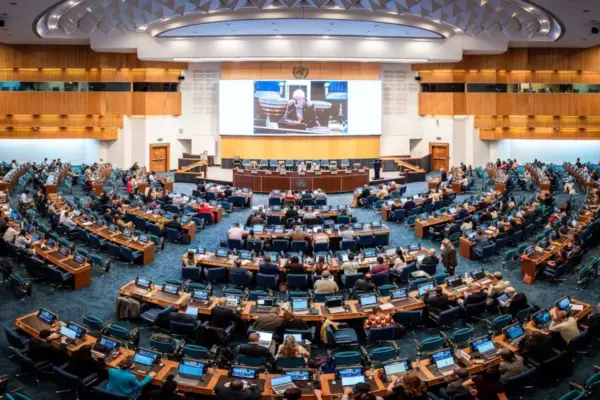
This year’s gathering carries immense significance because it marks the precise halfway point between the historic agreement of the Kunming-Montreal Global Biodiversity Framework (GBF) and the fast-approaching 2030 deadline set for achieving its ambitious targets. The stakes could hardly be higher. Recent assessments by the CBD have revealed a sobering reality: countries are currently falling short on 22 out of the framework’s 23 targets. As the international community stares down these stark shortfalls, the fortnight of negotiations in Yerevan will test whether multilateral diplomacy can bridge the widening chasm between political ambition and on-the-ground ecological reality.
In addition to evaluating the overarching framework, delegates in Yerevan will engage in intense negotiations regarding the two supplemental protocols to the CBD. These include the Cartagena Protocol, which establishes vital international rules on biosafety, and the Nagoya Protocol, which governs access to genetic resources and the fair and equitable sharing of benefits arising from their utilization. While these protocols operate under the broader umbrella of the convention, they function through their own governing bodies known as meetings of the parties, or MOPs. Because membership differs slightly from the main convention, these supplemental tracks involve 173 parties for the Cartagena Protocol and 141 parties for the Nagoya Protocol, each bringing their own distinct priorities and legal complexities to the table.
To help observers and policymakers track the labyrinth of negotiations, organizations such as Carbon Brief are closely monitoring how countries progress toward consensus on dozens of individual negotiating texts. This tracking encompasses draft decisions originating not just from the main COP and the MOPs for the Cartagena and Nagoya protocols, but also from the most recent meetings of the convention’s subsidiary bodies. These preparatory sessions serve as the foundational starting point for the exhaustive line-by-line debates that will define the upcoming fortnight in the Armenian capital.
The CBD relies on three core subsidiary bodies to feed technical, scientific, and structural recommendations into the COP process. These include the Subsidiary Body on Scientific, Technical and Technological Advice (SBSTTA), which provides scientific grounding for conservation policies; the Subsidiary Body on Implementation (SBI), which focuses on national reporting and target tracking; and the Subsidiary Body on Article 8(j) and Other Provisions (SB8J). Dedicated specifically to issues related to Indigenous peoples and local communities, SB8J was formally established during COP16, which took place in Cali, Colombia, in 2024. The inclusion and empowerment of these local stewards remain a cornerstone of modern biodiversity conservation, ensuring that traditional knowledge is integrated into global frameworks.
Within the dense documentation guiding the summit, tracking consensus is often an exercise in diplomatic cryptology. In UN draft texts, areas of persistent disagreement and disputed language are traditionally denoted by square brackets. By analyzing the frequency and distribution of these brackets in any given iteration of a text, observers can gauge just how far apart negotiating parties remain from reaching a final consensus. Texts also frequently present delegations with distinct policy choices framed as "options" or alternative pathways, known as "alt" provisions. These structural choices reflect the deeply entrenched divergence in national interests, economic capabilities, and political priorities that routinely surface during global environmental negotiations.
As the delegations settle into the negotiating rooms in Yerevan, discussions are expected to crystallize around two major agenda items that have dominated international environmental politics in recent years. The first is the comprehensive global review. This critical evaluation will assess collective progress—or the lack thereof—toward the implementation of the Kunming-Montreal Global Biodiversity Framework and formulate concrete recommendations designed to accelerate urgent conservation action before the decade closes. Given the UN’s findings that most targets are currently being missed, the global review is bound to spark fierce debates over accountability, transparency, and the mechanisms required to course-correct national strategies.
The second major flashpoint is finance, an issue divided into two heavily contested components: resource mobilisation and the financial mechanism itself. On resource mobilisation, biodiverse countries in the Global South are expected to push aggressively for a substantial and predictable increase in international public and private finance for nature conservation. Developing nations argue that halting biodiversity loss is impossible without robust, direct financial support from industrialized economies historically responsible for the bulk of global environmental degradation.

Disagreements over how and where this funding should be channeled have historically paralyzed negotiations. In fact, deep-seated friction over the creation of a dedicated financial mechanism directly led to the extraordinary suspension of COP16 in Cali, Colombia, in October 2024, after exhausted delegates failed to reach a breakthrough before the conference’s official close. At the heart of the dispute is a structural divide: nations from the Global South have long advocated for the establishment of a separate financial mechanism operating under the direct control and authority of the CBD. In contrast, countries from the Global North have largely favored utilizing existing institutional architecture, preferring to maintain funding mechanisms housed within the Global Environment Facility.
While the resumption of COP16 in Rome in early 2025 yielded a hard-fought compromise—producing a tentative roadmap designed to guide parties toward the eventual establishment of a permanent mechanism—the operational details and final institutional shape of that funding structure remain a central battleground. As the delegations unpack their briefs in Yerevan, the success of the summit will ultimately be judged by whether world leaders can turn procedural roadmaps into concrete financial commitments, proving that international cooperation can still rise to meet the existential crisis facing the planet’s ecosystems.