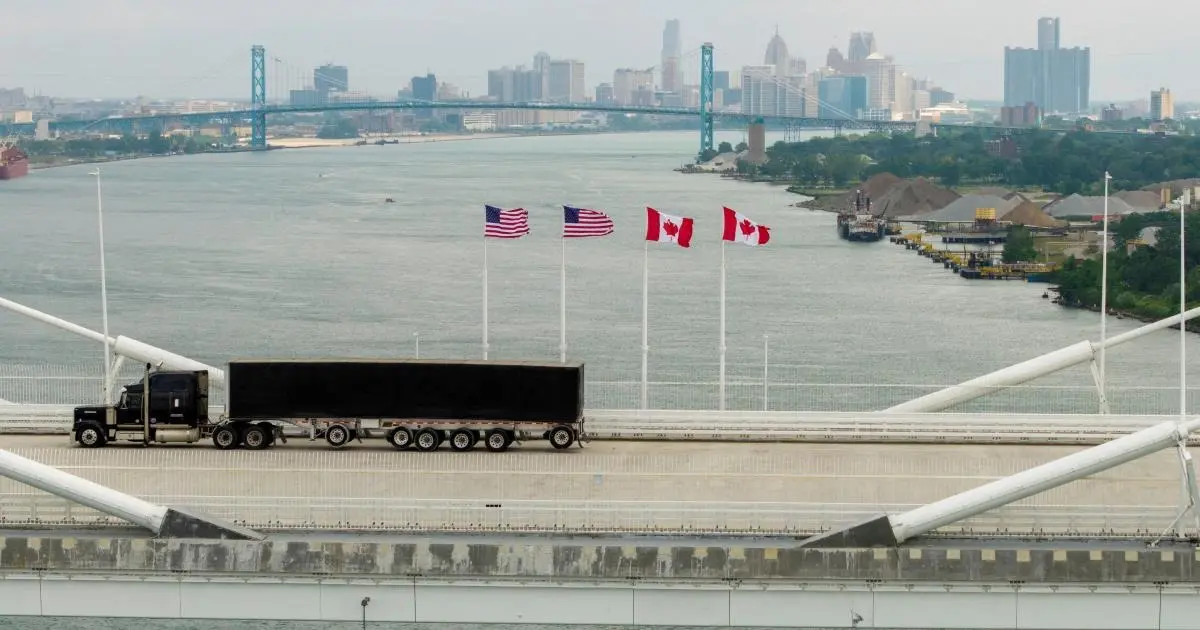
The foundational underpinnings of United States global power are currently facing an unprecedented internal stress test. Far from distant battlegrounds in Europe, Asia, or the Middle East, this structural erosion is taking place along America’s immediate borders. Friendly relations with neighboring countries have historically enhanced national security, promoted mutual economic prosperity, and simplified the management of complex transnational challenges. Conversely, weak and alienated neighbors historically export trouble.
Today, the political climate across North America has deteriorated markedly. In Canada, citizens increasingly perceive the high tariffs imposed by U.S. President Donald Trump and his belittling characterization of their country as the "51st state" as direct assaults on their national economy and independence. Further south, in Mexico, aggressive economic coercion and repeated threats of unilateral military intervention have revived deep, historically rooted anxieties concerning American hegemony—sentiments that generations of diplomats labored patiently to put to rest.
The modern North American partnership was not forged overnight; it required generations of careful negotiation, strategic foresight, and mutual compromise. During the nineteenth century, United States foreign policy was overwhelmingly concentrated on its home continent. In those formative decades, Washington competed vigorously with France, Mexico, Russia, Spain, the United Kingdom, and indigenous populations for territorial and political dominance.
However, as the United States ascended to the status of a global superpower during the twentieth century, subsequent generations of U.S. strategists began to take North American stability for granted. Washington shifted its primary diplomatic and military focus toward Europe, the Asia-Pacific, and the Middle East. It has only been since the closing years of the Cold War that successive U.S. presidents have actively recognized the vital necessity of reinvesting in North America. Ronald Reagan laid out this strategic rationale with exceptional clarity when he launched his presidential campaign in 1979, declaring that the key to future American security lay in Canada and Mexico becoming vastly stronger nations, while urging that the U.S. stop treating its nearest neighbors as foreigners.
Geopolitics invariably begins with geography, and America’s geography affords it an enormous, innate advantage over every other major global power. China and Russia are each compelled to manage complex, often volatile relationships with 14 distinct neighbors, many of which harbor deep resentments stemming from long histories of conflict. India must navigate six land borders, including one shared with a nuclear-armed rival. Furthermore, the global trade access of all three powers depends heavily on traversing vulnerable maritime chokepoints.
In sharp contrast, the United States shares open borders with two fundamentally benign neighbors and enjoys unobstructed access to two vast oceans. Close, cooperative relations with Canada and Mexico fundamentally bolster homeland security, attract high-value investment, stimulate continuous innovation, and create an expansive market rich in natural resources and specialized talent. Furthermore, this trilateral alignment serves as an indispensable tool for jointly combating transnational criminal networks, managing migration, and safeguarding clean air, water, and wildlife.
A safe, resilient, and adaptive North America serves as the indispensable starting point for any coherent U.S. global strategy. Washington is structurally best positioned to navigate an unpredictable and uncertain world when the United States, Canada, and Mexico present a unified, common front. Yet, the current reliance on economic bullying and political coercion is actively driving these natural partners away, destroying a precious geopolitical asset: a uniquely strong continental base from which Washington derives its international projection of power.
CONTINENTAL VISION
The historical recognition that positive relations with northern and southern neighbors would directly amplify global influence first took root with William Seward, who served as U.S. secretary of state from 1861 to 1869. Seward famously asserted that holding control of the North American continent equated to holding the controlling interest in the world at large. When negotiating the purchase of Alaska in 1867, Seward observed that Alaska and the Aleutian Islands effectively extended a friendly hand toward Asia. During his tenure, he also attempted to acquire Greenland, Iceland, the Hawaiian Islands, and strategic territories in the Caribbean, believing these acquisitions would firmly secure America’s oceanic approaches.
At the same time, Seward recognized that the United States could dramatically increase its power by fostering robust economic linkages rather than relying solely on territorial conquest. He actively abhorred European imperial conquests and had previously opposed the 1846–1848 Mexican-American War. As the U.S. Civil War drew to a close in 1865, Seward actively prevented Generals Ulysses S. Grant and Philip Sheridan from launching an invasion of Mexico to depose the Habsburg archduke whom the French had installed as emperor. He reasoned correctly that an external invasion would only unite Mexico in fierce hostility, whereas leaving the country to depose the interloper independently would yield a more stable, self-reliant outcome—a prediction validated when Mexican forces overthrew the regime in 1867.
Seward managed relations with the northern neighbor through similar diplomatic prudence. In 1867, the British government united its North American colonies to form the Canadian Confederation, driven in part by a desire to deter a potential U.S. invasion launched in retaliation for London’s wartime assistance to the Confederacy. Seward responded by choosing the peaceful path of international arbitration to resolve outstanding wartime claims against the United Kingdom.
Ultimately, Seward envisioned a cooperative North American union forged through mutual free choice rather than coercion or military conquest. He maintained a profound faith in the attractive power of the United States, arguing that commerce would serve as a new "god of boundaries," capable of redrawing political lines by pulling nations naturally together through mutual benefit—a concept his biographer, Ernest Paolino, termed Seward’s "law of imperial gravity."
The restoration of Mexican President Benito Juarez in 1867, occurring the exact same year the Canadian Confederation was established, offered a promising horizon of a democratic North America defined by tightly integrated economic ties. While peaceful relations were successfully established, Seward’s grand continental vision faded in subsequent decades as American political focus turned decisively westward, resulting in decades of diplomatic neglect toward the neighbors immediately to the north and south.
A SEARCH FOR STABILITY
By the dawn of the twentieth century, the United States had grown accustomed to taking continental harmony entirely for granted. The outbreak of the Mexican Revolution in 1910 shattered that comfortable sense of security. Over a subsequent decade marked by intense violent conflict, frequent raids on U.S. border towns, and the arbitrary seizure of American property by various revolutionary factions and bandits, Washington felt compelled to dispatch two separate military expeditions across the border into Mexico, narrowly avoiding a protracted and bloody quagmire.
The gravity of the situation was underscored by U.S. President Woodrow Wilson’s famous 1916 reelection campaign slogan, "He kept us out of war," which referred as much to the volatile situation in Mexico as it did to the unfolding catastrophe in Europe. The persistent instability on America’s doorstep left the nation glaringly vulnerable. In 1917, imperial Germany transmitted a secret proposal of alliance to the new Mexican government—a communication famously intercepted by British intelligence—which promised German military and financial assistance in recovering the lost territories of Arizona, New Mexico, and Texas if Mexico joined the Central Powers in the event of U.S. entry into World War I.
Throughout the 1920s, the United States managed to stabilize relations with the newly consolidated, one-party authoritarian state in Mexico. As political scientist Pamela Starr observed, Washington pragmaticially accepted its neighbor’s sovereignty, but strictly "within limits." As long as internal Mexican governance did not pose a direct threat to U.S. national security, Washington refrained from interference, prioritizing overall stability above concerns regarding Mexico’s stunted domestic democracy, prickly nationalism, and closed economic model.
This functional arrangement endured for approximately half a century, facilitating various forms of practical cooperation. Most notably, the Bracero Program, operating between 1942 and 1964, provided approximately 4.6 million Mexican guest-worker permits to fill critical domestic labor shortages across American agriculture, railroads, and other vital industries.
Simultaneously, the twentieth century witnessed Canada’s definitive transition from a British dominion into a sovereign North American partner and steadfast military ally. Throughout the 1920s and 1930s, the United States and Canada constructed physical bridges and tunnels designed to boost cross-border economic exchanges. U.S. Secretary of State Cordell Hull subsequently negotiated vital reciprocal trade agreements with Canada in 1935 and 1938.
In the wake of World War II, Canadian forces fought side-by-side with Americans in the Korean War and offered robust support for the establishment of NATO, the General Agreement on Tariffs and Trade, the United Nations, and the broader institutional architecture of the postwar international order. During the 1950s, the two nations jointly constructed the St. Lawrence Seaway and established an expansive continental radar network to monitor potential missile threats traversing the Arctic. By 1965, they had signed a landmark pact creating a duty-free, fully integrated automobile market.
TIES THAT BIND
The pace of North American economic and political integration accelerated dramatically during the Reagan administration. President Ronald Reagan’s warm diplomatic outreach to Canadian Prime Minister Brian Mulroney encouraged Mulroney to propose an ambitious, expansive free-trade agreement in 1985. Mulroney took a substantial political gamble: while many Canadians remained deeply wary of becoming economically dependent upon or dominated by the United States, they simultaneously recognized the need for formal, binding rules to discipline U.S. trade practices and encourage long-term investment. The two nations successfully concluded the agreement in 1987, securing approval from the U.S. Congress the following year, and transforming the 1988 Canadian general election into an effective national referendum on free trade—one that Mulroney ultimately won.
Simultaneously, Carlos Salinas, who assumed the Mexican presidency in 1988, recognized that a parallel trade pact could successfully open his nation’s economy and attract vital foreign capital. At the time, Mexico was struggling under the weight of severe debt crises, declining energy revenues, and the systemic breakdown of the ruling party’s half-century-old corporatist model, which had long fostered a centralized and closed economic environment. Seeking an escape from prolonged stagnation and a powerful catalyst for domestic reform, Salinas took the bold step of formally proposing a bilateral free-trade agreement to U.S. President George H.W. Bush in 1990.
Canada formally joined the negotiations in 1991, and the three nations ultimately signed the North American Free Trade Agreement (NAFTA) in 1992. For Washington, NAFTA represented far more than a simple commercial arrangement; it served as a monumental step toward historical reconciliation with Mexico, which had remained deeply suspicious of the United States since the traumatic loss of half its national territory in the war ending in 1848.
Mexico was now looking to its northern neighbor to help accelerate a sweeping domestic economic, social, and political transformation. Mexican negotiators deliberately sought to import the rule of law through robust legal protections for foreign investment, fair market competition, and intellectual property. Simultaneously, domestic reformers drew structural inspiration from U.S. and Canadian institutions as they labored to build a competitive multiparty democracy and a more open society.
President George H.W. Bush championed NAFTA as a cornerstone of post-Cold War American strategy, declaring in 1992 that the pact marked the beginning of a historic new era designed to help the United States prepare for the economic and diplomatic challenges of the coming century. His administration firmly believed that continental partnership would deliver immediate economic dividends while easing cooperation on complex foreign policy matters, environmental protection, immigration enforcement, and drug interdiction. Crucially, unlike the European Union’s model of deeply shared sovereignty, NAFTA respected national sensitivities regarding independence and individual state sovereignty.
President Bill Clinton subsequently faced the formidable political challenge of steering NAFTA through a divided U.S. Congress, securing final approval with overwhelming Republican support. Clinton deepened Washington’s long-term commitment to the North American project by extending a massive financial rescue loan to Mexico during the 1995 peso crisis to prevent localized economic instability from spilling across the border. Following the terrorist attacks of September 11, 2001, amid widespread fears that heightened security protocols would paralyze commerce, President George W. Bush launched dedicated initiatives to guarantee the safe, expedited transit of commercial goods and vehicles across both northern and southern borders.
BETTER TOGETHER
Opponents of NAFTA had aggressively predicted that American workers would suffer catastrophic job losses as employers relocated operations to Mexico to exploit lower wage structures. However, these dystopian warnings failed to materialize. Instead, the agreement proved to be an unmitigated economic and strategic triumph. By the year 2000, six years after NAFTA officially took effect, U.S. unemployment dropped to 3.8 percent, hitting its lowest level in decades. Inflation steadily declined, national productivity rose, and real wages experienced notable growth, with particularly significant gains registered among low-wage workers.
The pact stimulated heavy capital investment in shared infrastructure—including railways, pipelines, electrical grids, and border inspection systems—that rendered continental supply chains remarkably efficient, particularly within the manufacturing sector. Total trade in goods and services between the United States and Canada surged from $169 billion in 1988 to approximately $900 billion by 2024. Over the same period, U.S.-Mexican trade skyrocketed from under $100 billion to nearly $1 trillion annually.
Cross-border investment served as the primary engine driving this unprecedented growth. U.S. direct investment in Canada climbed from $61 billion prior to NAFTA to roughly $750 billion, while Canadian direct investment in the United States jumped from $27 billion to approximately $500 billion. Concurrently, American direct investment in Mexico surged from $15 billion to a range of $130 to $150 billion, and Mexican enterprise investments inside the United States rose from $1 billion to between $40 and $50 billion.
Because the United States accounts for as much as 60 percent of all Canadian imports and roughly 40 percent of all Mexican imports, robust economic growth among these neighbors directly stimulates the U.S. economy. Growth in geographically distant economies yields far less domestic benefit; for example, when China increases its imports, the United States captures only six to seven cents of every additional dollar spent.
Architects of NAFTA also calculated that the agreement would generate sustainable economic opportunities within Mexico, enabling citizens to find viable employment at home rather than migrating northward. Due to prolonged Mexican economic distress, the population of Mexican-born immigrants residing in the United States had climbed sharply from approximately 760,000 in 1970 to nine million by 2000. Yet, by 2010, net Mexican migration had dropped to zero, with most unauthorized arrivals at the southern border originating from Central America and beyond, transforming Mexico into an indispensable partner in regional immigration enforcement.
Although Donald Trump vowed to scrap NAFTA entirely during his initial presidential campaign, the agreement had by then become far too valuable to abandon. His administration ultimately settled for a renegotiation, replacing NAFTA with the United States-Mexico-Canada Agreement (USMCA) in 2020. While the new accord modernized provisions governing digital commerce and established rigorous new mechanisms for labor dispute resolution, its complex, rigid rules designed to protect regional automotive manufacturers ended up undermining the sector’s broader global competitiveness. Furthermore, the updated agreement reduced critical legal protections for foreign investors operating within Mexico, thereby dampening international confidence in local regulatory stability.
REPAIRING THE RIFT
While the USMCA formally remains in effect until 2036, the foundational concept of a collaborative North American partnership is currently on life support. The Trump administration notably declined to approve an administrative extension of the trade pact to 2042, and pervasive uncertainty regarding its long-term viability now actively discourages new capital investment in both Canada and Mexico.
Compounding these structural hesitations is a stated desire by the Trump administration to selectively ignore trade commitments whenever politically expedient. Over the course of 2025 and 2026, Washington levied punitive tariffs on Canadian automobiles, steel, aluminum, iron, metal-intensive manufacturing equipment, lumber, and pharmaceuticals, justifying the measures under the controversial pretext that these traditional imports constitute a direct threat to U.S. national security. Given that the United States has spent the past seven decades actively encouraging the economic integration of these precise industrial sectors, and that Canada has stood as a dependable military ally for over a century, the national security designation shocked and deeply insulted Canadians.
The continued weakening or potential fracture of traditional U.S. ties with Canada and Mexico would constitute a profound strategic disaster. Combined, the physical and economic assets of the three nations make North America a formidable global superpower. Stretching from the Arctic Circle down toward the tropics, the continent is home to nearly half a billion citizens, and unlike many advanced industrial economies, its aggregate population continues to grow.
The region boasts a highly skilled labor force, deeply integrated infrastructure networks, and globally competitive capabilities spanning agriculture, mining, advanced manufacturing, and complex services. Furthermore, North Americans enjoy access to cutting-edge technologies, abundant financial capital, absolute energy self-sufficiency, and the capacity to dramatically expand domestic production across oil, natural gas, and renewable energy sources.
This represents an extraordinarily strong hand—not one that Washington should casually discard. Instead of antagonizing Ottawa, U.S. leadership must actively cooperate with its northern neighbor on critical fronts, including Arctic and maritime security, vital mineral extraction and trade, and technological innovation. Canada’s world-class artificial intelligence talent, research capabilities, and vast energy reserves perfectly complement those of the United States, exactly as its natural resources and industrial output did throughout the twentieth century.
Concurrently, Washington must assist Mexico in fully realizing its domestic economic and institutional potential. While NAFTA helped Mexico build modern economic institutions and a more open society, deep-seated corruption continues to plague state and local governments, legal systems, police departments, and educational networks. Millions of Mexicans remain trapped within the informal economy, leaving vulnerable populations exposed to predatory drug cartels and transnational criminal syndicates. With sustained U.S. intelligence sharing and advanced technological assistance, however, Mexico can decisively strengthen national security and enforce the rule of law. Cultivating robust, trustworthy institutions will generate durable economic growth and solidify Mexico’s status as a reliable partner.
From William Seward to Ronald Reagan, the Bush family administrations, and Bill Clinton, generations of American leaders recognized that a strong, secure, and cooperative North America provides the United States with an indispensable strategic anchor in an inherently uncertain world. While a zero-sum, transactional approach to international economics stands in sharp contrast to this bipartisan tradition, the next U.S. administration will retain the clear opportunity to alter course. To restore and expand a constructive continental partnership, the United States must revive its traditional powers of regional attraction and treat its immediate neighbors with enduring respect.