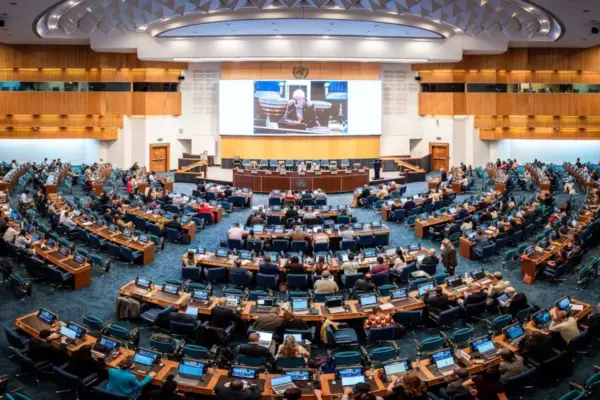
Next week, diplomats, environmental officials, and delegates from around the world will descend on Yerevan, Armenia, for a pivotal summit under the United Nations Convention on Biological Diversity (CBD). Running from 19 to 30 October, representatives from 196 parties will gather to hammer out the precise wording of dozens of legal texts that form the backbone of decisions under the Conference of the Parties (COP) to the CBD.
This year’s summit carries exceptional significance, marking the critical halfway point between the historic agreement of the Kunming-Montreal Global Biodiversity Framework (GBF) in Montreal and the fast-approaching 2030 deadline for achieving its ambitious targets. Yet, the gathering opens against a sobering backdrop. Recent assessments by the CBD have revealed that countries are currently falling short on 22 out of the framework’s 23 targets, intensifying pressure on delegates in Yerevan to accelerate implementation, bridge deep political divides, and breathe new life into global conservation efforts.
Alongside the main CBD negotiations, delegates will also engage in intense deliberations relating to the two supplemental protocols to the convention: the Cartagena Protocol, which governs biosafety and the safe transfer, handling, and use of living modified organisms; and the Nagoya Protocol, which addresses fair and equitable access to genetic resources and the sharing of benefits arising from their utilization. Governance for these agreements is managed through dedicated meetings of the parties, or MOPs, though these involve fewer participants than the parent convention, with 173 parties for the Cartagena Protocol and 141 for the Nagoya Protocol.
As the diplomatic community prepares for the fortnight of talks, observers are closely tracking how nations move toward consensus on a sprawling array of negotiating texts. The foundational documents for the summit include drafts originating not only from the COP and the MOPs, but also from the most recent meetings of the CBD’s subsidiary bodies, which establish the baseline parameters for the negotiations in Yerevan.
The CBD relies on three core subsidiary bodies to drive its scientific, technical, and operational mandates: the Subsidiary Body on Scientific, Technical and Technological Advice (SBSTTA), the Subsidiary Body on Implementation (SBI), and the Subsidiary Body on Article 8(j) and Other Provisions (SB8J). Notably, SB8J—which focuses explicitly on issues related to Indigenous peoples and local communities—was officially established at COP16 in Cali, Colombia, in 2024, institutionalizing a vital platform for traditional knowledge and community-led stewardship within global biodiversity governance.

Navigating the Complex Text and Areas of Disagreement
For negotiators and policy analysts tracking the granular details of the talks, monitoring progress requires deciphering the complex bureaucratic language of UN draft texts. Areas of persistent disagreement are traditionally denoted by square brackets. By counting the brackets in any given iteration of a text, observers can gauge just how far apart parties remain from reaching genuine consensus. Color-coded tracking systems often categorize these texts, highlighting areas of deep division in red while signaling smoother alignment in dark green. In addition to bracketed text, negotiations frequently feature alternative phrasing options—labeled as "options" or "alt"—which present delegates with distinct policy pathways to reconcile conflicting national interests.
Among the crowded agenda in Yerevan, two central issues are poised to dominate the political spotlight: the comprehensive global review and the perennial, contentious debate over finance.
The global review will evaluate collective progress made toward the implementation of the Kunming-Montreal Global Biodiversity Framework since its adoption, issuing critical recommendations on how governments can drastically accelerate national and international action. With the clock ticking down toward 2030, this stocktake is expected to lay bare the gaps in current policy implementation and demand firmer commitments from lagging administrations.
The Battle Over Nature Finance
Finance, however, remains the most volatile fault line in the negotiations, broken down broadly into resource mobilisation and the structure of the financial mechanism itself. Biodiverse countries in the Global South are expected to push aggressively for a substantial scale-up of international public and private finance for conservation, arguing that historic polluters and wealthy nations must shoulder the financial burden of protecting global ecosystems.

Deep-seated disagreements over the architecture of the financial mechanism famously overshadowed the previous summit, leading directly to the unprecedented suspension of COP16 in Cali, Colombia, in October 2024 after parties failed to reach a consensus before the official close of the conference. Developing nations from the Global South have consistently advocated for the creation of a dedicated, standalone financial mechanism operating directly under the authority and control of the CBD. Conversely, developed countries in the Global North have largely favored retaining the existing financial architecture, which is housed under the Global Environment Facility (GEF).
The impasse was temporarily bridged during a resumed session of COP16 held in Rome in early 2025, where countries managed to agree upon a structured roadmap leading toward the establishment of a permanent mechanism. As delegations convene in Yerevan, the discussions will test whether that fragile compromise can be translated into concrete financial commitments and operational rules.
With the stakes higher than ever for the planet’s ecosystems, the fortnight in Armenia will test the multilateral system’s capacity to move from ambitious paper promises to urgent, adequately funded, and verifiable action before the decade runs out.