The ripple effects of geopolitical strife in the Middle East continue to reverberate across Western democracies, triggering a sharp and sustained escalation in antisemitic and Islamophobic incidents in the United States and abroad. Security experts, municipal leaders, and community advocates warn that inflammatory rhetoric on social media—catalyzed heavily by the October 7, 2023, Hamas-led attack on Israel and the subsequent military offensive and blockade in the Gaza Strip—has transformed long-held prejudices into acute daily threats for minority communities.
According to data compiled by the Anti-Defamation League (ADL), antisemitic incidents in the United States surged by more than 200% in the immediate year following the October 7 attacks. Concurrently, the Council on American-Islamic Relations (CAIR) reported a staggering 178% increase in anti-Muslim incidents during the first three months alone. These alarming trends have shown little sign of abating, particularly as regional violence has persisted and expanded to involve subsequent military engagements, including the United States and Israel’s conflict with Iran.
The compounding nature of these international crises has created an unprecedented environment of vulnerability. Speaking at a recent Strong Cities Network event, Sameer Hossain, managing director of the Muslim Public Affairs Council—in a video presentation shared by American Community Media—noted that attacks against Muslims and Muslim institutions surged elevenfold in March, coinciding with the outbreak of the war with Iran, when compared to the average of all preceding months.
For Jewish and Muslim populations worldwide, the situation has instilled a pervasive sense of vigilance and anxiety. Milo Comerford, senior director of policy and research at the Institute for Strategic Dialogue (ISD) in the United Kingdom, highlighted during the Strong Cities event that social media commentary following the onset of the Gaza conflict served as a powerful catalyst for entrenched prejudices, aggressively fueling both hate speech and physical violence.
The danger extends beyond decentralized harassment, bleeding into organized extremist activity. An analysis conducted by the ISD revealed that over a third of Islamic State-linked attacks and disrupted plots throughout 2024 and 2025 specifically targeted Jewish or Israeli communities and institutions located outside the Middle East and Africa, Comerford noted.
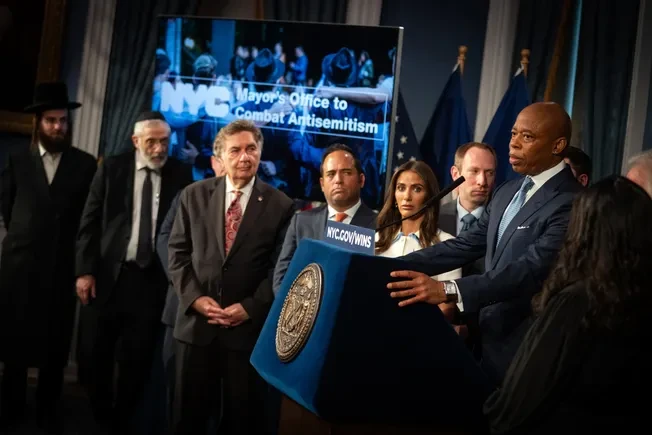
The human cost and psychological toll of this climate are starkly visible in major urban centers. In New York City—which boasts the largest Jewish population of any city outside of Israel—more than 50% of all hate crimes confirmed by the New York Police Department have targeted Jewish communities, according to Phylisa Wisdom, executive director of the Mayor’s Office to Combat Antisemitism.
"They’re feeling increased fear, and they’re seeing and noticing increased incidents, and that’s changing the way that they move through the city," Wisdom said during her remarks at the Strong Cities gathering.
In response to these mounting pressures, municipal governments are grappling with how to allocate resources and protect vulnerable populations. New York City, having established the first municipal office of its kind dedicated to combating antisemitism, actively consulted with more than 100 Jewish residents to formulate targeted interventions and safety protocols. Building upon these efforts, Mayor Zohran Mamdani announced last month that $7.4 million of a total $26 million earmarked for the Office for the Prevention of Hate Crimes will be directed toward bolstering physical security at synagogues and other local houses of worship.
While municipal responses to the crisis in Jewish communities have seen structured policy rollouts in major hubs like New York, experts and advocates point out that the parallel surge in threats and violence against Muslim residents has often tested the limits of local government preparedness. The lethal consequences of unchecked hostility have been tragically demonstrated in high-profile violent episodes across the country.
In Plainfield Township, Illinois, a 6-year-old Palestinian-American boy, Wadea Al-Fayoume, was fatally stabbed, and his mother severely wounded, in an attack carried out by their landlord, Joseph Czuba. Investigators and the victims’ family indicated that Czuba harbored intense anger driven by the October 7 attacks. In the wake of the tragedy, U.S. Senator Richard Durbin of Illinois introduced the Wadee Resolution in Congress to honor the young victim and formally condemn anti-Muslim hate.
Similarly, in November 2023, a shooting in Burlington, Vermont, left three Palestinian-American college students injured, one of whom was left permanently paralyzed from the chest down. The incident sparked fierce local political debates a month later, when the Burlington City Council became deadlocked over a proposed cease-fire resolution that also sought to express support for the shooting victims. The contentious meeting ended without passing either the original resolution or a subsequent watered-down version focused solely on supporting the victims.
Similar political flashpoints have played out nationwide. The New York City Council considered, though ultimately did not vote on, a formal cease-fire resolution concerning the Israel-Hamas war, even as at least 20 council members publicly voiced support for a cease-fire through other legislative and political channels.
These local battles underscore a fundamental tension in municipal governance. Local authorities possess no formal jurisdiction over the formulation or execution of United States foreign policy. However, as noted in a Strong Cities Network policy brief authored by Manzer, symbolic resolutions and local policy debates often function as vital tools for cities attempting to communicate core values, represent diverse constituencies, or signal preferences to higher levels of government.
Addressing the intricate relationship between global events and local stability, Manzer emphasized during a recent webinar that developing structured protocols helps cities protect residents and maintain social cohesion when international conflicts manifest locally through protests, civil unrest, and hate crimes. Local leaders, she argued, must evaluate these issues through a localized social cohesion lens, carefully weighing the potential achievements of any intervention, identifying who might be affected, and determining whether alternative strategies—such as direct anti-hate statements—might ultimately prove more effective than symbolic resolutions.
"Today’s response becomes tomorrow’s precedent," Manzer concluded.