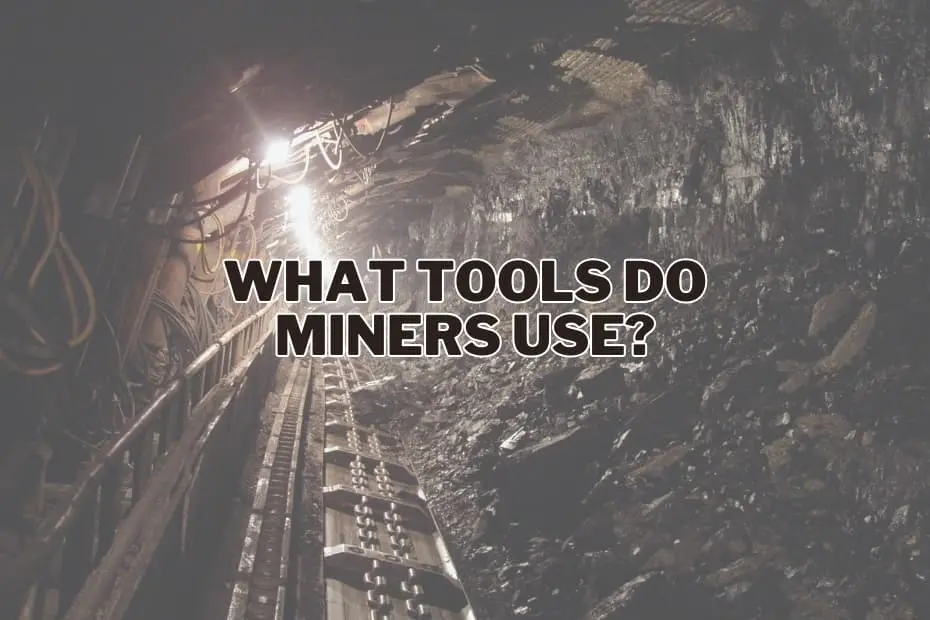
Mining remains one of the world’s oldest, most foundational, and most hazardous industries. Since the dawn of civilization, the extraction of valuable minerals, metals, and energy resources from deep within the earth has driven technological progress and economic growth. However, the image of a lone miner chipping away at a rock face with a hand tool represents only a fraction of the story.
Modern mining operations are highly sophisticated, engineered environments where success is measured by the ton and safety is calculated by the second. To get the job done efficiently while protecting human lives, modern miners rely on a diverse toolkit. This specialized equipment spans from refined versions of traditional hand tools to heavy automated machinery and advanced life-support systems. Understanding the tools miners use reveals how the industry has evolved to meet the demands of the modern world.
1 Pickaxe
The pickaxe is a timeless symbol of the mining profession, representing the raw determination required to extract resources from the earth. While heavy machinery now handles the bulk of large-scale excavation, the pickaxe remains an essential tool for precision work. Modern miners use it to break apart smaller, stubborn rock formations and carefully scrape away mineral-rich layers that require a delicate touch to avoid contamination.
Today’s pickaxes are a far cry from their historical counterparts. Constructed from high-grade, durable steel alloys, they are engineered to withstand immense, repetitive impact without fracturing or dulling quickly. When paired with vital personal protective equipment (PPE) such as helmets and heavy-duty gloves, the pickaxe continues to be a highly reliable and indispensable tool in a miner’s daily toolkit.
2 Shovel
No mining site, whether an open-pit operation or a deep underground shaft, can function without a sturdy shovel. Shovels are critical for clearing debris, managing rock fragments, and loading loose materials into transport containers. In manual operations, a well-designed shovel allows a worker to move significant amounts of earth quickly and with minimized physical strain.
In professional mining environments, shovels are selected based on the specific tasks at hand, ranging from heavy-duty spade designs for breaking tough ground to scoop-style shovels for moving loose gravel and ore. Because the process of shoveling inevitably kicks up dust and sharp rock fragments, miners must always pair this task with protective gear, particularly safety goggles, to guard against eye injuries.
3 Drill
Reaching deep, subterranean mineral deposits requires penetrating incredibly dense rock barriers, a task that would be impossible without mining drills. Drills are used at almost every stage of the mining process, from initial exploration to the final extraction phase. They range from handheld power drills used in confined spaces to massive, vehicle-mounted industrial drill rigs.
These excavation tools are indispensable because they allow miners to create blast holes for explosives, extract core samples for geological analysis, and install roof bolts to stabilize underground tunnels. By significantly increasing drilling speed and precision, these tools serve as a cornerstone of productivity in modern mining operations.
4 Sledgehammer
The sledgehammer relies on pure kinetic force to get the job done. Featuring a long handle and a heavy metal head, a sledgehammer’s powerful swing is ideal for manually breaking apart large, unwieldy boulders into manageable pieces. This tool is especially valuable during the early stages of mine exploration and development, when heavy machinery may not yet have access to the site.
Because wielding a sledgehammer requires intense physical exertion and creates a high risk of flying rock chips, safety protocols are strictly enforced during its use. Miners must wear protective helmets and safety goggles, and when working on elevated platforms or uneven underground terrain, they utilize safety harnesses to prevent dangerous falls.
5 Jackhammer
Combining the rapid, percussive force of a hammer with the penetrating power of a drill, the jackhammer is a highly efficient tool for pulverizing stubborn rock faces. Powered by compressed air (pneumatic), hydraulics, or electricity, jackhammers are widely utilized in both surface quarrying and underground tunneling operations.
While jackhammers drastically accelerate the excavation process, they also present significant occupational hazards. The rapid fracturing of rock generates high levels of noise and dense clouds of airborne dust. To mitigate these risks, operators are required to wear specialized safety goggles, hearing protection, and high-efficiency ventilation masks to prevent the inhalation of harmful particulate matter.
6 Helmet
In the mining industry, personal safety is the absolute priority, and no piece of equipment is more symbolic of this commitment than the safety helmet. No miner is permitted to step onto a worksite without a durable, properly fitted helmet. Engineered from high-impact resistant materials, modern helmets are designed to absorb blow forces and protect workers from falling rocks, low ceilings, and accidental impacts.
Beyond structural protection, modern mining helmets serve as a platform for other essential tools. Most are equipped with integrated brackets to securely hold high-intensity headlamps, ensuring that miners have a reliable light source that moves with their line of sight as they navigate dark and unpredictable environments.
7 Safety Goggles
The eyes are highly vulnerable in a mining environment, where drilling, blasting, and shoveling constantly fill the air with hazardous debris. Safety goggles are a critical line of defense, shielding a miner’s eyes from flying rock chips, fine dust particles, and chemical splashes.
To remain effective in harsh underground conditions, modern mining goggles are engineered with scratch-resistant, high-impact lenses. They also feature advanced anti-fog coatings, ensuring that miners maintain clear, unobstructed visibility even when transitionary temperatures and high humidity levels threaten to cloud their vision.
8 Dynamite
When mechanical tools encounter rock formations that are too dense to penetrate efficiently, miners turn to controlled chemical energy. Dynamite remains a vital tool for breaking through massive geological barriers and exposing rich mineral veins deep within the earth.
Because of its immense destructive power, the transport, storage, and detonation of dynamite are governed by strict safety regulations. Blasting operations are planned with mathematical precision to minimize structural damage to surrounding tunnels. Furthermore, because detonations release a mixture of dust and chemical fumes, miners must ensure that robust ventilation systems are fully operational to clear the air before anyone re-enters the blast zone.
9 Excavator
At surface mining operations and large underground caverns, excavators are the undisputed workhorses of earthmoving. These massive industrial machines feature a heavy-duty articulating boom, arm, and bucket system capable of scooping up tons of earth, rock, and run-of-mine ore in a single movement.
Excavators are indispensable because they dramatically accelerate the removal of overburden—the waste soil and rock that covers a valuable mineral deposit. By mechanizing the heaviest loading tasks, excavators reduce the reliance on manual labor, lower operational costs, and keep downstream processing operations steadily supplied with material.
10 Conveyor Belt
Once valuable ore is extracted from the rock face, it must be transported to the surface or directly to a processing facility. Conveyor belts serve as the continuous transport arteries of a modern mine. These automated systems are capable of moving thousands of tons of material over long distances, navigating steep inclines and sharp turns that would be difficult for wheeled vehicles to manage.
The primary advantage of conveyor belts is their ability to streamline material handling. By replacing or supplementing haul trucks, conveyor belts reduce fuel consumption, minimize traffic congestion within the mine, and eliminate the need for repetitive manual hauling, thereby boosting overall operational safety and efficiency.
11 Rock Splitter
In certain mining scenarios, using explosives like dynamite is either too dangerous or logistically impractical due to nearby infrastructure or unstable geological conditions. In these situations, miners rely on the rock splitter as an effective, non-explosive alternative.
By inserting a wedge-like tool into a pre-drilled hole and applying immense hydraulic pressure, the rock splitter forces the rock apart from the inside out. This method allows miners to break down massive boulders into manageable pieces quietly, safely, and with virtually no flyrock, dust, or ground vibration.
12 Mining Cart
Mining carts have a rich history in the industry, and they continue to play a functional role in many underground operations. Guided by steel tracks laid along the tunnel floors, these rugged containers are designed to transport heavy payloads of extracted ore and waste rock from the deep working face to central collection shafts or processing areas.
By utilizing rail tracks, mining carts reduce the rolling resistance of heavy loads, allowing large quantities of material to be moved with minimal energy. Whether pulled by small locomotives or winched via cable systems, mining carts help maintain a steady, organized flow of materials out of the mine.
13 Headlamp
In the pitch-black environment of an underground mine, visibility is a matter of survival. A headlamp is a fundamental tool that provides hands-free illumination, allowing miners to safely operate machinery, swing hand tools, and identify potential hazards in their path.
Modern mining headlamps utilize advanced LED technology, which offers incredibly bright, focused light beams while consuming very little battery power. These devices are built to be intrinsically safe—meaning they are sealed to prevent any electrical spark from igniting flammable gases, such as methane, that may be trapped in the underground air.
14 Ore Crusher
Extracted rock is rarely ready for market in its raw form; it must first be broken down to liberate the valuable minerals locked inside. The ore crusher is a heavy-duty industrial machine designed to compress and pulverize massive rocks into much smaller, uniform fragments.
By reducing the size of the material, ore crushers prepare the rock for downstream chemical or mechanical processing. Without these high-powered crushing systems, maximizing the extraction of valuable metals and minerals from raw ore would be a highly inefficient and costly endeavor.
15 Ventilation System
Perhaps the most critical life-support system in any underground mine is the ventilation system. Deep subterranean workings are naturally hot, humid, and prone to the accumulation of toxic or explosive gases, such as carbon monoxide and methane.
A comprehensive ventilation system utilizes high-powered fans, air shafts, and directing ducts to continuously pull fresh air from the surface and push contaminated air out. By maintaining a steady flow of clean, breathable air, these systems regulate underground temperatures, dilute dust concentrations, and protect miners from the silent threat of toxic gas poisoning.
Conclusion
The mining industry represents a complex intersection of human labor, physical science, and engineering. From basic, time-tested implements like pickaxes and shovels to high-powered machinery like excavators, conveyor belts, and automated ventilation systems, every tool plays a specific, calculated role in the extraction process. By understanding the specialized gear and machinery that miners use, we gain a deeper appreciation for the technical sophistication and human effort required to unearth the essential resources that fuel our modern world.
To discover how other field professionals utilize specialized equipment to map, analyze, and prepare these environments before extraction begins, explore our detailed overviews of Tools Used By Geologists and Surveyors Tools.
FAQs: What Tools Do Miners Use?
What is the most important safety tool for miners?
While safety requires a combination of equipment, a durable helmet integrated with a high-intensity headlamp is considered essential. This combination protects miners from falling debris and low-clearance impacts while ensuring hands-free visibility in dark underground environments.
Why do miners use dynamite?
Miners use dynamite to quickly and efficiently shatter dense, high-strength rock formations that are too tough for manual tools or standard mechanical excavators to penetrate, allowing access to deeply buried mineral veins.
What types of drills are used in mining?
Mining operations utilize a variety of drills, including handheld pneumatic and electric power drills for light work, as well as massive hydraulic rotary drill rigs designed to bore deep blast holes and extract geological core samples.
How do conveyor belts help miners?
Conveyor belts automate the transportation of bulk materials across long distances. By continuously moving ore and waste rock out of the mine, they reduce the need for manual hauling, lower fuel costs, and minimize traffic hazards on site.
What role do ventilation systems play in mining?
Ventilation systems are critical for life support in underground mines. They continuously circulate fresh surface air through the tunnels, dilute and remove hazardous gases like carbon monoxide and methane, and help regulate underground temperatures.