The United States Department of Homeland Security (DHS) has formally updated its multi-year procurement forecast to include a sweeping security services contract valued between $20 million and $50 million. The upcoming solicitation, which spans multiple critical domains of national security, explicitly integrates modern defense priorities such as small-drone cybersecurity, counter-unmanned aircraft systems (counter-UAS) expertise, and specialized threat training into its core framework.
Published publicly on October 26, the updated procurement forecast identifies the initiative under the designated title “Terrorism and Targeted Violence Risk Mitigation.” The project is a collaborative effort overseen jointly by DHS headquarters and the Cybersecurity and Infrastructure Security Agency (CISA). While the overarching agreement is broad and encompasses various facets of public safety, risk management, and counter-terrorism measures, the explicit inclusion of small unmanned aircraft systems (sUAS) cybersecurity and counter-UAS capabilities underscores how rapidly evolving aerial technologies have become central to the department’s overarching security architecture.
Counter-UAS Research, Training, and Comprehensive Support
According to the specific parameters outlined in the DHS procurement forecast, the selected contractor will be tasked with delivering a comprehensive suite of professional services. These responsibilities include rigorous research, product development, specialized training modules, analytical support, and strategic risk management services.
Within this broad operational scope, the requirements specifically target the unique cybersecurity challenges associated with small drones, alongside dedicated counter-UAS activities designed to identify and neutralize potential airborne hazards. Beyond aerial security, the contractor will also be expected to support active assailant prevention programs, insider threat mitigation strategies, targeted public and private sector outreach campaigns, and general security operations support.
Despite the explicit emphasis on aerial defense and digital resilience, the current forecast does not identify specific counter-drone hardware technologies, nor does it outline immediate equipment purchases. Furthermore, the documentation does not itemize precisely how much of the estimated $20 million to $50 million contract valuation will be directly allocated to drone-related research and operational support.
Instead, the requirement centers heavily on high-level professional services, advisory support, and the meticulous development and delivery of comprehensive training programs conducted in both in-person and virtual environments. These educational initiatives are designed to prepare federal, state, and local security personnel for complex, multi-layered threat scenarios.
Part of a Broader DHS Counter-Drone Mission
The inclusion of counter-UAS and drone cybersecurity elements within this procurement forecast aligns seamlessly with the Department of Homeland Security’s established mandate to address aerial threats targeting public safety and critical national infrastructure.
In its comprehensive 2024 Countering Unmanned Aircraft Systems program overview, the department outlines ongoing operational initiatives aimed at evaluating cutting-edge counter-UAS technologies. These efforts focus on significantly improving operational capabilities related to detecting, tracking, identifying, and responding to potentially malicious or unauthorized drones operating in restricted or sensitive airspace.
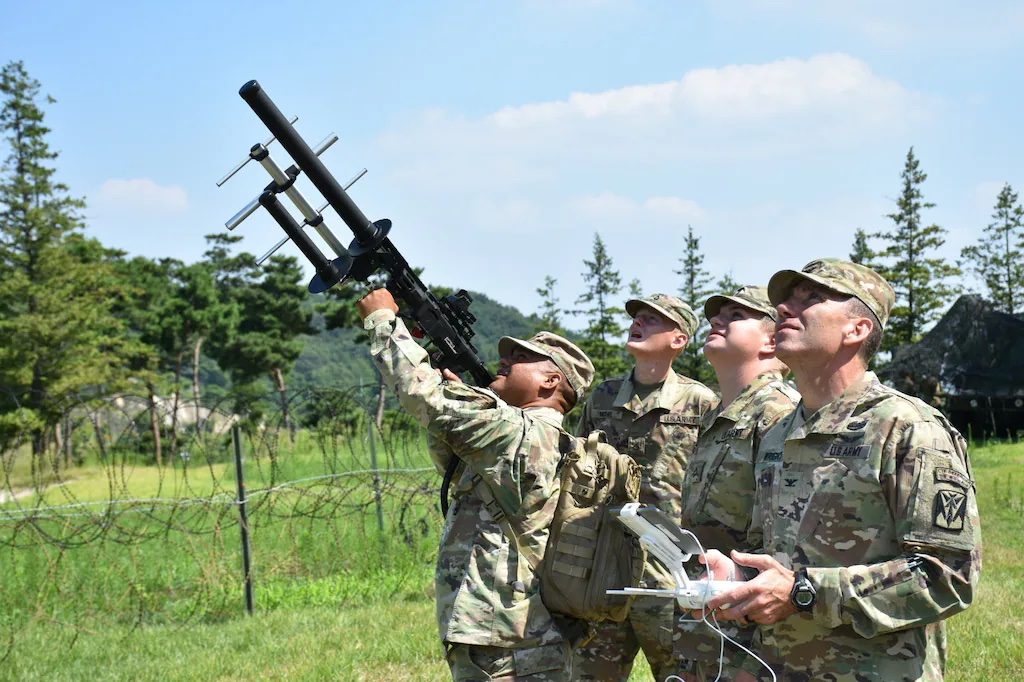
The newly announced procurement forecast addresses a vital, complementary need within this broader mission profile: providing the foundational research, educational curricula, cybersecurity expertise, and day-to-day operational support necessary to help agencies successfully anticipate and mitigate security threats before they materialize on the ground or in the sky.
Even with these specialized operational requirements highlighted in the forecast documents, DHS officials have not yet identified any specific new counter-UAS capabilities or large-scale technology deployments that will be immediately associated with the award of this particular contract. The initiative remains focused on professional services, strategic planning, and preparedness training rather than immediate hardware acquisition.
Procurement Timeline, Incumbent Details, and Next Steps
The planned procurement is structured as a follow-on contract, meaning it is designed to seamlessly continue an existing, ongoing security requirement currently managed by industry partners. According to DHS procurement documentation, CELEEN LLC is identified as the incumbent contractor currently executing the requirements of the program.
To foster small business participation and leverage existing federal acquisition frameworks, the contracting opportunity has been officially designated as a small-business set-aside under the federal OASIS+ multi-agency contract vehicle. This structure is intended to ensure that qualified small businesses have robust opportunities to compete for and manage complex federal security initiatives.
Looking ahead at the anticipated procurement schedule, DHS currently projects that the formal solicitation will be released to the vendor community on December 7, 2026. Following the evaluation period, the final contract award is formally expected to take place during the second quarter of fiscal year 2027.
Federal officials emphasize that these projected dates, alongside the estimated financial valuation of $20 million to $50 million, remain subject to change as budgetary and operational priorities evolve. The published forecast functions purely as a planning document and does not represent an official contract award, a binding procurement commitment, or an immediate allocation of new federal funding.
For the commercial drone industry and defense technology sector, the planned procurement serves as yet another clear indicator of how federal security programs are actively adapting. By embedding drone cybersecurity and counter-UAS expertise directly into broader risk management and preparedness frameworks, DHS continues to signal that uncrewed aerial systems must be thoroughly accounted for in modern security planning.