It is the morning after a major storm, and the head of Claims at a major insurance company faces a familiar operational bottleneck: which policyholders with open claims have yet to be contacted? Under traditional workflows, answering this straightforward question requires submitting an IT request, pulling a report from one database, performing a cross-reference lookup in another, and finally handing off the resulting list to a communications team to draft and dispatch notices. By the time the first email reaches a policyholder, half the business day has already evaporated.
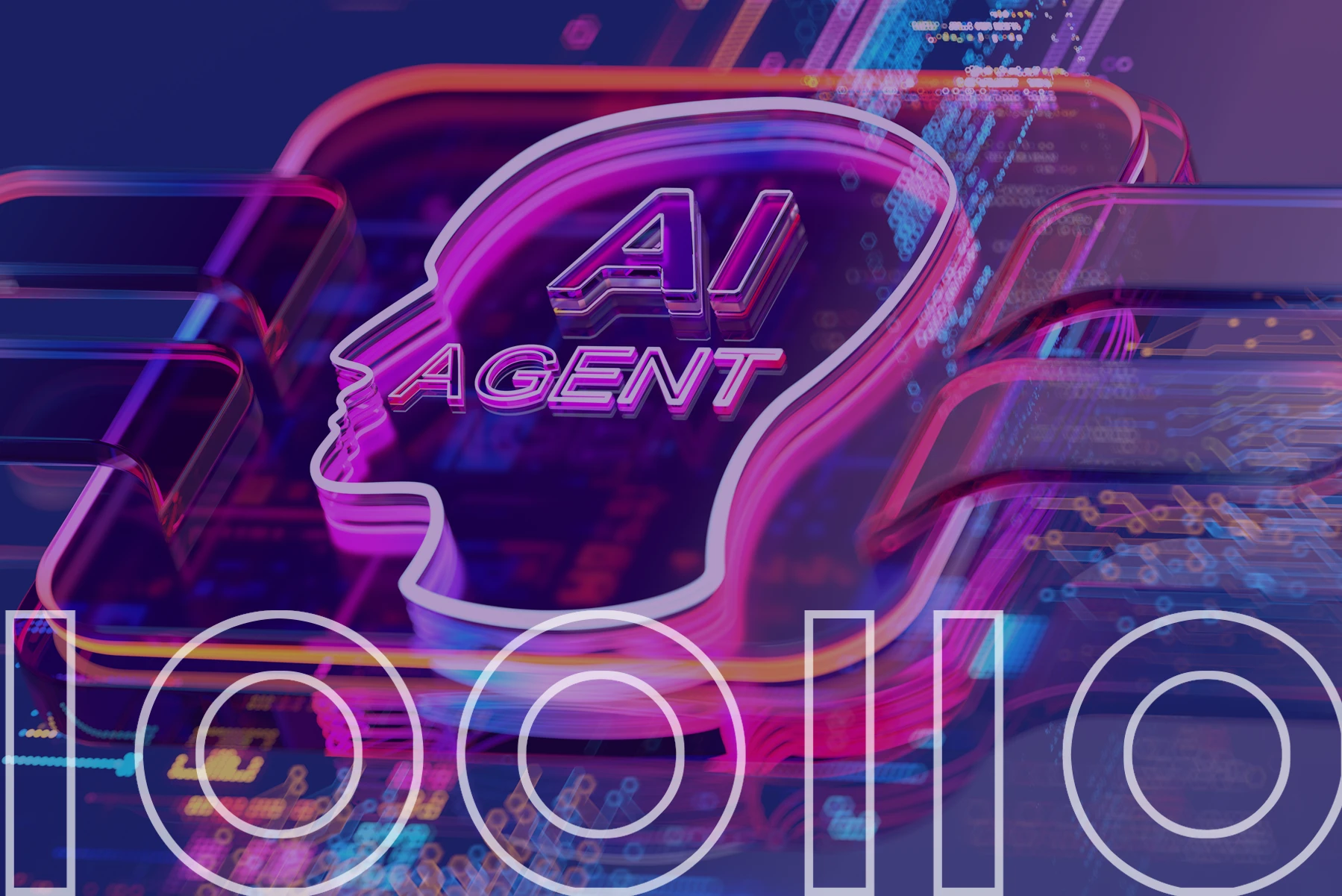
Emerging artificial intelligence agents promise to collapse that multi-step chain into a single, conversational interaction. However, realizing that operational efficiency requires a secure, standardized bridge to the systems that actually generate and track customer communications. Without a controlled interface, organizations are forced to choose between brittle, custom-built integrations and handing autonomous AI tools reckless, unmonitored access to sensitive enterprise messaging channels.
To solve this enterprise dilemma, Precisely has officially introduced the EngageOne RapidCX Model Context Protocol (MCP) server, offering a standardized and secure pathway to integrate AI agents with core customer communication workflows.
The Challenges of Connecting AI Agents to Customer Communications
Across the global enterprise landscape, organizations are aggressively racing to deploy AI agents to streamline daily operations, automate repetitive tasks, and accelerate customer service delivery. Yet, connecting these advanced AI tools to core enterprise systems has historically meant relying on custom integrations. In practice, custom integrations are notoriously fragile. Every new AI model or tool requires its own bespoke connection, meaning that any subsequent update to an underlying API or agent platform inevitably triggers a disruptive cycle of costly software rework.
For regulated industries, integrating customer communications significantly raises the stakes. When an AI agent is granted the capability to reach into enterprise communication systems, it requires tightly enforced scoping alongside an immutable record of every action taken and on whose behalf. For banks, insurance carriers, utilities, telecommunications providers, and healthcare organizations, maintaining this level of visibility is not merely a beneficial feature. It is a mandatory compliance requirement that must be demonstrated to internal auditors and external regulators whenever an operational error occurs.
Until now, incorporating Precisely EngageOne RapidCX into an external AI agent workflow meant building custom connections directly against its application programming interfaces, absorbing a heavy software development and control burden entirely in-house. Furthermore, that engineering effort had to be duplicated every single time the business chose to adopt a different AI assistant or automation platform.
What Does an MCP Server for Customer Communications Do?
The Model Context Protocol represents an open standard designed to allow AI assistants and autonomous agents to securely connect to enterprise systems and leverage them as functional tools. Conceptually, it serves as a universal connector. Instead of forcing IT departments to build a custom, point-to-point integration for every distinct AI tool that emerges on the market, an enterprise system exposes its capabilities once through a standardized protocol, allowing any compatible client to utilize them seamlessly.
The newly launched EngageOne RapidCX MCP server applies this foundational concept directly to enterprise customer communications. When an enterprise AI agent connects via the protocol, the server immediately authenticates the request, cross-checks it against the specific administrative scopes granted to that tool, and passes approved directives directly to RapidCX. Because the protocol is an open standard, compatible AI clients such as Anthropic’s Claude, OpenAI’s ChatGPT, and Microsoft Copilot can connect directly, bypassing the need for complex, custom engineering work.
This server forms part of a broader rollout of several Precisely MCP servers deployed across the company’s enterprise software portfolio, designed to help organizations modernize their technical architectures without sacrificing operational governance.
How Controls Stay in Place When an Agent Takes Action
For heavily regulated organizations, security and compliance are always the primary concerns when evaluating new technologies, and a policy of simply trusting an autonomous agent is never acceptable. Every single request routed through the EngageOne RapidCX MCP server operates strictly under the rigorous controls that RapidCX already enforces across enterprise environments.
These integrated safeguards ensure that all agent activity remains clearly visible and tightly bounded, transforming a promising technical pilot into a secure framework that corporate compliance teams can confidently authorize. These controls do not replace human judgment regarding what content requires review; instead, administrators retain full authority to define precisely which actions an AI agent is permitted to execute and which communications necessitate explicit human approval, particularly when handling sensitive, highly regulated customer content. The MCP server provides AI agents with controlled, limited access, while corporate governance policies dictate the absolute boundaries of that access.
Where Regulated Teams Should Start with AI Agents in Communications
Industry experts advise regulated enterprises to begin their AI integration journey by targeting operational tasks that deliver high business value while remaining easy to contain within strict procedural guardrails. The EngageOne RapidCX MCP server enables organizations to initiate these workflows smoothly, allowing teams to identify unreached policyholders, trigger automated notices, and verify delivery statuses directly through conversational interfaces.
Consider the storm scenario mentioned earlier: a head of Claims can ask an AI assistant to identify all policyholders with open storm claims who have not yet received communication, dispatch a First Notice of Loss email to each individual through RapidCX, and confirm successful delivery status—all within the span of a single conversational prompt. A subsequent review of the RapidCX Communication Tracker Dashboard confirms the exact emails sent and their corresponding delivery metrics.
This external integration capability operates distinctly from the native AI agents already built directly into RapidCX, such as the Communication Builder Agent and the Compliance Risk Scoring Agent, which assist internal human teams in drafting and verifying content from within the platform itself. The MCP server functions in the opposite direction, connecting external enterprise agents into the platform. Both systems are entirely complementary and operate under the centralized governance controls of RapidCX.
Putting AI Agents to Work on Communications with Confidence
Enterprise AI agents are poised to integrate into customer communication workflows regardless of whether an organization’s underlying IT architecture is fully prepared. The critical distinction lies in whether those agents arrive via unmonitored, ad-hoc integrations that evade auditing, or through an open, standardized protocol equipped with robust, built-in enterprise controls.
Achieving operational speed and maintaining strict accountability do not have to be mutually exclusive objectives. Deploying a dedicated MCP server for customer communications grants enterprise teams the velocity of modern artificial intelligence without forfeiting the authentication frameworks, administrative scoping, and comprehensive audit trails that compliance departments rely upon. Existing EngageOne RapidCX customers can consult directly with their dedicated Precisely account teams to explore implementation pathways tailored to their specific corporate environments.