The burgeoning air taxi industry is preparing for a monumental expansion across the United States. According to the U.S. Department of Transportation’s Advanced Air Mobility National Strategy, commercial air taxi services are projected to scale up significantly from six initial launch states this year to a widespread presence across multiple urban and rural areas by 2030. Looking even further ahead, federal transportation officials predict that by 2035, the skies will see advanced air operations featuring exciting and complex use cases, including fully autonomous flight.
For years, the primary narrative surrounding this technological leap has centered heavily on regulatory milestones, pilot training programs, and massive infrastructure investments. Cities and private developers have poured resources into planning and constructing vertiports, passenger terminals, and specialized high-power charging stations to accommodate electric vertical takeoff and landing aircraft, commonly known as eVTOLs. However, federal regulators and industry experts are increasingly emphasizing that physical infrastructure and pilots alone will not sustain the upcoming aerial revolution.
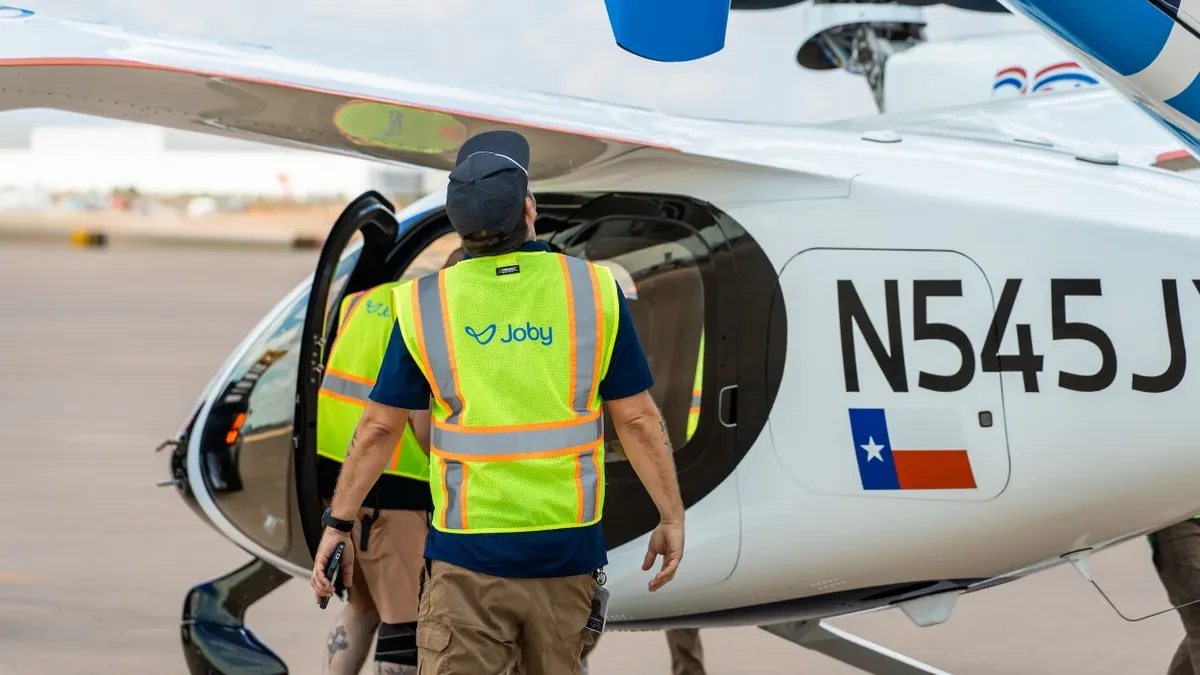
A critical missing link remains: the specialized ground workforce. As the industry scales, aviation maintenance personnel will need targeted, advanced training tailored to high-voltage electrical systems, complex aircraft software, and innovative composite materials. To meet this demand, the Department of Transportation strongly recommends ramping up workforce development and educational initiatives at both the K-12 and post-secondary levels.
This exact challenge is what regional leaders on California’s central coast are actively working to solve. The Monterey Bay Economic Partnership, a prominent regional nonprofit organization, has launched a comprehensive initiative focusing on four rural airports situated in Watsonville, Marina, Salinas, and Hollister. The overarching goal of the program is to build out both the physical infrastructure and the specialized human capital necessary to support the next generation of air mobility in the region.
"The critical step here is to make sure that the workforce will be prepared," said Tahra Goraya, President and CEO of the Monterey Bay Economic Partnership, in an interview with Smart Cities Dive.
The region is uniquely positioned to spearhead this movement. Two of the most prominent pioneers in the electric air taxi sector maintain deep ties to the central California area. Joby Aviation, a leading eVTOL developer that has made major strides in flight testing and Federal Aviation Administration certification, is headquartered in Santa Cruz. Meanwhile, competitor Archer Aviation originally got its start a short distance away in Palo Alto. Because of these geographic and industrial roots, Goraya notes that the central coast has organically transformed into a national hub for advanced aviation activities and research.
Despite the intense enthusiasm surrounding the sector, quantifying the exact economic impact and job creation remains a moving target for local planners and educators.

"Certainly, there’s a lot of buzz around jobs and the job potential, but we don’t quite know what those numbers will quite look like yet," Goraya acknowledged. Nevertheless, local educational institutions are not waiting for final job tallies to begin taking action. "Some of our community colleges are already training for these skills," she added.
To build a resilient talent pipeline, the Monterey Bay Economic Partnership has actively engaged a broad coalition of stakeholders across the educational spectrum. These efforts include ongoing collaborations with the California State University system, the University of California, and local county offices of education, which oversee pre-kindergarten through 12th-grade instruction. By reaching students early and diversifying training pathways, regional leaders hope to demystify high-tech careers in aviation maintenance and aerospace engineering.
Importantly, industry advocates stress that the workforce of the future will not exclusively consist of individuals with advanced academic degrees.
"There’s a lot of skills and a lot of training that doesn’t necessarily require a two-year degree or a four-year degree," Goraya pointed out, highlighting the potential for certificate programs, vocational training, and specialized technical workshops to fill critical labor shortages in aircraft upkeep and station operations.

As advanced air mobility projects rapidly transition from conceptual designs to active flight tests, regional airports must also adapt their operational strategies well in advance of widespread commercial service. According to strategic documents published by the Monterey Bay Economic Partnership, waiting for aircraft to achieve full certification before upgrading local facilities is a recipe for delay.
If regions wait until aircraft are certified to begin building the systems around them, they will be laying the groundwork at the exact point when they should be ready to move directly into implementation. Experts warn that adopting a reactive posture leaves little time to properly align local infrastructure, educational institutions, community expectations, and private investments around emerging operational demands.
For many smaller facilities, embracing advanced air mobility represents a unique historical turning point. General aviation airports have traditionally served private pilots, flight schools, and small charter operations without hosting high-frequency commercial passenger transit. Preparing these facilities for electric air taxis could completely transform their economic viability and community utility.
"Most general aviation airports don’t have this kind of activity, and I think this could certainly be a strong opportunity for airports to generate economic opportunity," Goraya concluded.