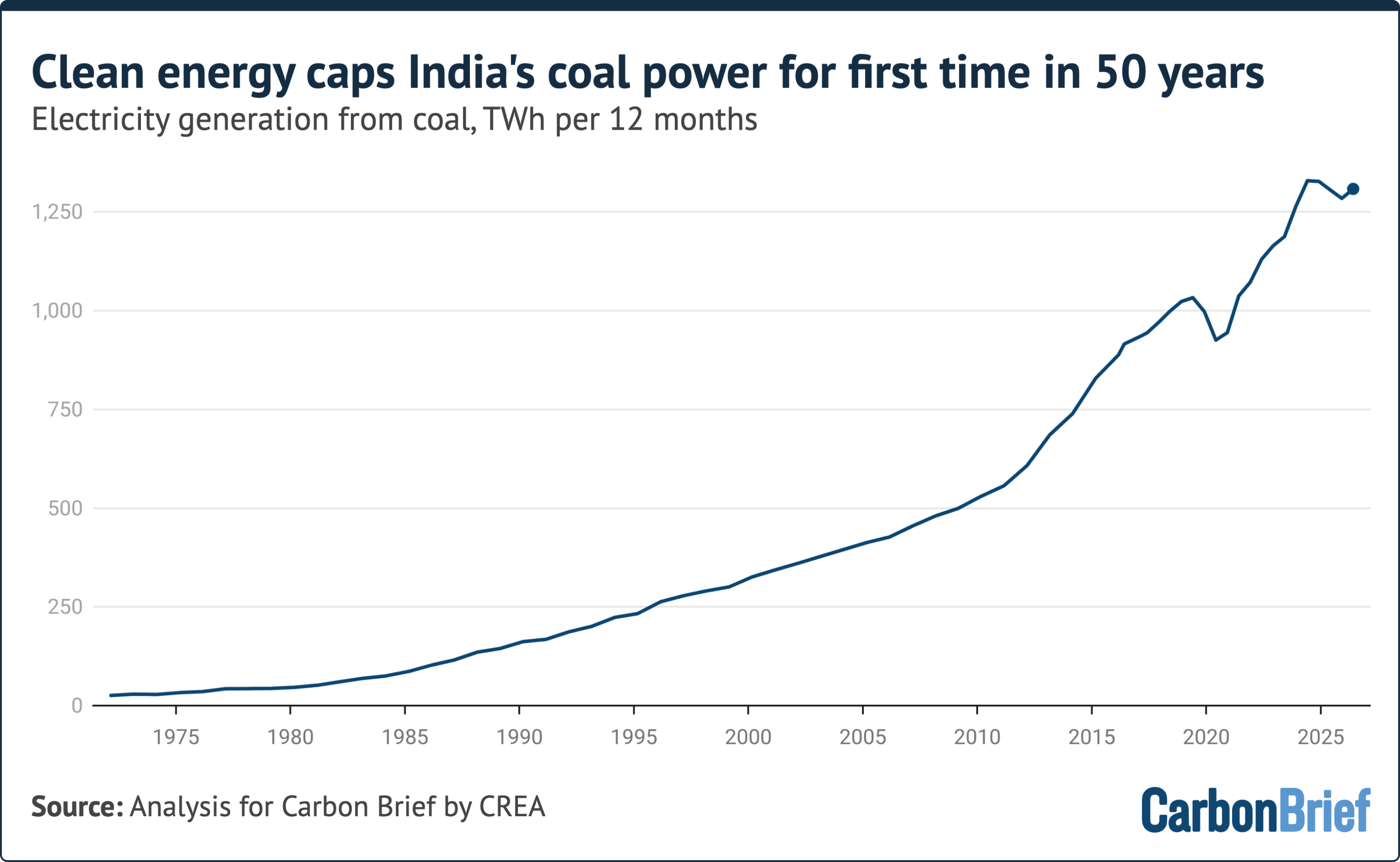
A massive surge in clean energy generation has successfully kept carbon dioxide (CO2) emissions in check across India’s power sector, resulting in zero emissions growth from the first half of 2024 to the same period in 2026. This milestone marks the first time in more than 50 years that India has experienced no growth in coal-fired power over a two-year period, even as overall electricity demand continued to expand to meet the needs of a rapidly developing economy.
At the same time, national consumption figures for both oil and gas have declined for two consecutive years. This unexpected fossil-fuel pullback has helped buffer the country against major international energy market shocks, successfully alleviating the severe economic and supply pressures brought on by the Hormuz crisis.
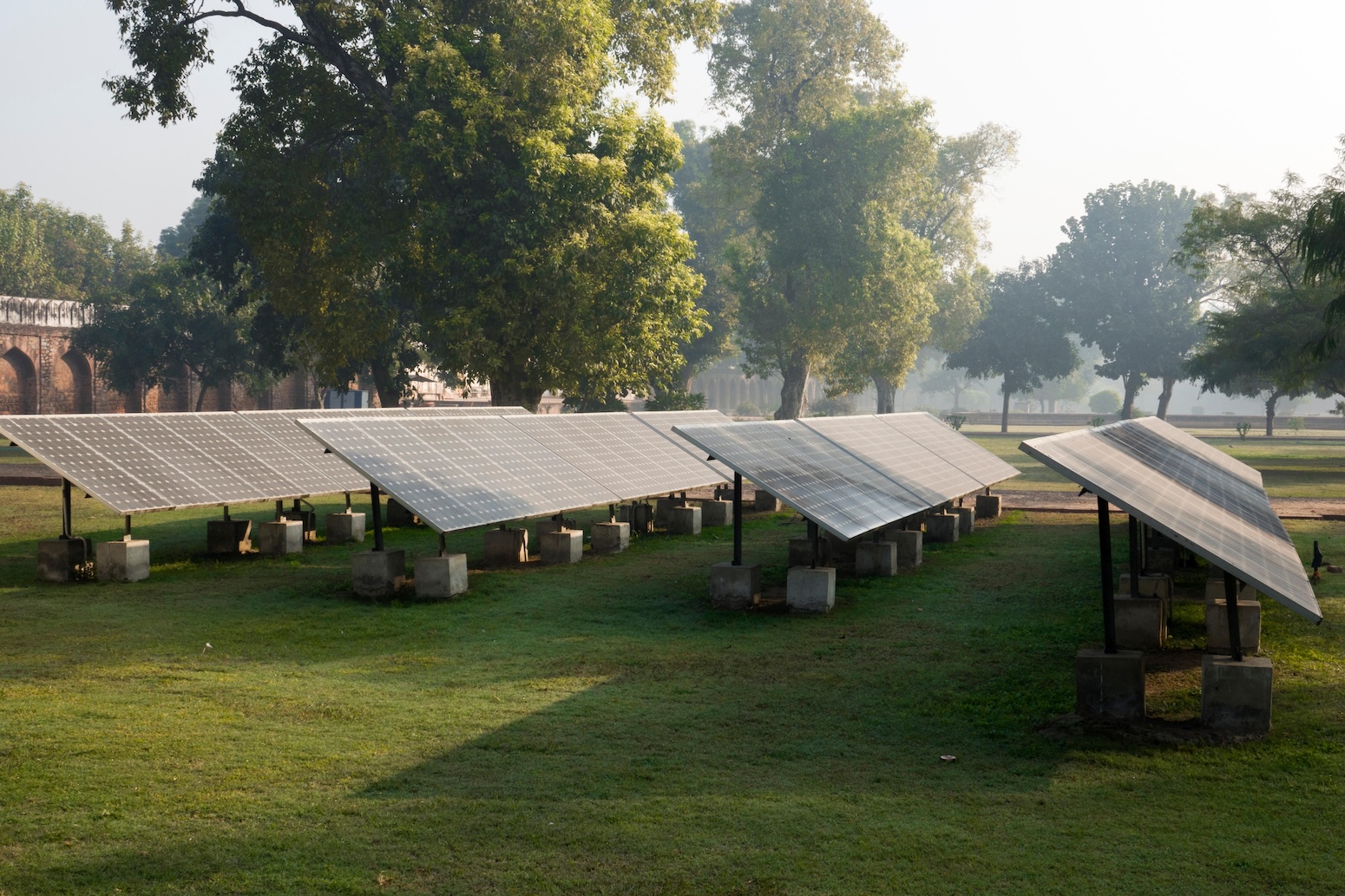
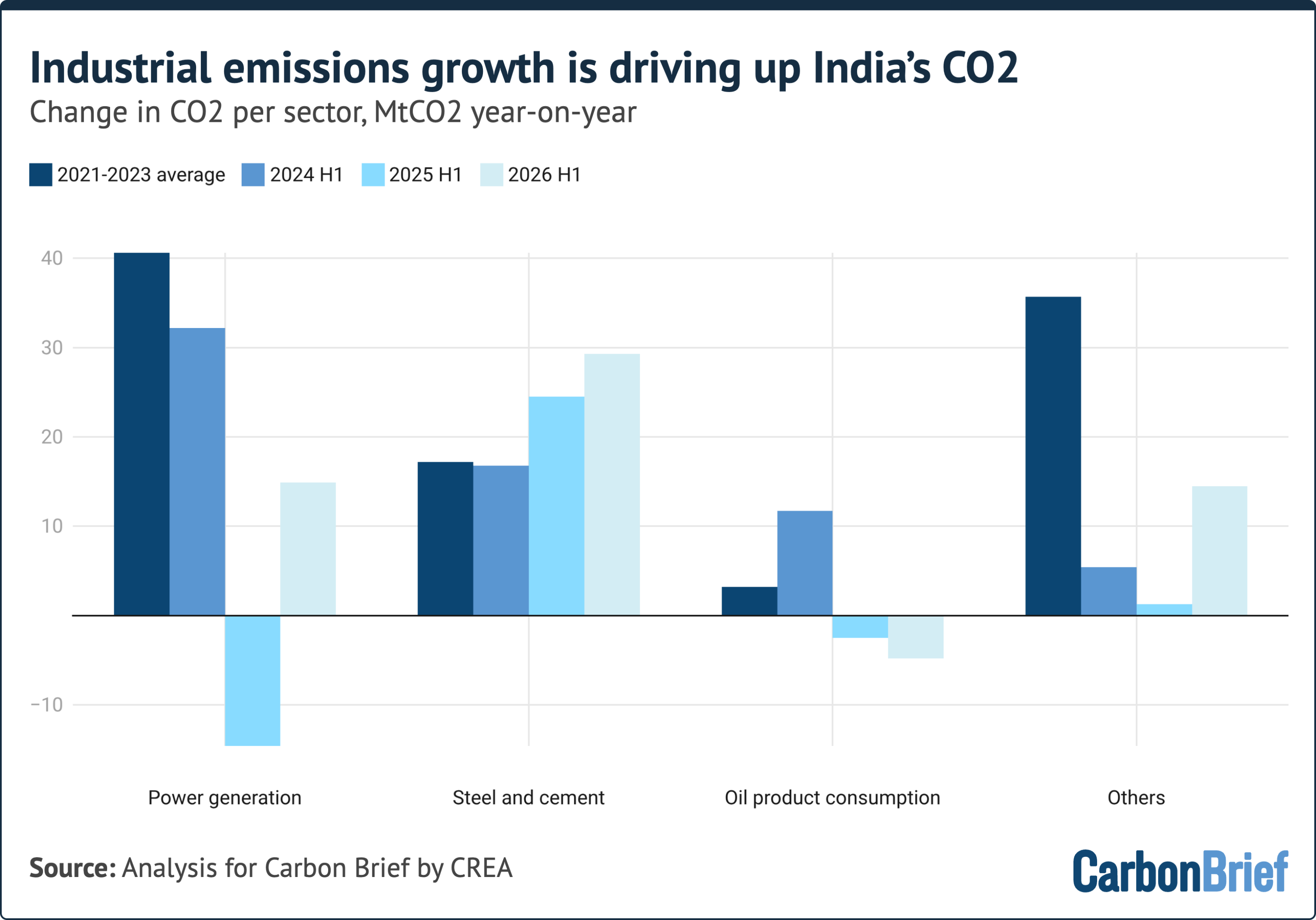
Nevertheless, a new six-monthly analysis highlights that India’s overall greenhouse gas emissions still grew by 3.7% year-on-year in the first half of 2026. This broader rise was driven primarily by accelerated emissions growth in heavy industries, particularly steel and cement manufacturing. While the electricity grid is cleaning up its act, the industrial sector’s heavy reliance on traditional fossil fuels continues to push national totals upward.
If India is to maintain the remarkable pace of its clean-energy expansion, energy experts note that the country will need to systematically upgrade its electrical transmission infrastructure, rapidly build out utility-scale energy storage, and boost the operating flexibility of its existing coal-fired power plants. Meanwhile, even as renewable power covers the vast majority of electricity demand growth, traditional fossil-fuel industries continue to pursue massive capital investments, including new coal plants, domestic coking coal production for steelmaking, and ambitious coal-to-chemicals conversion projects.
Flatlining Fossils in the Power Sector
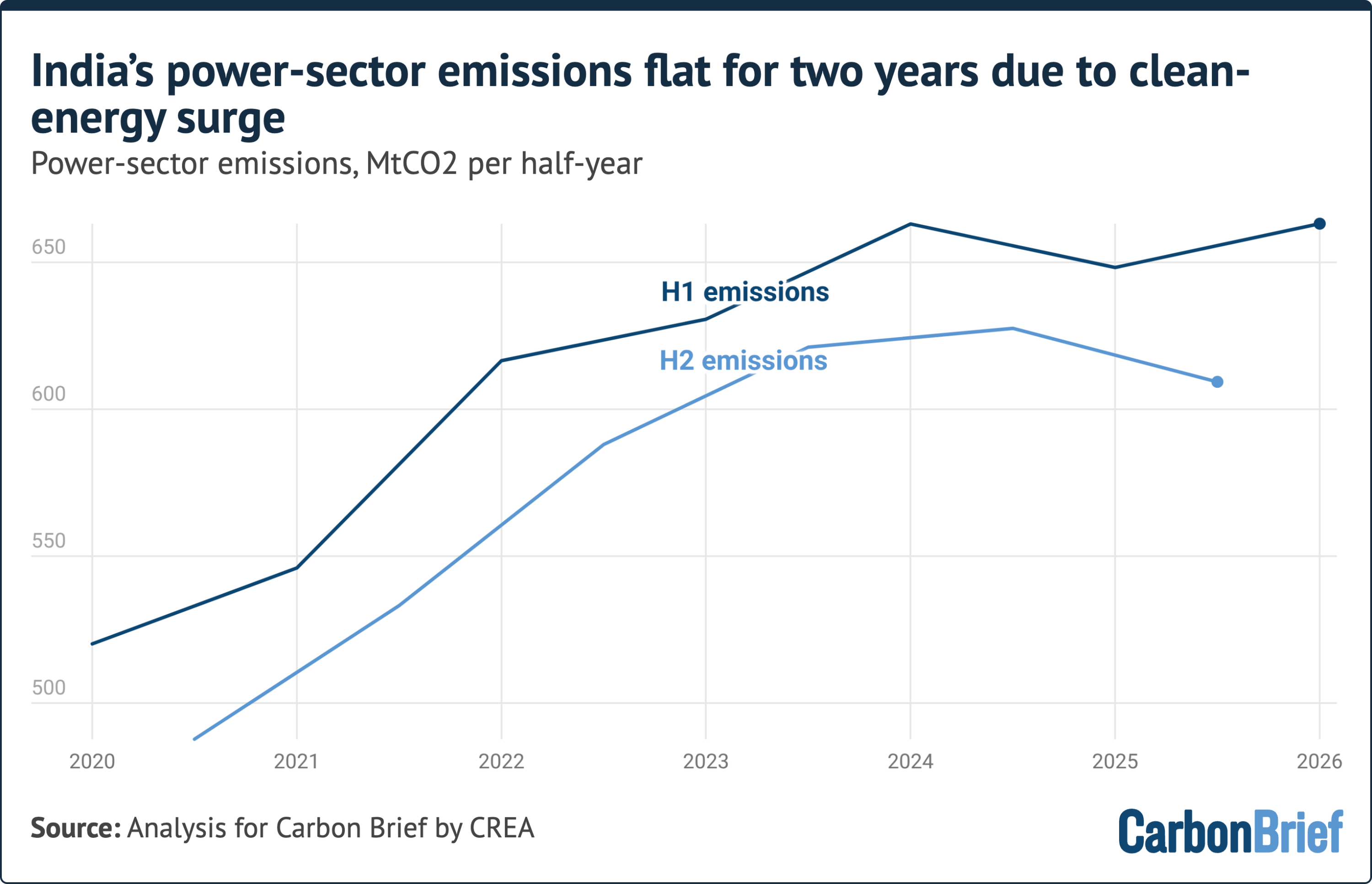
Last year, India’s total CO2 emissions from fossil fuels and cement grew at their slowest pace in two decades. That sharp slowdown was the direct result of rapid clean-energy deployment and flat oil demand, offset only partially by rising industrial output. The first half of 2026 marks a clear continuation of these underlying trends, most notably through the prolonged flatlining of power-sector emissions.
Power-sector carbon dioxide output in the first half of 2026 sat at virtually the exact same level as it did two years prior, effectively wiping out a minor dip recorded in 2025. Beyond electricity generation, however, India’s key emitting sectors displayed deeply divergent trajectories. While power sector emissions ticked up by 2.3% to reverse the previous year’s minor decline, demand for petroleum products and natural gas continued its downward slide. Conversely, the steel and cement sectors saw emissions growth accelerate to 8% year-on-year, significantly outstripping recent historical trends.
Clean-Energy Growth Matches Power Demand
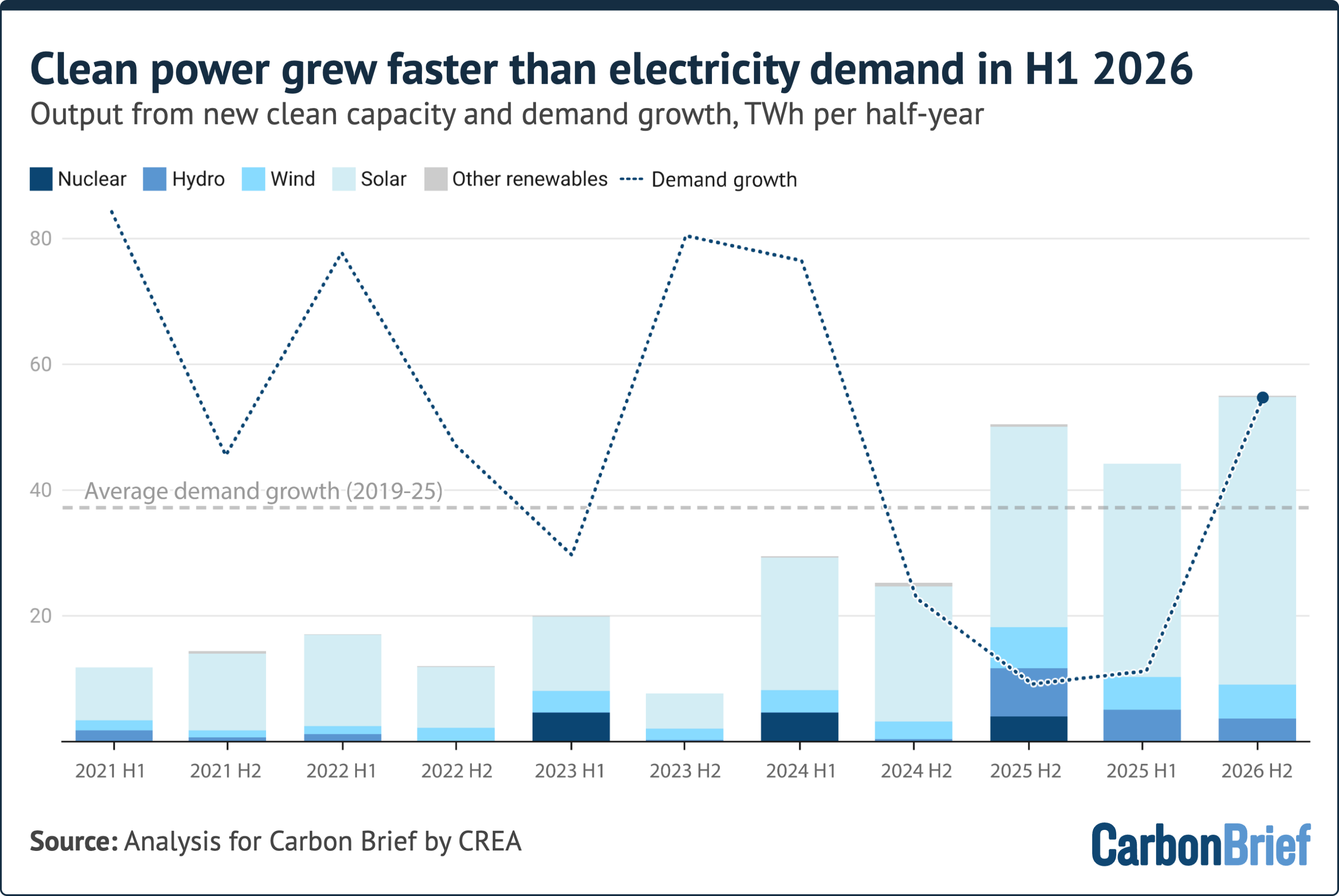
The period stretching from the first half of 2024 through the first half of 2026 witnessed the largest increase in non-fossil power generation on record in India. This unprecedented expansion enabled fossil-fuel consumption and sector-wide emissions to remain completely flat, despite rising overall electricity consumption.
Over this two-year window, India’s total power generation climbed by 7%, adding roughly 63 terawatt-hours (TWh)—an amount roughly equivalent to the total annual electricity consumption of nations like Singapore or Switzerland. Crucially, this additional power requirement was met entirely by clean energy sources. Solar power led the charge with a 44TWh increase, supported by notable gains from wind, nuclear, and hydroelectric generation. Together, non-fossil sources added 70TWh over the two-year period, comfortably surpassing the net increase in national demand.
New clean energy capacity additions have consistently outpaced average demand growth over the past 18 months, driven by the installation of 77 gigawatts (GW) of new solar power, 11GW of wind, 5GW of hydro, and 0.6GW of nuclear capacity. While solar remains the dominant driver, alternative non-fossil sources still accounted for 40% of the overall generation increase.
Electricity demand in 2026 was further compounded by extreme weather events, including a delayed monsoon season and intense heatwaves driven by El Niño conditions, which drove up residential and commercial cooling demand. To manage this variable power generation and support continued renewable growth, India is rapidly accelerating investments in energy storage. The government’s National Electricity Plan has outlined massive storage requirements, leading authorities to issue tenders for roughly 272GWh of storage capacity by mid-2026, encompassing both pumped hydro and advanced battery systems.
Regional Leaders in the Clean-Power Shift
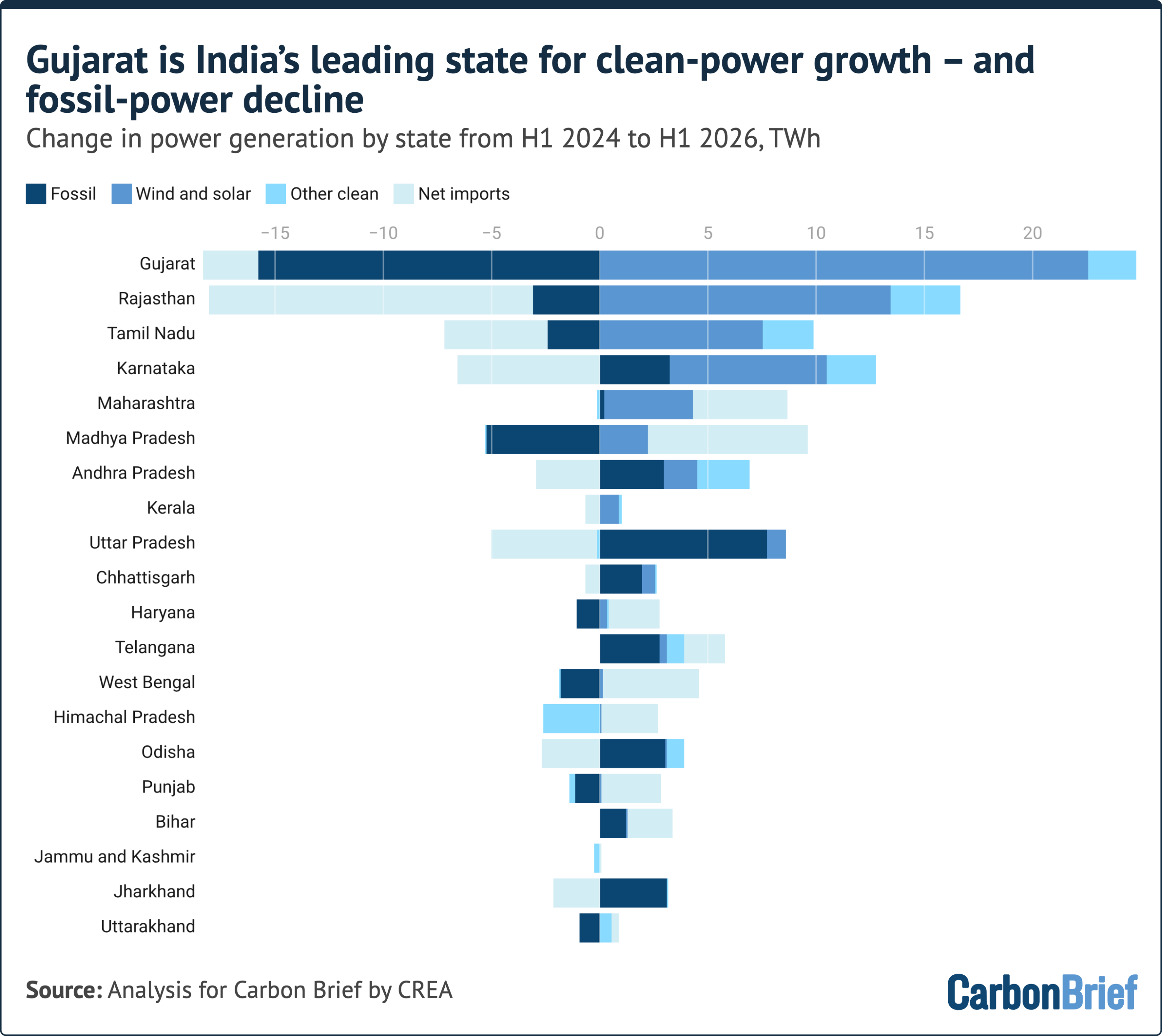
The reduction in fossil-fuel power generation between 2024 and 2026 was largely concentrated in a handful of proactive states. Gujarat emerged as the national leader, recording both the largest reduction in fossil-fuel generation and the most aggressive expansion of clean power. Following closely behind, Rajasthan and Tamil Nadu also posted significant clean-energy gains alongside reduced fossil generation.
Other states, such as Madhya Pradesh, West Bengal, and Punjab, saw drops in fossil-fuel generation driven primarily by higher net electricity imports rather than local renewable installations. Meanwhile, states like Karnataka and Andhra Pradesh successfully generated clean power well above their internal demand growth, exporting their surplus to help stabilize the national grid, even as their local fossil-fuel generation saw minor fluctuations. On the demand side, Maharashtra and Telangana experienced the largest absolute increases in power consumption, but successfully managed to match nearly all of that rising demand with new clean energy generation.
Oil and Gas Consumption Continues to Fall
India’s national oil consumption maintained its downward trajectory into the first half of 2026, dropping 1.3% year-on-year and accelerating slightly from the 0.7% reduction recorded during the same period in 2025. Although everyday consumer staples like diesel and petrol continued to see growth, overall oil demand was dragged down by sharp contractions in liquefied petroleum gas (LPG), petcoke, and industrial feedstocks, alongside a slowing growth rate for aviation fuel.
Diesel consumption growth accelerated to 4.1%, supported by heightened freight transport and increased agricultural demand as the delayed monsoon forced farmers to rely more heavily on diesel-powered irrigation pumps. Petrol consumption rebounded with a 6.9% year-on-year increase, reflecting steady growth in passenger vehicle and two-wheeler mobility. However, this growth was visibly tempered by India’s aggressive ethanol-blending program, which successfully achieved its target of 20% blending years ahead of schedule.
Electric vehicle adoption has also begun to make a tangible dent in fuel consumption projections, particularly in urban centers like Delhi where targeted EV policies are accelerating the electrification of commercial fleets, auto-rickshaws, and two-wheelers.
In contrast, aviation fuel demand growth slowed to just 2% amid international airspace disruptions and surging fuel prices resulting from the Middle East crisis. LPG consumption contracted by 7% due to international supply chain disruptions, while petcoke consumption dropped by nearly 10% as high market prices prompted cement manufacturers to pivot back toward traditional coal. Industrial feedstocks like naphtha also experienced steep contractions as import prices surged, forcing domestic petrochemical producers to curtail operating rates.
Rapid Emission Growth from Heavy Industry Continues
Heavy industry remains the primary engine driving India’s continued emissions growth. Steel and cement output surged by 8% and 9% respectively in the first half of 2026, supported by robust institutional investments in the real estate sector. However, this production growth put considerable pressure on manufacturing profit margins due to high global prices for imported coking coal and freight disruptions tied to geopolitical tensions in the Middle East.
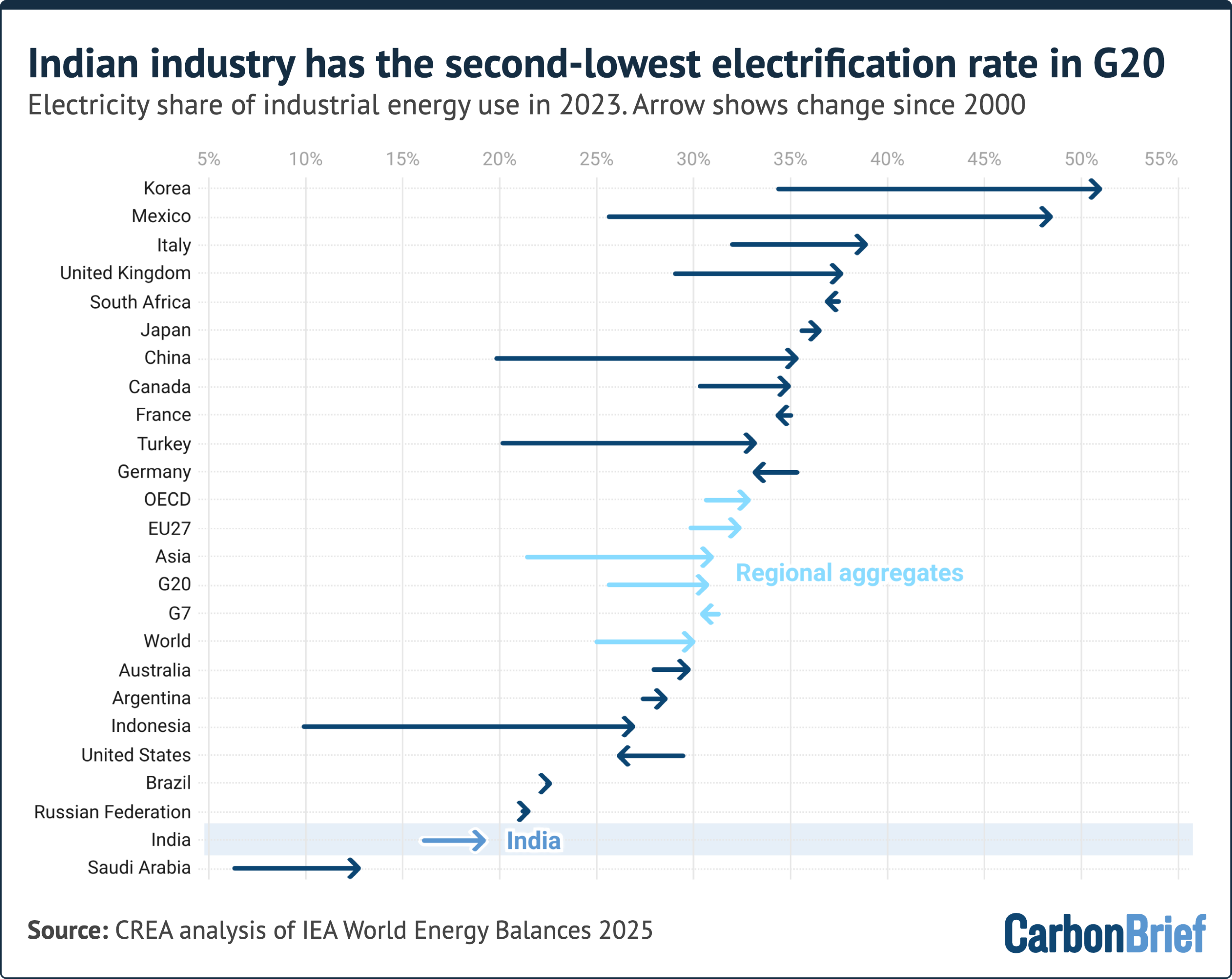
Outside of the primary heavy industries, coal consumption in secondary sectors accelerated sharply to 14% as widespread LPG shortages forced industrial and commercial users to seek alternative fuels. Industrial energy use across India remains heavily dominated by direct fossil-fuel combustion. According to international comparative data, Indian industry maintains one of the lowest industrial electrification rates among G20 economies, lagging significantly behind global averages in both current electrification levels and the pace of transition. This persistent reliance on direct fossil heating means that any expansion in heavy industrial output translates directly into higher carbon emissions, underscoring the urgent need to accelerate industrial electrification technologies to achieve broader climate goals.