The UK government has significantly scaled back its projections for electric planes and sustainable aviation fuels, according to quietly released official forecasts that threaten to complicate upcoming decisions regarding airport expansion.
The documents, published ahead of an expected green light for a contentious third runway at Heathrow Airport, reveal that an ambitious rollout of emerging technologies and efficiency upgrades will achieve only a fraction of the emissions reductions previously anticipated over the next two decades.
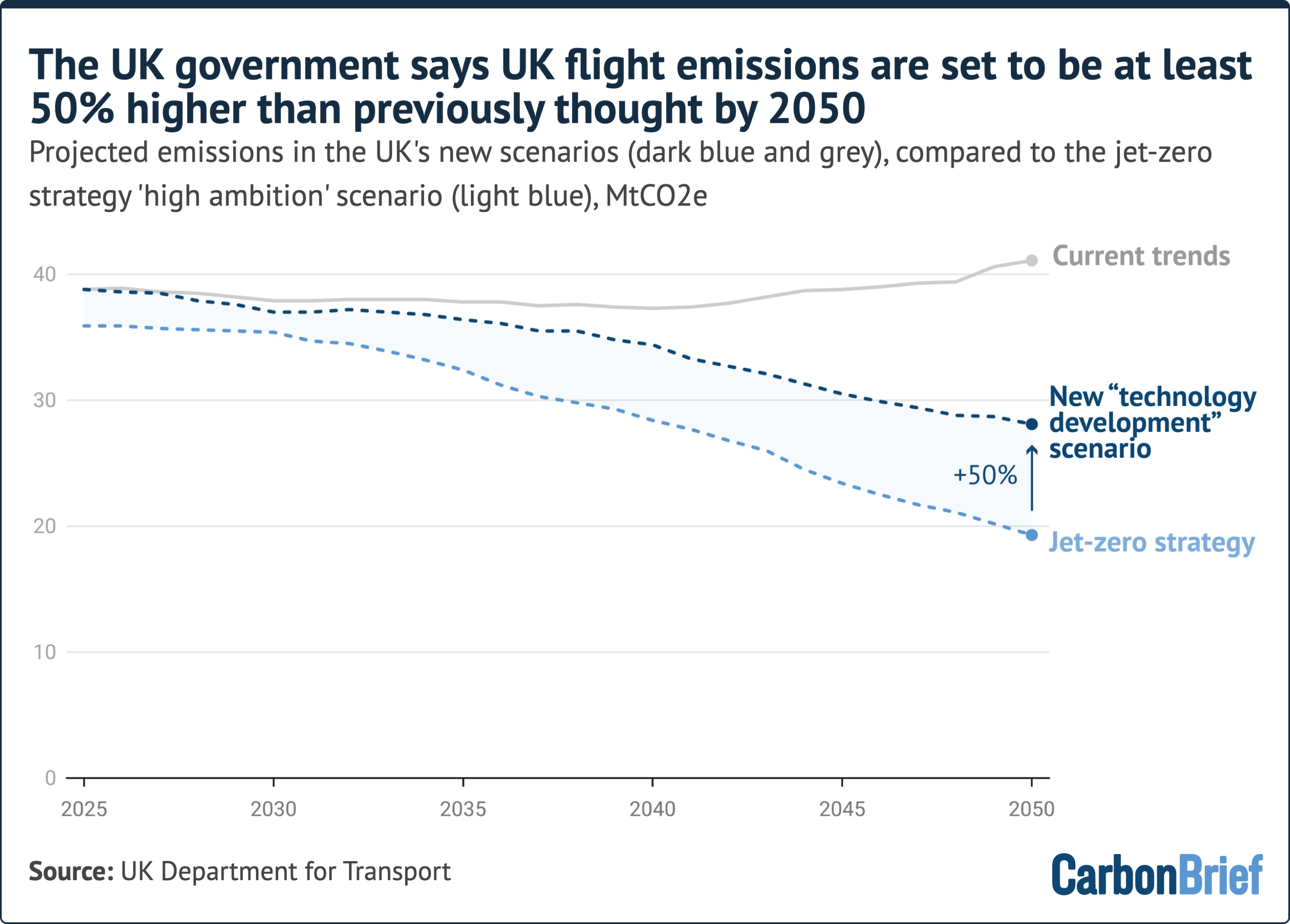
According to the Department for Transport forecasts released in June, technological advancements and efficiency measures will reduce flight emissions by just a quarter over the next twenty years. This shortfall leaves projected aviation emissions in 2050 nearly 50 percent higher than the targets established under the "jet-zero" strategy, which was originally launched by the Conservative government in 2022.
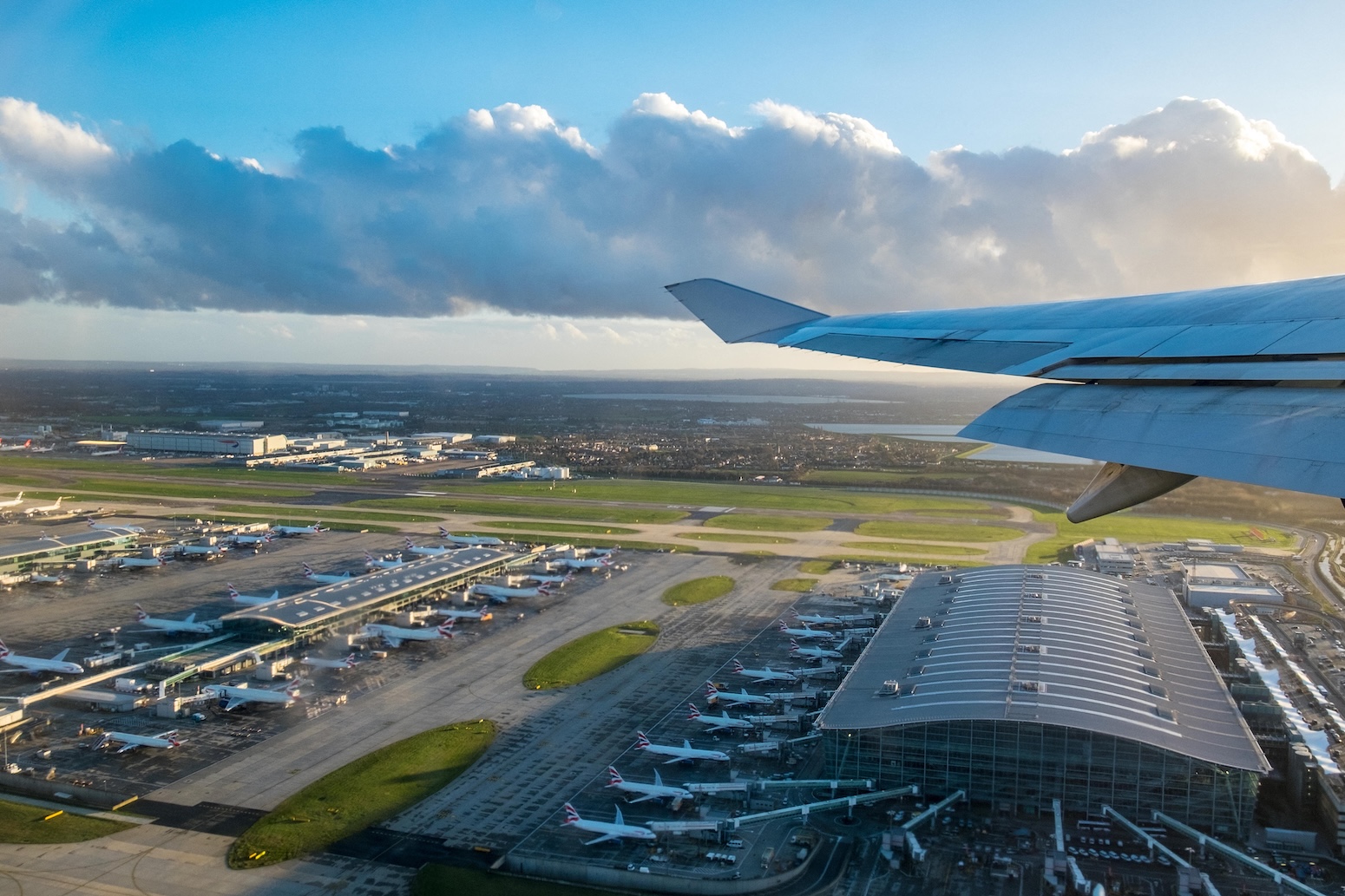
The findings arrive as the Labour government signals its support for expanding Heathrow, with a final planning decision anticipated by 2029. Ministers have repeatedly defended airport expansion by pointing to the impending commercial rollout of clean-aviation technologies. However, the updated modelling indicates that soaring passenger numbers combined with a more conservative trajectory for green "techno-fixes" will leave aviation emissions stubbornly high by the middle of the century—the exact year the UK is legally bound to achieve net-zero carbon emissions.
If these higher-than-expected emissions remain compatible with national climate targets, the government will have to rely on costly, largely unproven carbon dioxide removal technologies or commit vast tracts of land to forestation projects to capture the excess carbon from the atmosphere.
The previous administration’s jet-zero strategy committed the UK to a high-ambition pathway designed to see aviation emissions peak at 38.2 million tonnes of carbon dioxide equivalent in 2019 before dropping to 19.3 million tonnes by 2050. At the time, officials insisted this goal was achievable alongside substantial airport growth, relying heavily on early-stage innovations such as sustainable aviation fuels, battery-powered aircraft, and broad operational efficiencies.
While the Labour government has maintained this general philosophy—publicly endorsing new runways while backing sustainable fuels as a primary mechanism to curb carbon output—its own updated figures tell a different story. The newly published technology development pathway projects that emissions will only drop to 28.1 million tonnes of carbon dioxide equivalent by 2050 under ambitious abatement measures. This figure sits roughly 9 million tonnes higher than the original jet-zero goal, representing an increase of about 50 percent.
This upward revision stems from a reassessment of several key variables. Expectations for sustainable aviation fuel uptake, fuel-efficiency improvements, and the commercial viability of battery-powered planes have all been dialed back, alongside lower international carbon pricing projections.
Under the revised outlook, the government now expects sustainable aviation fuels to account for 30 percent of total aviation fuel consumption by 2050, down from an earlier projection of 50 percent. Furthermore, ministers concede that these fuels will deliver lower carbon savings over their entire lifecycle than previously estimated.
Sustainable aviation fuels have faced widespread scrutiny from environmental groups and scientific bodies due to severe supply constraints and lingering uncertainties over their true climate benefits. Meeting even a more modest goal of 22 percent uptake by 2040 would demand enormous and potentially unattainable volumes of waste products, which currently serve as the primary feedstock for the fuel.
To compile the updated forecasts, the government commissioned independent research from the Aviation Impact Accelerator to evaluate realistic aircraft fuel-efficiency improvements over the coming decades. That analysis yielded less optimistic projections than previous government work, prompting officials to revise annual efficiency gains downward from 2 percent in the original jet-zero strategy to 1.3 percent in the new technology scenario.

The role of electric aviation has also been scaled back significantly. Current projections now suggest that battery-powered flight will be restricted to only the smallest zero-emissions aircraft by 2035, offering negligible relief for long-haul commercial routes.
Crucially, achieving even the more modest emissions reductions outlined in the new technology pathway requires aggressive efforts to decarbonise the sector. If the UK fails to implement additional policies or innovations while flight demand continues to climb, aviation emissions could actually surpass current levels by 2050. The government’s current-trends scenario illustrates this risk, projecting that unabated emissions could surge to 41.1 million tonnes of carbon dioxide equivalent by mid-century—roughly double the level recommended by the Climate Change Committee, the government’s official independent advisory body.
Budget-Busting Projections
All of the newly released forecasts account for substantial capacity growth across multiple UK airports, most notably the planned expansion of Heathrow. Overall, passenger numbers are expected to surge by at least 50 percent by 2050. In contrast, climate experts and the Climate Change Committee have repeatedly warned that suppressing the relentless growth in air travel demand may be necessary to keep emissions within safe legal boundaries.
Because residual aviation emissions in 2050 will exceed earlier estimates, meeting the UK’s net-zero commitment will require massive environmental offsets, such as planting thousands of hectares of new forests or deploying engineered carbon removal systems on an unprecedented scale.
Tim Johnson, director at the Aviation Environment Federation, described the new forecasts as a more honest and realistic appraisal of what the aviation sector can achieve over the next 24 years. However, he warned that diminished faith in clean technology revives difficult questions regarding the governance of travel demand.
"Less reliance on cleaner technology and fuels reopens the debate about the role and scale of greenhouse gas removals and ways to tackle the projected 50 percent growth in demand for air travel," Johnson said.
Calculations from the Aviation Environment Federation, based on government data, indicate that initial emissions from a third runway at Heathrow would start at a relatively modest 3.5 million tonnes of carbon dioxide equivalent per year in 2050, before climbing significantly beyond the legally binding net-zero deadline.

Dr Lois Pennington, a research associate at the University of Manchester who has studied the climate impacts of Heathrow’s expansion, noted that the updated government figures demonstrate that the aviation sector is already exceeding its fair share of the national carbon budget.
"For Heathrow, it means expansion can no longer be waved through on the promise of technology, and any approvals will be in the full knowledge that it will bust our legally binding carbon budgets," Pennington said.