The water crisis along the vital Colorado River basin has reached a severe new milestone, as the second-largest reservoir in the United States plummeted to a record-low water height. This latest drop comes just days after the nation’s largest reservoir similarly shattered its own historical low, underscoring a relentless, multi-decadal decline that threatens water and food security across the American Southwest.
Both Lake Mead and Lake Powell, engineered giants situated along the course of the Colorado River, serve as the lifeblood for millions of residents and vast tracts of agricultural land. Together, these two monumental reservoirs provide municipal water supplies to approximately 40 million people spread across seven southwestern states. Beyond urban centers, the river system sustains roughly 5.5 million acres of farmland—equivalent to more than 22,000 square kilometres—cultivating crops in states including Colorado, Arizona, California, and others within the expansive river basin.
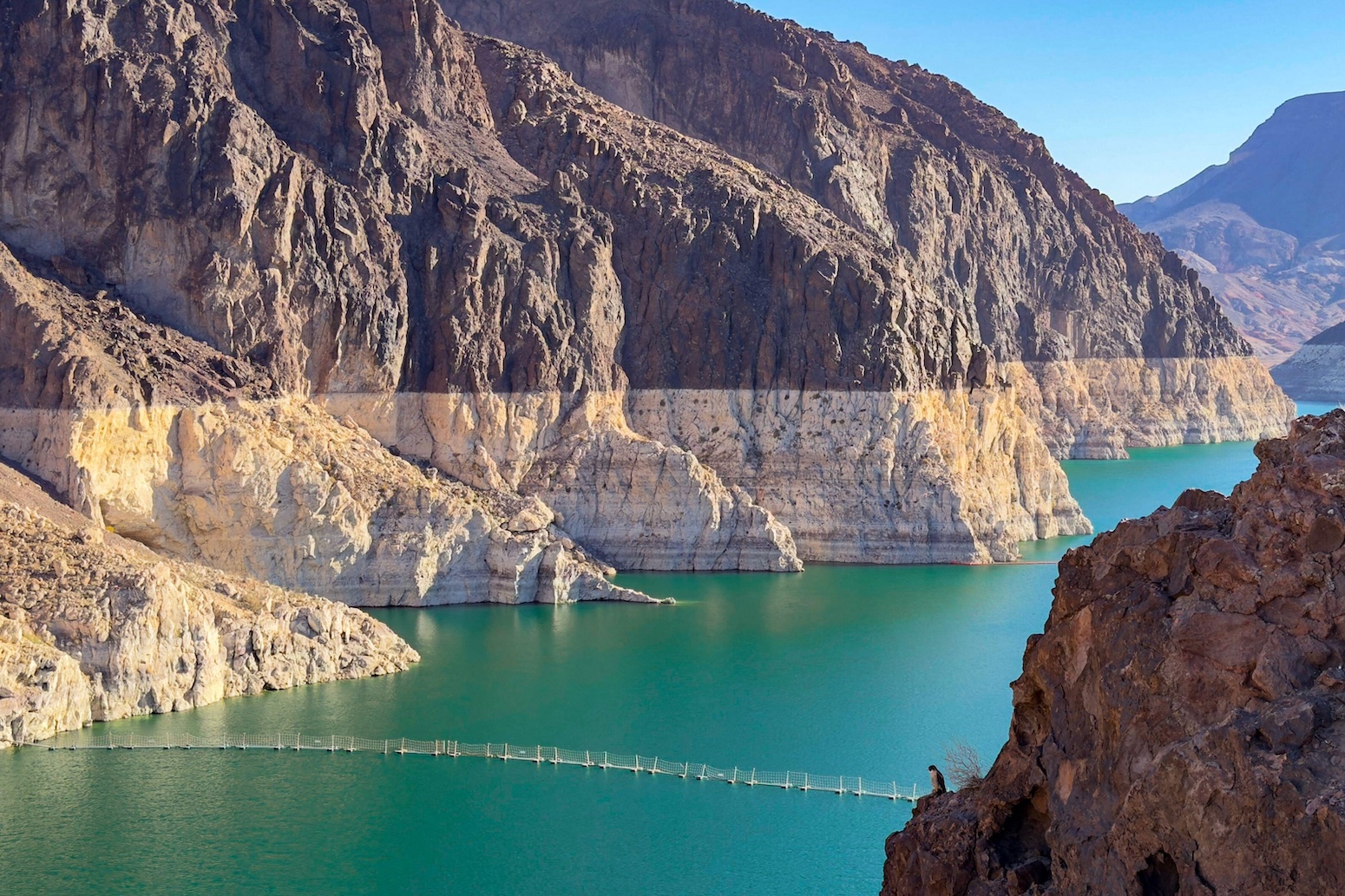
However, scientific experts tracking the region point to a devastating combination of human-induced climate change, surging regional population growth, and systemic over-consumption as the primary drivers behind the continuous drop in water levels.
At their maximum theoretical capacity, Lakes Mead and Powell are engineered to hold a combined total of 68 cubic kilometres of water. To put that staggering volume into perspective, it represents enough water to supply the entire household consumption needs of the contiguous United States for nearly a year and a half. Yet, rather than holding steady, the water levels within both reservoirs have been in a persistent, decades-long retreat.
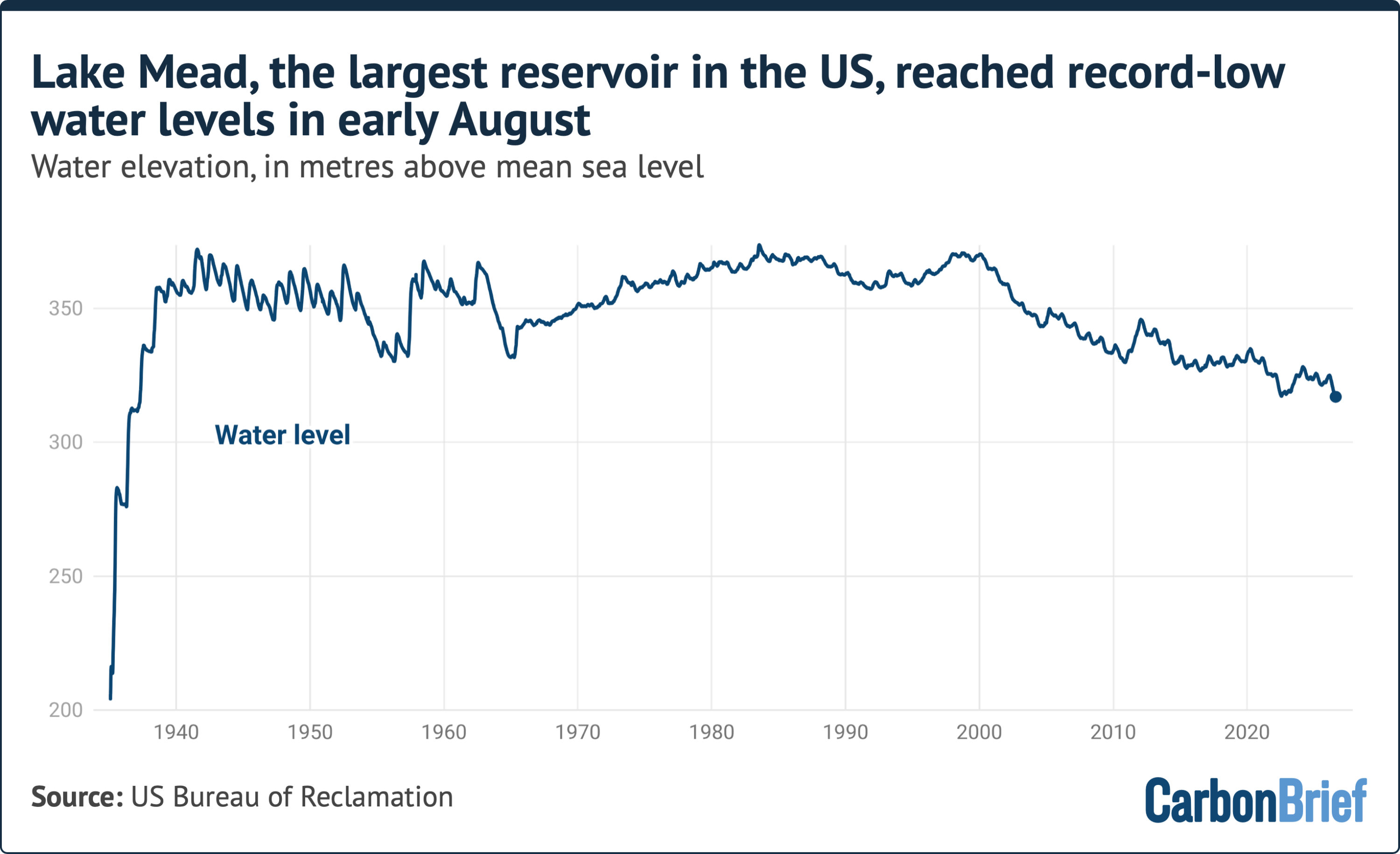
The historical trajectory of Lake Mead illustrates the severity of the decline. The reservoir began filling in 1935 following the monumental construction of the Hoover Dam, designed with a "full pool" maximum capacity reaching 347.60 metres above mean sea level. That historical benchmark was decisively broken when Lake Mead’s water level dropped to a new record low of 317.11 metres.
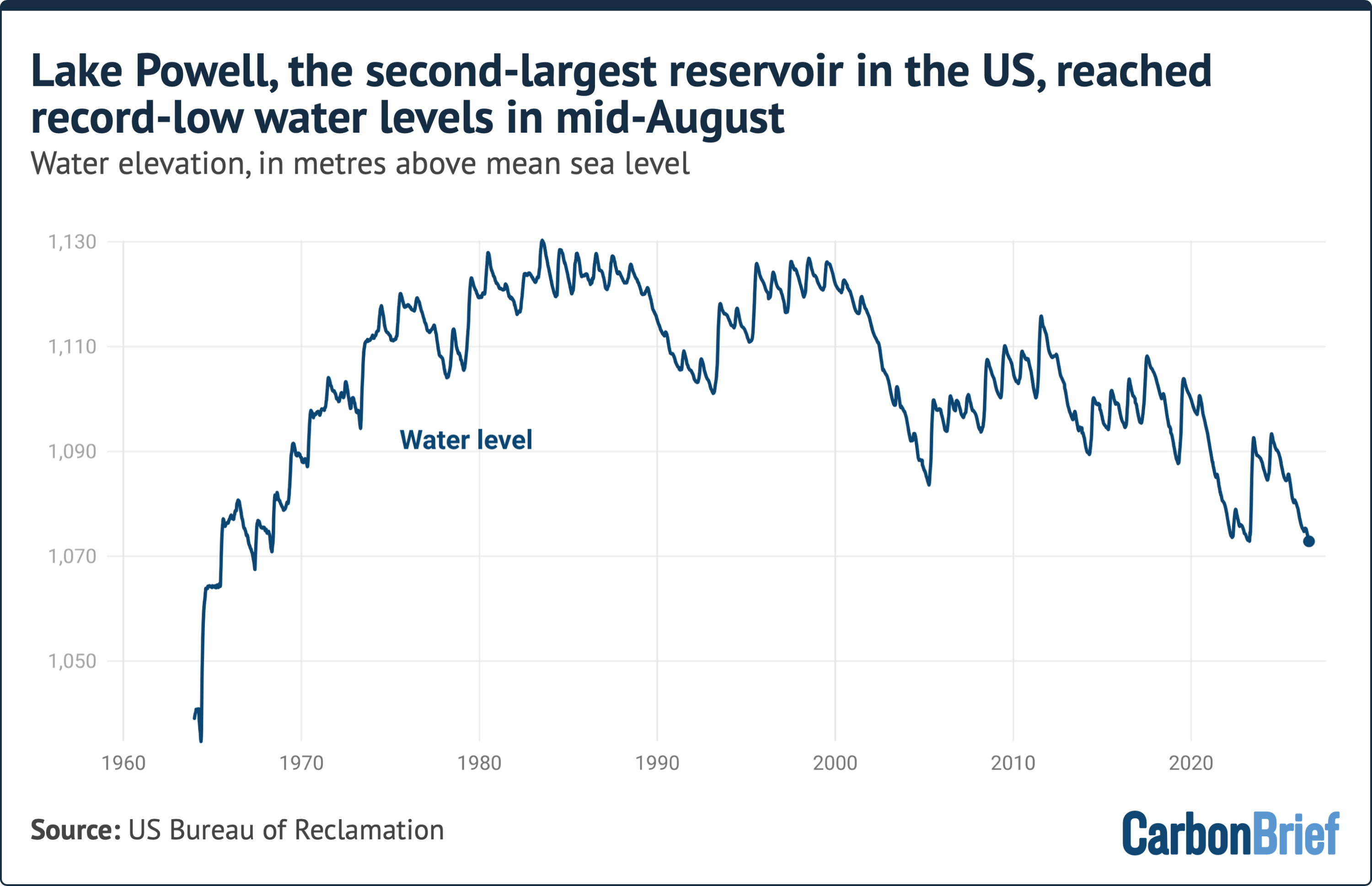
A similar story of depletion unfolds further up the system at Lake Powell, where the full-pool level is established at 1,127.76 metres above mean sea level. While Lake Powell achieved its maximum capacity multiple times during the 1980s, it has failed to fully recover since. The downward spiral continued when Lake Powell’s water level was recorded at a sobering new low of 1,072.87 metres.
Hydrological experts warn that the situation is unlikely to improve in the immediate future. Both reservoirs have continued to drop further in the days following these historic breaches. According to Dr. Jack Schmidt, a senior research scientist at Utah State University’s Center for Colorado River Studies, this downward trend is locked in and will largely persist through the autumn, winter, and early spring months. Relief will not arrive until the seasonal snowpack in the mountains of the Upper Colorado River Basin eventually begins to melt.
"The big dilemma of the moment is that we’re only in the middle of August, and we have no assurance of what the coming winter will be," Dr. Schmidt explains. "The only thing we can be sure of is that we will be depleting overall total basin reservoir storage from now until, roughly, early April."
Compounding Factors and Climate Pressures
The unprecedented record lows across both major reservoirs are not the result of a single dry year, but rather the culmination of several compounding environmental and systemic pressures.
Historical data indicates that since the turn of the 20th century, the volume of water flowing along the Upper Colorado River has declined by approximately 20%. Comprehensive scientific research suggests that roughly half of this substantial reduction can be directly attributed to human-induced climate change.
The vast majority of the river’s streamflow originates from the seasonal snowpack of the Upper Colorado River Basin. This crucial geographic zone stretches across five western states, though the primary accumulation occurs within Colorado and Utah. For more than a quarter of a century, this region has been gripped by a historic and punishing "megadrought." Specialized studies investigating the phenomenon have revealed that nearly half of the megadrought’s extreme intensity observed between 2000 and 2018 is directly traceable to global climate change.
Simultaneously, the rapidly expanding population throughout the American Southwest has placed intense, unrelenting pressure on the diminishing water supplies of the Colorado River system. Demographic tracking shows that the number of people relying on the Colorado River for at least a portion of their municipal water has surged by roughly 15 million people—an increase of about 60%—since 1992.
Dr. Schmidt highlights the distinct duality driving the ongoing emergency, distinguishing between the foundational environmental pressures and the institutional hurdles of governance.

"There’s an ultimate cause of the present water crisis, and there’s a proximate cause," Dr. Schmidt notes. "The ultimate cause is a warming climate, a warming planet and a pretty clear correlation between warming conditions and decreased runoff in the Colorado River Basin."
He adds, "The proximate cause is that in this messy democratic republic of ours, big policy decisions that match the variability of the climate occur painfully slowly—with intense political negotiations—and only incrementally."
As regional stakeholders grapple with these tightening constraints, federal agencies are attempting to formulate long-term management strategies. The US Bureau of Reclamation, the federal agency tasked with managing water resources across the western United States, released a comprehensive environmental impact statement detailing its proposed post-2026 strategy for the future operation and management of Lakes Powell and Mead. While the complete implementation details of the strategy remain under review, the document signals a shifting framework for federal oversight.
Dr. Schmidt observes that the environmental impact statement does appear to grant the Bureau of Reclamation the necessary flexibility to respond to escalating crises by mandating mandatory reductions in water deliveries to several basin states. However, he cautions that administrative adjustments alone cannot outpace environmental realities.
"They acknowledge it won’t work if we just stay critically dry," Dr. Schmidt concludes, "and of course every climate model for the 21st century, especially with a continually warming planet, says that that’s exactly what’s going to happen."