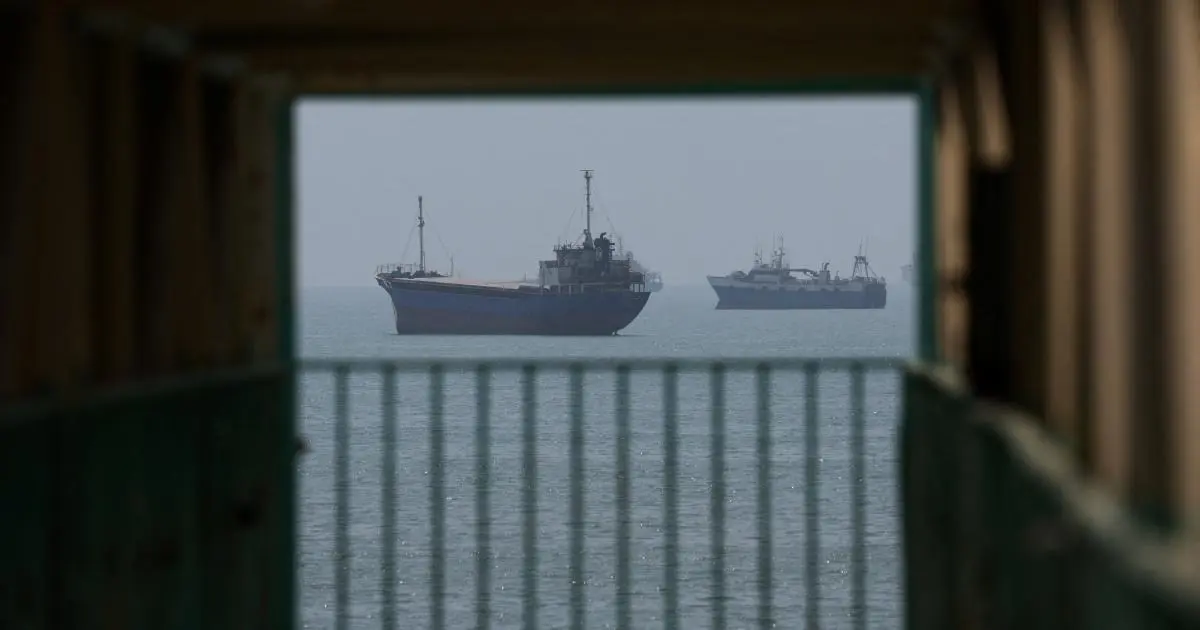
Six months into the military campaign led by the United States and Israel against Iran, the conflict has settled into an entrenched stalemate. Neither Washington nor Tehran has been able to secure a decisive military or diplomatic breakthrough. Instead, the two adversaries find themselves locked in a reciprocal blockade, halting oil and cargo shipments through the strategic Strait of Hormuz and into Iranian ports with no immediate resolution in sight. The political and economic costs required to meet the adversary’s demands for ending the impasse remain prohibitively high, while the ongoing expenses of the stalemate itself are comparatively manageable. Consequently, this mutual blockade has emerged as the least damaging path forward for both Washington and Iran for the foreseeable future.
While this fragile equilibrium may not be the optimal outcome for Washington, it successfully avoids both outright defeat and catastrophic regional escalation. Over time, the dynamic increasingly works to the advantage of the United States. As the shipping restrictions persist, Tehran’s strategic position is eroding at a much faster rate than Washington’s. The United States possesses robust domestic energy supplies to draw upon, whereas nearly the entirety of Iran’s vital crude oil exports—and by extension, the vast majority of its hard currency reserves—has been effectively cut off. A prolonged blockade that systematically tightens the economic screws on Iran could ultimately compel Tehran to adopt a more flexible posture in future diplomatic engagements, potentially opening the door to a compromise acceptable to Washington. The primary strategic challenge for the United States moving forward is ensuring that Tehran does not react to its deteriorating domestic and economic conditions by escalating hostilities and igniting a wider regional conflagration that draws in American forces.
U.S. policy must therefore concentrate on neutralizing the most disruptive contingencies, chief among them being Iranian military escalation, while quietly committing to a dual-blockade strategy for an indefinite period. If Iran remains intransigent and refuses to offer concessions, Washington can methodically degrade the Iranian economy and military infrastructure. Simultaneously, this approach ensures that Tehran remains incapable of rebuilding the formidable regional hegemony it wielded prior to the Hamas attacks against Israel on October 7, 2023. At this juncture in the conflict, sustaining the current strategic posture represents the most pragmatic and effective method for prosecuting—and ultimately winning—this protracted war.
Best of the Worst
Back in June, Washington and Tehran tentatively agreed to a memorandum of understanding designed to establish a durable cease-fire, reopen the crucial Strait of Hormuz, and lay the groundwork for a permanent settlement within 60 days. The proposed agreement aimed to resolve long-standing bilateral grievances, including the restriction of Iran’s nuclear enrichment program in exchange for the removal of U.S. and international financial sanctions. However, the diplomatic framework collapsed before a final pact could be formalized, largely due to Tehran’s failure to fully reopen the strait. With traditional diplomacy effectively stalled, both governments are now banking on economic coercion—with Iran leveraging its impact on the broader global economy—to force the other side back to the negotiating table under favorable terms.
Of course, maintaining a blockade is not without domestic and strategic costs for Washington. Keeping the Strait of Hormuz closed has exerted upward pressure on domestic gasoline prices and fueled broader economic inflation, a politically sensitive vulnerability as the November midterm elections approach. These prices could climb even higher if Iran manages to successfully interdict the residual millions of barrels of oil that currently bypass the blockade daily. Furthermore, the U.S. military has expended significant quantities of critical munitions and placed considerable strain on its regional troop deployments to sustain operations over the past half-year.
Even so, the ongoing military operation remains remarkably cost-effective when measured against past Middle Eastern interventions. While previous conflicts in Iraq and Afghanistan cost the United States trillions of dollars and thousands of American lives, the current conflict with Iran has resulted in the deaths of 18 U.S. service members, with cumulative financial estimates ranging from $37.5 billion to over $100 billion by mid-July. Most importantly, the mutual blockade is far more palatable to political leaders in Washington than any of the available alternatives.
A complete unilateral U.S. withdrawal from the Strait of Hormuz, enacted without securing major concessions from Iran—such as the permanent dismantling of its own blockade—is practically unthinkable, even for the unorthodox Trump administration. Such a retreat would hand Tehran an undeniable psychological victory, reversing much of the progress achieved by the United States and Israel over the past three years in systematically dismantling Iran’s network of regional proxies. Furthermore, a voluntary withdrawal would likely fail to secure free passage through the strait, as Tehran would almost certainly demand the establishment of a permanent tolling system. With Washington in retreat, Iran could freely revive and expand its nuclear ambitions, representing a catastrophic strategic failure for the United States.
Military escalation presents an equally unappealing path for Washington. The Iranian regime has already weathered a massive, sustained bombing campaign; a secondary, more aggressive air offensive might devastate much of Iran’s remaining military assets as well as its energy, transportation, and communication grids, but it still could not guarantee that Tehran would capitulate on the core issues of opening the strait or curtailing its nuclear program. Having survived numerous historical assaults aimed at diminishing its authority—and drawing on the institutional resilience forged during the grueling Iran-Iraq War of the 1980s—the current Iranian leadership is unlikely to be cowed by further punishment. Instead, Tehran could retaliate by launching targeted strikes against Gulf Arab state infrastructure and exhausting remaining U.S. air defense stockpiles, thereby driving up the costs of the war for the United States and its regional allies.
The final alternative—a full-scale land invasion aimed at forcibly overthrowing the Iranian government—would require a mobilization on the scale of the 1991 Desert Storm operation, which involved more than 500,000 American troops. Such an undertaking carries the severe risk of massive American casualties, catastrophic humanitarian costs for Iranian civilians, and widespread instability across the entire Middle East. The Trump administration, which has consistently criticized past U.S. "forever wars" in the region, effectively ruled out this option months ago.
Consequently, Washington’s calculated assessment is that an indefinite blockade remains superior to all other alternatives. The blockade functions as a slow-moving instrument of economic and military pressure designed either to force Iran back toward a compromise resembling the June memorandum of understanding or to steadily erode the Islamic Republic’s internal stability. While historical precedents for this type of coercive campaign are mixed, a similar strategy proved successful in 1988, when Iran ultimately agreed to end hostilities after years of exhausting warfare with Iraq and an unsuccessful naval confrontation with the United States in the Persian Gulf.
To date, the economic fallout from the mutual blockade has remained remarkably contained for the United States. Despite six months of an almost continuous embargo on Gulf oil and natural gas orchestrated by Iran, the global economy has absorbed the shock with minimal damage. In July, five months into the conflict, the International Monetary Fund revised its global GDP growth projections for 2026 downward by a modest 0.1 percentage point—moving from 3.1 percent to 3.0 percent—while noting limited evidence of secondary economic ripple effects. Although American retail gasoline prices have climbed roughly 38 percent since the outbreak of hostilities, national economic growth remains fundamentally steady. Should deeper energy shortages materialize, Washington retains the capacity to intervene directly in domestic markets to stabilize prices, aided by the fact that the United States currently produces more oil than it consumes. In this context, the United States can sustain the mutual blockade at a relatively low strategic cost.
Stuck in the Middle With You
The leadership of the Islamic Revolutionary Guard Corps (IRGC) has managed to retain its grip on power and appears positioned to do so for the foreseeable future. By pivoting the national economy into a perpetual crisis footing, the regime has intensified its domestic security controls while insulating its preferred military programs at the direct expense of the civilian population. Tehran remains deeply resistant to concessions akin to those outlined in the June memorandum because surrendering its control over the Strait of Hormuz would strip the regime of its primary leverage while exposing its nuclear enrichment infrastructure to strict international oversight. (Under the terms of the June framework, for instance, Tehran offered only vague commitments regarding the dilution of its stockpiles of highly enriched uranium, which remains Washington’s principal proliferation concern.)
Nevertheless, time continues to favor the United States. As Washington maintains its maritime pressure past the November elections, the strategic utility of the strait’s closure for Tehran will gradually diminish as seasonal travel subsides and international markets adapt by securing alternative energy suppliers. Concurrently, the domestic toll of the blockade on Iranian oil exports is intensifying rapidly. Inflation surpassed 80 percent year-over-year in August, accompanied by a steep depreciation of the national currency. While the ruling elite may be hardened by decades of international isolation, the broader Iranian economy urgently requires oil revenues and sanctions relief to survive. This escalating economic distress has prompted pragmatic political figures within the regime, including President Masoud Pezeshkian, to signal a potential willingness to revisit the terms of the abandoned memorandum of understanding.
Yet, as economic desperation mounts, the hardline leadership of the IRGC could choose escalation over compromise. Tehran might escalate its maritime harassment in the strait, including attempts to deploy new naval mines—a tactic interrupted by a U.S. strike on August 30—or launch targeted attacks against Saudi and Emirati pipelines designed to bypass the maritime choke point and transport millions of barrels of Gulf crude. Alternatively, beyond sporadic regional skirmishes, Tehran could orchestrate a large-scale offensive utilizing remaining missile and drone arsenals to devastate Gulf energy infrastructure, damage U.S. regional bases and naval assets, and strike targets inside Israel. Should such an offensive succeed in crippling the massive economic investments of the Gulf Arab states, it could fracture their informal security alignment with Washington or compel the United States to accept Iranian terms for reopening the strait.
Should Iran pursue such an escalation, the Trump administration would be forced into a major military retaliation despite its underlying reluctance. Foreign military intelligence sources indicate that the United States and Israel had formulated plans for a massive air campaign in early August that would have significantly surpassed previous bombings in scale and destructive power. That operation was ultimately shelved, in part due to strong reservations from Gulf Arab states fearful of catastrophic retaliatory strikes.
All of these trajectories remain plausible. Historically, Iran has frequently opted for escalation when pressured, but given the severe battering sustained by its economy and regional proxy network since 2023, the regime may ultimately conclude that negotiation is preferable to collapse. As the stalemate persists and Washington holds its ground, Tehran’s leadership will eventually be forced to choose among three difficult paths: negotiating a comprehensive compromise, escalating the conflict through aggressive military action, or enduring an indefinite blockade from a position of mounting weakness.
Winning by Stalemate
When the United States and Israel initiated their military campaign against Iran in February, neither government anticipated that six months later the conflict would culminate in a double blockade of the Strait of Hormuz. Initial expectations among allied leadership likely assumed the rapid destruction of the regime or an immediate capitulation by Tehran. Yet, when evaluated against the available alternatives, embracing the stalemate has become the most advantageous course of action for Washington. Although the United States was unable to achieve a swift military victory, it remains uniquely equipped to absorb the protracted costs of the current economic standoff while the Iranian economy buckles under mounting strain.
The single greatest vulnerability within this ongoing stalemate is the persistent threat of Iranian escalation. To mitigate this risk, Washington must clearly communicate the severe consequences awaiting Tehran should it launch a major offensive or resume active work on its nuclear program. Only sustained American military power can effectively deter Iranian aggression. Consequently, Washington should continue to manage the stalemate while maintaining readiness to execute a decisive counteroffensive if Iran chooses to raise the stakes. As the U.S. strategic position strengthens over time, Tehran’s remaining leverage is limited to maintaining hostilities just short of triggering a devastating American response.
A managed stalemate, backed by credible deterrent threats, offers a viable strategy not only for concluding the current conflict on favorable terms, but also for consolidating and expanding the strategic gains secured by Washington over three years of broader confrontation with Iran and its regional proxies. While it may not instantly transform the Middle East, reducing Iran to a position of enduring economic and military weakness is the most effective way to enforce long-term strategic restraint from Tehran.