Researchers recorded the sounds drones make with chipped or cracked propellers and failing motors. Their aim is to let a ground station flag a drone as unairworthy before takeoff.
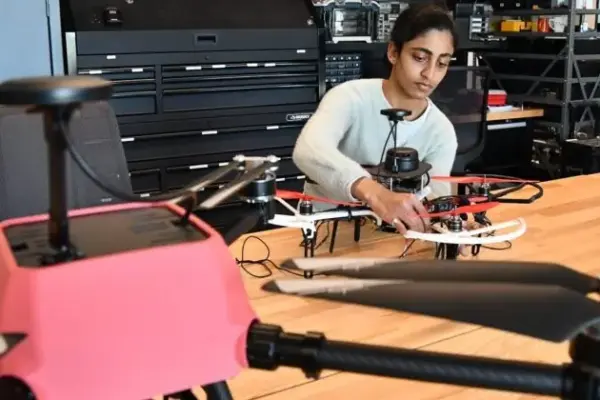
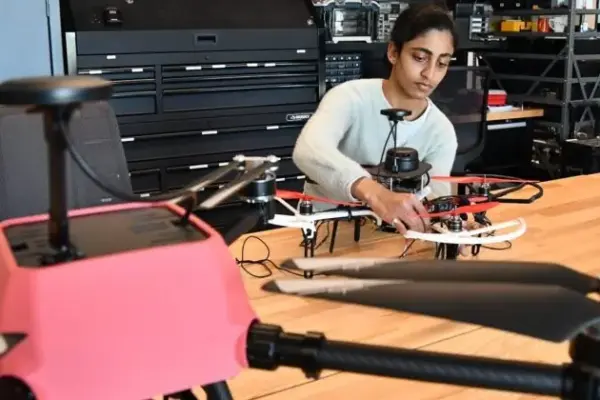
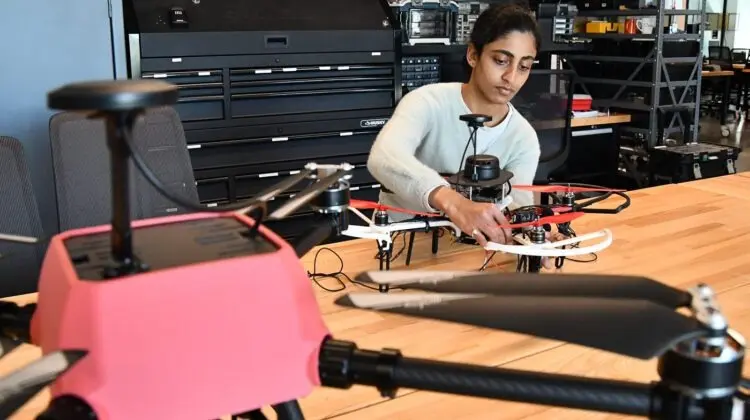
Engineers at the University of Cincinnati are harnessing the power of acoustics to help NASA detect damaged drone motors and propellers before a catastrophic crash can occur in the field. Prissha Chawla, a doctoral student in the UC College of Engineering and Applied Science, alongside her dedicated research partners, has been meticulously recording the distinct audio signatures that drones produce when their propellers become chipped or cracked, or when a motor suffers internal damage and begins to fail. The research team then converts these acoustic recordings into actionable data that ground station computers can utilize to automatically alert human operators when a drone is deemed unairworthy prior to launching into the sky.
The student research team is scheduled to present the details of this innovative project at the upcoming Modelling, Estimation and Control Conference on October 25 in Phoenix.
The initiative represents a crucial step forward as uncrewed aerial vehicles become more prevalent in modern airspace, particularly in sensitive sectors. "The project started in 2024 with interest by NASA in detecting problems with motors before a drone took off," Chawla said. "More and more, drones are being used for public safety. You don’t want them to crash."
As commercial and municipal agencies increasingly rely on aerial technology for critical missions, ensuring mechanical reliability before a flight becomes paramount. Traditional pre-flight inspections often rely heavily on visual checks, which can easily miss microscopic fractures in propeller blades or internal wear within electric motors. By shifting toward an acoustic monitoring paradigm, the University of Cincinnati team is addressing a subtle yet dangerous vulnerability in daily drone operations.
How Acoustic Drone Damage Detection Works
The current phase of the research focuses primarily on ground-based operations and pre-flight assessments. "We’re focusing on pre-flight tests that NASA already runs," Chawla explained.
Beyond structural damage like chips and cracks in spinning propellers, Chawla noted that environmental hazards such as grit, dust, and other microscopic debris can infiltrate motor bearings over time. This contamination can lead to increased friction, overheating, and eventually cause a motor to seize mid-flight. The acoustic drone damage detection system aims to catch these hidden mechanical faults early by analyzing subtle shifts and anomalies in the acoustic profile a drone produces during startup and idle testing, rather than relying exclusively on visual inspection.
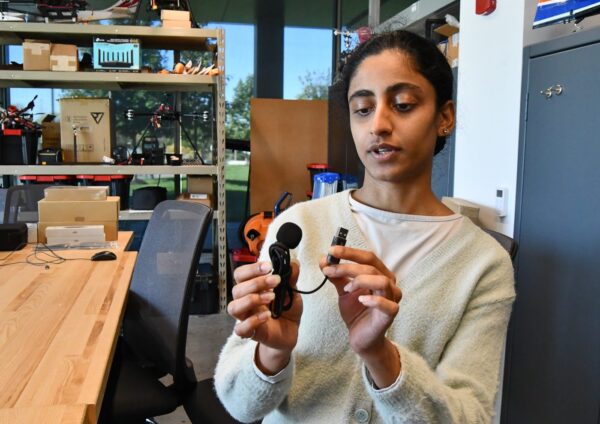
Looking toward the future, the students envision a much broader application for the technology. They eventually hope to design an autonomous drone that can rely entirely on sound in real-time to detect damage to its propellers and other critical mechanical systems while actively in flight. Equipped with this capability, such an advanced aircraft could autonomously recognize an impending failure and return safely to its base before a catastrophic mechanical failure forces an uncontrolled descent.
This transition from ground-only diagnostics to in-flight acoustic monitoring could dramatically increase the safety margins of autonomous missions, especially in remote or hazardous environments where manual intervention is impossible.
Preflight Checks for Drone-in-a-Box Systems
UC student Luke Busse, collaborating closely on the initiative, pointed out that this sophisticated damage-detection system could seamlessly integrate as a core feature of fully autonomous drone-in-a-box architectures. In these advanced operational setups, drones are housed and deployed directly from a weatherproof, automated docking station. These stations are engineered to autonomously handle every phase of the mission lifecycle, including launching, landing, battery charging, telemetry data uploading, and mission scheduling, all completely without the need for an on-site human operator.
"In that scenario, it would be great. You could have sensors in the box that provide preflight checks," Busse said.
Integrating acoustic diagnostic capabilities directly into automated docking infrastructure solves one of the major logistical hurdles of remote drone operations. While drone-in-a-box systems allow for round-the-clock deployment without human oversight, ensuring the mechanical health of the aircraft between flights has remained a challenge. By embedding acoustic sensors within the housing unit itself, the system can automatically "listen" to the drone’s rotors and motors during routine pre-flight warm-ups, effectively filtering out unhealthy aircraft before they ever leave the safety of the box.
More information regarding the ongoing aerospace and engineering initiatives is available directly through the University of Cincinnati College of Engineering and Applied Science.