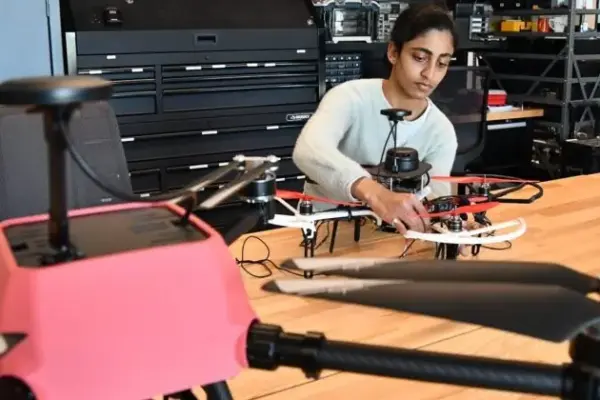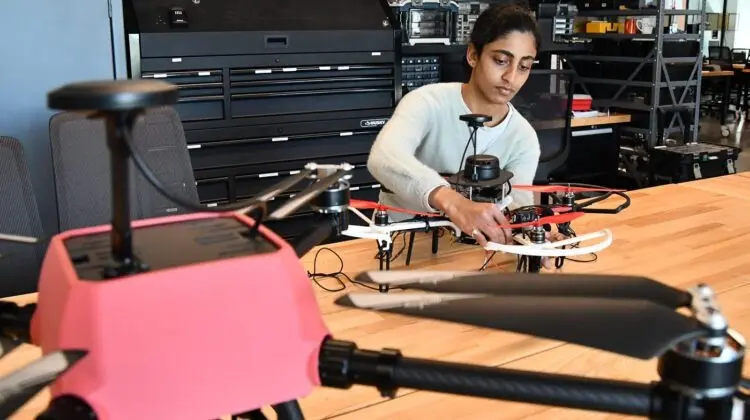
Engineers at the University of Cincinnati are harnessing the power of acoustics to help NASA identify damaged drone motors and propellers before a catastrophic in-flight failure can occur. As the commercial and public safety applications of unmanned aerial vehicles expand exponentially, researchers are developing innovative ways to ensure that these aircraft are entirely airworthy before they ever leave the ground.
The research initiative, spearheaded by doctoral student Prissha Chawla alongside her research partners in the University of Cincinnati College of Engineering and Applied Science, centers on recording the distinct audio profiles generated by drones. Specifically, the team has been capturing the unique acoustic signatures produced when propellers become chipped or cracked, or when a motor suffers internal damage or begins the gradual process of failing. By converting these audio recordings into actionable data, the research team aims to equip ground station computers with the capability to automatically flag unairworthy aircraft and alert human operators prior to takeoff.
The student research team is scheduled to present their findings and demonstrate the practical applications of their project at the upcoming Modelling, Estimation and Control Conference on October 25 in Phoenix, Arizona.
According to Chawla, the foundational goals of the research originated from a direct interest by NASA in bolstering pre-flight safety protocols. "The project started in 2024 with interest by NASA in detecting problems with motors before a drone took off," Chawla said. Emphasizing the growing societal reliance on unmanned aircraft, she added, "More and more, drones are being used for public safety. You don’t want them to crash."
How acoustic drone damage detection works
While many advanced drone monitoring systems rely heavily on visual inspections, onboard diagnostics, or heavy sensor arrays, the University of Cincinnati team’s current work focuses squarely on the ground environment and pre-flight assessments.
"We’re focusing on pre-flight tests that NASA already runs," Chawla explained, detailing the practical integration of their acoustic monitoring framework into existing operational workflows.
In real-world operational environments, physical wear and tear can severely compromise an aircraft’s mechanical integrity. Beyond visible structural damage like chips and cracks in rotor blades, drones frequently encounter environmental hazards. Airborne grit, dust, and other foreign debris can easily infiltrate motor bearings during flight or landing operations. Over time, this accumulated debris can grind against moving parts, leading to increased friction, mechanical wear, and eventually a complete motor seizure.
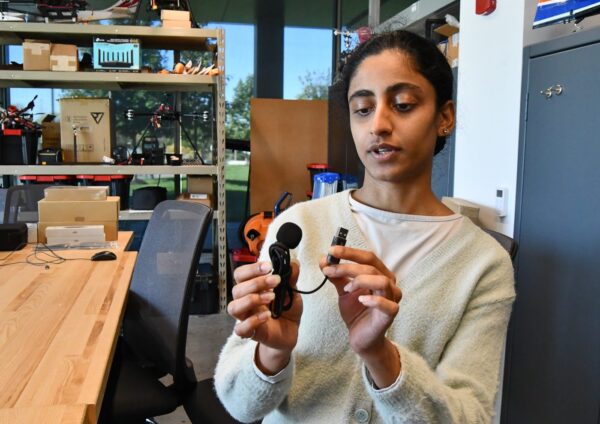
Acoustic drone damage detection aims to catch these hidden mechanical faults well before they result in a complete loss of control. By analyzing minute changes in the acoustic profile—the pitch, frequency, and harmonic resonance—that a drone makes when its components are compromised, the system can identify deep-seated mechanical issues that might easily escape a casual visual inspection or routine electronic checklist.
Looking toward the future, the student researchers envision a much broader scope for the technology. They hope to adapt the acoustic monitoring system for autonomous drones in flight, enabling an aircraft to rely on sound alone to detect progressive damage to its propellers and other critical mechanical systems while airborne. In such a scenario, an autonomous drone could immediately recognize its own mechanical distress and safely return to its base before a minor component failure escalates into a catastrophic accident.
Preflight checks for drone-in-a-box systems
The practical applications of this acoustic monitoring technology extend far beyond traditional launch setups, aligning closely with the rapid industry shift toward highly automated deployment infrastructure. Luke Busse, another University of Cincinnati student involved with the project, noted that the damage-detection system could seamlessly become an integral feature of fully autonomous drone-in-a-box systems.
In these advanced configurations, drones are housed within weatherproof, automated docking stations. These specialized boxes independently manage every phase of an aircraft’s operational lifecycle, handling launches, precision landings, battery charging, telemetry data uploads, and mission scheduling entirely without the need for an on-site human operator to oversee the process.
The integration of acoustic pre-flight checks could solve a significant logistical hurdle for completely remote operations, where human technicians are not present to physically inspect the aircraft or listen for abnormal mechanical sounds.
"In that scenario, it would be great. You could have sensors in the box that provide preflight checks," Busse said, highlighting how automated audio analysis could bridge the gap between remote deployment and rigorous safety assurance.
As unmanned aerial systems continue to integrate into emergency response, infrastructure inspection, and logistics networks, innovations like the University of Cincinnati’s acoustic detection framework offer a promising pathway toward enhanced reliability. Additional information regarding the ongoing research and academic programs can be found through the University of Cincinnati College of Engineering and Applied Science.