
UK aircraft developer targets private ownership under new FAA light-sport rules, while expanding into unmanned defense applications.
UK-based aircraft developer Skyfly Technologies has successfully raised $10 million in a new seed funding round to accelerate the commercial production of its flagship two-seat electric aircraft, the Axe. The innovative aircraft distinctly combines vertical takeoff and landing (VTOL) capabilities with traditional fixed-wing flight, deliberately charting a course toward private ownership rather than focusing on the commercial air taxi services that have dominated much of the broader electric vertical takeoff and landing (eVTOL) sector.
The seed investment round was led by HICO Investment Group, with additional strategic participation coming from Archangel, a notable defense technology investor. Skyfly has announced that the fresh capital injection will be directly utilized to complete the Federal Aviation Administration’s (FAA) light-sport certification process and to significantly expand the company’s manufacturing and assembly capacity across both the United Kingdom and the United States.
Currently, the company anticipates making its very first customer deliveries in 2027. This financial milestone follows an extensive testing phase that includes more than 100 prototype flights and the acquisition of experimental flight permits in both the UK and the US. Bolstered by these technological advancements, Skyfly reports a solid existing order book comprising 61 private customers worldwide.
New FAA Rules Open a Path for Personal eVTOL Aircraft
A major catalyst for Skyfly’s current market strategy is the evolution of regulatory frameworks governing light aircraft. The FAA’s Modernization of Special Airworthiness Certification (MOSAIC) framework, which officially took effect in July 2026, substantially expands the eligibility criteria and operational scope for light-sport aircraft.
Significantly, these updated regulatory rules accommodate modern electric propulsion systems, distributed multiple-motor architectures, and certain classes of aircraft equipped with vertical takeoff capabilities. By doing so, they establish a viable and previously nonexistent certification pathway tailored specifically for aircraft designed for private ownership and recreation, rather than strictly commercial passenger transport services.
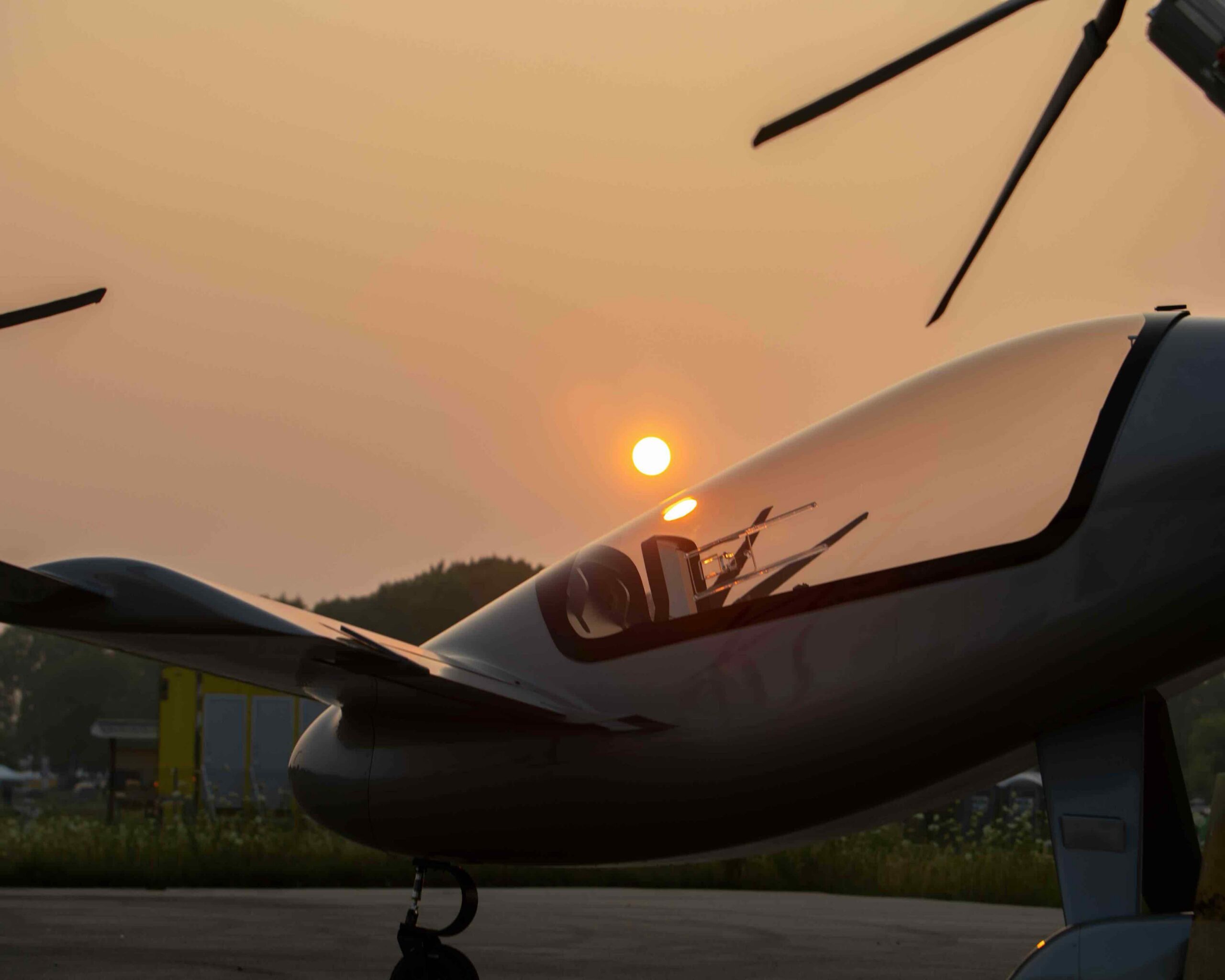
Skyfly purposefully designed the Axe aircraft with this exact emerging market category in mind from the outset.
"The FAA’s MOSAIC rules have opened a route to market that simply did not exist for electric aircraft before, and the Axe was designed for exactly this category," said Michael Thompson, Chief Executive Officer of Skyfly.
Despite the promising regulatory shift, the company still faces the rigorous task of demonstrating full compliance with all applicable safety and airworthiness requirements before it can legally deliver certified aircraft to eager private buyers.
Combining Vertical Takeoff With Fixed-Wing Efficiency
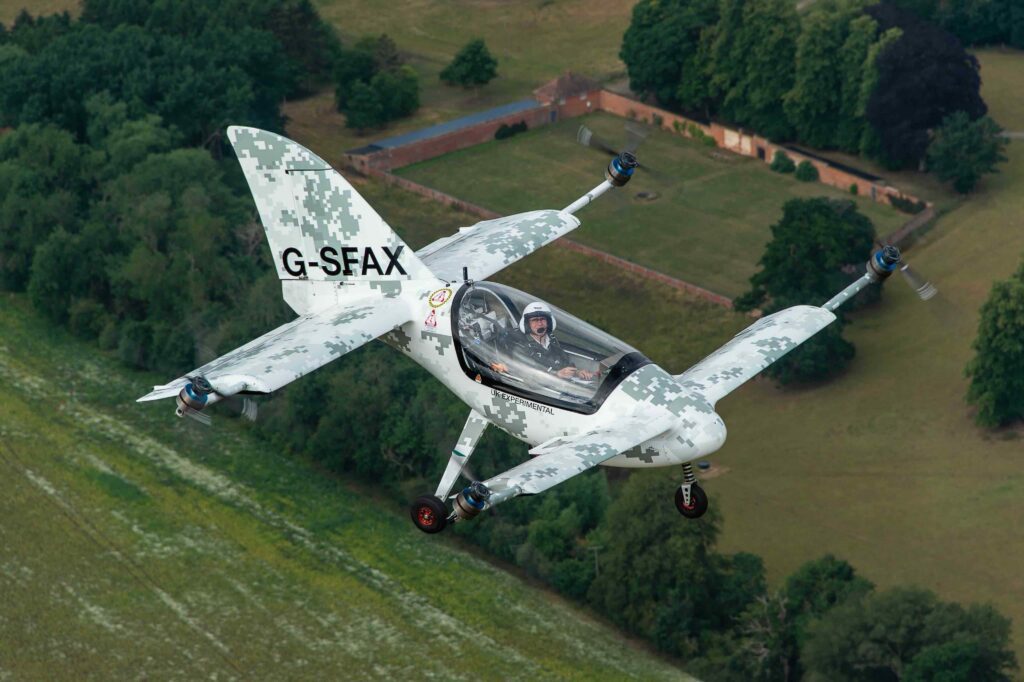
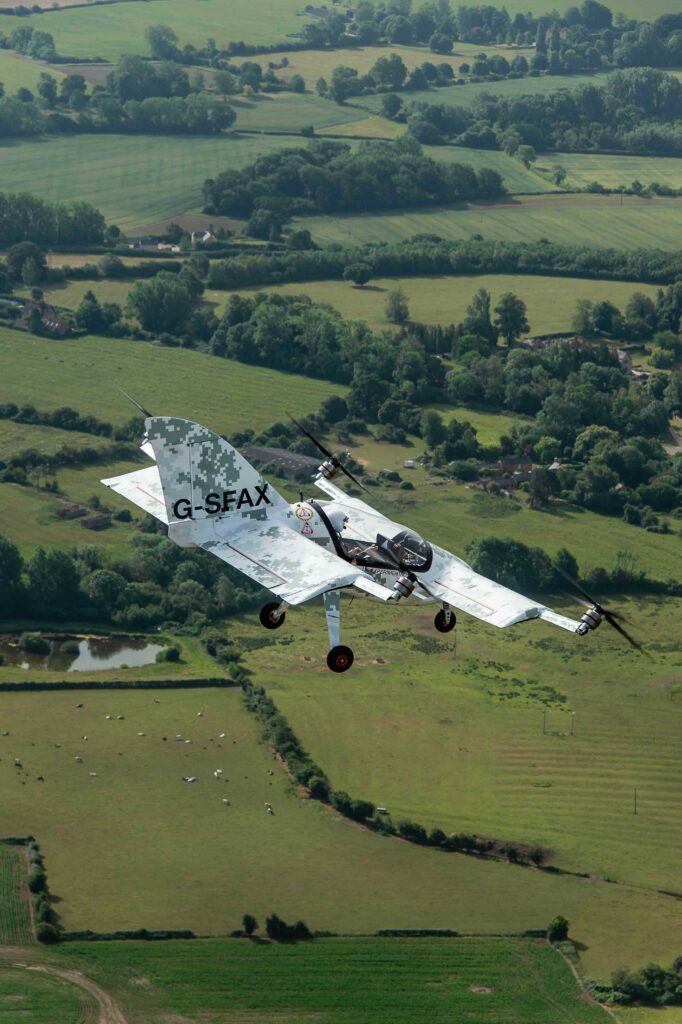
At the heart of Skyfly’s commercial ambitions is the Axe’s distinct engineering design. The aircraft utilizes a configuration of eight fixed-angle electric motors dedicated to vertical takeoff and landing maneuvers. Once the aircraft successfully transitions into the air, its integrated fixed wings provide the primary lift required during forward flight, which dramatically reduces the total amount of energy consumed during the cruising phase of the journey.
Unlike many competitor designs within the advanced air mobility industry that rely on complex tilting motors, pivoting nacelles, or entirely rotating wings, the Axe features zero moving transition mechanisms. According to Skyfly engineers, this mechanical simplicity drastically streamlines the aircraft’s architecture, inherently improving safety profiles and significantly reducing long-term maintenance needs and operational complexity.
Performance specifications provided by the company indicate that the Axe offers a maximum range exceeding 100 miles on a single charge, a flight endurance window lasting between 60 and 90 minutes, and a reliable cruise speed of approximately 100 mph. Furthermore, the aircraft boasts a stated payload capacity of 200 kilograms, comfortably accommodating two adult occupants and baggage.
On the economic front, Skyfly estimates that operating costs for the Axe will hover around $90 per flight hour, which is substantially lower than the operational expenses associated with many conventional light aircraft currently on the market. However, industry observers note that these specific figures currently remain company projections rather than independently verified operating results.
Versatility is another cornerstone of the aircraft’s operational design. The Axe possesses the capability to take off and land vertically without the need for a traditional runway, making it ideal for private properties or unprepared surfaces, yet it retains the ability to utilize conventional runways whenever they are available.
To build public awareness and showcase its technical readiness, Skyfly successfully demonstrated the Axe prototype at the prominent EAA AirVenture Oshkosh fly-in conventions in both 2025 and 2026. Additionally, the company reports having successfully completed a milestone airfield-to-airfield eVTOL flight across European airspace.
Technology Also Targets Unmanned Defense Missions
Beyond its commercial pursuits in the private consumer market, Skyfly is actively leveraging its core aircraft design expertise to address distinct opportunities in the defense and government sectors. The company has introduced the Longbow, a heavy-lift, hybrid-electric unmanned aircraft specifically engineered for military and public-sector applications.
Skyfly is currently targeting impressive performance benchmarks for the Longbow, including a maximum operational range exceeding 400 miles paired with a robust payload capacity of 200 kilograms. Proposed mission profiles for the unmanned platform include vital logistical tasks such as cargo resupply, intelligence, surveillance, and reconnaissance (ISR) operations, medical evacuation missions, and complex ship-to-shore logistics.
Demonstrating its serious intent in the defense arena, Skyfly has officially joined the UK Ministry of Defence’s competitive heavy-lift challenge, positioning its hybrid-electric technology as a forward-thinking solution for modern military supply chains.
"Longbow addresses a clear requirement for unmanned systems that can move meaningful payloads over significant distances without relying on a runway," noted Nicholas Nelson, General Partner at Archangel Ventures, highlighting the strategic defensive utility of the platform.
Despite these ambitious plans, the Longbow remains firmly in the research and development phase, with Skyfly having announced no definitive production schedule or delivery timeline for the defense platform thus far.
From Prototype to Customer Deliveries
To support its dual-track expansion, Skyfly currently operates a dedicated 10,000-square-foot manufacturing and assembly facility located in the United Kingdom. The newly secured $10 million in seed funding will play a critical role in scaling up this production footprint, while simultaneously funding the continued engineering refinement and testing of the company’s proprietary hybrid-electric propulsion technology.
The Axe undeniably represents a divergent strategic approach within the rapidly evolving eVTOL landscape. While the vast majority of well-funded aerospace startups have channeled their resources into large-scale commercial air taxi networks designed for urban passenger transport, Skyfly is staking its commercial future on the enduring appeal of private aviation, aiming to bring personal vertical flight directly into the hands of individual aircraft owners.
Ultimately, whether this unique market segment can develop and scale successfully will depend heavily upon navigating the remaining hurdles of regulatory certification, achieving predictable operating costs, meeting evolving pilot training and licensing requirements, and sustaining robust consumer demand.
For the time being, however, the fresh infusion of capital provides Skyfly with the necessary financial runway to transition definitively out of the prototype testing phase and move steadily toward its scheduled commercial customer deliveries in 2027.