
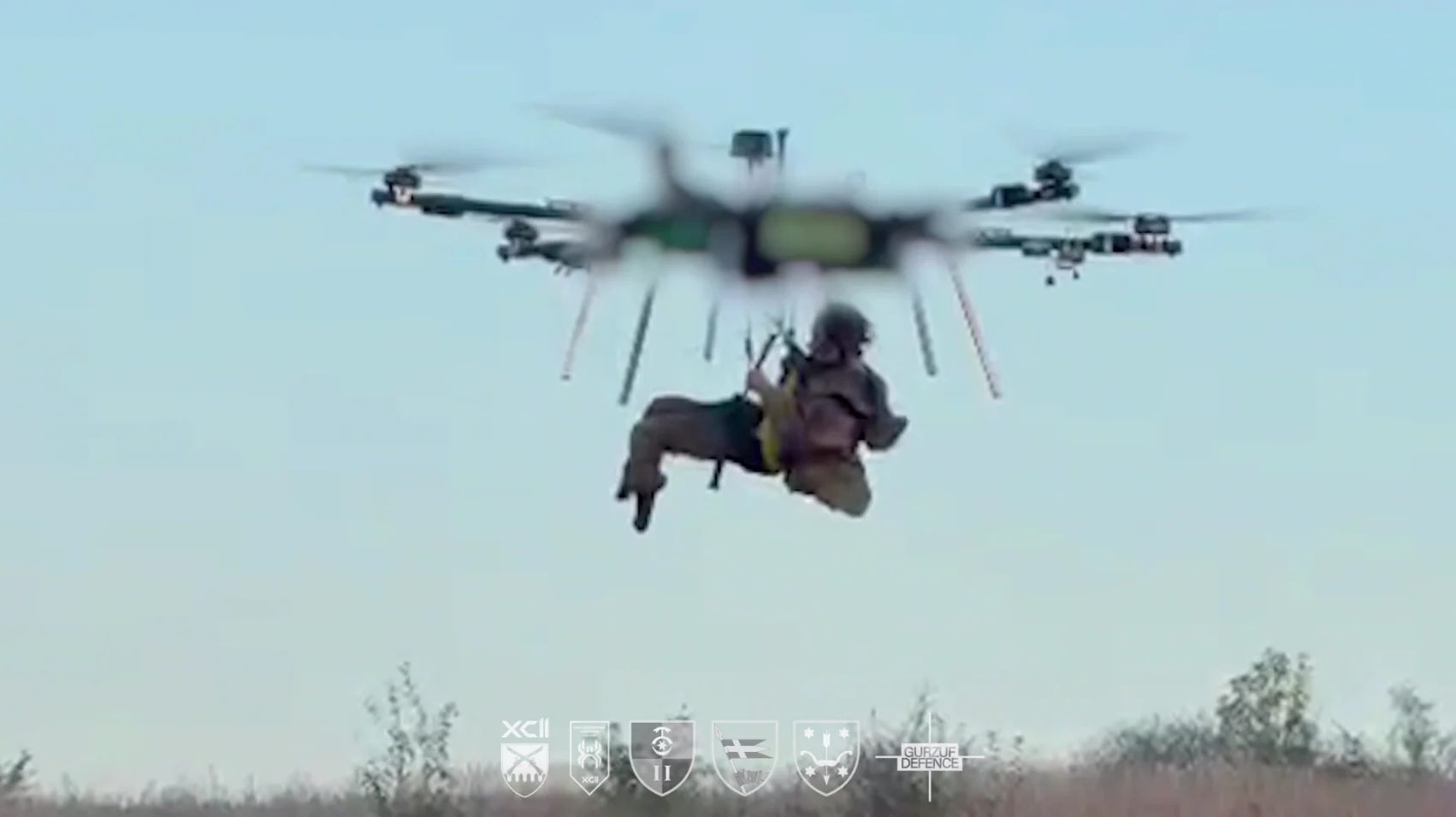
Ukrainian forces have successfully carried out what is being described as the world’s first front-line evacuation of a wounded soldier using an uncrewed aerial vehicle. The operation, announced by Ukraine’s 92nd Separate Assault Brigade on October 19, marks a significant milestone in the evolution of military technology, highlighting an emerging and critical application for unmanned aircraft in high-threat combat environments where traditional ground-based medical evacuation is either lethally dangerous or entirely impossible.
According to reports from Ukraine’s ArmyInform military news service, the injured service member was trapped in a forward position that conventional armored ambulances and transport vehicles could not safely approach. The surrounding terrain was heavily sown with landmines, and the persistent threat of enemy surveillance and attack drones made any conventional rescue attempt an extreme hazard to personnel. Facing these severe obstacles, military operators turned to an innovative alternative: a heavily modified heavy-lift hexacopter designed to lift and transport human cargo away from the frontline danger zone.
The groundbreaking mission underscores a rapidly expanding interest in unmanned medical evacuation systems across Ukraine’s defense sector, as domestic manufacturers race to develop specialized aircraft capable of safely moving injured personnel out of harm’s way without risking the lives of additional rescue crews.
An Alternative to Perilous Ground Evacuations
The successful casualty extraction demonstrates how uncrewed aerial systems are evolving to fill critical gaps in modern warfare. When ground routes are cut off by intense enemy fire, artillery bombardment, or dense minefields, getting wounded soldiers to medical care within the vital "golden hour" becomes an immense logistical challenge. Unmanned aerial vehicles offer a potential lifeline, bypassing surface-level hazards entirely.
The aircraft utilized in this historic mission was developed by Gurzuf Defence, a Ukrainian defense manufacturer. Before attempting to transport a human, the military and the manufacturer conducted extensive testing and implemented crucial engineering modifications to maximize stability while carrying a live passenger.
While this successful individual mission is a major technological and operational achievement, military analysts emphasize that it does not yet establish routine capability. Further testing, technical refinement, and broader operational experience will be required to thoroughly evaluate the reliability, adaptability, and inherent limitations of using drones for human transport under active combat conditions.
Heavy-Lift Drones Adapted for Human Transport
The aircraft at the center of the October 19 rescue was a heavily modified variant of the Ayu-Dag 6—also referred to as the Audag-6—produced by Gurzuf Defence. Originally engineered for military payload delivery, logistics supply runs, and cargo transport, the six-rotor platform was built to haul substantial loads across contested zones without exposing a human pilot to the hazards of the front line.
According to a profile published in March 2026 by Ukrainska Pravda, the standard Ayu-Dag 6 weighs approximately 98 kilograms and typically boasts a payload capacity ranging between 70 and 90 kilograms. However, demonstrations by the manufacturer have proven the aircraft’s capability to lift loads weighing up to 130 kilograms. The drone’s overall operational range and endurance vary significantly depending on the weight of the cargo and the specific configuration of the aircraft.
Adapting the platform for human transport required intensive engineering work. Transporting a person introduces unique challenges that go far beyond standard cargo delivery, requiring specialized modifications to minimize aerodynamic swinging, ensure absolute flight stability, maintain reliable control links, and establish fail-safe procedures in the event of partial equipment malfunction.
This successful deployment illustrates the inherent flexibility of heavy-lift drone architectures. Platforms initially conceived for dropping supplies or moving ammunition can, with appropriate engineering adjustments, be repurposed to support specialized, high-stakes humanitarian missions on the battlefield. Nevertheless, human transport inherently demands stringent safety protocols, secure patient-harnessing mechanisms, and robust communication redundancies to ensure the safety of the individual being evacuated.
The Emergence of Dedicated Medical Evacuation Drones
The deployment of the Gurzuf Defence platform coincides with parallel advancements by other Ukrainian defense companies working specifically on dedicated casualty evacuation drones.
Recently, another prominent Ukrainian manufacturer, SkyFall, introduced a specialized uncrewed aircraft named StarGate, which is purpose-built to transport wounded soldiers secured to a standard medical stretcher. In mid-October, the Associated Press reported on a live demonstration of the StarGate system, showcasing its potential to reshape battlefield medicine.
According to specifications provided by SkyFall, the StarGate drone is engineered to carry up to 150 kilograms, achieve top speeds of approximately 105 kilometers per hour, and operate across ranges of up to 15 kilometers. To ensure reliability in the heavily jammed electronic warfare environment of modern conflict, the aircraft is equipped with redundant communication systems and advanced navigation capabilities designed to function even when GPS signals are completely unavailable.
SkyFall commenced front-line testing of the StarGate system in October, with its long-term operational effectiveness still under active evaluation by military units in the field.
The concurrent development of these distinct systems by Gurzuf Defence and SkyFall points to a broader, concerted push within Ukraine’s defense industrial base toward specialized aerial medical evacuation. As engineering teams refine these technologies, the implications of uncrewed rescue systems may eventually extend far beyond the battlefield. Similar heavy-lift platforms could one day revolutionize civilian search and rescue operations, providing rapid extraction capabilities in treacherous mountainous terrain, severe flood zones, or other disaster-stricken areas where traditional ground access is severely restricted.
Realizing civilian applications, however, will necessitate rigorous safety testing, comprehensive regulatory approvals, and specialized structural designs optimized for passenger safety. For now, Ukraine’s reported front-line rescue stands as an important early operational milestone, offering a tangible glimpse into the future of emergency response technology. Whether aerial medical evacuation transforms into a standard, repeatable capability will ultimately depend on continued engineering development, extensive field testing, and real-world operational experience.