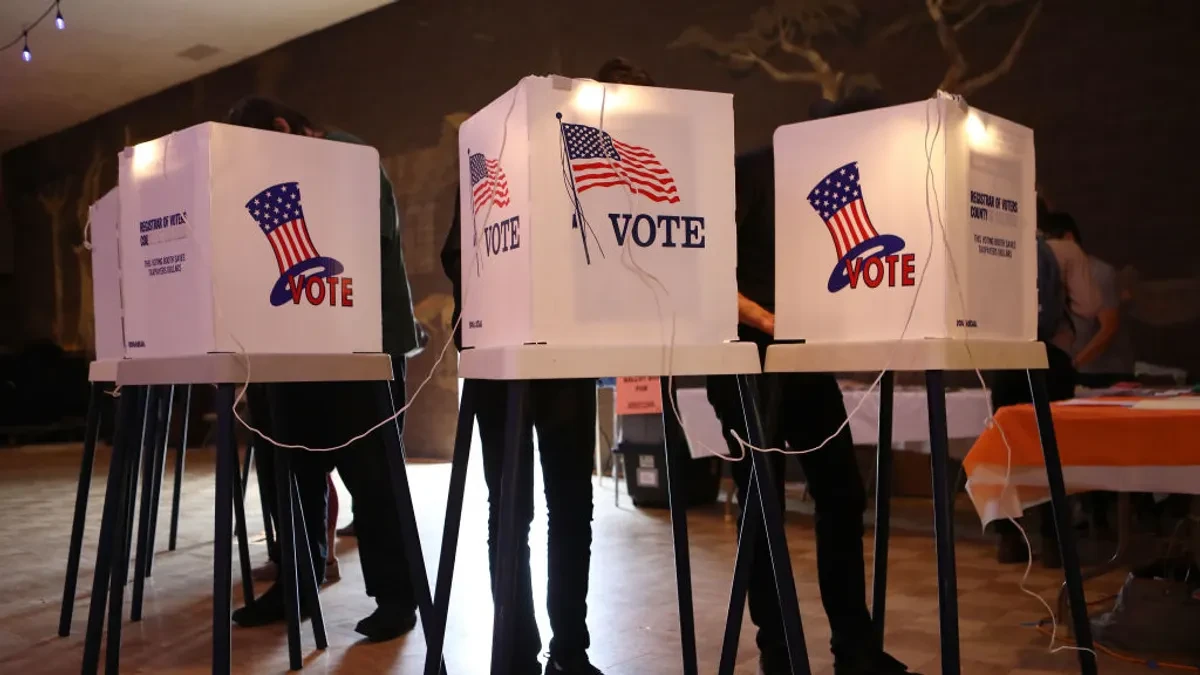
As housing affordability and supply remain central concerns for local and national leaders, voters across the United States are preparing to step directly into the policymaking arena. According to data from Ballotpedia, six statewide housing measures are certified for the ballot this November, marking the highest number of housing-related ballot questions in a single election year since 2006.
The surge in ballot measures reflects a broader, ongoing trend of state governments taking a more active role in addressing housing challenges. While local governments and zoning boards have historically held primary authority over residential development, recent years have witnessed states increasingly stepping into the conversation with comprehensive legislative strategies, funding packages, and policy mandates. This heightened focus also reached the national stage earlier this summer with Congress passing the 21st Century ROAD to Housing Act, further cementing housing as a paramount domestic priority.
This November, residents in California, Hawaii, Massachusetts, and Rhode Island will have the direct power to shape how their states fund, regulate, and approach housing development. The measures up for consideration span a wide spectrum of policy tools, ranging from multibillion-dollar bond authorizations and down payment assistance programs to environmental review reforms and local zoning mandates.

California
California voters face three distinct and consequential measures addressing different facets of the state’s persistent housing crunch, touching upon affordable housing finance, homebuying assistance, and environmental regulation.
Proposition 1 asks voters to approve $11.25 billion in state general obligation bonds dedicated to funding various housing affordability programs throughout the state. Under the proposed breakdown, $1.25 billion of the total bond proceeds would be strictly allocated toward housing for military veterans. The remaining funds would be distributed across a broad array of home and rental assistance initiatives, including programs aimed at expanding affordable student housing options across the state.
In addition to Proposition 1, California voters will weigh Proposition 37, a measure designed to ease the path to homeownership for qualifying residents. If approved, the measure will establish a second mortgage program and authorize the California Housing Finance Agency to issue up to $25 billion in revenue bonds. These bonds would generate loans for qualifying homebuyers, with the debt ultimately repaid by homeowners through their regular home loan payments.
California’s third housing measure, Proposition 45, targets the regulatory environment by altering the California Environmental Quality Act. The measure aims to establish strict deadlines and streamlined administrative procedures for specified development projects, including housing construction and health-related infrastructure. Furthermore, Proposition 45 would update the judicial review process for these projects, potentially narrowing the scope of what courts can consider during legal challenges brought against developments.

Hawaiʻi
In the Pacific, voters in Hawaiʻi are being asked to consider a proposed amendment to the state constitution that would fundamentally alter how local communities finance crucial infrastructure needed for new residential development.
The constitutional amendment would authorize the state legislature to empower individual counties to issue housing infrastructure bonds. Under the current structure, local governments face strict debt limits tied to real property tax rates. If approved, the amendment would allow counties and municipalities to repay these housing infrastructure bonds solely through future growth in property tax revenues, providing local leaders with a flexible financing mechanism to support community development without immediately pressing against existing debt caps.
Massachusetts
Massachusetts voters face a direct question concerning local zoning laws and the expansion of housing options in residential neighborhoods. Question 7 on the November ballot asks whether the state should mandate that local governments permit single-family homes on residentially zoned land of at least 5,000 square feet, provided the properties meet specific qualifying characteristics, such as reliable access to public water and sewer services.
Should the measure pass, cities and towns would retain the authority to reasonably regulate certain physical and operational aspects of these single-family homes. According to the text of the proposed measure, local regulations could still govern building height, parking requirements, minimum distances from neighboring structures, and whether properties can be utilized on a short-term rental basis.

Rhode Island
In Rhode Island, voters are being asked to decide Question 2, a measure that would authorize the state to borrow $120 million through bonds dedicated to affordable housing development.
If approved by the electorate, the funding would be strategically channeled into housing initiatives, with specific statutory minimums carved out for different needs. At least $25 million of the bond proceeds would be set aside specifically for housing intended for homeownership, while another $10 million would be directed toward the development of public housing. The proposed $120 million borrowing matches the historic financial commitment made by Rhode Island voters two years prior, which stood as the largest housing bond in state history at the time of its passage.