Nearly 58% of countries worldwide have now met a United Nations call to submit new national pledges aimed at addressing severe nature loss, newly published analysis reveals. The milestone comes roughly two years after the original formal deadline lapsed, marking a notable increase in global participation as governments prepare to convene for the upcoming COP17 biodiversity summit in Yerevan, Armenia.
The pledges, formally designated as national biodiversity strategies and action plans (NBSAPs), serve as the foundational roadmaps for countries to implement the landmark Kunming-Montreal Global Biodiversity Framework (GBF). Agreed upon at the COP15 summit in Montreal, Canada, in December 2022, the framework established an overarching global mission to halt and reverse the decline of nature and biodiversity by the year 2030.
Under the original timeline established during the 2022 summit, governments were expected to submit their comprehensive NBSAPs by the start of the COP16 biodiversity summit, which took place in Cali, Colombia, in October 2024. However, that initial deadline saw sluggish compliance, with only 15% of nations managing to submit their finalized plans on time. The widespread delays prompted intense negotiations at COP16, where delegates ultimately agreed to a revised text that strongly urged member states to release their respective NBSAPs as soon as possible.
Recent tracking conducted by Carbon Brief demonstrates that global momentum has steadily accelerated since the Cali summit. A total of 113 countries have now officially come forward with new NBSAPs. This figure represents a substantial improvement from a year ago, when only 55 nations had published their updated plans, and marks a major pivot in international environmental policy as the UN prepares for the next major stocktake.
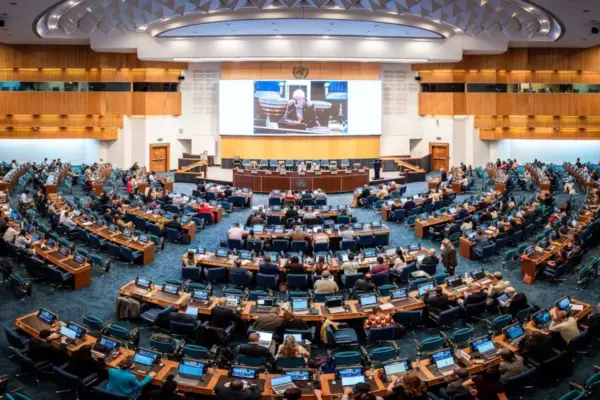
As delegates pack their bags for Yerevan, Armenia, where COP17 gets underway next week, the political landscape surrounding global conservation is entering a critical juncture. COP17 officially marks the crucial halfway point of the Kunming-Montreal Global Biodiversity Framework, setting the stage for the very first comprehensive global review of how effectively countries are progressing toward their 2030 targets.
Global Review and the 2030 Targets
The Kunming-Montreal Global Biodiversity Framework is structured around a comprehensive list of 23 specific targets designed to be achieved by 2030. These targets cover an expansive and interconnected range of environmental topics, spanning the restoration of degraded ecosystems, the mitigation of climate change impacts, and the mobilization of adequate financial resources—particularly for developing nations—to help cover the mounting costs of protecting fragile ecosystems.
As part of the monitoring mechanisms embedded within the GBF and its underlying governance documents, governments agreed to a structured schedule to track collective and individual progress. This framework mandated the preparation of a comprehensive global report coordinated by the United Nations. The findings of this report draw directly from countries’ newly submitted NBSAPs, their individual national targets, and their seventh national reports, which were originally due to be submitted to the UN in February of this year.
Carbon Brief’s updated analysis indicates that out of 196 total parties to the convention, 113—representing approximately 58% of the total—have successfully met the call to produce a brand-new NBSAP. This is a dramatic upward shift from the mere 28% of nations that had completed their pledges roughly a year after the original UN deadline had passed.
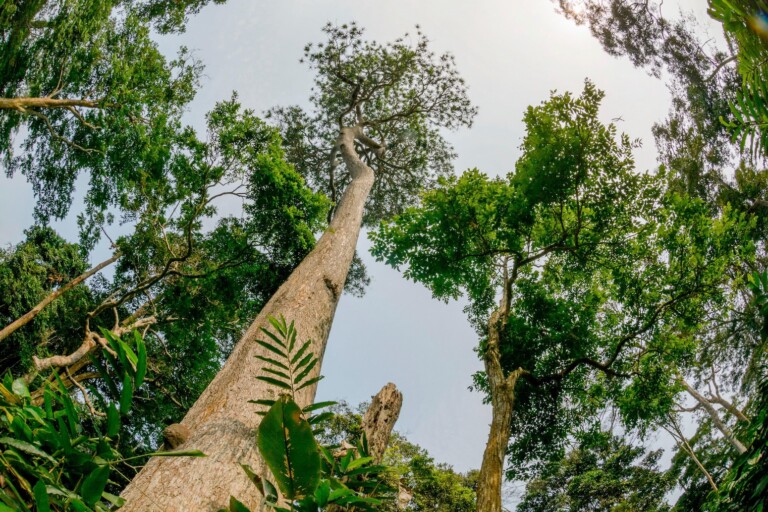
Regional trends highlight significant shifts in engagement over the past two years. Notably, a large wave of African nations has published new NBSAPs in the intervening months. Among the African countries that have released their updated plans are Algeria, Benin, Botswana, Cameroon, Comoros, Congo, Côte d’Ivoire, the Democratic Republic of Congo, Egypt, Equatorial Guinea, Eritrea, Ethiopia, Gabon, Gambia, Guinea, Lesotho, Liberia, Madagascar, Malawi, Mali, Namibia, Rwanda, Senegal, Sierra Leone, Somalia, Sudan, Zambia, and Zimbabwe.
Similarly, several key South American nations have stepped up to publish their updated strategies. This group includes Brazil—widely recognized as the world’s most biodiverse nation—alongside Belize and Chile. Meanwhile, the host nation for COP17, Armenia, formally published its own updated NBSAP in April, cementing its institutional readiness to welcome international negotiators.
Gaps in the Global Framework
Despite the steady rise in overall compliance, significant policy and geographic gaps remain within the global architecture. According to the foundational rules of the GBF, countries that found themselves unable to meet the strict criteria for a full NBSAP ahead of COP16 were permitted to submit interim national targets instead. Unlike comprehensive NBSAPs, these national targets simply list specific biodiversity goals that a government aims to achieve, omitting the detailed, actionable plans outlining how those goals will be realized on the ground.

While the number of nations producing at least one national target stood at 119 by the close of COP16, that figure has since climbed to 175, representing roughly 89% of all member countries. Furthermore, while only about half of all nations managed to meet the initial February deadline to produce their seventh national reports this year, that compliance rate has since risen to 73%.
However, several prominent nations have yet to finalize their comprehensive strategies. Most notably, four of the world’s designated megadiverse nations—countries that harbor the vast majority of Earth’s remaining species—have failed to publish new NBSAPs. These holdouts include Papua New Guinea, Peru, South Africa, and the United States.
The absence of the United States carries distinct diplomatic implications, as the nation remains the only UN member country that is not a formal signatory to the UN Convention on Biological Diversity. Additionally, Russia, the country possessing the largest land area on the planet, has similarly failed to produce a new NBSAP to date, presenting a major blind spot in northern hemisphere ecological monitoring.
Financing Challenges and Institutional Support
Throughout the tumultuous rollout of the post-2022 biodiversity framework, numerous developing nations have consistently voiced concerns that severe financial constraints have acted as the primary barrier preventing them from finalizing their NBSAPs. Crafting rigorous, scientifically grounded national strategies requires substantial technical capacity and funding, commodities that are often scarce in economically vulnerable regions.
To address these systemic hurdles, multilateral financial institutions have stepped up their assistance efforts. A spokesperson for the Global Environment Facility (GEF)—the principal multilateral fund tasked with providing financial aid to help developing nations prepare their NBSAPs—reported that out of 139 countries that requested financial support following COP16, 120 successfully accessed the necessary funds.
The spokesperson added that the UN Environment Programme has been actively working behind the scenes to resolve remaining bureaucratic and administrative issues to ensure that the final 19 countries can secure their requested financial assistance as quickly as possible. As delegations prepare to travel to Yerevan for COP17, the availability of long-term nature finance and the bridging of these persistent implementation gaps are expected to dominate the negotiating agenda.