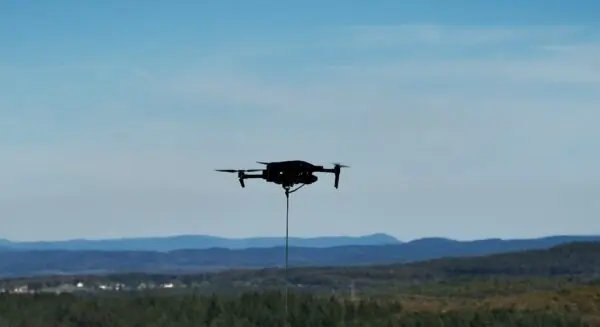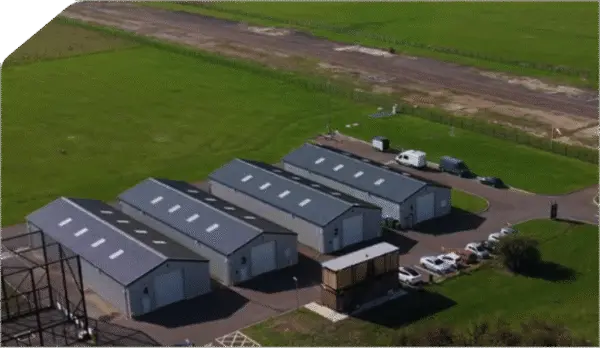
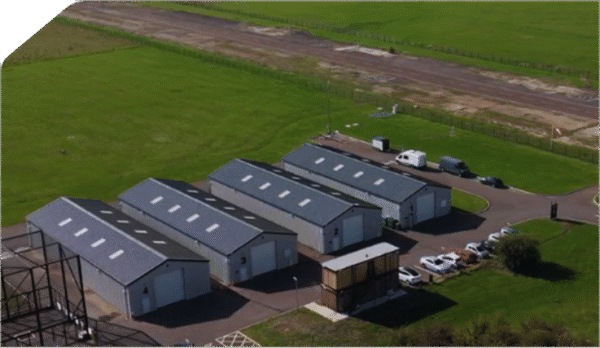
The United Kingdom’s burgeoning commercial drone and autonomous systems industry is set to receive a major infrastructure boost following an announcement by the Satellite Applications Catapult. Unveiled at the DroneX trade show in London, plans are officially underway to establish the National Autonomy and Drone Innovation Centre (NADIC) at Westcott Venture Park in Buckinghamshire.
Backed by a substantial £2.25 million (approximately $3 million) investment from Buckinghamshire Council, the new facility is designed to dramatically expand the Catapult’s existing Drone Test and Development Centre at the Westcott site. The overarching goal of the initiative is to tackle one of the most persistent and practical bottlenecks facing the modern UK aerospace and unmanned systems sector: a severe shortage of accessible, specialized infrastructure where developers can rigorously test their technologies and generate regulator-grade safety evidence under controlled, repeatable conditions.
Set against a backdrop of ambitious government targets for routine Beyond Visual Line of Sight (BVLOS) flight by 2027—and economic forecasts predicting the domestic drone economy could soar to a staggering £45 billion (about $60 billion) by 2030—the launch of NADIC marks a critical turning point for the industry. While British engineering and innovation have consistently proven that advanced autonomous systems can work in theory, bridging the gap between a promising prototype and a commercially viable, fully certified platform has remained an uphill battle for many developers.
Capabilities at the National Drone Testing Centre
The newly announced National Autonomy and Drone Innovation Centre will offer an extensive suite of advanced testing capabilities tailored to the complex demands of modern uncrewed aerial vehicles and autonomous systems. Among its core offerings will be specialized position, navigation, and timing (PNT) test facilities. These systems are critical for assessing how autonomous platforms perform in environments where satellite navigation signals are unavailable, disrupted, or maliciously manipulated—a growing concern for commercial operators relying on GPS in complex urban or remote areas.
Additionally, NADIC will house a dedicated Satellite Communications Integration and Test Lab. This laboratory will be utilized to validate drones and broader autonomous systems across a diverse mix of satellite, terrestrial, and hybrid communications networks, providing essential support for long-distance and BVLOS operations. To complement these technical environments, a state-of-the-art Remote Operations Control Centre will enable operators to undergo rigorous training, simulate complex missions, and validate remote command-and-control procedures prior to deployment in the field.
Physical testing capabilities at the facility will be equally robust. A specialized Windshaper system will be capable of generating precise, highly repeatable indoor wind conditions, ensuring that testing schedules remain unaffected by adverse weather conditions. Furthermore, an integrated robotic arm will automate repeatable drone testing procedures, while an advanced motion platform will accurately recreate the dynamic operating conditions experienced on moving vessels, transport vehicles, and uneven terrain.
The initial rollout of these physical testing assets—including the robotic arm, motion platform, and control room—is expected to come online this coming autumn, with the full completion and operational readiness of the entire facility anticipated in the second half of 2027.
The centre’s primary beneficiaries will be small and medium-sized enterprises (SMEs) and component builders. These smaller firms form the bedrock of the industry by developing the advanced navigation, sensing, communications, and autonomy systems upon which the wider sector depends. However, they frequently bear the heaviest evidence burden because larger commercial operators are often hesitant to integrate third-party equipment into their fleets until its safety and reliability have been exhaustively proven.
Closing the UK Drone Evidence Gap
Despite the immense commercial potential and enthusiastic backing from government and industry stakeholders, the everyday reality of operating commercial drones in the United Kingdom remains tightly restricted. Nearly every commercial drone flight in the country still operates as an individually authorized, time-limited exception. Companies are routinely required to prove through empirical evidence that each specific operation is safe for the airspace it occupies.
Facilities capable of producing this evidence to a standard recognized by aviation regulators have historically been scarce, leaving smaller enterprises at a distinct disadvantage. This regulatory bottleneck was formally underscored in July when the Civil Aviation Authority (CAA) published its Airspace Architecture Concept of Operations. The CAA explicitly stated that today’s bespoke, case-by-case approvals "are not designed to support the volume of operations needed for widespread commercial use."
John Abbott, chief executive of the Satellite Applications Catapult, emphasized the transformative nature of the new facility during the announcement at DroneX.
"Britain is very good at proving that drones can work. What we have never built is the shared infrastructure that turns a promising system into a proven one. Companies come to us with technology that works and a gap in their evidence, and there has been nowhere accessible for many of them to close it," Abbott said. "A company should be able to arrive with a system, establish its operational limits under controlled conditions, and leave with data that goes straight into a regulatory application. This facility offers a serious step forward for the sector."
When fully operational, NADIC will sit alongside the Catapult’s existing Future Networks Development Centre, also located at Westcott. The latter facility is dedicated to researching and developing resilient communications architectures that seamlessly combine satellite and terrestrial networks, creating a powerful synergy of aerospace innovation at the Buckinghamshire site.
Local leadership has also championed the project as a vital catalyst for regional economic development and job creation. Steven Broadbent, leader of Buckinghamshire Council, highlighted the strategic importance of the council’s financial commitment to the initiative.
"This is about investing in Buckinghamshire’s future economy and making sure residents benefit from the skilled jobs, training opportunities and wider prosperity that successful innovation sectors can bring," Broadbent said. "The Buckinghamshire Growth Fund was created for exactly this purpose—to invest in projects that bring long-term value to our economy, communities, businesses, residents and I am delighted that this first major funding decision does exactly that."