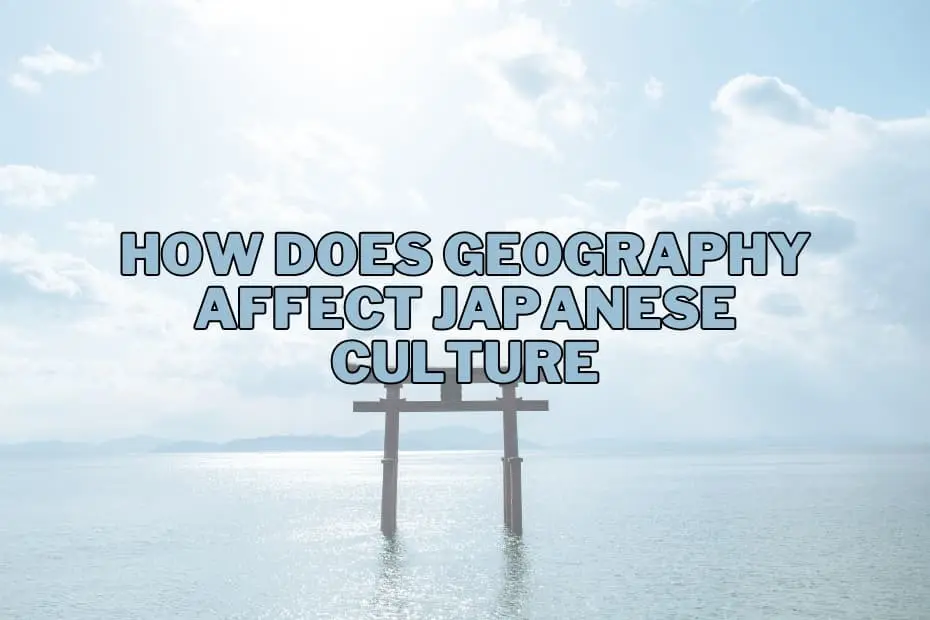
The physical environment of any nation plays a vital role in directing the course of its history, but in Japan, geography and culture are so deeply intertwined that they are virtually inseparable. From its dramatic mountainous interior to the vast, unpredictable seas that surround its shores, the physical landscape of the Japanese archipelago has profoundly influenced the development of its society over the course of centuries.
To truly understand Japan is to look beyond maps, political borders, and topography. It requires an exploration of how a rugged and volatile environment has actively sculpted the country’s traditions, spiritual beliefs, cuisine, artistic expressions, and national psyche. The unique interplay between geography and culture in Japan reveals how the land itself has become the ultimate cornerstone of Japanese identity.
The Physical Geography of the Japanese Archipelago
To understand the cultural dynamics of Japan, one must first understand its unique physical makeup. The nation is not a singular landmass but an archipelago comprised of nearly 7,000 islands. At the core of this vast chain lie four main islands: Hokkaido in the north, Honshu forming the mainland heart, and Shikoku and Kyushu situated to the south.
This geographic fragmentation and physical isolation from continental Asia allowed Japan to develop a highly distinct cultural identity. While it absorbed influences from its nearby neighbors over the millennia, its island borders acted as a natural filter, allowing Japanese society to adapt external ideas to fit its own unique domestic context. Within the archipelago itself, more isolated regions—such as the Ryukyu Islands in the far south, including Okinawa—developed highly localized traditions, adding layers of diversity to the broader national culture.
A Mountainous Divide and Its Societal Implications
Mountains dominate the Japanese landscape, covering more than 70 percent of the country’s total landmass. This rugged, volcanic terrain historically acted as a series of natural barriers, isolating communities from one another for generations. This internal isolation gave rise to a rich tapestry of regional dialects, unique local customs, and highly specialized regional cuisines.
The dominance of mountainous terrain also left very little flat land available for agriculture. With arable land at a premium, the Japanese people had to adapt their farming practices. This geographic constraint made rice cultivation a highly organized, meticulous, and collaborative endeavor. To maximize yield on limited flat ground, communities had to work in close cooperation, laying the foundation for a highly collectivist society that prioritizes communal harmony and mutual support over individualism.
Climate Diversity and the Philosophy of the Seasons
Stretching across multiple degrees of latitude, Japan experiences a remarkably diverse range of climates. The northern island of Hokkaido undergoes long, snow-heavy winters, while the southern reaches of Okinawa enjoy subtropical warmth. This dramatic climatic variation has fostered a deep cultural appreciation for the transition of the seasons.
In Japan, the changing seasons are not merely observed; they are celebrated as a central part of existence. This is epitomized by traditions such as hanami (cherry blossom viewing) in the spring and tsukimi (moon viewing) in the autumn.
This seasonal awareness also heavily dictates the culinary philosophy of shun, which emphasizes harvesting and consuming foods at the absolute peak of their natural season. Through shun, the Japanese people maintain an intimate, sensory connection to the shifting rhythms of the earth.
Resilience Forged in the Pacific Ring of Fire
Japan’s geographic position is defined by its placement along the volatile Pacific Ring of Fire. The country is highly susceptible to natural disasters, including frequent earthquakes, devastating tsunamis, and volcanic eruptions. Rather than driving the population to despair, these persistent environmental threats have forged a culture characterized by profound resilience, adaptability, and preparedness.
This constant vulnerability is visible in every level of Japanese society. It is reflected in traditional and modern architecture, which utilizes flexible, earthquake-resistant engineering, as well as in routine community-based disaster drills.
Spiritually, living on unstable ground has cultivated a philosophical acceptance of impermanence. The understanding that life and physical structures can be swept away at any moment has taught the Japanese people to find beauty in the fleeting and to maintain a pragmatic, respectful relationship with the formidable forces of nature.
Geographic Influences on Japanese Society and Urbanization
The physical limitations of the land have directly dictated where and how the people of Japan live, work, and build their communities.
The Maritime Connection and Coastal Identity
As an island nation completely surrounded by the ocean, Japan has naturally developed a deeply ingrained maritime culture. For centuries, the sea has served as both a protective barrier and a vital gateway for trade, communication, and resource gathering.
The ocean is also the primary source of sustenance for the nation. Fishing is not merely an industry in Japan; it is a cultural pillar. The bounty of the surrounding waters is reflected in the daily diet, where seafood is a central staple.
From the world-renowned sushi of Hokkaido to the popular street food of Osaka, such as takoyaki (octopus balls), the culinary identity of the nation is intimately tied to its coastlines. Historically, these maritime routes also allowed for the exchange of ideas, technology, and art with the rest of the world, shaping Japan’s evolution.
Urban Density and the Preservation of Rural Life
Because flat, habitable land is so scarce, Japan’s population is heavily concentrated in dense coastal plains and valleys. This has resulted in the growth of massive, highly populated urban centers like Tokyo and Osaka.
To manage this extreme density, Japanese society has pioneered highly innovative solutions in architecture, housing, and infrastructure. This is evident in the prevalence of compact, highly efficient living spaces and the development of some of the world’s most advanced, punctual public transportation networks.
In stark contrast to these hyper-modern, bustling metropolises, Japan’s rural mountainous areas maintain a much slower, traditional pace of life. These rural communities serve as cultural repositories, preserving ancient agricultural practices, close-knit communal structures, and local festivals that have remained unchanged for centuries.
Regional Diversity in Traditions and Dialects
The geographic barriers that carve up the archipelago have ensured that Japan is far from a monoculture. The country boasts an incredible array of regional identities, dialects, and traditions.
In the far north, the indigenous Ainu culture of Hokkaido—with its deep spiritual ties to the cold northern forests and wildlife—stands in stark contrast to the Ryukyuan culture of Okinawa in the south, which features its own distinct language, musical traditions, and maritime customs. Across the main islands, variations in geography have produced localized festivals (matsuri), traditional crafts, and unique regional identities that remain a source of great pride for local residents.
Agriculture and the Culinary Landscape
The relationship between the Japanese people and their land is perhaps most tangibly expressed through their food. Agriculture and cuisine are direct reflections of the country’s geography.
Rice Cultivation as a Cultural Anchor
Rice is far more than just a dietary staple in Japan; it is a sacred cultural symbol. Because of the mountainous terrain, traditional flat fields were often unavailable, leading to the creation of stunning terraced rice paddies that climb up steep hillsides.
The labor-intensive process of maintaining these terraces and managing water distribution required intense communal cooperation. This collective effort solidified a societal structure based on harmony, shared responsibility, and meticulous attention to detail. Rice remains central to many Shinto rituals and seasonal festivals, representing the spiritual bond between the people, the ancestors, and the soil.
The Abundance of the Sea
With its extensive coastline, Japan has access to some of the richest fishing grounds in the world. This geographic abundance has made seafood the star of the traditional Japanese culinary arts.
Dishes such as raw sashimi, lightly battered tempura, and rich miso soups highlight the natural flavors of fresh, locally sourced marine ingredients. Each coastal region boasts its own seasonal delicacies, from the prized crabs of Hokkaido’s freezing northern waters to the carefully prepared fugu (pufferfish) of Kyushu in the south.
Seasonal Eating and Celebrations of the Harvest
The culinary concept of shun ensures that menus change in tandem with the seasons. This practice of eating foods at their nutritional and flavorful peak is celebrated throughout the year in various food-centric festivals.
Events like the autumn harvest celebrations and spring cherry blossom picnics demonstrate a deep cultural respect for the natural cycles of the earth. By aligning their diet with what the land naturally provides at any given moment, the Japanese people maintain a harmonious relationship with their geographic surroundings.
Art, Religion, and Philosophy Inspired by Nature
The dramatic beauty and volatile power of the Japanese landscape have long served as the primary inspiration for the nation’s spiritual, philosophical, and artistic movements.
Nature as the Ultimate Artistic Muse
For centuries, Japanese artists, poets, and writers have turned to the natural world for inspiration. The country’s iconic landscapes are immortalized in classic ukiyo-e (woodblock prints) and celebrated in the minimalist structure of haiku poetry.
Natural landmarks like the majestic, snow-capped Mount Fuji and the tranquil Arashiyama bamboo grove in Kyoto are recurring motifs. These artistic representations do not merely capture visual beauty; they convey a deeper philosophical appreciation for the sublime power and transient nature of the physical world.
Shintoism and the Sanctity of the Land
Shinto, the indigenous spirituality of Japan, is rooted in the animistic worship of nature. In the Shinto belief system, the natural world is inhabited by spirits known as kami. Mountains, rivers, ancient trees, and waterfalls are not viewed as inanimate objects, but as sacred entities to be revered.
Consequently, Shinto shrines are carefully integrated into the natural landscape, often situated in deep forests, at the base of majestic mountains, or overlooking the sea. This religious framework has fostered a deep-seated cultural reverence for environmental conservation and a profound sense of stewardship over the land.
Zen Buddhism and Landscape Design
Zen Buddhism, which emphasizes mindfulness, simplicity, and meditation, found a natural partner in Japan’s geography. This philosophy is beautifully materialized in the design of traditional Japanese dry landscape gardens (karesansui).
These gardens use carefully arranged rocks, raked gravel, and moss to represent larger geographic features like mountains, rivers, and oceans. By compressing the grand scale of nature into a small, manicured space, Zen gardens create serene environments that encourage deep contemplation and a feeling of oneness with the universe.
Economy, Trade, and Modern Environmental Challenges
Geography continues to play a decisive role in Japan’s modern economic strategies, trade relations, and approach to environmental sustainability.
A Strategic Maritime Trade Hub
Situated off the coast of East Asia, Japan’s geographical position has made it a vital hub for global maritime commerce. Its deep-water ports, such as Yokohama and Kobe, serve as crucial gateways for international trade.
Historically and in the modern era, Japan’s proximity to China, the Korean Peninsula, and Southeast Asia has facilitated continuous economic and cultural exchange, positioning the nation as a central player in the global economy.
Overcoming Resource Scarcity Through Innovation
Despite its economic prowess, Japan is remarkably poor in natural mineral resources and fossil fuels. This severe geographic limitation has forced the nation to become a global leader in technological innovation, manufacturing efficiency, and resource management.
Rather than relying on raw material exports, Japan has built its economy on processing imported materials into high-value, high-tech goods, turning its geographic challenges into a powerful driver of industrial ingenuity.
Tourism and the Allure of Geographic Wonders
In the modern era, Japan’s diverse geography has become a major driver of international tourism. Millions of travelers flock to the country annually to experience its natural wonders.
Visitors can ski down the powder-snow slopes of Hokkaido, soak in therapeutic, geothermally heated hot springs (onsen) tucked away in volcanic valleys, or relax on the tropical beaches of Okinawa. This geographic variety allows Japan to offer a wide range of travel experiences, boosting regional economies across the archipelago.
Modern Sustainability and Environmental Stewardship
As a highly industrialized, densely populated nation with limited space, Japan faces pressing environmental challenges. In response, the country has implemented forward-thinking urban planning and sustainability initiatives.
From cutting-edge green energy projects to rigorous community waste reduction and recycling programs, modern Japan is actively seeking ways to balance technological progress with environmental conservation. These efforts reflect a continuation of the traditional cultural value of living in harmony with the natural world.
Q&A: How Geography Affects Japanese Culture
How has Japan’s mountainous terrain influenced its culture?
The mountainous terrain historically isolated communities, leading to a rich diversity of regional dialects, customs, and culinary traditions. Because
the rugged landscape limited arable land, communities had to develop highly cooperative and organized methods for rice cultivation, fostering a collective, community-oriented social structure.
Why is the sea so important to Japanese traditions and cuisine?
As an island nation, Japan has always relied on the sea for sustenance, trade, and defense. Seafood is a foundational component of the Japanese diet, with regional dishes showcasing local marine resources. The ocean also served as a vital channel for cultural exchange with neighboring Asian countries and the wider world.
How do natural disasters shape Japanese resilience and preparedness?
Living on the volatile Pacific Ring of Fire has taught the Japanese population to adapt to frequent earthquakes, tsunamis, and volcanic eruptions. This constant threat has created a highly prepared society, visible in advanced earthquake-resistant architecture and regular community safety drills. Spiritually, it has fostered a philosophical acceptance of impermanence and a deep respect for the forces of nature.
What role does geography play in regional cultural diversity in Japan?
Geographic barriers like mountain ranges and ocean channels kept regions relatively isolated for centuries. This allowed distinct regional identities to flourish. For example, the indigenous Ainu culture of snowy Hokkaido in the north is vastly different from the Ryukyuan culture of the subtropical Okinawan islands in the south.
How has geography influenced Japanese art and religion?
Japan’s dramatic landscapes are central to its artistic and spiritual traditions. The indigenous religion, Shintoism, is based on the worship of nature, treating mountains, rivers, and trees as sacred. Zen Buddhism uses manicured rock gardens to mimic natural landscapes, while traditional art forms like ukiyo-e woodblock prints and haiku poetry frequently focus on seasonal changes and natural landmarks like Mount Fuji.