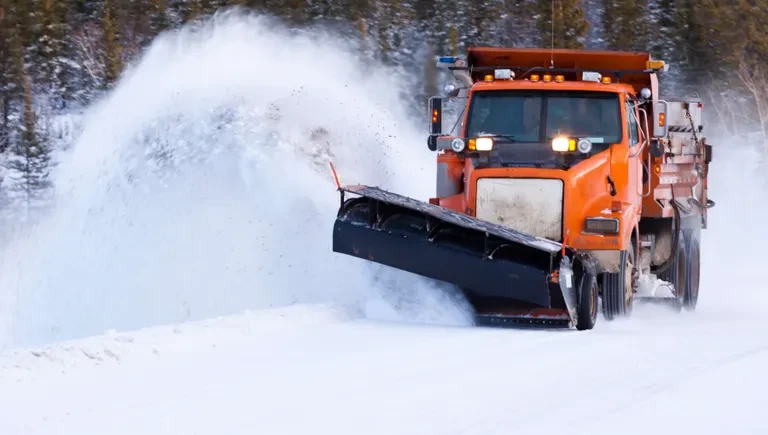
As residents increasingly demand hyper-local live updates and city councils press for rigorous operational accountability, municipal public works teams are rapidly modernizing their approach to winter weather. Moving far beyond traditional reliance on two-way radios, static paper maps, and handwritten logs, modern departments are adopting digital platforms to gain a live, street-level picture of winter storms as they unfold.
Getting heavy trucks out onto the road when a major winter storm hits is rarely the core problem for municipal agencies. Most public works departments have mastered the logistics of deploying a fleet at the first sign of freezing precipitation. The genuinely difficult phase begins once the trucks are actively deployed: knowing precisely which streets have been fully cleared, identifying which priority corridors require an immediate secondary pass, tracking the exact real-time location of every vehicle in the fleet, and adjusting strategies dynamically as snow continues to accumulate hour after hour.
For many cities across North America, those vital operational answers still rely on manual radio check-ins, folded paper maps pinned to command center walls, and the institutional memory of veteran snowplow drivers. While that analog approach can adequately manage a light dusting or a minor squall, it breaks down during a severe, multi-day winter storm. Under heavy weather conditions, the clearest picture of what actually occurred often arrives only the following morning—long after municipal leaders have any ability to alter routes, reallocate resources, or respond to compounding service complaints.
This persistent operational gap is driving a fundamental shift in how municipal agencies run winter operations. A growing number of cities are beginning to treat snow response as an active management process that they can monitor and steer in real time, rather than a chaotic emergency that can only be reconstructed long after the storm has cleared.
Snow Doesn’t Work Like Other City Services
Part of the underlying challenge is that snow removal fundamentally differs from the way most municipal services are measured, tracked, and evaluated. In solid waste collection, for instance, the basic unit of work is a discrete stop. A sanitation truck services a specific residential property or commercial container, the task is marked complete, and the vehicle moves on to the next address.
Snow removal, by contrast, operates under an entirely different set of physical and logistical rules. The fundamental unit of work here is the continuous road segment. A plow must cover a specified stretch of street at an appropriate service speed—often requiring multiple passes throughout a storm—and overall success is judged by the percentage of the broader road network that remains clear and safe, rather than the sheer number of distinct locations a single vehicle visited. Furthermore, plowing, salting, and applying brine each follow their own distinct operational logic, and a single stretch of road may require all three treatments at different stages of a single weather event.
This structural complexity changes the nature of the questions supervisors must answer from the command center. Instead of asking basic questions like whether a specific address was visited, dispatchers and managers need to know which neighborhood streets have been plowed within the last four hours, which emergency medical corridors are due for another chemical pass, and whether the designated salt route on the east side of town has been fully completed. A simple flashing dot on a digital map showing the GPS coordinates of a truck does not answer any of those strategic questions. What is required instead is a comprehensive, verifiable record of what treatment each individual road segment has received.
From Reacting to Managing
When winter operations are powered by granular, segment-level data, the command center experience of a major winter storm changes dramatically. As a snowplow traverses a street, key operational details—including the exact time of service, the number of passes completed, the specific type of treatment applied, and the current completion status—are recorded automatically through connected fleet technology. Supervisors can instantly identify where snow coverage is wearing thin, where road conditions are deteriorating, and where high-priority arterial streets still require immediate attention, all while there is still ample time to intervene and direct resources effectively.
This live operational visibility also transforms how field crews respond to the inevitable surprises that accompany winter weather. Winter storms rarely adhere strictly to pre-planned schedules; drivers routinely encounter unexpected obstacles such as blocked roadways, downed power lines, and abandoned passenger vehicles, while brand-new service requests emerge mid-storm, ranging from a drifted cul-de-sac that requires an extra pass to emergency lane clearings for first responders. When drivers can flag these hazards directly from the cab and dispatchers can dynamically reroute nearby trucks in response, the snow removal plan evolves into a flexible strategy that the team can adjust continuously, rather than a rigid document that gets abandoned by the third hour of the storm.
The benefits of this data-driven approach extend well past the immediate conclusion of the storm. When an aggrieved resident or a city council member contacts the department to ask why their specific street was left unplowed or delayed, the agency possesses a defensible, objective record detailing exactly what work was performed, when it happened, and where resources were allocated. That same historical record subsequently forms the empirical foundation for a more efficient, refined winter operations plan ahead of the next major weather event.
What It Looks Like at Scale
Major municipalities across the country are already demonstrating how this technology functions successfully across vast, complex street networks. Kansas City, Missouri, provides a clear example of how a major city manages winter maintenance over extensive urban infrastructure. The city routinely deploys a winter fleet of approximately 300 vehicles utilizing Routeware’s connected snow operations platform, coordinating plowing and treatment citywide through the worst of the winter season. The effectiveness of Kansas City’s advanced winter maintenance program has earned formal recognition from the American Public Works Association, which honored the department with a prestigious snow award for operational excellence.
The broader takeaway for other municipal leaders is not necessarily about the sheer size of the fleet, but rather about the strategic advantage of visibility. Having a real-time picture of where trucks are operating and what road segments they have cleared enables a public works team to plan labor shifts, equipment maintenance, and public communication ahead of a storm, rather than scrambling to catch up after accumulation has already paralyzed the city.
Evaluating Winter Readiness
For public works leaders evaluating their agency’s readiness ahead of the season’s first major storm, asking a targeted set of operational questions can quickly reveal where critical blind spots remain.
Departments must first determine whether they can view coverage by individual street segment or whether they are limited to basic truck location tracking. While standard GPS breadcrumbs merely show where a vehicle has traveled, segment-level verification shows the actual service each street received and how recently that treatment occurred.
Another vital consideration is whether plowing, salting, and brining activities are tracked within a single unified platform. Supervisors who are forced to piece together disparate systems in the middle of an active blizzard inevitably lose precious time they cannot afford to spare.
Cities must also examine whether their operational routes are explicitly built for winter conditions and whether those routes are actively updated before each storm arrives. Efficient routes planned ahead of the season, and then adjusted based on specific meteorological forecasts, translate directly to fewer driven miles, fewer missed residential streets, and a cohesive plan that field crews can actually execute under pressure.
Furthermore, leadership should assess whether supervisors possess the capability to redirect trucks in real time. Having a live, comprehensive view of work currently in progress alongside scheduled maintenance is what ultimately transforms a static plan into a dynamic operation that can be actively steered through changing weather conditions. Systems should also seamlessly connect with existing telematics and mapping tools already embedded within the municipal fleet, as integration is almost always faster and less disruptive than a total system replacement.
Field communication is another critical pillar of modern operations. Drivers must be able to report road hazards, blocked streets, and ad-hoc jobs directly from the cab to dispatch in the moment, rather than waiting until the end of a grueling shift. Finally, municipal leaders must consider whether their department could readily answer a probing council member’s question the following day. If reconstructing a storm response still requires days of combing through tangled radio logs and conducting driver interviews, both public accountability and long-term planning will inevitably suffer.
Winter as an Operation, Not a Scramble
Residents increasingly expect the same level of granular visibility from their municipal government that they routinely experience from commercial delivery and ride-sharing applications. At the same time, city councils and budget directors increasingly expect hard data to back up financial requests and service delivery decisions. As winter weather patterns continue to evolve and become more unpredictable, cities are under mounting public pressure to demonstrate operational resilience even in the face of severe, fast-moving storms.
Municipalities that maintain the capability to monitor their storm response street by street, in real time, find themselves vastly better positioned on all three fronts. The snow will arrive regardless of municipal preparation, but the defining difference lies in whether a department merely struggles to cope during the storm and the difficult week that follows, or manages the challenge with professional ease and confidence while in the thick of it.