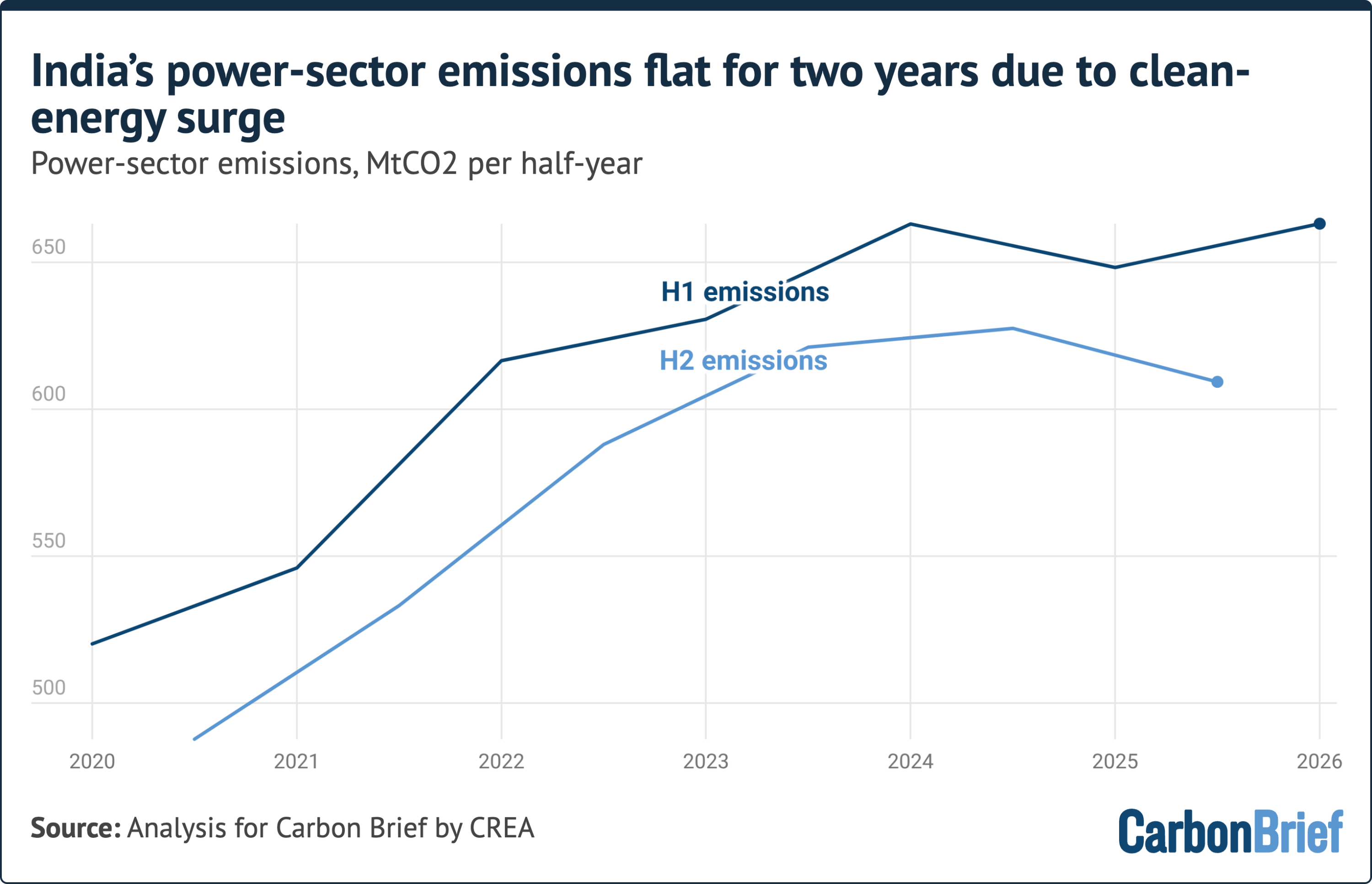
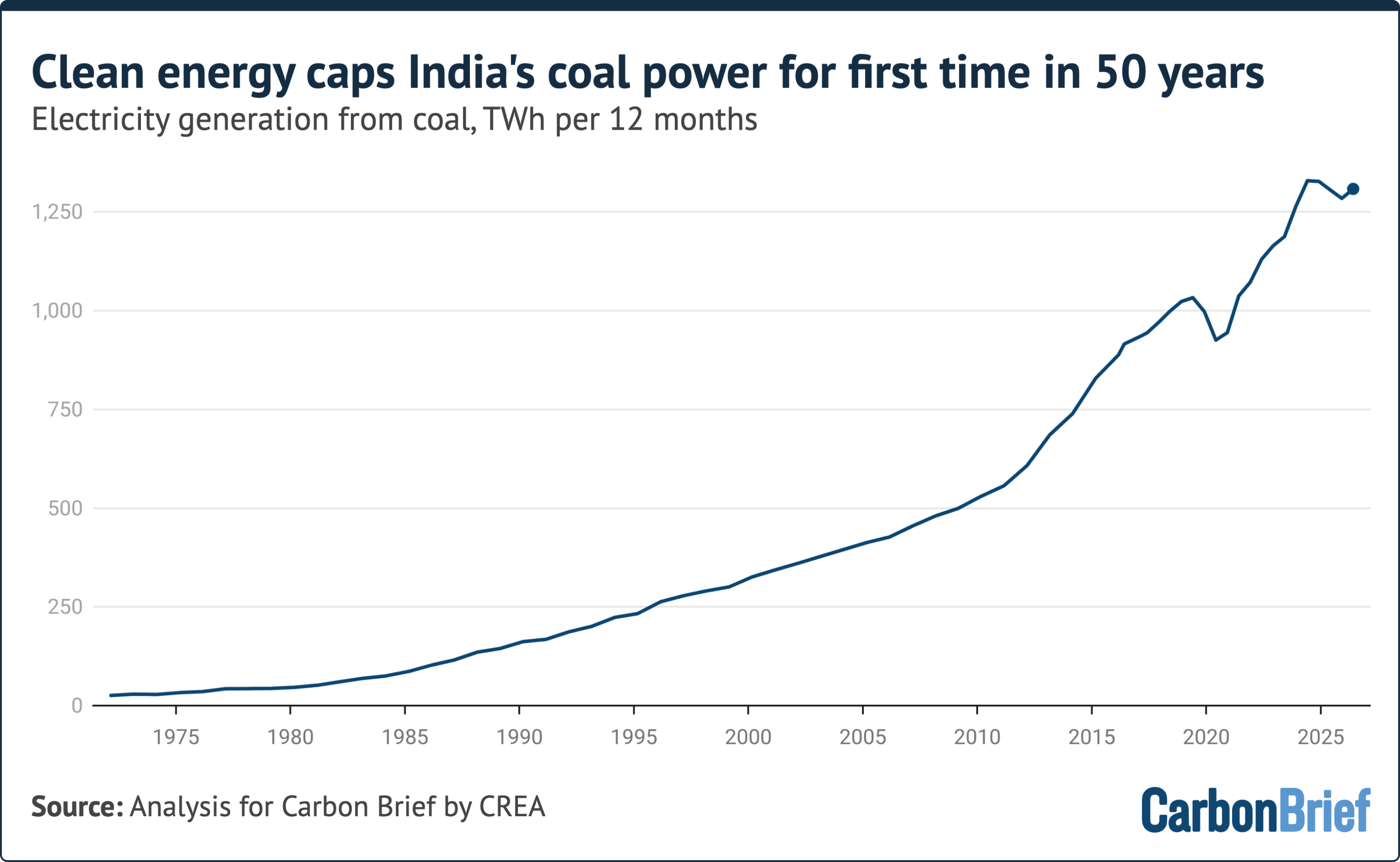
A historic surge in renewable energy generation has kept carbon dioxide (CO2) emissions remarkably in check across India’s power sector, resulting in zero emissions growth from the first half of 2024 to the same period in 2026. According to a new six-monthly analysis conducted for Carbon Brief, this marks the first time in more than 50 years that India has experienced no growth in coal power over a consecutive two-year period, even as national electricity demand continued its upward trajectory.
The unprecedented stabilization of power sector emissions comes alongside consecutive two-year declines in both national oil and gas consumption. These drops in fossil fuel demand have provided vital economic cushioning, helping alleviate the severe domestic shocks of the Hormuz crisis. Nevertheless, broader industrial pressures remain resilient; India’s overall greenhouse gas emissions still grew by 3.7% year-on-year in the first half of 2026, largely driven by expanding activity in the steel, cement, and manufacturing sectors.
Maintaining this delicate balance between surging electricity demand and flatlining power emissions will require substantial infrastructure upgrades. Industry experts note that if India is to sustain its rapid clean-energy expansion, the nation must urgently modernize its electricity transmission grid, rapidly scale up energy storage facilities, and enhance the operational flexibility of its existing coal-fired power plants. Meanwhile, despite the rapid deployment of solar and wind farms, the traditional fossil-fuel industry continues to pursue major capital investments, including multi-gigawatt pipelines for new coal capacity, ambitious coal-to-gasification chemical plans, and expanded domestic coking coal production.
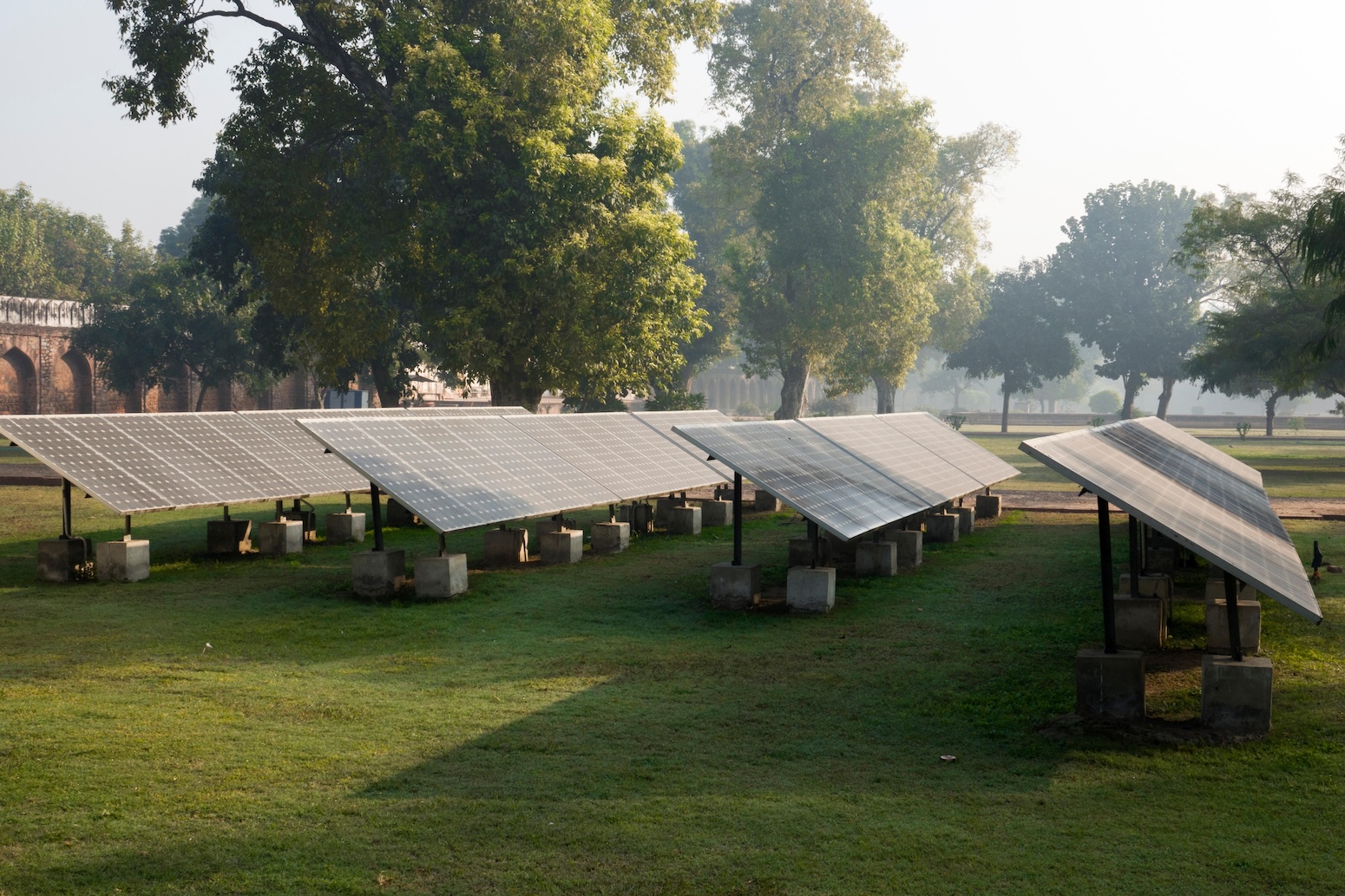
Flatlining Fossils
The latest figures continue a broader structural slowdown that began last year, when India’s CO2 emissions from fossil fuels and cement grew at their slowest pace in two decades. This sharp deceleration was fueled by an aggressive expansion of clean energy, flat oil demand, and a simultaneous rise in heavy industrial output.
By the first half of 2026, this trend cemented itself within the electricity sector. Power sector CO2 output was identical to levels recorded two years prior, effectively wiping out a temporary dip seen in 2025 and holding flat between 600 and 660 million metric tonnes of carbon dioxide per half-year.
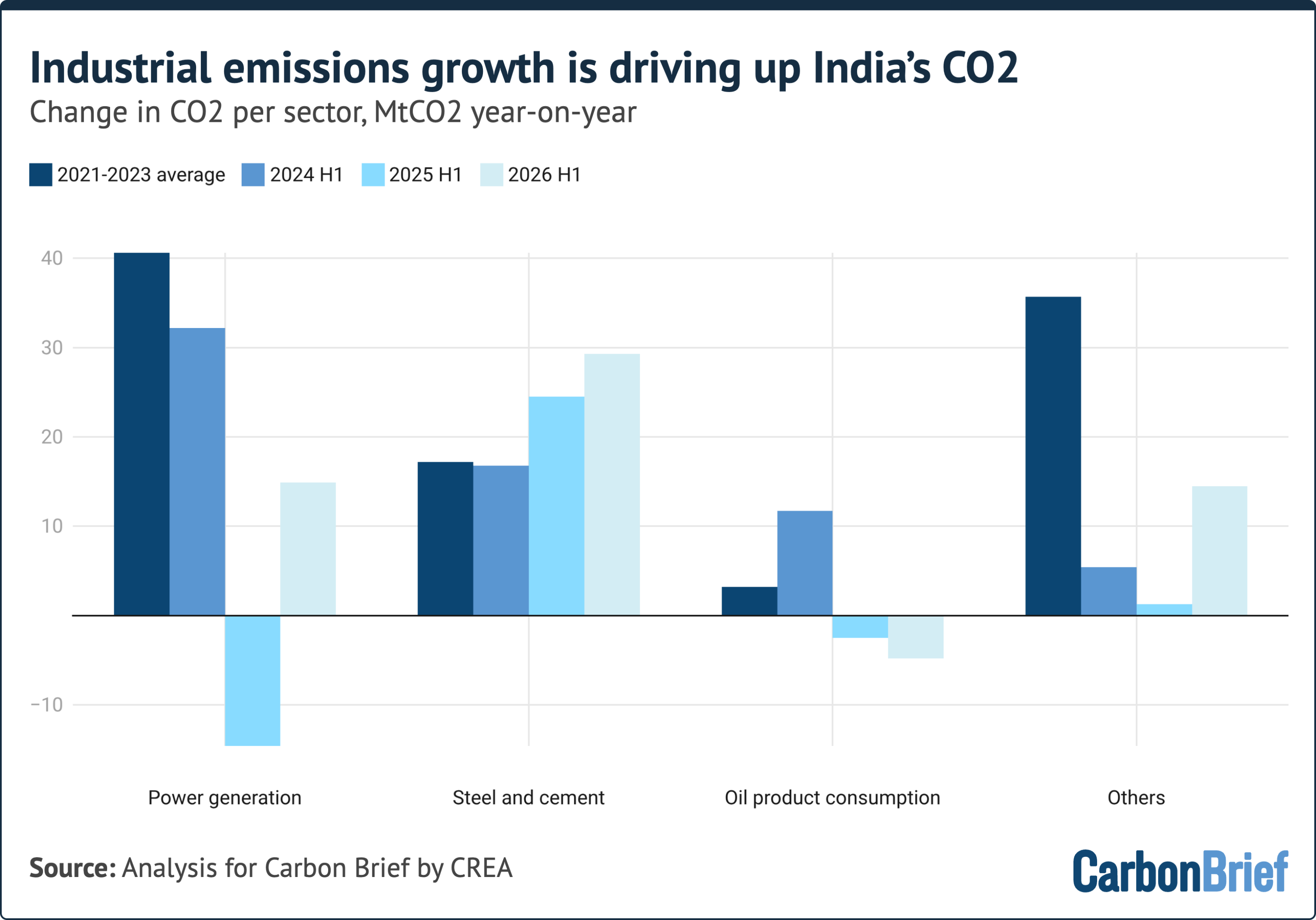
Beyond electricity generation, however, India’s primary emitting sectors exhibited divergent paths. While power sector emissions ticked up by 2.3% year-on-year in the first half of 2026—modestly reversing the previous year’s dip—demand for oil and gas products shrank for yet another consecutive year. Conversely, industrial emissions from steel and cement production surged dramatically, accelerating by 8% year-on-year during the first half of 2026, well above recent historical trends.
Clean-Energy Growth Matches Power Demand
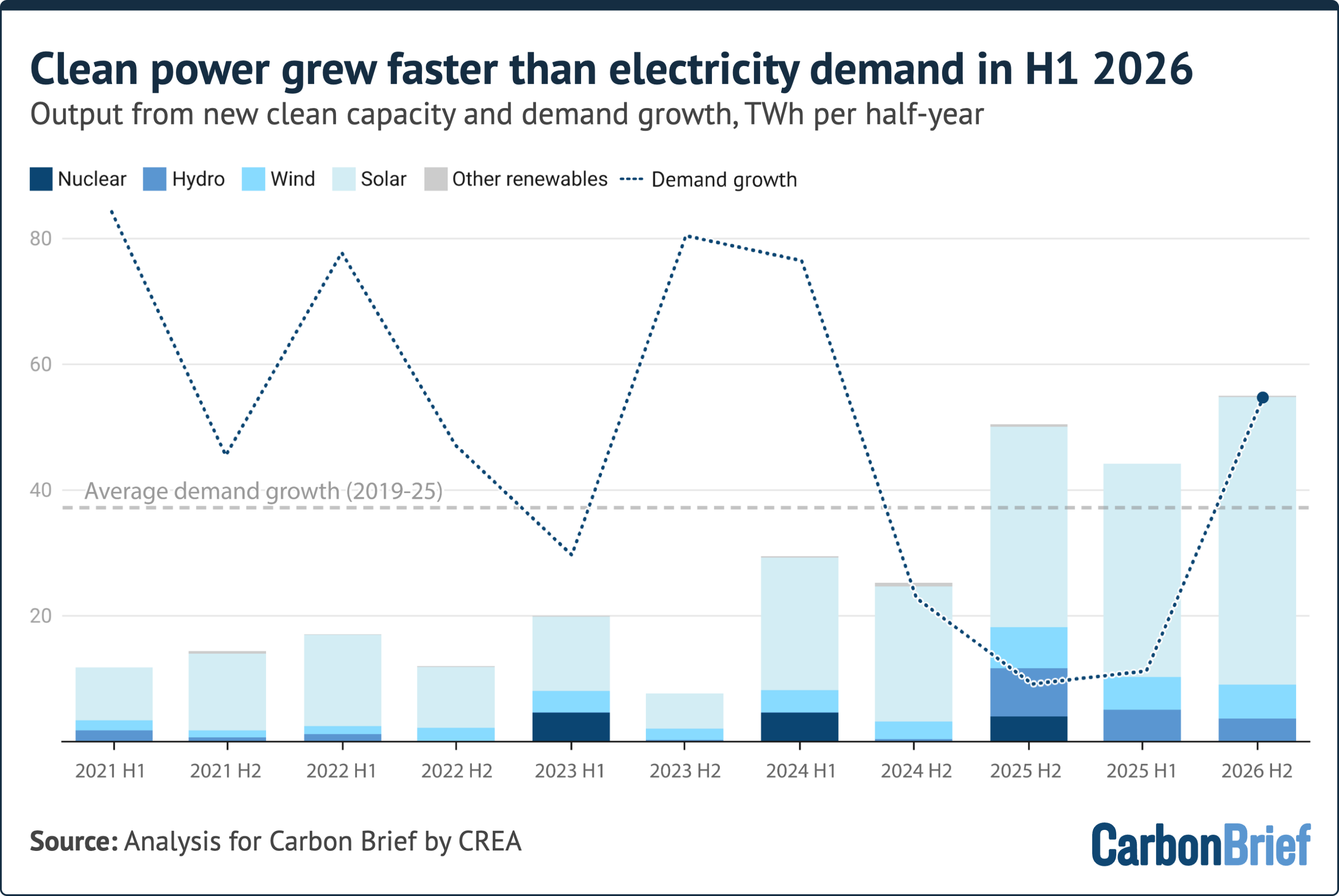
The two-year window from the first half of 2024 to the first half of 2026 witnessed the largest absolute increase in non-fossil power generation in India’s recorded history. This massive influx of renewable power allowed fossil fuel consumption and direct power-sector emissions to remain completely flat despite climbing electricity consumption.
Over this two-year stretch, India’s total electricity generation expanded by 7%, adding roughly 63 terawatt-hours (TWh) of power—an increase equivalent to the total annual electricity consumption of nations like Switzerland or Singapore. This additional demand was met entirely by clean energy sources. Solar generation led the charge with a 44 TWh increase, supported by notable gains from wind (13 TWh), nuclear (7 TWh), and hydroelectric power (8 TWh). Collectively, clean-energy sources injected 70 TWh into the grid over the two-year span, comfortably outpacing the net growth in overall electricity demand.
Underpinning this generation boom was an aggressive infrastructure rollout. Over the past two years, India added 77 gigawatts (GW) of new solar capacity, alongside 11 GW of wind, 5 GW of hydro, and 0.6 GW of nuclear capacity. While solar power continues to dominate the renewable landscape, alternative non-fossil sources collectively accounted for 40% of the overall increase in clean generation.
Driving this electricity demand in 2026 was a potent El Niño cycle, which severely delayed the annual monsoon season, intensified nationwide heatwaves, and consequently triggered an unprecedented spike in residential and commercial cooling demand. To support this variable renewable integration, the Indian government has accelerated investments in energy storage. The Central Electricity Authority’s National Electricity Plan projects a requirement of 82 gigawatt-hours (GWh) of storage capacity by 2026-27, scaling steeply to 411 GWh by 2031-32. By May 2026, government authorities had already issued tenders for approximately 272 GWh of energy storage capacity, including 142 GWh of pumped hydro and 133 GWh of advanced battery storage systems, supplementing existing operating capacities.
Which States Led the Clean-Power Shift?
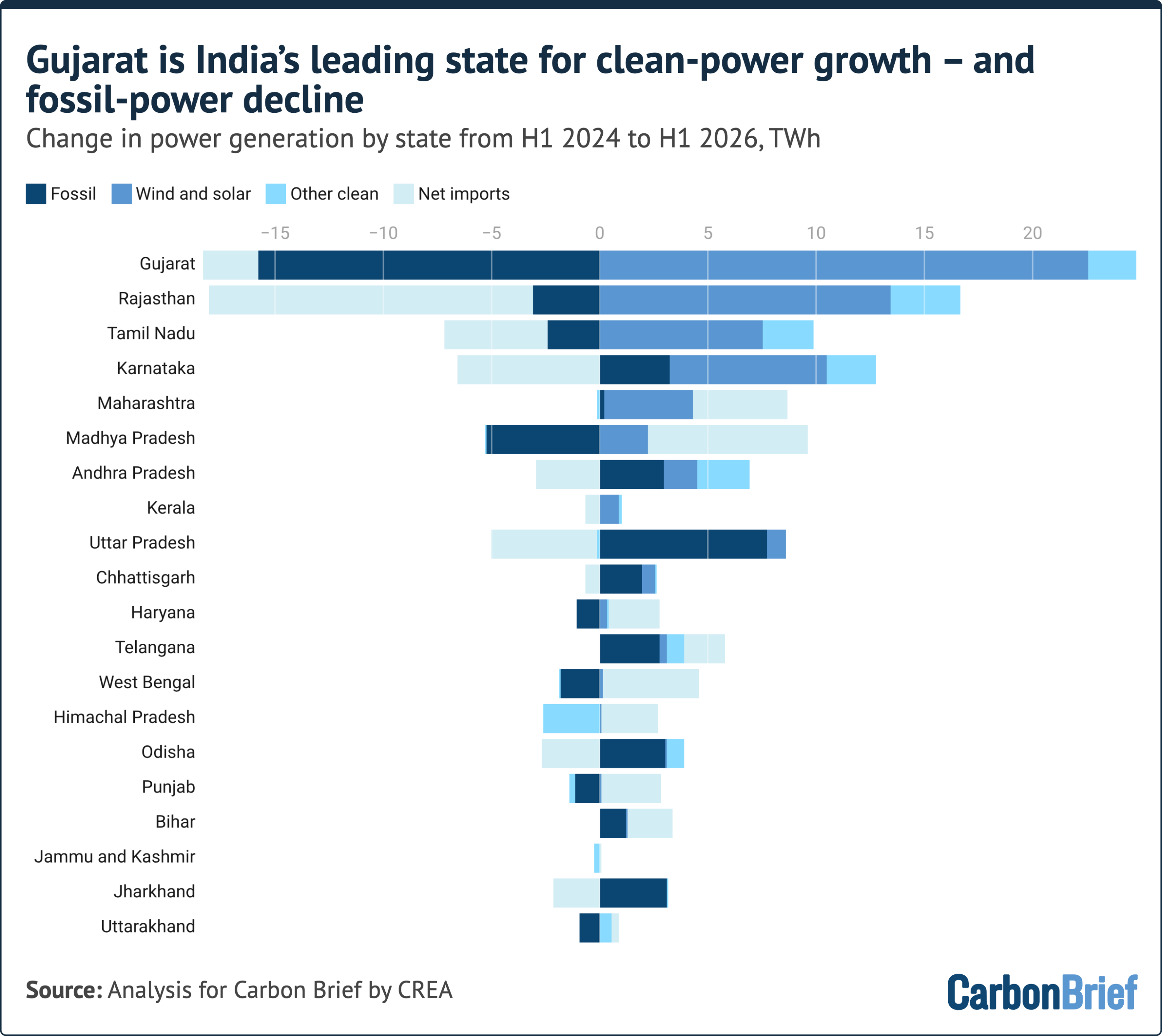
Geographically, the decline in fossil-fuel power generation between the first half of 2024 and the first half of 2026 was concentrated in a select group of states. Gujarat emerged as the national leader, recording both the largest absolute reduction in fossil-fuel generation and the most aggressive expansion of clean power capacity, driven largely by massive wind and solar installations.
Following Gujarat, Rajasthan and Tamil Nadu posted the next-largest gains in clean-power generation, alongside corresponding cuts in fossil-fuel electricity output. Meanwhile, states such as Madhya Pradesh, West Bengal, and Punjab saw reductions in local fossil-fuel generation driven primarily by higher net power imports rather than local renewable buildouts.
Other states, including Karnataka and Andhra Pradesh, successfully generated clean power at a rate exceeding local demand growth, helping stabilize national fossil-fuel consumption. However, because much of this excess clean energy was exported across state lines, these exporting hubs experienced localized increases in fossil-fuel power generation. In contrast, Maharashtra and Telangana—the two states experiencing the steepest surges in overall electricity demand—managed to nearly match their rising consumption entirely through regional clean-power growth.
Fall in Oil and Gas Consumption Continues
India’s national oil consumption continued its downward trajectory through the first half of 2026, contracting by 1.3% year-on-year and accelerating slightly from the 0.7% reduction recorded during the same period in 2025. Although everyday transport fuels like diesel and petrol maintained positive growth, overall oil consumption was pulled downward by steep contractions in liquefied petroleum gas (LPG), petroleum coke (petcoke) used heavily in cement manufacturing, and vital industrial petrochemical feedstocks.
Diesel consumption growth accelerated from 1.8% to 4.1% in the first half of the year, bolstered by robust freight movement and heightened agricultural demand. The delayed monsoon forced farmers to rely more heavily on diesel-powered irrigation pumps. Petrol consumption rebounded strongly, increasing 6.9% year-on-year after flatlining in early 2025, reflecting sustained growth in passenger vehicle and two-wheeler sales.
This petrol demand growth, however, was visibly tempered by a significant scaling up of domestic ethanol blending. India successfully hit its ambitious target of 20% ethanol blending five years ahead of schedule in the 2025-26 period, shaving a full percentage point off net petrol consumption growth. Concurrently, electric vehicle (EV) adoption gained substantial momentum across commercial and passenger segments, with major urban centers like Delhi rolling out aggressive EV fleet policies to accelerate electrification in two-wheelers, three-wheelers, and commercial transit.
Conversely, aviation fuel demand growth slowed sharply from 5% to 2% amid international supply chain disruptions and airspace closures resulting from the Hormuz crisis, which also drove up operating costs for commercial airlines. LPG consumption contracted by 7% following widespread global supply disruptions, while petcoke consumption plummeted by 9.9% as surging global prices prompted cement manufacturers to substitute petcoke with thermal coal. Industrial chemical feedstocks, particularly naphtha, faced severe pressures as import prices nearly doubled and domestic prices jumped by roughly 60%, forcing petrochemical producers to significantly cut operating rates.
Rapid Emission Growth from Heavy Industry Continues
Despite rising raw material costs and tightening profit margins, India’s domestic steel and cement production grew by 8% and 9% respectively during the first half of 2026. This industrial expansion was supported by robust institutional investments in the national real estate sector. However, elevated global prices for imported coking coal and higher logistical freight costs squeezed manufacturer profit margins, pushing cement prices to their highest levels since the 2021-22 energy price shocks.
Outside of power, steel, and cement, broader industrial coal consumption surged by 14% in the first half of 2026. Severe LPG shortages and regional gas supply constraints forced commercial establishments, hotels, and ceramic manufacturers to temporarily revert to alternative fuels, including coal gasifiers, biomass, kerosene, and furnace oil, prompting emergency relaxation orders from multiple state pollution control boards.
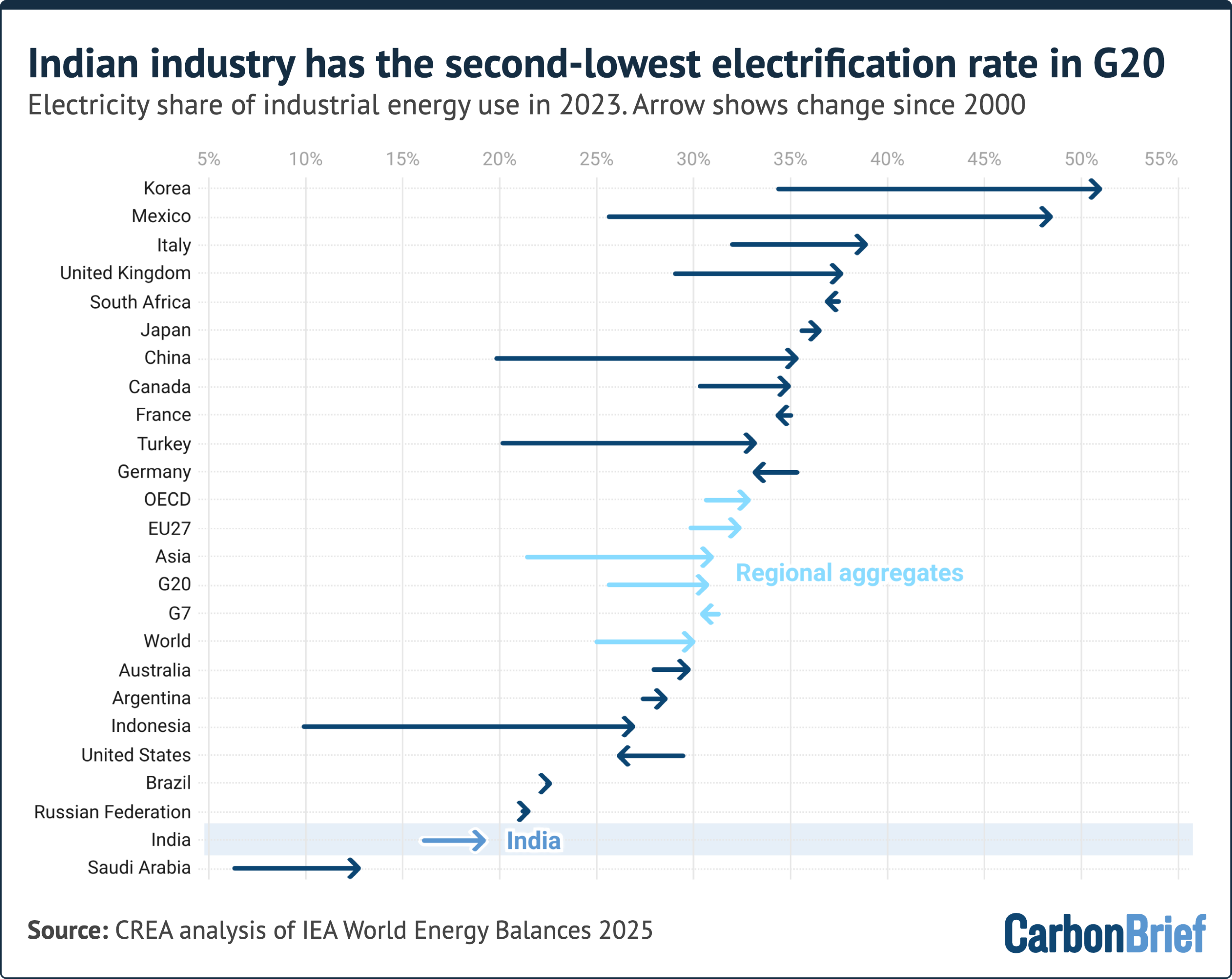
A fundamental structural challenge underlying these trends is the low rate of electrification across Indian heavy industry. Indian manufacturing possesses the second-lowest industrial electrification rate among G20 economies, lagging far behind the global average. Because direct electrification rates remain subdued, any expansion in heavy industrial output translates almost automatically into increased direct fossil-fuel consumption and rising carbon emissions.
New Investments in Coal
Even as clean energy increasingly meets incremental power demand, major capital investments continue across India’s traditional coal supply chain. Approximately 43 GW of new coal-fired power capacity remained under construction at the end of June 2026. Policymakers defend these thermal additions as necessary to guarantee grid stability and meet surging peak evening loads, despite the growing integration of solar generation and battery storage.
Beyond electricity generation, the government is aggressively pursuing coal gasification initiatives to convert solid coal into chemical feedstocks, fertilizers, and synthetic natural gas to bolster national energy security. Despite the technology remaining largely nascent within the country—with commercial-scale synthetic gas currently deployed primarily at select steel facilities—national targets aim to process 100 million tonnes of coal annually via gasification over the next four years. Additionally, the government has classified domestic coking coal as a critical and strategic mineral, encouraging domestic miners and steelmakers to build new washeries and expand coking coal mining capacity.
These ongoing capital commitments to new coal mines, gasification plants, and domestic coking coal infrastructure risk locking in fossil-fuel dependence across heavy industry for decades to come. Nevertheless, the unprecedented two-year freeze in power-sector emissions demonstrates that rapid renewable energy deployment can successfully decouple electricity demand growth from carbon pollution, offering a viable blueprint for India’s long-term climate strategy if grid flexibility, energy storage, and industrial electrification barriers can be systematically overcome.