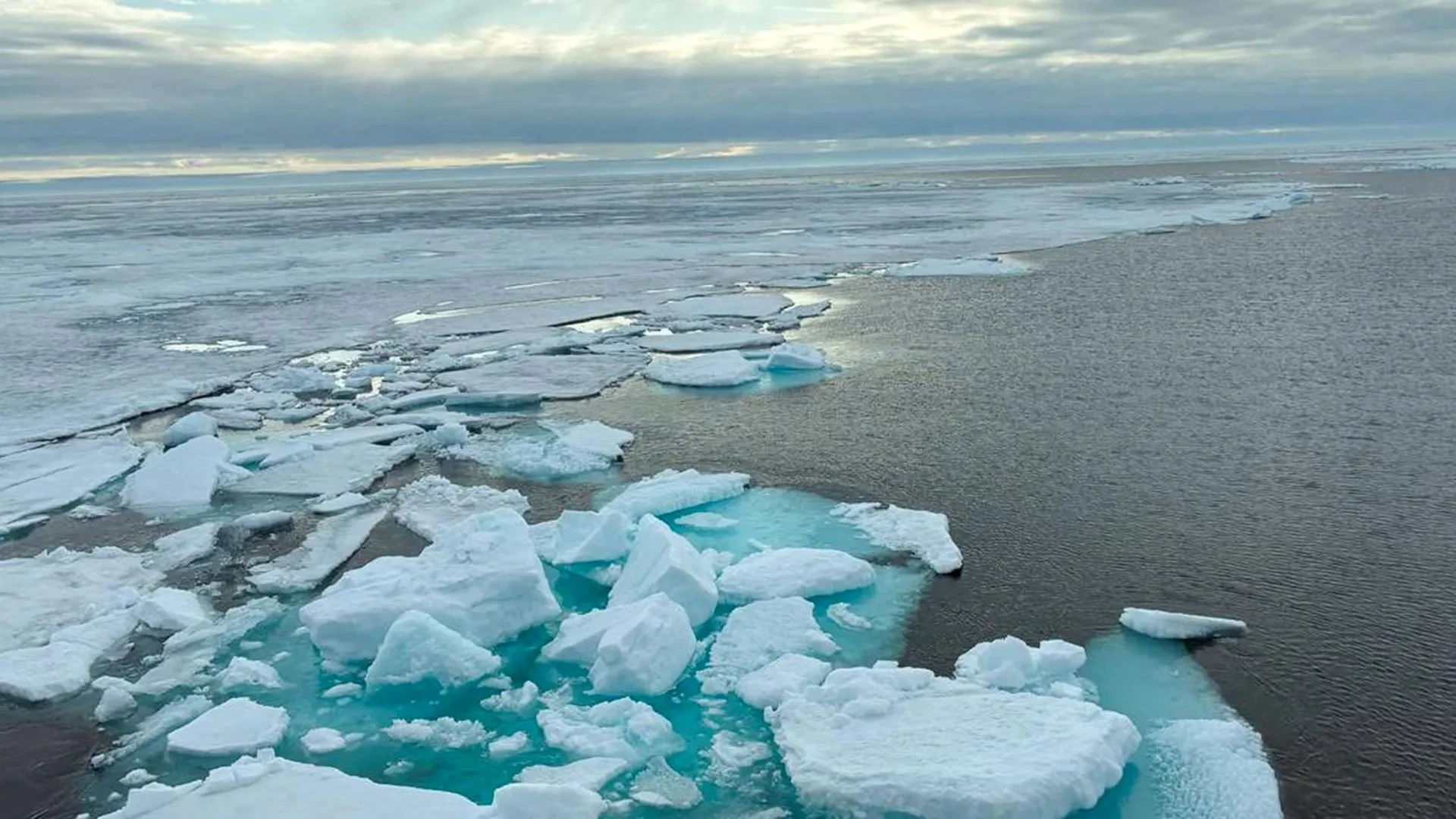
Weather has long held the power to dramatically reshape the frozen expanses of the Earth’s polar caps, but scientists are finding that not all atmospheric disturbances are created equal. While individual low-pressure systems regularly churn across the Far North, new research reveals that when these storms arrive in rapid, unrelenting succession, their destructive potential multiplies exponentially.
An international research team led by the prestigious Alfred Wegener Institute has completed the first systematic, long-term investigation into these continuous sequences of weather systems. Their findings, recently published in the scientific journal Nature Communications, shed light on how a meteorological phenomenon known as "cyclone clustering" significantly accelerates sea ice loss. By preventing the fragile polar surface from recovering between weather events, these clusters are fundamentally altering the Arctic landscape and introducing heightened risks for vulnerable northern coastlines.
When Arctic Storms Arrive One After Another
Cyclone clustering occurs when multiple low-pressure systems track through the exact same geographical region in quick succession. Instead of offering a window of calm for atmospheric pressure to stabilize and temperatures to drop after a single storm clears the area, a subsequent system follows closely behind. This dynamic locks the region into an extended period of severe, turbulent weather.
While meteorologists have studied these patterns in temperate zones, their impacts closer to the poles remained largely unquantified until now. "In Europe, such events have frequently led to significant damage in the past due to high winds, heavy rainfall or high tide levels along the coast," notes Dr. Lars Aue, the lead author of the study from the Alfred Wegener Institute, Helmholtz Centre for Polar and Marine Research, commonly known as the AWI.
Eager to determine whether this same relentless clustering behavior occurs in the high Arctic and to measure its exact toll on the marine environment, the AWI-led research team undertook a massive data-mining project. They analyzed satellite observations alongside comprehensive weather records spanning a 45-year period from 1979 to 2024.
"We adapted an algorithm for tracking weather systems so that it could detect rapidly consecutive cyclones in the Arctic," explains Lars Aue, detailing the methodological approach of the team. "We were then able to compare the state of the sea ice on satellite images before and after a cluster had passed through."
Cyclones Break Apart Arctic Sea Ice
The subsequent analysis revealed that when low-pressure systems overlap with the ice cover, they physically fracture the frozen surface through brute mechanical force. Powerful, cyclonic winds whip across the ocean, breaking up solid sheets of ice and forcing individual floes to drift, collide, and grind against one another.
In the depths of a normal Arctic winter, newly opened fractures and gaps in the ice sheet—known as leads—would ordinarily freeze over again within a matter of days as sub-zero temperatures reclaim the exposed water. However, when one cyclone immediately follows another, the prolonged stormy conditions maintain high turbulence and warmer temperatures, preventing those vital openings from closing as quickly as they normally would.
During the warmer periods of the year, these cyclone clusters behave somewhat differently, though their consequences remain severe. Although summer storms tend to possess lower baseline wind intensities than their winter counterparts, they can still profoundly disrupt local sea ice dynamics. Sustained winds can force floes further north, compressing them against denser multi-year ice and reducing the overall geographical area covered by the pack.
Furthermore, the storms launch a thermal assault on the frozen ocean. Cyclones routinely draw abnormally warm air masses northward into the Arctic basin, promoting surface melting from above. Simultaneously, the powerful churning of the water column brings relatively warm seawater upward from deeper ocean layers, raising temperatures near the surface and melting the ice from below.
Over the past two decades, these compounded atmospheric and oceanic processes have made cyclones a primary driver of sustained Arctic ice loss, particularly as these weather sequences concentrate near the end of the annual summer melting season.
Storm Clusters Can Double the Impact
The frequency and composition of these atmospheric sequences depend heavily on geographical location and seasonal shifts, but the researchers observed an average of about 2.5 individual cyclones per cluster event.
The physical consequences, however, display a wide variance across the Arctic basin. While clustering increases the rate of sea ice destruction by a factor of 1.5 in certain sectors, other vulnerable regions experience impacts up to seven times stronger than those caused by isolated storms.
"On average across the entire Arctic, cyclone clusters reduce Arctic sea ice cover by about twice as much as conventional, isolated low-pressure systems. This condition also lasts about two and a half times longer," Lars Aue points out.
This multiplicative effect means that the true danger of cyclone clustering goes far beyond the peak wind speed or pressure drop of any single storm. Because the repeated sequence allows no breathing room for the ice to refreeze or stabilize between disturbances, the destructive effects accumulate and compound over time.
Warming Could Make Arctic Ice Even More Vulnerable
Beyond evaluating historical storm tracks, the researchers uncovered a troubling long-term trend that signals trouble for the future climate stability of the region. The overall volume of sea ice loss associated directly with cyclone clusters has risen substantially over recent decades.
A primary catalyst for this trend is the changing nature of the Arctic sea ice itself. As global temperatures continue to rise due to anthropogenic climate change, the remaining ice cover is becoming progressively thinner, more fragmented, and increasingly mobile. This diminished structural integrity leaves the ice far less capable of withstanding the mechanical stresses and thermodynamic forces generated by passing cyclones.
During the peak of the summer season, the increasingly warm Arctic Ocean threatens to exacerbate this dynamic even further, creating a dangerous environmental feedback loop.
"We could be entering a self-enforcing feedback loop: the weaker the sea ice becomes, the more cyclone clusters can reduce its extent, which in turn weakens the sea ice," warns Lars Aue. "Currently, we are using climate projections to investigate whether the intensification of the effects of cyclone clusters that we have seen in recent decades could continue in the future."
Sea Ice Also Protects Arctic Coastlines
These new findings underscore the profound extent to which short-term, episodic weather events dictate the long-term health of Arctic sea ice. Building a comprehensive understanding of why these cyclone clusters form, how they track, and precisely how they interact with the frozen ocean will be vital for predicting how the entire polar region will transform in the coming decades.
The implications of accelerating sea ice destruction also extend far beyond the open waters of the Arctic Ocean. Sea ice serves as a vital natural buffer, acting as a physical barrier that protects fragile Arctic coastlines from the destructive energy of powerful ocean waves. As this protective shield retreats and thaws, coastal communities find themselves increasingly exposed to severe autumn and winter storms.
At the same time, concurrent environmental shifts—such as widespread permafrost thaw—are further destabilizing northern coastlines, leaving them exceptionally vulnerable to rapid erosion and storm surges.
By accurately incorporating the mechanics of cyclone clustering into global climate models, researchers hope to dramatically improve forward-looking projections for both future sea ice survival and coastal risk management.
"Until now, there has been no systematic analysis of the impacts of cyclone clusters in the Arctic," concludes Lars Aue. "With our work, we are filling a knowledge gap and lay an important foundation for projections that can depict the future of the Arctic sea ice—a central component of the global climate system—as accurate as possible."