The City of Northglenn, Colorado, is pioneering a proactive approach to the commercial drone delivery boom, currently weighing a comprehensive set of regulations focused squarely on ground-based launch and support facilities. As retail giants and logistics firms rapidly scale up automated aerial delivery networks across the United States, Northglenn’s municipal leadership is navigating a complex regulatory landscape defined by a sharp jurisdictional divide: while local authorities can govern land use and physical infrastructure, federal law strictly reserves all authority over the skies for the federal government.
The emerging municipal proposal is notable both for the specific aspects of the industry it seeks to regulate and for the operational boundaries that city officials openly acknowledge they cannot touch. Because the Federal Aviation Administration maintains absolute control over the national airspace, Northglenn has no legal standing to regulate flight paths, cruising altitudes, or operational schedules once a delivery drone lifts off the ground. Instead, the draft ordinance zeroes in exclusively on the ground facilities utilized to launch, recover, maintain, and support the unmanned aircraft systems that power modern commercial logistics.
Northglenn is taking up the regulatory challenge well before receiving an actual permit application for a commercial drone delivery facility within its municipal boundaries. According to an administrative memorandum prepared by city staff, an increasing number of suburban and urban communities across the country are facing inquiries and formal requests for drone launch sites from industry operators. Given the swift trajectory of the commercial drone sector, staff members anticipated that Northglenn could receive a formal development application in the foreseeable future.
Prompted by that staff assessment, the Northglenn City Council directed municipal planners to draft a specialized land-use category specifically tailored for the industry. The resulting framework introduces regulations for what the city defines as a "Commercial Drone Delivery Hub," establishing a structured path for businesses looking to establish a physical footprint within the community.
Local Rules Cannot Keep Drone Delivery Out
Northglenn’s exhaustive internal analysis highlights a fundamental operational challenge that cities across the country are facing when attempting to manage the influx of drone logistics. Even if municipal leaders elected to completely bar commercial drone delivery hubs from operating within their borders, they lack the legal authority to prevent drones from servicing local residents.
City staff pointed out that major commercial operators typically design their residential delivery networks around a operational radius extending roughly four to seven miles outward from each primary launch site. Because of this localized range, a fully authorized drone delivery hub situated in a neighboring municipality could easily dispatch aircraft across municipal lines to serve delivery addresses inside Northglenn.
Consequently, city presentations addressing the proposed ordinance emphasize that denying a permit to a local launch site does not prevent drone delivery activity from being experienced by residents within the community. The reality of regional overlapping coverage means that local bans are largely ineffective at stopping the aerial delivery of goods.
Instead of attempting a futile exclusion strategy, Northglenn intends to leverage its traditional municipal land-use authority to regulate the physical ground facilities that make the flights possible. This traditional zoning and planning power allows the city to establish rigorous standards for physical infrastructure, including launch and recovery pads, accessory structures, perimeter fencing, visual screening, ground operating hours, vehicle parking, exterior lighting, and comprehensive site security.
Preparing Before Drone Delivery Arrives
Northglenn’s deliberate march toward formal regulation comes against the backdrop of an aggressive national expansion by major logistics partnerships, most notably retail giant Walmart and drone delivery provider Wing. These companies have been systematically pursuing a much larger national rollout of residential drone delivery services, transforming what was once experimental technology into a mainstream retail fulfillment option.
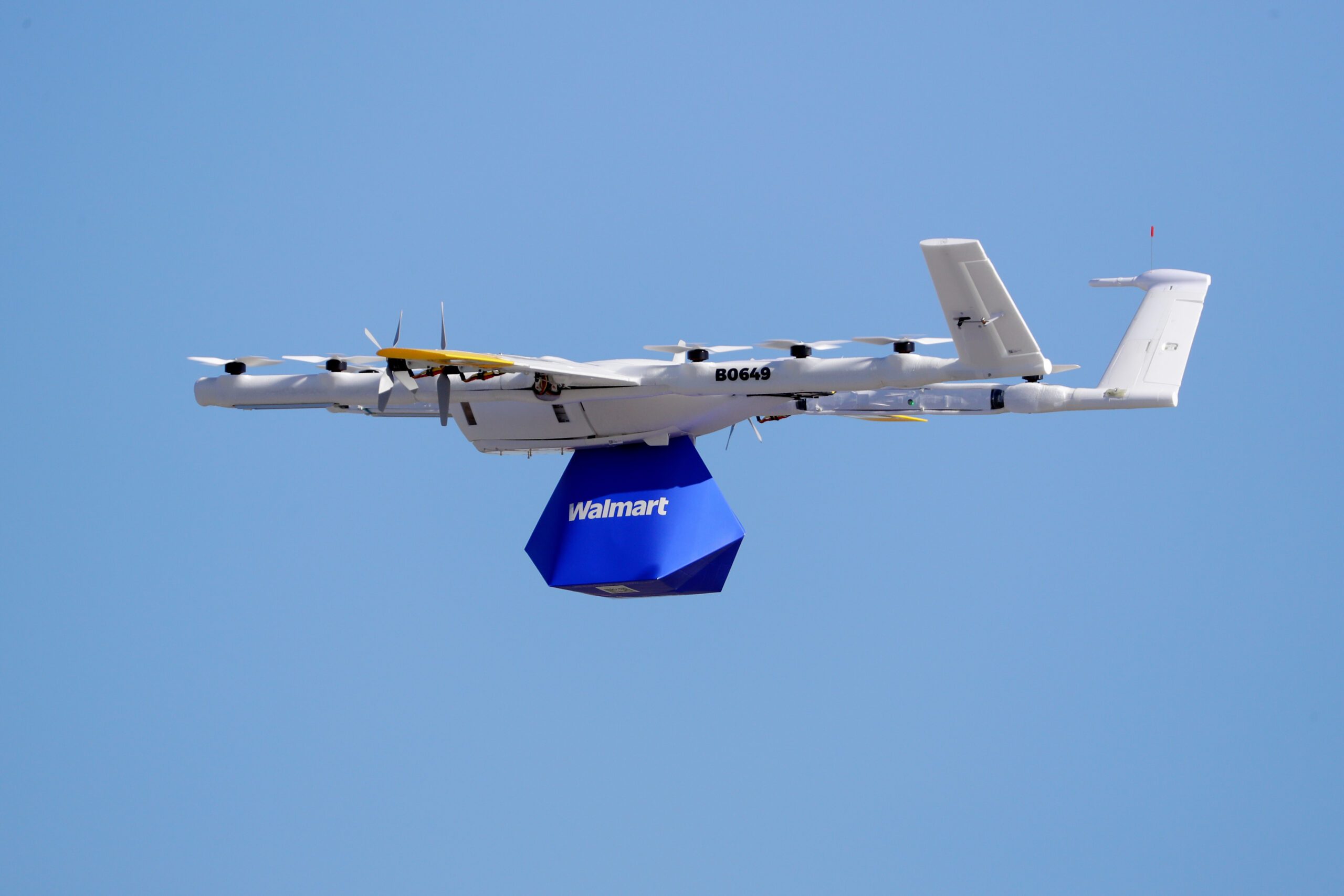
Earlier in the year, Walmart and Wing publicly announced ambitious expansion plans aimed at integrating drone delivery services at approximately 150 additional Walmart retail stores over a twelve-month period. Company executives indicated at the time that their combined operational network is projected to exceed 270 active locations, positioning them to reach more than 40 million American households with rapid aerial fulfillment.
While the state of Colorado was not explicitly highlighted among the initial markets named in those corporate rollout announcements, Northglenn’s internal municipal research revealed that drone delivery proposals are already materializing organically across the broader Denver metropolitan region. An administrative survey conducted by the city in August uncovered that neighboring Thornton had already received a pre-application for drone operations, while nearby Longmont had processed pre-application inquiries involving two separate Walmart retail locations.
In light of these regional developments, Northglenn staff reported that, to the best of their knowledge, their municipality stands as the first local jurisdiction in the immediate region to advance a complete, use-specific commercial drone delivery ordinance toward potential adoption.
What the Proposed Rules Would Require
Under the terms of the newly proposed regulatory framework, establishing a Commercial Drone Delivery Hub within Northglenn would require securing a specialized Special Use Permit. The ordinance distinguishes between different operational scales and zoning districts to ensure compatibility with surrounding neighborhoods and commercial areas.
An accessory hub—defined as a secondary use on a property—would be permitted to operate within Commercial General, Commercial Auto-Oriented, and Industrial zoning districts. Conversely, a hub operating as the primary use of a property would face stricter limitations, restricted exclusively to designated Industrial districts.
To secure the necessary permits, applicants would be required to submit a comprehensive operational narrative detailing their daily business hours, maximum planned flight altitudes, anticipated noise levels, maximum number of stationed aircraft, and expected flight frequency. Furthermore, operators would need to formulate and submit a thorough Incident and Emergency Response Plan. Applicants would also be required to sign a formal statement explicitly acknowledging the strict legal prohibition against utilizing commercial delivery drones to conduct surveillance on any person while in a private place.
City officials have taken care to clarify that gathering this operational information does not translate into local regulatory control over actual flight operations. Data concerning flight altitudes, routing, noise generation, and frequency will be collected strictly for public disclosure purposes and to facilitate a thorough land-use compatibility analysis.
Proposal Moves Toward City Council
The regulatory process has advanced steadily through local municipal channels. The Northglenn Planning Commission convened a formal public hearing to review the text of the ordinance, ultimately voting to recommend that the City Council adopt the proposed regulations. City administrative staff anticipate that the measure will experience its official first reading before the City Council, setting the stage for a subsequent public hearing and a final second reading.
Northglenn’s proactive initiative illustrates the broader division of regulatory authority that is rapidly emerging across the United States as commercial drone delivery networks scale up. Local municipalities maintain the clear legal power to determine where physical launch facilities may be constructed and to enforce strict land-use standards for those specific sites. However, those traditional zoning powers do not grant cities any control over whether drones launched outside their boundaries can fly through local airspace or complete deliveries to local residents. As the industry continues its national ascent, Northglenn’s framework offers a glimpse into how local governments are learning to manage the ground-level impacts of an airborne economy.