While the towering, four-foot-tall Emperor penguin may enjoy the status of being the best-known member of its family across the globe, it is far from living a solitary existence. Seventeen other penguin species inhabit the vast expanses of the Southern Hemisphere, many of them making their homes on isolated, windswept islands that pose immense logistical challenges for scientists seeking to reach and study them in their natural habitats.
That extreme remoteness helps explain how an entire species of gentoo penguin managed to escape formal scientific recognition for so long. These particular birds reside on the Kerguelen Islands—known in French as the Desolation Islands—situated nearly 2,000 miles away from any permanently inhabited landmass. Now, an international team of researchers spearheaded by scientists in Chile and at the University of California, Berkeley, has formally identified this isolated population as a distinct species. This milestone marks the first time in more than a century that a brand-new penguin species has been officially named. The findings detailing this taxonomic breakthrough were recently published in the scientific journal Communications Biology.
DNA Reveals Four Distinct Gentoo Penguin Species
Comprehensive genetic evidence gathered by the research team has demonstrated that what scientists historically treated as a single, widely distributed gentoo penguin species is actually composed of four separate species.
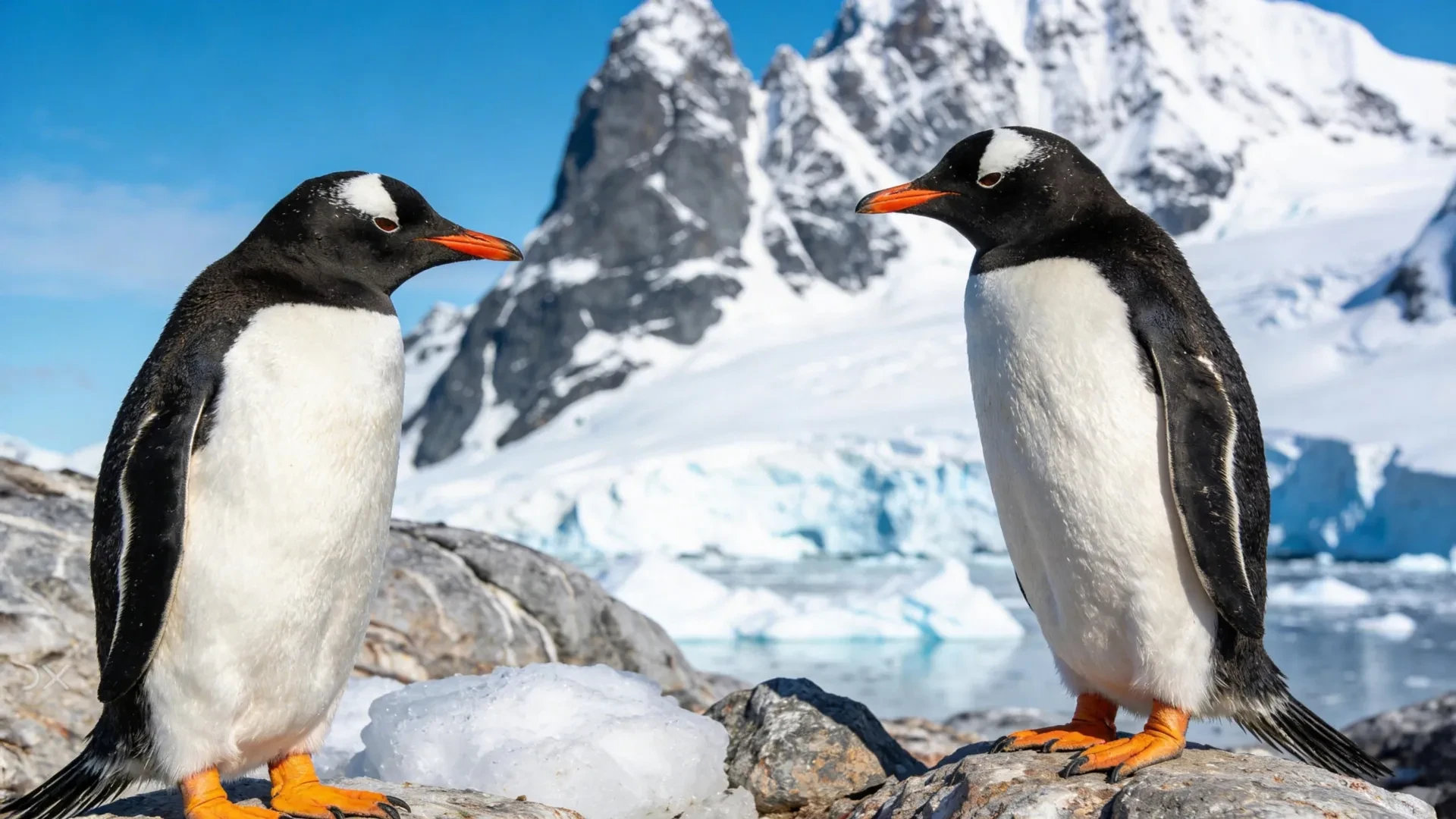
Among them, one lineage had never been formally recognized by the scientific community. Apart from subtle physical differences in body size and vocalizations, this newly named bird closely resembles other gentoos, featuring the familiar stark white underside and dark black back that help penguins avoid marine predators while hunting for prey in the open ocean. Genetically, however, it stands apart. Scientists categorize this type of organism as a cryptic species, meaning it looks remarkably similar to its close relatives despite harboring significant and fundamental genetic differences.
In addition to identifying this previously unrecognized lineage, the researchers determined that three other gentoo populations, which were previously classified merely as subspecies, are sufficiently distinct on a genetic level to be elevated to full species status.
The newly recognized southeastern gentoo penguin, scientifically designated as Pygoscelis kerguelensis, may face an uncertain future as environmental conditions shift. Two of the other newly defined species could also prove increasingly vulnerable as global warming reshapes both Antarctic and sub-Antarctic ecosystems. Conversely, the southern gentoo, now known as Pygoscelis ellsworthi, stands as the sole lineage of the four that makes its permanent home directly on the Antarctic continent. Climate projections indicate that this southern population may be affected relatively little by rising global temperatures and could potentially even expand its geographic range.
"In Antarctica, of course, other species, not the gentoo, are threatened by climate change," explained Juliana Vianna, one of the paper’s senior authors and a professor of ecosystems and environment at Andrés Bello National University in Santiago, Chile. "But the gentoo is of most concern in the sub-Antarctic region," she noted, referring to the wide zone of separated islands north of Antarctica that fall under the jurisdiction of numerous nations, including Chile, South Africa, France, the Netherlands, Australia, and New Zealand.
"It’s very important that conservation institutions in all the different countries involved recognize and take appropriate action to save these three gentoo penguin species," Vianna added.
A Century of Debate Over Gentoo Penguins
To finally resolve decades of lingering disagreements regarding gentoo classification, Vianna joined forces with co-senior authors Rauri Bowie, a professor of integrative biology at UC Berkeley, and Elie Poulin, a professor at the University of Chile in Santiago. Together, they united penguin specialists from across the globe into a broad, comprehensive genomic study focusing specifically on gentoo populations.
Previous generations of researchers had proposed as many as six distinct gentoo subspecies, yet a universal consensus remained elusive. The new study represents a definitive scientific agreement built upon whole-genome sequences extracted from 64 individual penguins collected across 10 distinct breeding colonies. For the very first time in taxonomic history, the sampling successfully covered nearly the entire geographic range of gentoo penguins worldwide.
Alongside genetic sequencing, the team meticulously compared physical and behavioral characteristics, including plumage coloration, vocal calls, breeding schedules, diet, and foraging behavior.
"There’s probably no species of penguin where the taxonomy has been more debated than the gentoo penguin," said Bowie, who also serves as a curator in UC Berkeley’s Museum of Vertebrate Zoology. "For over 100 years it’s been controversial as to how many species or how many subspecies there are. What this paper does is try to address that question using cutting-edge integrative approaches."
How Penguins Spread Across the Southern Hemisphere
Bowie and Vianna have spent nearly a decade investigating the complex evolutionary pathways through which penguins diversified across the globe. In 2019, they published research indicating that modern penguins originally emerged near the coasts of Australia and New Zealand roughly 22 million years ago.
Over subsequent epochs, Emperor and King penguins split away from the other primary lineages, with Emperors eventually becoming uniquely adapted to the harsh conditions of Antarctica, while Kings established themselves across the sub-Antarctic. Approximately 12 million years ago, the development and strengthening of the circumpolar current assisted other penguin groups in dispersing throughout the sub-Antarctic zone. This oceanographic highway allowed them to colonize remote islands and sprawling archipelagoes, eventually pushing as far north as the coasts of Africa and South America.
Among their relatives, gentoo penguins possess one critical ecological advantage: they are remarkably flexible eaters. Rather than relying heavily on a single type of prey to sustain themselves, gentoos will consume almost anything they can successfully catch beneath the waves.
That dietary flexibility is becoming increasingly important as oceanic krill populations face declines. Penguin species that rely on much narrower diets, including Emperors and Adélies, are experiencing population contractions in certain regions. Gentoos living alongside them on the Antarctic Peninsula, by contrast, are seeing their numbers grow.
A Flexible Diet Helped Drive Speciation
Ironically, the very dietary flexibility that helps gentoos thrive today may have also played a central role in creating the distinct species recognized by science.
Because gentoos can feed on a wide variety of marine prey—including fish, krill, squid, and cuttlefish—they do not need to undertake exceptionally long migrations away from their breeding colonies in search of sustenance. They also exhibit strong site fidelity, returning to the exact same nesting grounds year after year.
Over vast expanses of time, populations marooned on isolated islands became increasingly specialized and adapted to their local environments. Those gradual behavioral and ecological differences were subsequently reinforced by natural selection acting directly across their genomes.
Researchers estimate that the four distinct gentoo species diverged from one another during the past 300,000 to 500,000 years. Geographic isolation played a paramount role in this divergence, alongside the Antarctic Polar Front, a major oceanographic boundary in the Southern Ocean where water temperatures and salinity levels shift sharply. This natural barrier can heavily restrict the movement and intermingling of marine animals.
North of the Polar Front, where the surrounding waters are noticeably warmer and saltier, lives the eastern lineage known as Pygoscelis taeniata, which is found inhabiting the Crozet, Marion, and Macquarie Islands. Meanwhile, the northern lineage, Pygoscelis papua, remains strictly restricted to the Falkland/Malvinas and Martillo Islands in South America.
The newly described southeastern lineage, Pygoscelis kerguelensis, makes its home near the Polar Front, having evolved as a relatively small population on Kerguelen Island and likely the nearby Heard Island. Farther south lies the most numerous lineage of all, Pygoscelis ellsworthi, which populates the Antarctic Peninsula, coastal Antarctica, and South Georgia Island.
Penguin Genomes Reveal Local Adaptations
The detailed genomic analysis was spearheaded by University of Chile graduate student Daly Noll, who serves as the primary author of the study. Compared to previous scientific efforts, the researchers examined a much broader portion of the genome, analyzing thousands of genetic variations known as single nucleotide polymorphisms, or SNPs.
The resulting genetic data illuminated precisely how each gentoo species has adapted over generations to its specific environment.
The southern gentoo, which continues to thrive across the Antarctic, carries distinctive genetic changes associated with surviving in extreme polar conditions. The research team discovered an elevated number of genes linked directly to internal heat production, fat and lipid storage, and specialized light perception. These adaptations involving light perception likely help the birds cope with the dramatic seasonal shifts in daylight and the intense glare of sunlight reflecting off surrounding ice sheets.
In contrast, the eastern gentoo possesses a higher concentration of genes associated with efficient carbohydrate metabolism and enhanced diving performance. These genetic traits include those involved in oxygen transport and utilization, blood vessel formation, mitochondrial activity, and lung development. Together, these physiological advantages may allow the birds to remain submerged underwater for longer periods while foraging in oceans that feature relatively low biological productivity.
The northern gentoo inhabiting South America displayed an entirely different genetic pattern. Its genome showed an enrichment of genes involved in digestion, heart contraction, and muscle excitation. Researchers suggest these biological shifts likely support the sustained physical activity demanded by prolonged underwater feeding behaviors.
Climate Change Could Leave Island Penguins Stranded
To look toward the future, the research team utilized sophisticated climate models to estimate where suitable gentoo habitat is likely to exist by the year 2050.
Under a moderate climate change scenario, the island-dwelling sub-Antarctic species could face the loss of suitable habitat across all of the islands where they currently maintain breeding colonies. In many cases, there would be few or no nearby landmasses offering an appropriate alternative habitat for the displaced birds.
The Antarctic gentoo, however, may experience a very different trajectory. Its suitable geographic range is projected to extend even farther onto the continent as climatic conditions continue to shift. At the same time, however, Emperor, Adélie, and chinstrap penguins are widely expected to decline as sea ice diminishes and populations of ice-dependent krill are severely disrupted.
Vianna emphasized that climate change is far from the only danger confronting penguin populations outside of Antarctica. Warming oceans, local habitat destruction, predation by introduced species such as rats and dogs, competition with commercial fisheries, and accidental entanglement in fishing nets continue to threaten numerous populations.
"In terms of climate change, island species that have really low population sizes could be compared with the sub-Antarctic gentoo penguins," Vianna said. "Galapagos and other island penguin species, because they’re endemic to these islands, will find no place to go after a change in their environment. Those islands are very isolated, and these penguins cannot adapt easily to colonize any other region."
Genomics Could Help Protect Penguins
The unusually large and diverse dataset assembled for this research project could prove to be invaluable far beyond purely academic questions of penguin classification, according to Bowie.
Already, Vianna and her colleagues are examining penguin genomes for genetic variations associated with surviving avian influenza, a devastating disease currently impacting penguin, wild bird, and marine mammal populations across the globe. Identifying specific genetic traits linked to natural resistance or heightened vulnerability could ultimately help conservationists determine which specific populations face the most urgent threats to their survival.
"Whole genome sequencing has transformed our ability to not only look at adaptation from a perspective of how things diversify, but it has really important conservation value," Bowie said.
In addition to Bowie and Vianna, the international research team included biologists hailing from Australia, Spain, Venezuela, South Africa, the United Kingdom, France, Argentina, Monaco, and Brazil. Daly Noll of the University of Chile in Santiago served as the lead author of the published study.