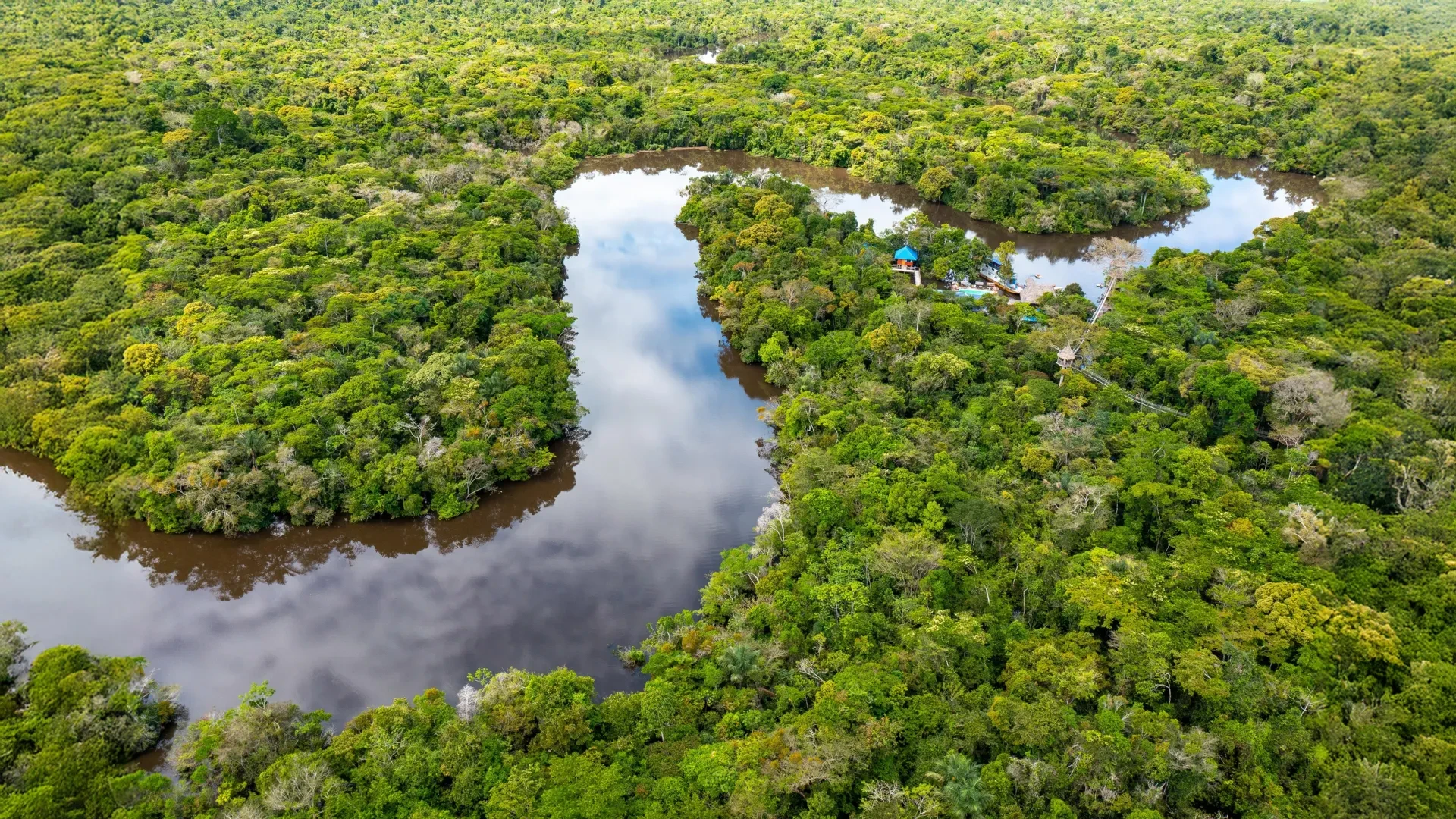
As a strengthening El Niño weather pattern tightens its grip across the Amazon basin, an international team of scientists is drawing urgent attention to a conservation priority that has historically received less emphasis than it deserves: safeguarding the vast expanses of forest that are still standing from the creeping, destructive impacts of wildfires and commercial logging.
While global environmental programs and national policies have long focused heavily on halting outright deforestation and aggressively restoring cleared or degraded land, new research suggests that an equally vital—and frequently more cost-effective—strategy is to prevent disturbances within existing forests. According to a landmark study published in the scientific journal Science, proactive measures aimed at stopping selective logging and halting the spread of wildfires can deliver some of the greatest environmental benefits for every dollar spent.
The research was conducted by an international team of scientists hailing from the United Kingdom, Brazil, Sweden, and Australia, led by researchers at Lancaster University. The study represents what the authors describe as the first systematic comparison of its kind, meticulously evaluating a wide array of strategies designed to protect existing tropical forests alongside initiatives focused on restoring forests on former agricultural lands.
Comparing Conservation Strategies Across the Amazon
To arrive at their findings, the research team examined more than three million hectares of land situated within Santarém and Paragominas, two critical and heavily pressured regions located in the Brazilian state of Pará. The evaluation spanned a crucial decade, analyzing land-use dynamics, environmental shifts, and policy outcomes from 2010 to 2020.
Rather than relying on generalized assumptions, the scientists combined high-resolution satellite imagery with an extensive framework of on-the-ground field observations. Their comprehensive dataset incorporated 381 survey transects distributed across 38 distinct catchments and 499 rural properties. Furthermore, the researchers integrated sophisticated ecological models that charted the complex distributions of 160 distinct bird species and 426 unique tree species, providing a remarkably granular picture of regional biodiversity.
Utilizing observed changes in land use over the ten-year study period, the team constructed rigorous counterfactual scenarios. These advanced models allowed researchers to estimate what realistically might have happened to regional biodiversity and vital forest carbon stocks under alternative conservation approaches, comparing those theoretical outcomes directly against what actually occurred on the ground.
By pairing these ecological projections with detailed economic analyses, the team calculated the precise costs associated with each distinct strategy. This methodology made it possible to draw direct comparisons regarding how much environmental return on investment each type of intervention could generate for the financial resources committed.
"These findings highlight the need to put in place policies and resources to prevent and tackle the wildfires that disturb and degrade tropical forests," said Professor Jos Barlow of Lancaster University, who served as the senior author of the study.
Professor Barlow emphasized that this imperative is growing increasingly critical as global weather patterns shift. "This is all the more urgent in this El Niño year," he noted. "These events, combined with ongoing climate change, result in longer, hotter, and more intense dry seasons across the Amazon’s ‘arc of deforestation,’ greatly increasing the extent and severity of forest fires."
Protecting Standing Forests Produced Major Gains
When the economic and ecological data were synthesized, preventing damage to standing forests emerged as a critical focal point for conservation success. Measures that successfully reduced disturbances—such as unauthorized logging and agricultural fires bleeding into forest edges—generated the largest overall benefits for tropical forest biodiversity. Furthermore, these protective interventions proved nearly as effective as preventing outright deforestation when it came to safeguarding and maintaining vital forest carbon stocks.
"While no one strategy is a silver bullet, our results provide clear evidence that we should begin by prioritizing the forests we have left," said Dr. Leonardo Miranda of Lancaster University, the lead author of the study. "And protection must go beyond avoiding deforestation. Avoiding forest disturbances from wildfires or logging delivered the greatest benefits for forest biodiversity."
While protective measures took center stage, forest restoration also demonstrated meaningful benefits. This was particularly true on rural properties where a significant majority of the original native forest cover had already disappeared, leaving landscapes heavily depleted.
However, when evaluated across the entire study area, attempting to restore forests on former agricultural land as a standalone strategy proved to be less effective overall. It was also determined to be the most expensive of all the conservation approaches evaluated by the research team. These insights suggest that future conservation funding and policy frameworks should be carefully tailored to the specific ecological and economic conditions of individual landscapes, rather than leaning on a single, uniform approach applied everywhere.
No Single Strategy Was Enough
A sobering takeaway from the research is that none of the evaluated interventions, when implemented entirely on its own, possessed the capacity to completely reverse the cumulative losses of biodiversity and carbon storage across the full study area.
"Net gains in biodiversity and carbon storage were only achieved when both avoidance interventions were implemented. However, combining all three interventions delivered even greater gains," Dr. Miranda explained. He added that the necessity of multi-pronged approaches will only grow more pronounced as climate change progresses, noting that newly established forest restoration sites can be exceptionally vulnerable to the ravages of uncontrolled wildfires.
This finding carries significant weight for governments and international organizations that are currently placing a heavy emphasis on forest restoration as a primary climate solution. Both overarching global environmental commitments and specific Brazilian federal and state policies feature prominent initiatives aimed at bringing trees back to vast areas where forest cover has historically been lost.
Restoration Works Best Alongside Protection
While the researchers strongly affirm that restoration remains an indispensable tool—particularly in landscapes where widespread clearing has already taken place—they caution that attempting to restore forests while existing nearby forests continue to be actively degraded can undermine the overall integrity of conservation programs.
"Restoration is essential where forests have been lost across large areas. But our study shows that investing in new forests makes little sense if, at the same time, we fail to protect existing forests," said co-author Dr. Joice Ferreira, a senior researcher at Embrapa and principal investigator of the prominent ‘Capoeira’ research program focused on forest restoration. "Otherwise, we are pouring money into a leaky pot—restoring forests in one place while others are being degraded and lost. What we urgently need to do is integrate these policy agendas, ensuring that forest restoration goes hand in hand with protection of the forests we still have."
Although the scope of the empirical research was concentrated on two distinct regions of the Brazilian Amazon, the scientists suggest that their core conclusions carry broader geographic relevance. They argue that the findings may apply equally to other tropical deforestation frontiers around the world, potentially influencing conservation policy and resource allocation far beyond the Amazon basin.
Soy, Beef and Forest Degradation
Beyond government policy and traditional conservation funding, the researchers contend that the burden of responsibility for forest preservation extends directly into the private sector. Industries and global commercial markets tightly linked to major agricultural commodities produced in regions experiencing ongoing forest loss and degradation must also evaluate and address their operational roles.
"There is a need for the companies and markets that benefit from nationally and globally traded commodities like soy and beef to take responsibility not only for deforestation, but also the degradation of remaining forests that is inextricably linked to these production systems," said Dr. Toby Gardner, a co-author of the study, Senior Research Fellow at the Stockholm Environment Institute, and co-founder of the supply chain sustainability initiative Trase.
The complete findings and methodological details of the research are outlined in the paper titled "Protecting tropical forests is more cost-effective for biodiversity and climate than restoration," which was published in Science. The underlying research was convened by the Sustainable Amazon Network, known locally as Rede Amazonia Sustentavel, and received financial support from institutions including the United Kingdom’s Global Centre on Biodiversity for Climate and Brazil’s National Council for Scientific and Technological Development.