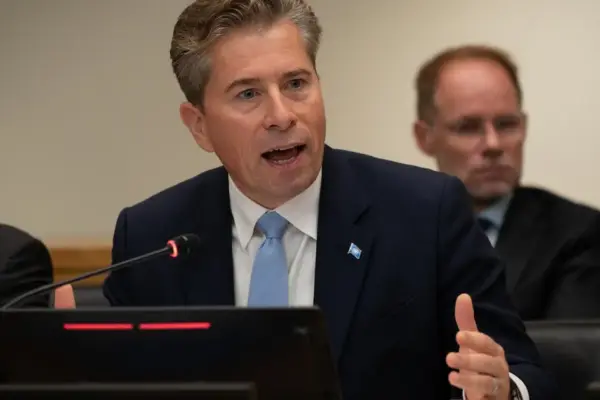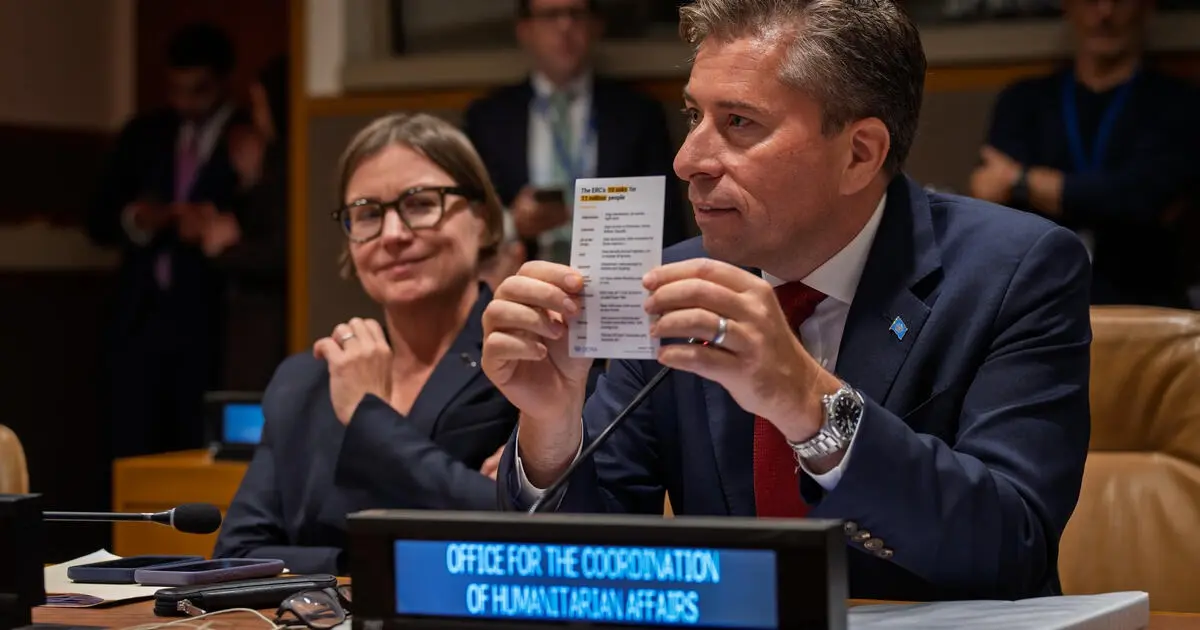
NEW YORK — In a blistering and deeply personal address delivered in New York on 21 September 2026, Tom Fletcher, the United Nations Under-Secretary-General for Humanitarian Affairs and Emergency Relief Coordinator, issued a stark warning that the international community is rapidly losing control over modern warfare, emerging technologies, and the foundational rules meant to protect civilians in conflict zones.
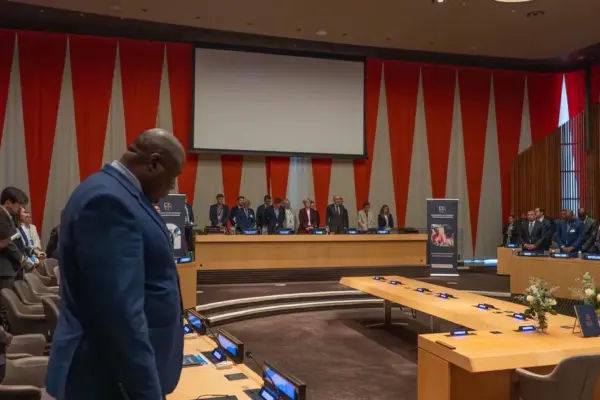
Speaking at a high-level humanitarian event alongside other global leaders, Fletcher pulled no punches, lamenting that international gatherings of diplomats and humanitarians often risk becoming little more than echo chambers disconnected from the brutal realities on the ground.
"And here we are once again in a basement, agreeing with each other," Fletcher told the room. "And I fear we are howling sometimes into the void. I don’t know how much these voices, disagreement we have, are being heard out there."
Fletcher argued that the international community must fundamentally shift its strategy to confront those who routinely violate international humanitarian law (IHL). He emphasized that unless perpetrators of war crimes and violators of humanitarian norms face genuine consequences and fear the punitive capabilities of the global community, aid workers will continue to be killed in staggering numbers.
"And we need to make our opponents a bit more frightened, because we can convince each other right now, but I’m not sure we’re convincing the people who are breaking international humanitarian law," Fletcher said. "So, unless we start to make them feel more fear of what we can do to them, then they will carry on killing my colleagues in their hundreds. And we’ll be back here next year with a slightly higher number than the ones I’m about to give you now and wondering why we’re not making more progress."
The Emergency Relief Coordinator stressed that he stood in full alignment with previous remarks made during the gathering by leaders such as Mirjana Spoljaric Egger, President of the International Committee of the Red Cross (ICRC). Recalling the historical origins of IHL, Fletcher noted that the legal framework was forged in the devastating aftermath of the Second World War precisely because humanity had witnessed the catastrophic cost of its absence.
He described international humanitarian law as the essential scaffolding required to protect a fragile world. However, much like the United Nations itself, Fletcher observed that IHL is not infallible and ultimately relies on the political will and backing of Member States to remain effective and enforceable.
Turning to the grim statistics facing the humanitarian sector, Fletcher highlighted the human toll of contemporary conflicts. With approximately one thousand aid workers having lost their lives, the emotional and operational burden on humanitarian organizations has reached unprecedented levels. He noted that he and his colleagues routinely make difficult phone calls to the grieving families of fallen staff members, while citing ongoing diplomatic struggles, such as the efforts led by Carl Skau, Deputy Executive Director of the World Food Programme, who recently traveled to Yemen to secure the release of 73 detained humanitarian personnel.
Fletcher warned that the international community is steadily losing its grip on multiple fronts, echoing concerns raised during the discussions by Dr. Abdullah bin Abdulaziz Al Rabeeah, Supervisor General of the King Salman Humanitarian Aid and Relief Centre. According to the UN relief chief, humanity is rapidly losing control of the climate crisis, the global economic system—which he noted is increasingly operating on a dangerous war footing—and the rapid proliferation of artificial intelligence.
In a particularly chilling portion of his address, Fletcher shared firsthand observations from a recent visit to Kherson, Ukraine, where he examined a $300 commercial drone of the type increasingly used to target civilians and humanitarian workers. He detailed a terrifying technological evolution described to him by locals on the ground: AI-operated drones are programmed with specific objectives, and as their battery life diminishes toward the end of a flight, the algorithmic pressure to complete the mission spikes. Consequently, these autonomous weapons become even more lethal as their batteries run low, forcing civilians to time their movements and seek shelter based on the fading power levels of nearby drones.
"The places we work are an atrocities lab, right now, for the weapons coming towards everyone," Fletcher said, warning that the battlefields of today serve as a testing ground for technologies that threaten global safety.
Despite the vast resources poured into global security, defense, and military hardware, Fletcher pointed out a stark imbalance in international funding priorities. He noted that the humanitarian sector is asking for a mere one percent of what governments currently spend on arms, defense, and security to save the lives of 87 million people worldwide.
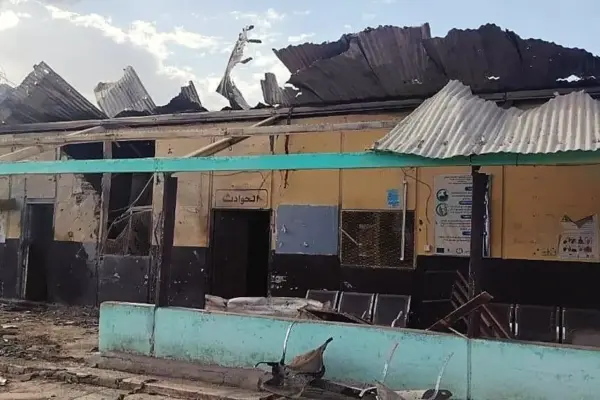
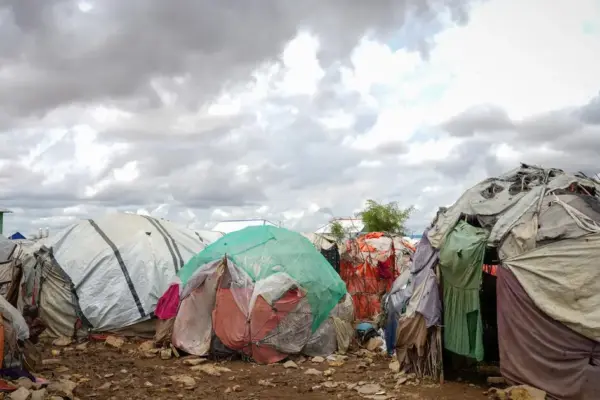
Addressing the practical meaning of a world operating outside the bounds of international humanitarian law, Fletcher dismissed hypothetical debates. Such a world, he argued, is not a distant dystopian possibility, but an active reality for populations trapped in regions cut off from the map, including Yemen, Sudan, Somalia, South Sudan, and Gaza.
Fletcher issued a direct challenge to diplomats, policymakers, and representatives of Member States present in the room, urging them to look beyond the immediate battlefield actors and confront the entire supply chain of violence. He called for strict accountability not only for those who pull the trigger, but also for the nations and corporations that design, manufacture, and sell the weapons—many of which originate in countries represented at the conference.
He urged officials to prioritize ethical trade-offs during difficult diplomatic negotiations with representatives of regimes responsible for attacks on aid workers, rather than waiting years to express remorse in retrospective memoirs.
"Don’t talk about it in your memoir in four years’ time about the thing you wished you’d said," Fletcher urged. "We don’t get another go at this, those of us who are only doing this for a few years. So please make those trade-offs."
Shifting focus to immediate, actionable solutions for the diplomatic community, Fletcher pointed to a concrete set of priorities for the week. He highlighted a series of ten straightforward humanitarian access asks, developed in coordination with partners like European Union Commissioner for Equality, Preparedness and Crisis Management Hadja Lahbib, designed to safely reach 11 million vulnerable people with life-saving assistance throughout the year. Fletcher joked that he would personally distribute the briefing cards to attendees following the session to ensure immediate buy-in and implementation.
Concluding his remarks, Fletcher paid tribute to the extraordinary resilience and bravery of humanitarian personnel across the globe. He affirmed that aid workers will continue to run toward the sound of gunfire to protect and assist survivors, regardless of whether they receive the robust institutional support and protection they deserve.
However, he insisted that the international community owes it to those on the front lines to elevate its performance, strengthen accountability, and ensure that future generations do not find themselves repeating the same grievances at identical conferences in the years to come.
"The reality is: I can promise you that the humanitarians, who have such courage, will continue going out towards the sound of gunfire to try to stop it and try to help the survivors, whether we give them the support and protection that they deserve, or not," Fletcher said. "But we owe it to them to do better. We owe it to them to try to ensure we don’t need to have this meeting next year. Let’s make that an objective. What will each of us do? What’s the one thing each of us will do differently this year so that we don’t regret it later. And let’s just make sure we do a better job of holding the line."