For years, the commercial drone market has been defined by a single overwhelming reality: the undisputed dominance of DJI. From agricultural fields to cinematic production sets and critical infrastructure inspections, the Chinese manufacturer captured the lion’s share of global attention and market execution. However, a shifting regulatory landscape—highlighted by tightening U.S. policies aiming to diversify the domestic supply chain—is actively reshaping the industry.
Against this evolving geopolitical and commercial backdrop, a comprehensive new intellectual property analysis from LexisNexis Intellectual Property Solutions offers a revealing alternative perspective on where true global drone innovation is actually taking place. While the numbers confirm that China maintains a commanding lead in total patent volume, a closer examination of patent strength, startup ecosystems, and historical filing trends suggests that the global drone sector is maturing into something far more distributed, specialized, and competitive than previously understood.
The findings indicate that the industry is gradually transitioning away from reliance on a single dominant hardware platform toward an interconnected, worldwide ecosystem of specialized technological solutions. This diversification comes at a critical juncture for policymakers, particularly in Washington, D.C., where efforts are underway to foster domestic manufacturing and reduce foreign technology dependencies.
Regulatory Pressures and the Search for a Broader Supply Chain
The structural push toward a more diversified global supply chain has accelerated significantly through policy interventions. Most notably, in December 2025, the Federal Communications Commission (FCC) added foreign-produced drones and critical system components to its Covered List. This consequential administrative action effectively restricts FCC authorization for new foreign-produced drone models coming into the United States, although previously authorized equipment remains unaffected by the mandate.
Subsequent regulatory adjustments, including targeted exemptions and conditional approvals, have managed to carve out narrow pathways for certain foreign systems to continue operating within specific parameters. Yet, the overarching message from regulators has been clear: the United States commercial and governmental drone markets must cultivate resilient, domestic alternatives.
Understanding how innovation maps onto this policy environment requires looking beyond immediate market shares and examining the intellectual property foundations that underpin future technologies. According to the LexisNexis analysis, while China holds a commanding numerical advantage in patent filings, the global distribution of technological quality and asset strength tells a vastly more nuanced story about where the industry is heading.
China Leads in Patent Volume, but Not by Every Measure
A decade ago, the United States occupied the undisputed leadership position in the global drone patent landscape, dominating both the raw number of filings and the aggregate commercial value of those intellectual property portfolios. However, the tide turned between 2015 and 2017, a period during which China aggressively accelerated its research and development output, eventually surging ahead in sheer volume.
By 2024, data compiled by LexisNexis revealed that China accounted for a dominant 44% of worldwide drone-related patent families. By comparison, the United States accounted for 17% of the global total.
Yet, industry experts emphasize that raw filing counts tell only part of the story. To gain a more accurate assessment of technological vitality, LexisNexis evaluates intellectual property portfolios through its proprietary Patent Asset Index. This sophisticated metric looks beyond mere portfolio size, factoring in the technological impact, citation frequency, and geographic scope of patent-protected inventions.
When evaluated through the lens of patent quality and asset value, the apparent chasm between the two superpowers narrows dramatically. The analysis shows that the gap has closed substantially since 2018, with the United States and China now running virtually neck-and-neck in total global Patent Asset Value for drone-related innovations.
"While China is clearly winning on the volume of patents filed, it’s the quality battle that best predicts future leaders in emerging technologies, and that race is neck-and-neck," explained Marco Richter, Managing Director and Chief Commercial Officer for LexisNexis Intellectual Property Solutions. "Put simply, the space is wide open for the next generation of drone startups to drive patent innovation and market leadership. The companies—and countries—that win this innovation race will build new industries that control the skies over the coming decades."
Drone Innovation Extends Far Beyond the U.S. and China
To better understand where tomorrow’s breakthroughs are originating, LexisNexis conducted a targeted examination of private drone startups worldwide. To qualify for the evaluation, companies had to be founded within the last 15 years, remain privately held as of September 1, 2026, demonstrate a functional flying drone platform, and hold a minimum of five relevant patent families. Passenger-carrying electric vertical takeoff and landing (eVTOL) companies were deliberately excluded from this specific dataset to focus strictly on uncrewed aerial systems.
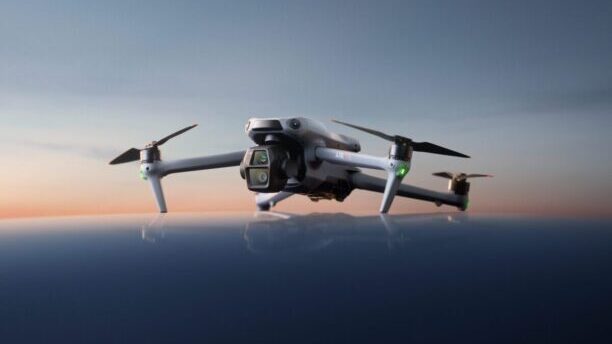
The resulting top ten list reflects a surprising degree of international diversity, spanning six distinct countries across North America, Asia, and Europe.
The United States claims four prominent spots on the prestigious list: Skydio standing at number two, Valqari at number three, Anduril at number six, and Zipline at number nine. China is represented by two major innovators, with Autel Robotics securing the top position at number one and Zero Zero Robotics claiming the fifth spot. The remainder of the top ten highlights a vibrant international landscape, featuring Aeronext from Japan, Tevel from Israel, Flyability from Switzerland, and AirForestry from Sweden.
This wide geographic spread is matched only by the diversity of applications these startups are pursuing. Rather than engaging in a crowded race to build another generalized consumer camera drone, these specialized companies are developing proprietary technology tailored for high-stakes sectors such as defense, logistics, precision agriculture, complex industrial inspections, and forestry management.
DJI’s Changing Patent Position and Market Realities
Because of the 15-year age cutoff applied to the startup evaluation, market giant DJI did not qualify for the startup ranking. However, LexisNexis conducted a separate historical examination of the company’s patent trajectory to understand how the broader competitive ecosystem has shifted over time.
At the close of 2018, DJI alone accounted for approximately 24% of the entire drone industry’s total Patent Asset Index score. That single-company footprint was larger than the combined patent portfolios of every other firm in the top ten list at the time.
Today, however, the landscape looks remarkably different. LexisNexis estimates DJI’s share of the global Patent Asset Index has fallen to just 4%. Furthermore, the company’s annual global filings for drone-related patents dropped precipitously to only three filings in 2024, representing the latest year with complete data—a staggering 99% decline from its historical peak.
While LexisNexis does not definitively attribute a single cause to this steep drop in patent publication, analysts point to several plausible factors, including the impact of intensifying U.S. government restrictions, strategic pruning of aging patent portfolios, or a deliberate corporate shift toward protecting sensitive proprietary innovations as trade secrets rather than publishing them in public patent databases.
Industry observers caution that intellectual property activity is not synonymous with immediate market share, localized manufacturing capacity, or final product capability. The patent analysis does not demonstrate that current U.S. or allied manufacturers possess the immediate supply chain scale to completely replace DJI across every commercial market it currently serves. Nevertheless, the data strongly indicates that the industry’s intellectual property landscape is fundamentally less concentrated than it was a decade ago.
From One Dominant Platform to Specialized Solutions
This structural dispersal of intellectual property holds profound significance at a time when national industrial policies are actively seeking to minimize vulnerabilities associated with foreign technology reliance.
Even though China continues to generate a significantly higher volume of drone-related patent families than the United States, the two nations remain deadlocked in terms of overarching patent strength and asset quality. Moreover, among qualifying startups, robust patent portfolios are taking root in nations traditionally viewed as secondary players, including Japan, Israel, Switzerland, and Sweden.
Perhaps most importantly, these international startups are not attempting to replicate existing models; they are solving entirely different operational problems across diverse industries. As the global commercial drone market continues to mature, its primary center of gravity appears to be shifting away from reliance on a single, all-purpose hardware platform toward a decentralized ecosystem characterized by highly specialized, mission-specific aerial solutions. While the patent data does not point to a single successor to yesterday’s dominant manufacturer, it outlines a future defined by a more resilient, globally distributed, and technologically diverse drone economy.