
NEW DELHI — Amid a rapidly shifting global landscape defined by unprecedented technological disruption and economic transformation, educational institutions must fundamentally rethink their mission to prepare the workforce of tomorrow. This was the central message delivered by Dr Ramakrishnan Raman, Vice Chancellor of Symbiosis International (Deemed University), during his keynote address at the prestigious Symbiosis International Annual Dinner hosted in New Delhi.
Gathering an influential international audience comprising diplomats, academics, policymakers, and industry leaders, the event served as a high-level platform to discuss the evolving intersections of global diplomacy, cross-border cooperation, and higher education. Against the backdrop of a world navigating complex geopolitical shifts and technological revolutions, Dr Raman’s remarks underscored the indispensable role that universities play in shaping responsible, technology-ready, and globally minded graduates capable of steering future societies toward inclusive prosperity.
The primary challenge facing contemporary academia, Dr Raman noted, extends far beyond the traditional metrics of employment placement and curriculum delivery. In an era where artificial intelligence, automation, and advanced data systems are fundamentally reshaping economies and workplaces, the core obligation of institutions of higher learning is no longer simply to train students for existing careers. Instead, universities are tasked with the far more complex responsibility of equipping young minds for a world in which many of the professional roles they will eventually occupy are yet to emerge.
Welcoming the international dignitaries, diplomats, and academic peers present at the gathering, Dr Raman emphasized that diplomacy, mutual understanding, and international cooperation remain as vital today as they have ever been. He pointed out that while technological and economic changes often introduce friction and uncertainty, they simultaneously offer profound opportunities for institutions of higher education to strengthen global connections, foster grassroots innovation, and prepare young people to navigate an increasingly interconnected international community.
Articulating a philosophy that has increasingly defined the academic vision at Symbiosis International, Dr Raman observed that education today is not merely about preparing students for jobs that currently exist, but rather about cultivating the cognitive agility required for careers that may not yet exist. This perspective places a premium on adaptable skill sets, interdisciplinary thinking, and a lifelong commitment to continuous learning.
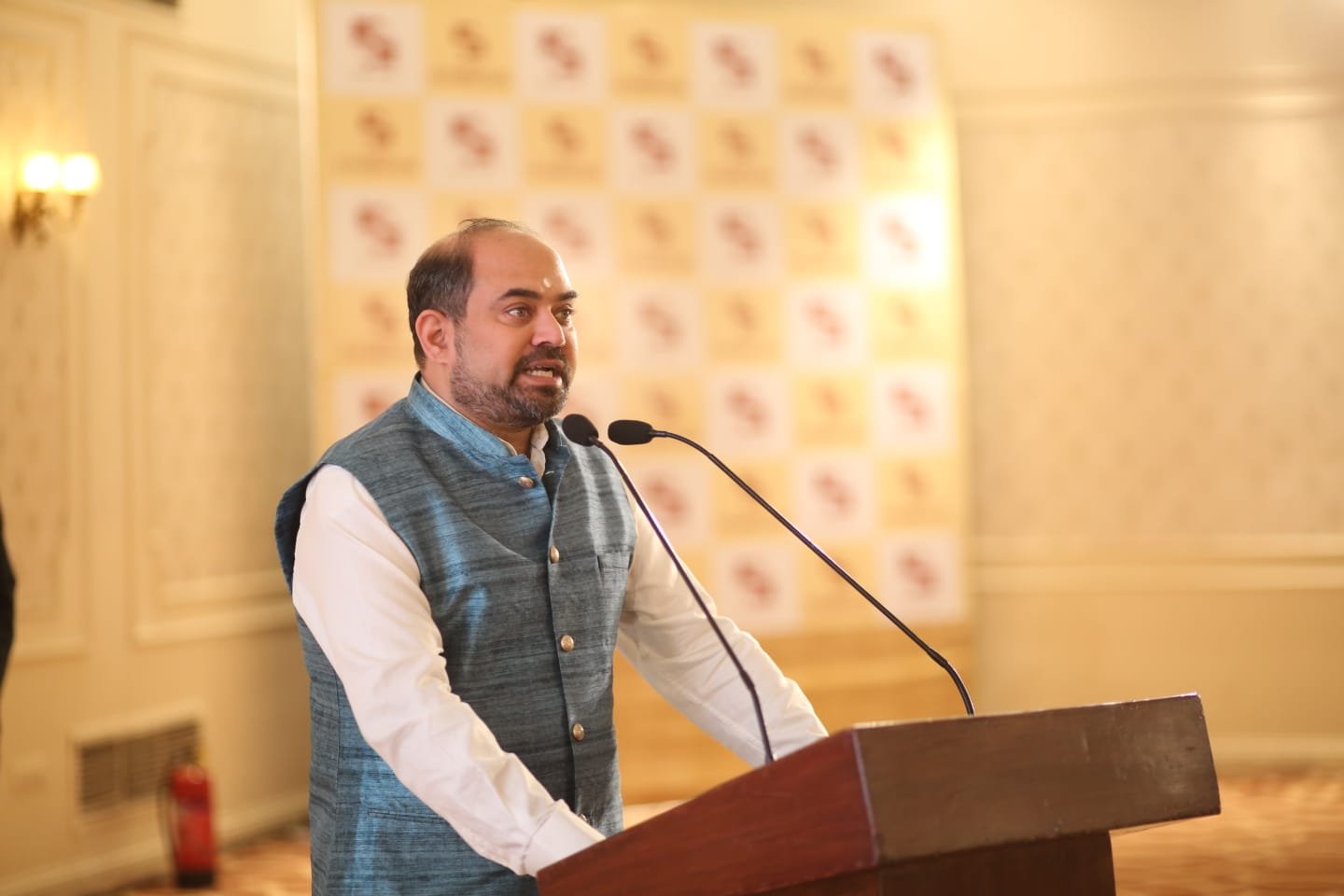
To operationalize this forward-looking vision, Symbiosis International has actively integrated artificial intelligence and other emerging technologies directly into its academic frameworks, spanning classroom teaching, advanced research initiatives, and strategic industry engagements. However, Dr Raman was careful to stress that true technological adoption cannot be reduced to the superficial introduction of new digital tools into physical or virtual classrooms.
Instead, he argued that educational institutions must cultivate a deeper, more critical engagement with technology. Students must be challenged to think critically, solve complex problems, interpret vast arrays of data, and grapple meaningfully with the profound ethical implications of the technologies they utilize. In a world increasingly driven by automated decision-making and digital surveillance, technological proficiency must be coupled with moral clarity and societal responsibility.
Furthermore, Dr Raman highlighted the necessity of ensuring that digital and technological capabilities are not siloed within specialized technical departments or engineering programs. Rather, digital literacy must be developed organically across diverse academic disciplines, including management, law, healthcare, and the humanities. As artificial intelligence continues to permeate every facet of professional practice—from legal analysis and medical diagnostics to corporate governance and public policy—understanding the mechanics and impacts of technology must become a shared educational priority rather than the exclusive preserve of technical specialists.
The discussion on technological readiness naturally bridged into a broader conversation regarding the indispensable value of international collaboration. Dr Raman underscored that no single institution, nation, or industry can successfully navigate the complexities of the modern technological and economic revolution in isolation. Universities, national governments, and private sector enterprises must proactively work together through joint research initiatives, faculty exchange programs, student mobility agreements, and collaborative skills development frameworks. By pooling resources and drawing upon each country’s distinct strengths, cultural insights, and academic expertise, the global educational community can build a more robust foundation for future generations.
Concluding his address at the annual gathering, Dr Raman issued a compelling call to action for the international community. He urged academic leaders, policymakers, and industry stakeholders to commit to a future where ongoing technological progress contributes not simply to narrow measures of economic productivity, but fundamentally to the creation of more inclusive, resilient, and prosperous societies worldwide.