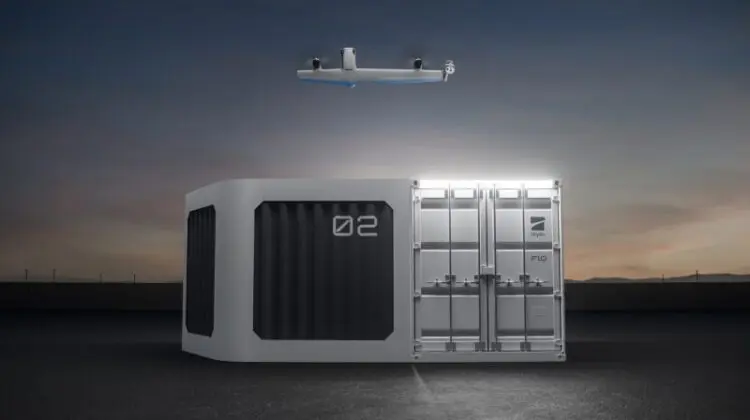
The landscape of autonomous commercial aviation shifted significantly as drone manufacturer Skydio broke new ground during its annual Ascend conference in Summerlin, Nevada. Stepping away from its traditional focus on quadcopters for the very first time, the San Mateo, California-based company officially announced the F10 Lightrunner, an advanced fixed-wing aircraft engineered for high-speed, long-range industrial and public safety missions. Alongside the aircraft, Skydio introduced the MegaDock, two major industry-specific software platforms, and a comprehensive suite of hardware and software upgrades designed to scale automated operations to unprecedented levels.
The F10 Lightrunner represents a massive leap forward in capabilities for enterprise users, boasting a top speed of up to 100 miles per hour (161 kilometers per hour) and an impressive 30-mile (48-kilometer) flight radius. This combination of speed and extended range allows a single launch location to provide rapid aerial coverage across nearly 3,000 square miles (7,770 square kilometers). Customer deployments of the new fixed-wing system are scheduled to begin in 2027, promising to transform how organizations approach large-scale infrastructure monitoring and emergency response.
"F10 Lightrunner is the most advanced fixed-wing drone that has ever existed," said Adam Bry, chief executive officer of Skydio, addressing attendees at the Ascend conference. "It will bring the benefits of Drone as First Responder and fully automated drone inspection of critical infrastructure to a scale that’s never been possible before, with 100 mph speed and up to a 30-mile coverage radius."
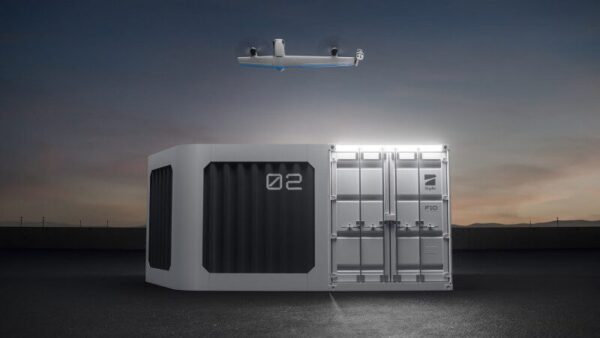
Operating the F10 Lightrunner entirely eliminates the need for a traditional on-site ground crew. Instead, the aircraft relies on an innovative Robotic Takeoff and Landing (RTOL) system that utilizes a specialized suction-based robotic gripper to secure and release the vehicle. To support multi-aircraft deployments efficiently, Skydio designed the MegaDock, a robust housing station capable of storing up to five F10 aircraft simultaneously and supporting concurrent missions from a single centralized location.
The engineering behind the F10 places a heavy emphasis on uninterrupted visual data capture. Skydio designed the aircraft around its optical payload using a unique SideEye layout. In this configuration, the camera is positioned entirely outside the rotor and wing plane, ensuring that the aircraft’s physical structure never blocks the video feed. This layout guarantees that pilots and automated systems maintain continuous, unobstructed coverage throughout the entirety of a mission.
To manage the complexities of high-speed fixed-wing flight, the aircraft runs on Foresight, a specialized autonomy software built specifically by Skydio to handle real-time flight path planning and adjustments, thereby significantly reducing pilot workload. Furthermore, safety and regulatory compliance are maintained on every flight through the integrated Skydio Airspace Assurance System, which handles collision avoidance and airspace management seamlessly.
Asset Command and Security Command Platforms
Expanding upon the successful operational model established by its earlier DFR Command offering, Skydio used the Ascend conference to unveil two powerful new software platforms aimed at specific vertical markets. The first of these, Asset Command, is tailored specifically for organizations tasked with managing massive portfolios of fixed physical infrastructure.
Asset Command streamlines operations by importing asset data directly from existing Geographic Information Systems (GIS) and Computerized Maintenance Management Systems (CMMS). This direct integration allows the software to automatically plan, schedule, and route detailed infrastructure inspections. To ensure the platform met real-world industry demands during development, Skydio collaborated closely with prominent early development partners, including AEP, Chevron, Dominion Energy, and Southern Company.
In contrast, Security Command is designed to turn existing drone fleets into a dynamic, continuous security capability. The platform can autonomously dispatch aircraft equipped with live video feeds, granting security teams immediate aerial awareness of a site before sending human personnel into potentially dangerous or volatile situations.
"We’re now tapping the true potential of software-defined, autonomous, dock-based drones with industry-specific applications for public safety, energy infrastructure, and physical site security," Bry stated. "Each Command brings together specialized autonomy, customized workflows, and deep integrations with the systems our customers already use, making drones easier to adopt and integrate than ever before, and orders of magnitude more effective once they’re operating them."
Both the Asset Command and Security Command platforms officially went on sale during the Ascend conference, with general market availability slated for early 2027.
Controller 2 and Software Updates
In addition to its flagship aircraft and software suites, Skydio rolled out a series of hardware and software enhancements designed to improve the daily user experience for professional operators. Among these hardware introductions is Controller 2, a hand-flown control device featuring a bright, 7-inch sunlight-readable display, an integrated kickstand for hands-free placement, and an extended battery life lasting up to 5.5 hours on a single charge.
On the software front, the company released a new iteration of the Skydio Mobile App, built explicitly to facilitate secure, real-time live-video sharing among teams in the field. Camera software updates are also on the horizon, with ThermalBoost scheduled for release this winter and Low-Light Enhance following next spring. Additionally, Skydio is actively rebuilding its Transparency Dashboard—a vital tool utilized heavily by public safety agencies to publicly publish flight logs and operational policy data—with expanded reporting tools rolling out later in the year.
Comprehensive details regarding the entire new product lineup, software integrations, and deployment timelines remain available directly through the official Skydio website.