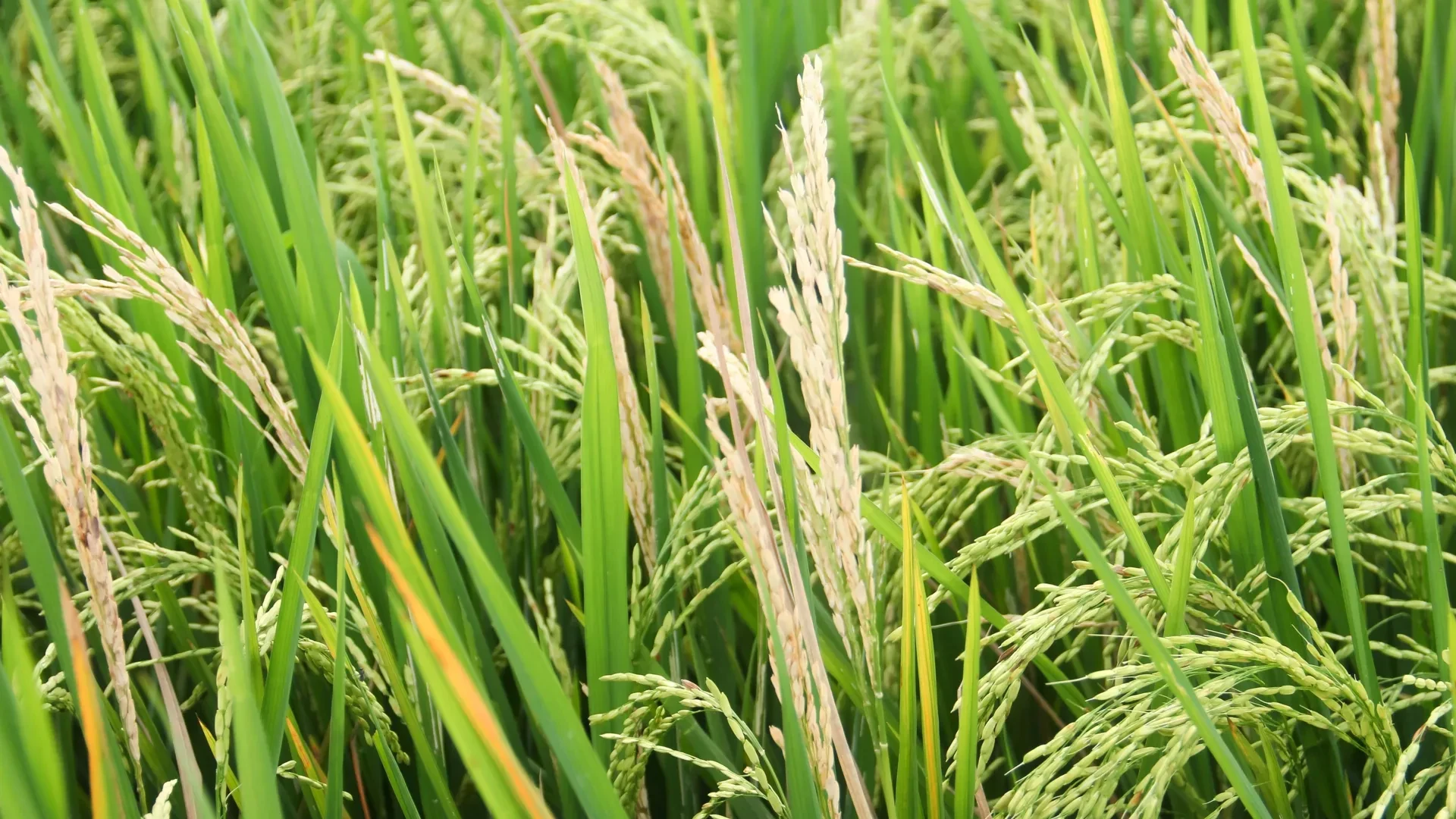
Scientists have uncovered a promising new way to protect some of the world’s most important food crops from a destructive fungus that poses a severe and escalating threat to global food security. By engineering the natural immune defenses of plants, an international team of researchers has developed an experimental approach that could eventually help staple crops such as wheat, rice, and barley resist fungal infections far more effectively than current agricultural methods allow.
The research effort, led by scientists at the John Innes Centre in the United Kingdom in collaboration with researchers at Kobe University in Japan, focused on a recently discovered group of plant immune receptors. The team successfully identified how these specific proteins recognize invading pathogens and demonstrated that the proteins can be modified to detect multiple fungal threats simultaneously. The findings, published in the scientific journal Science Advances, could open the door to a new generation of crops equipped with stronger, more durable disease resistance.
"We’ve discovered something that could lead to a potential intervention on what is the worst fungal disease of cereals," said Professor Mark Banfield, a research group leader at the John Innes Centre and a corresponding author of the study.
The primary target of this groundbreaking research is Magnaporthe oryzae, the destructive fungus responsible for blast disease. This pathogen causes the most serious fungal disease affecting cultivated rice and has increasingly become a major, highly aggressive threat to wheat and barley crops in various parts of Asia and Africa. The agricultural damage inflicted by the disease is enormous. Each year, rice blast destroys enough potential harvests to feed approximately 60 million people. As the fungus continues to expand its geographical reach into additional agricultural regions, developing effective, sustainable ways to protect vulnerable crops has become an urgent priority for international agricultural organizations and global food security planners.
The pathogen infects plants through a sophisticated and highly specialized biological strategy. It delivers specific proteins, known as effectors, directly into the cells located within the leaves and stems of the host plant. Once inside, these effector molecules actively interfere with normal plant cellular functions, successfully suppressing the host’s vital processes and allowing the pathogen to establish a foothold, multiply, and promote widespread disease throughout the crop.
Plants, however, have not evolved defenseless. Over millions of years, they have developed their own complex and multifaceted defense systems. Specialized plant immune receptors are capable of recognizing foreign pathogen molecules and triggering an immediate protective response. One crucial defense mechanism involves causing infected plant cells to undergo a controlled, localized form of cell death. By sacrificing a small, contained area of tissue, the plant prevents the pathogen from spreading any farther through its vascular system or neighboring cells.
For more than three decades, the vast majority of scientific research into plant immunity has centered heavily on a well-known family of proteins called Nucleotide-binding and leucine-rich receptors, commonly referred to as NLRs. These receptors have historically played a central role in helping researchers understand how cereal crops recognize and defend themselves against blast disease and a wide variety of other agricultural infections.
More recently, however, scientists have begun investigating another distinct group of immune proteins found naturally in cereal crops, known as tandem kinase proteins, or TKPs. Although researchers are still actively learning how these unique receptors operate within the cellular machinery of plants, they appear to offer promising additional opportunities for strengthening plant defenses against rapidly evolving agricultural diseases.
Earlier laboratory studies revealed that some TKPs contain a specialized region called a Heavy Metal Associated domain, or HMA domain. Interestingly, similar structural regions are also found in certain NLR receptors, where they actively assist in recognizing pathogen effectors and initiating rapid immune responses. This shared feature immediately attracted the attention of Professor Banfield and his colleagues because it suggested that scientists might be able to artificially redesign the receptors to recognize additional, unrelated fungal threats that naturally bypass standard plant defenses.
"This piqued our interest," Professor Banfield explained. "If we can engineer these integrated HMA domains for new properties by making amino acid protein changes where effectors bind, we can gain what we call novel recognition specificities—and potentially a new frontline for defense of plants against disease."
In their newly published study, the researchers examined with high precision exactly how HMA domains interact physically and chemically with the specific molecules released by the blast fungus during an infection. Using advanced biophysical techniques and protein crystallography—a sophisticated method that allows scientists to determine the detailed, three-dimensional structure of molecules at an atomic level—the team obtained a high-resolution view of how these vital plant receptors physically bind to fungal effectors.
The resulting data revealed that HMA domains essentially function as sophisticated biological bait. By tightly binding to the specific molecules that the fungus relies on during the infection process, these specialized regions help plants recognize the immediate presence of an invading pathogen and swiftly activate their internal defenses before the disease can take hold.
Armed with this detailed structural information, the researchers successfully modified TKP immune receptors in the laboratory so that they could recognize two different fungal effectors simultaneously—specifically those associated with severe infections in both wheat and barley. This exceptional ability to detect multiple distinct targets, known in biology as dual specificity, is remarkably unusual in naturally occurring plant immune receptors. Demonstrating that this capability can be successfully introduced through targeted protein engineering suggests a highly promising way to drastically expand the range of threats that crop immune systems can naturally recognize and neutralize.
Furthermore, these findings provide a solid foundational framework for investigating other recently identified TKPs in various other cereal crops. In the future, scientists may eventually be able to design customized, tailor-made immune receptors that can detect several different fungal effectors at the exact same time, potentially making staple food crops significantly more difficult for persistent agricultural pathogens to successfully infect.
Although these laboratory findings are exceptionally encouraging for the future of agriculture, the technology remains at a relatively early, experimental stage. The researchers conducted their initial tests using protoplasts, which are individual wheat cells stripped of their cell walls to serve as a simplified, highly controllable model for studying how plant tissues respond to external stimuli. The critical next step for the research team is to determine whether these engineered receptors can provide equally effective, reliable protection in whole, living plants grown under tightly controlled greenhouse conditions.
"Our study indicates that this new class of resistance proteins is amenable for engineering purposes. We now know that the previous tools we used in engineering NLR receptors may also work with this new class," noted Dr. Daniel Yu, the first author of the study.
Gaining a deep understanding of precisely how fungal effectors attach to plant immune receptors could also help researchers take full advantage of other rapidly advancing scientific technologies. Modern precision breeding techniques and artificial intelligence models may soon provide additional, highly efficient ways to redesign HMA domains, enabling them to recognize pathogen molecules that have historically escaped detection by traditional crop breeding programs.
One particularly promising future possibility involves combining different types of immune receptors within the very same crop variety. Because traditional NLRs and the newly studied TKPs appear to activate plant defense mechanisms through entirely different cellular pathways, utilizing them together could create multiple, overlapping layers of biological protection. This multi-layered approach could make it exponentially harder for evolving fungi to bypass a plant’s immune system.
"We think these two classes of immune receptors, NLRs and TKPs, are probably activated in different ways," Professor Banfield said. "That gives the potential for more robust immunity in the field because you are not putting all your eggs in one basket. Further down the road, we may be able to use techniques to stack genes encoding TKPs and NLRs together against the same disease, making a super-resistant crop. They will have different ways of activating immunity, so it is likely to be more difficult for a pathogen to evolve away from."
The urgent need for better crop protection is becoming increasingly apparent as blast disease continues to threaten major food supplies across the globe. Wheat blast was first officially identified in Brazil during the 1980s and has since spread alarmingly to parts of Asia and Africa. Although the specific strain has not yet been detected in the United Kingdom, changing global climate patterns could eventually create environmental conditions that allow the disease to threaten vital cereal production in northern Europe and other temperate regions.
For farmers and agricultural producers worldwide, the emergence of blast disease in new geographical areas presents a severe and complex challenge, particularly because the fungus directly targets crops that are absolutely essential to feeding large, growing human populations.
By revealing how a previously underexplored class of plant immune receptors can be successfully engineered to recognize multiple fungal threats, the international research team has identified a compelling new strategy for safeguarding future agricultural harvests. Extensive further testing will now be necessary to establish whether these modified defenses work effectively in whole plants and under practical, real-world agricultural conditions. If successful, combining these advanced immune receptors could eventually help scientists develop robust, resilient crop varieties capable of withstanding one of agriculture’s most destructive fungal diseases.