Every six to seven years, climate modelling groups across the globe embark on a massive, coordinated effort to simulate how Earth’s climate could evolve over the coming decades. These complex simulations form the bedrock of scientific evidence utilized by the Intergovernmental Panel on Climate Change (IPCC) in its definitive assessment reports. Built around a standardized set of greenhouse gas emissions pathways, these models allow researchers to project future temperature changes, socioeconomic impacts, and environmental risks under various human activity scenarios.
A newly published suite of scenarios for the seventh phase of the Coupled Model Intercomparison Project (CMIP7) marks a significant evolution in global climate science. These new frameworks replace the Shared Socioeconomic Pathways (SSPs) that drove the previous generation of climate models and featured heavily in the IPCC’s sixth assessment cycle. Published in the journal Geoscientific Model Development and released into the public domain by the Scenario Model Intercomparison Project team, the seven new CMIP7 scenarios fundamentally reshape how scientists look at future emissions, climate policies, and the feasibility of global temperature targets.
The updated scenarios depart from their predecessors in several notable ways. Most immediately, they abandon the enigmatic naming conventions based on radiative forcing levels—such as SSP5-8.5 or SSP1-2.6—and instead adopt straightforward names tied directly to their emissions trajectories, ranging from "low-to-negative" to "high." Furthermore, the new set eliminates the hypothetical "no-climate-policy" baseline worlds that previously served as counterfactuals. Instead, the scenarios explore the real-world implications of current policies continuing, being actively strengthened, or weakening over time.
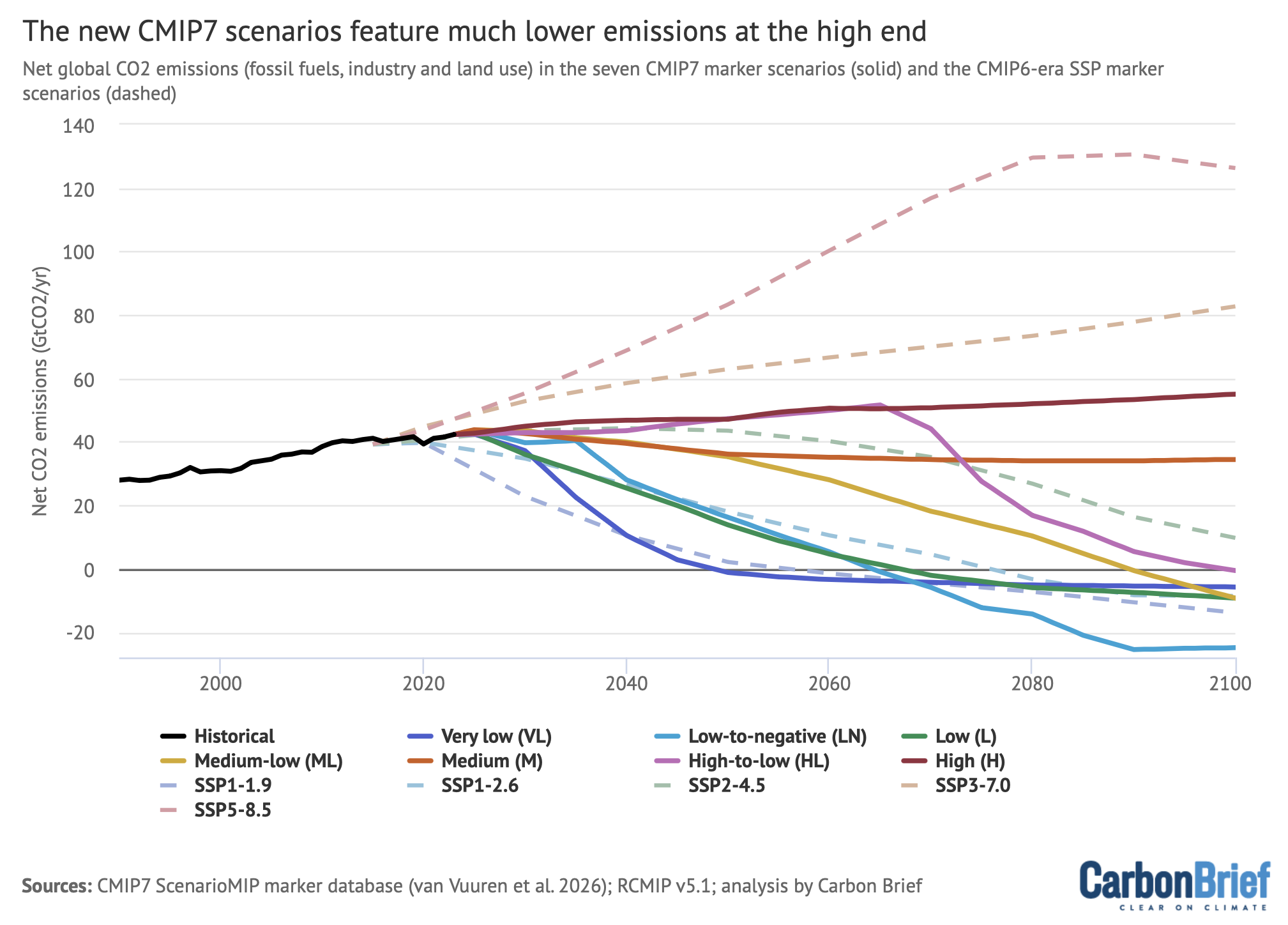
Crucially, the new scenarios dramatically revise high-end future emissions downward, bringing them far below the extreme scenarios of prior generations. This shift reflects a rapidly changing global energy landscape where a 21st century dominated by unbridled coal use is no longer considered plausible. At the same time, the lowest emissions scenarios have been revised upward relative to the sixth assessment report, reflecting the reality that global emissions have not fallen as quickly as once hoped, making at least some temporary overshoot of the Paris Agreement’s aspirational 1.5C warming limit unavoidable.
A New Generation of Scenarios and Socioeconomic Foundations
To simulate how human activity will influence future climates, modellers must estimate external drivers of global warming, known as radiative forcings, which include atmospheric greenhouse gas concentrations, air pollutant levels, and land-use changes. Because the future is inherently uncertain, researchers rely on a suite of plausible storylines. The Scenario Model Intercomparison Project coordinates these efforts for the IPCC, and the release of the underlying emissions data allows modelling groups worldwide to begin full Earth-system model runs for the upcoming seventh assessment cycle.
The previous SSP scenarios were finalized between 2015 and 2017 using historical data ending in 2015. By the time the IPCC’s sixth assessment report concluded in 2021, several years projected by those scenarios were already part of the historical record, and the world had changed considerably. The new CMIP7 scenarios are designed to correct this temporal disconnect and incorporate updated demographic and economic projections published in 2024.
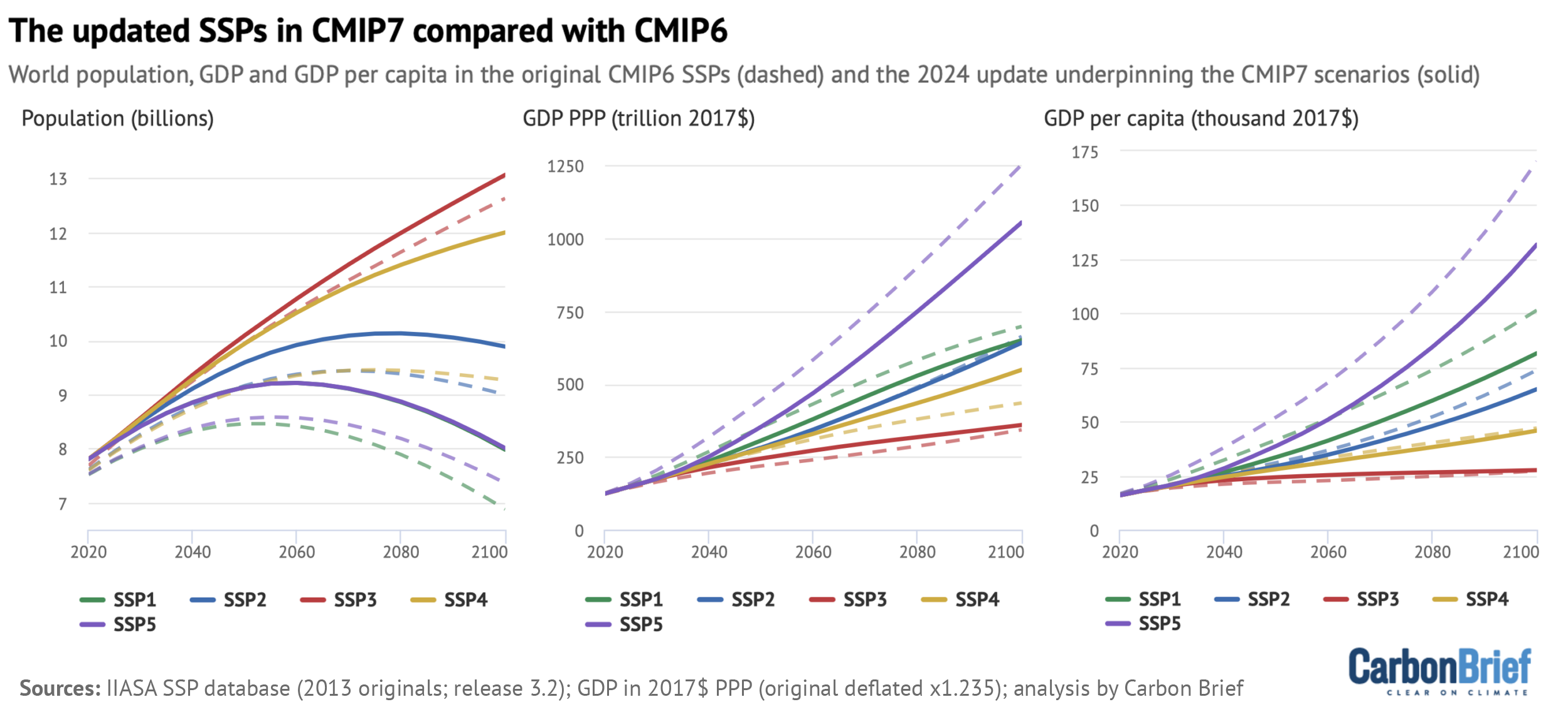
Underpinning these updated scenarios are revised socioeconomic assumptions that present a somewhat more crowded and less wealthy world than originally envisioned in the 2013-era SSP database. Global population figures have been revised upward in nearly every scenario. For instance, the updated middle-of-the-road pathway projects a global population of 9.9 billion people by the year 2100, representing an increase of roughly one billion people compared to earlier estimates. Meanwhile, gross domestic product projections have been adjusted downward in high-end growth scenarios while remaining relatively stable in others. Consequently, income per person in 2100 is projected to be roughly 10 to 25 percent lower in most scenarios.
Another major structural change involves the socioeconomic pathway underlying the highest future emissions scenario. While the previous generation relied on SSP5—characterized by fossil-fueled development—to drive its highest emissions trajectory, the new high scenario in CMIP7 is based on SSP3, a world marked by regional rivalry and fragmented governance. Integrated assessment modelling teams found that SSP3 and SSP5 variants produced similar emissions outcomes, but judged the fragmented world of SSP3 to be more relevant for exploring high-end risks and adaptation challenges.
Shifting Baselines and Timescales
The decision by CMIP7 scenario authors to eliminate baseline scenarios that assumed a total absence of climate policy represents a conceptual turning point. Rather than comparing future worlds against an unrealistic vacuum of governance, the new range begins with current policies and explores potential pathways of reinforcement or rollback. The high scenario investigates a plausible rollback of current mitigation policies, while the medium scenario freezes climate policies at their 2025 levels without assuming countries successfully achieve their nationally determined contributions or unlegislated net-zero pledges.
The medium scenario is not intended to serve as a forecast or a "most likely" outcome, but rather as an analytical benchmark against which the effects of future policy shifts can be measured. It occupies an emissions level roughly analogous to the older SSP2-4.5 scenario. The low scenario explores a world where climate policy is rapidly strengthened to limit warming below 2C by 2100, mirroring the old SSP1-2.6 pathway. Meanwhile, the very-low scenario aims for 1.5C warming by the end of the century, but acknowledges that a temporary mid-century overshoot of the threshold is now practically unavoidable.
In addition to these structural revisions, CMIP7 introduces crucial technical changes to how models operate. For the first time, climate models with an interactive carbon cycle are required to run in emissions-driven mode for carbon dioxide, calculating atmospheric concentrations directly from emissions rather than prescribing them. This advancement ensures that the deep uncertainties surrounding carbon-cycle feedbacks are fully captured in the range of projected warming. Furthermore, the simulation period has been extended from 2100 to 2150, providing a more comprehensive view of the long-term climatic conditions that younger generations will experience within their lifetimes. All scenarios also feature long-term extensions out to the year 2500 to study the stabilization of Earth-system processes, such as ice sheet dynamics and sea level rise.
A Narrower Range of Future CO2 Emissions
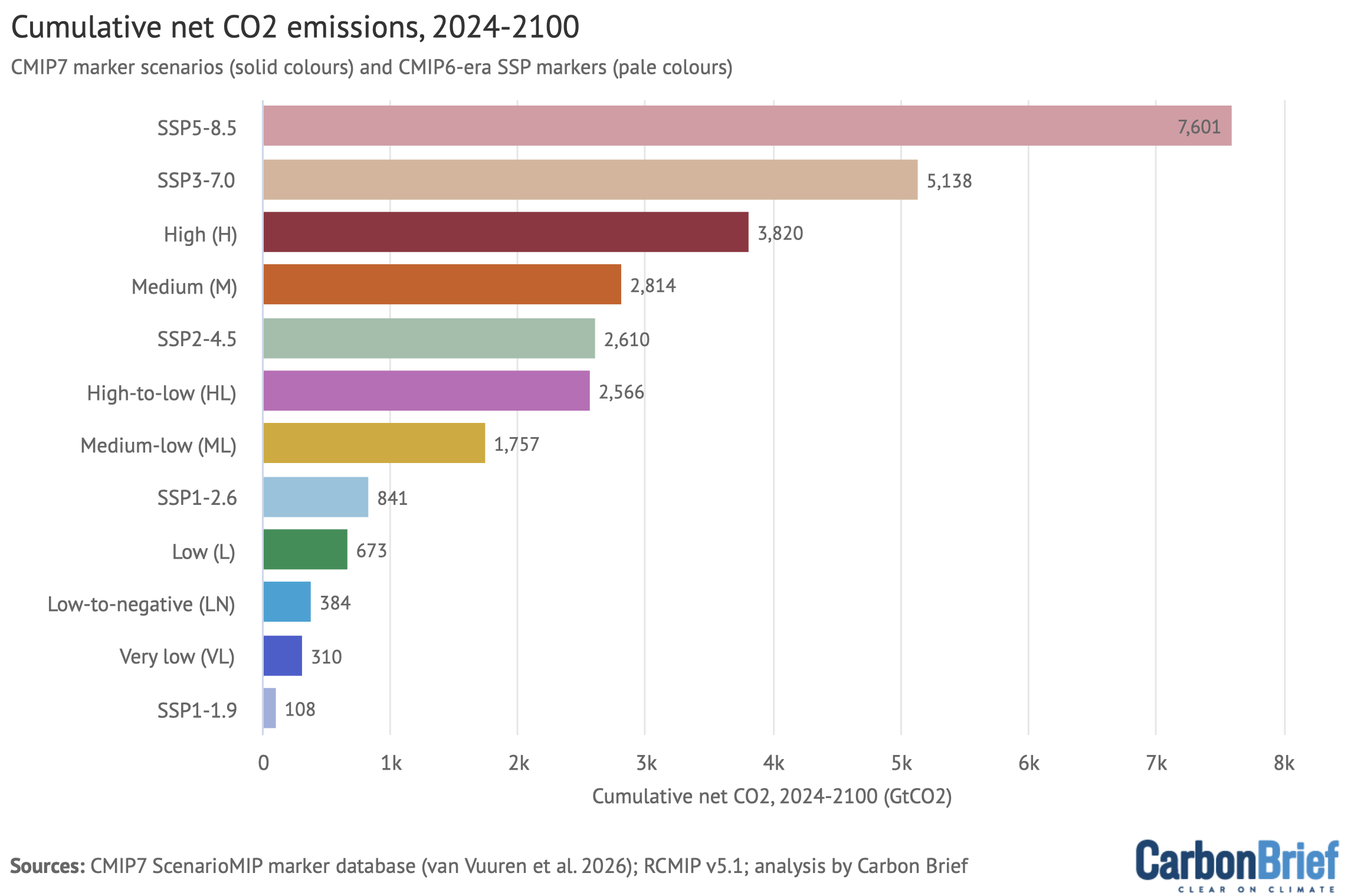
When looking at the big picture, the new CMIP7 scenarios compress the overall range of projected future carbon dioxide emissions compared to the sixth assessment phase. At the lower end, the very-low and low scenarios closely track their predecessors, aiming for net-zero carbon dioxide emissions around mid-century and late-century respectively. However, because global emissions failed to decline rapidly after 2020, the cumulative emissions for these low-end scenarios between 2024 and 2100 are somewhat higher than previously estimated.
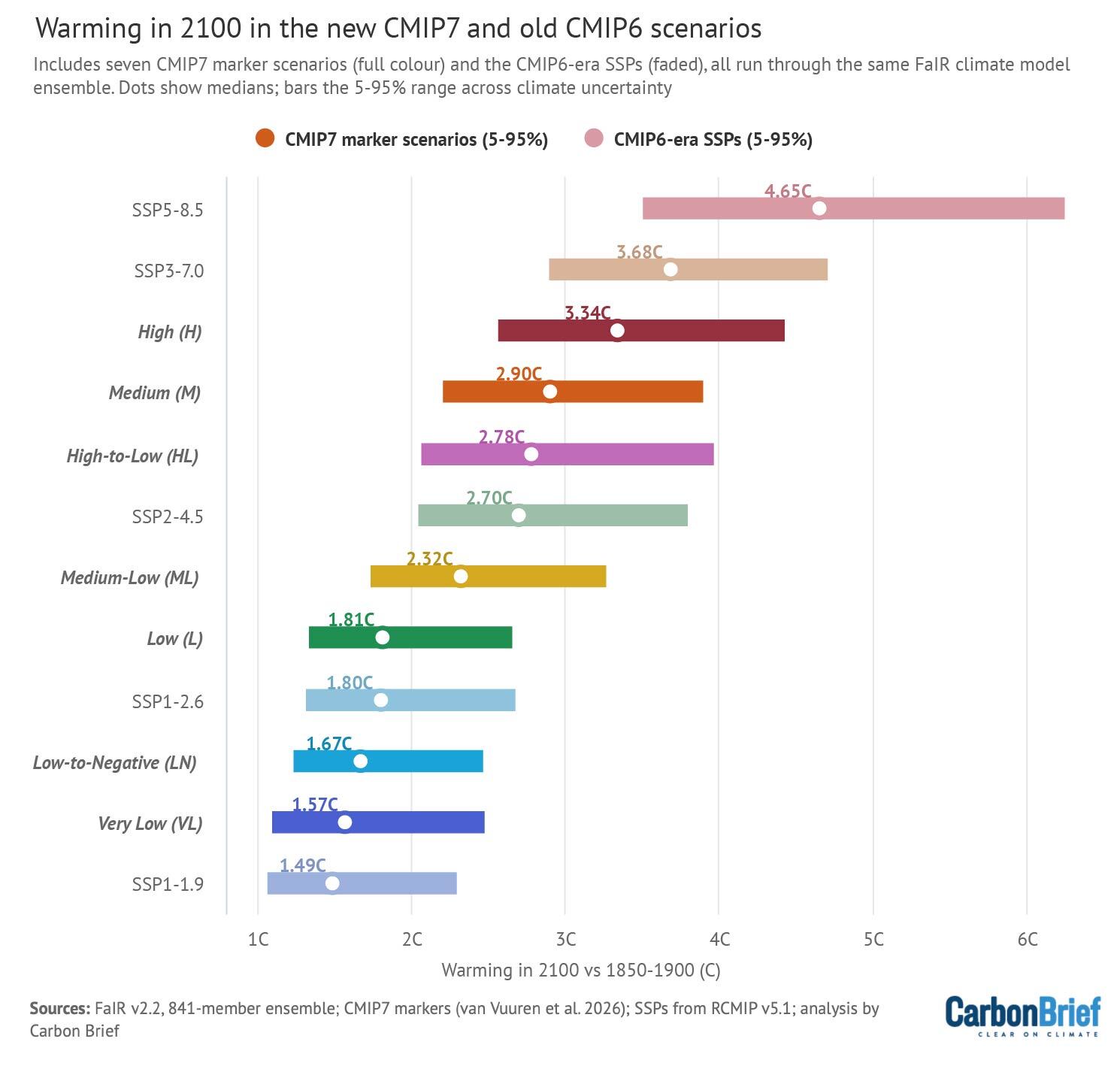
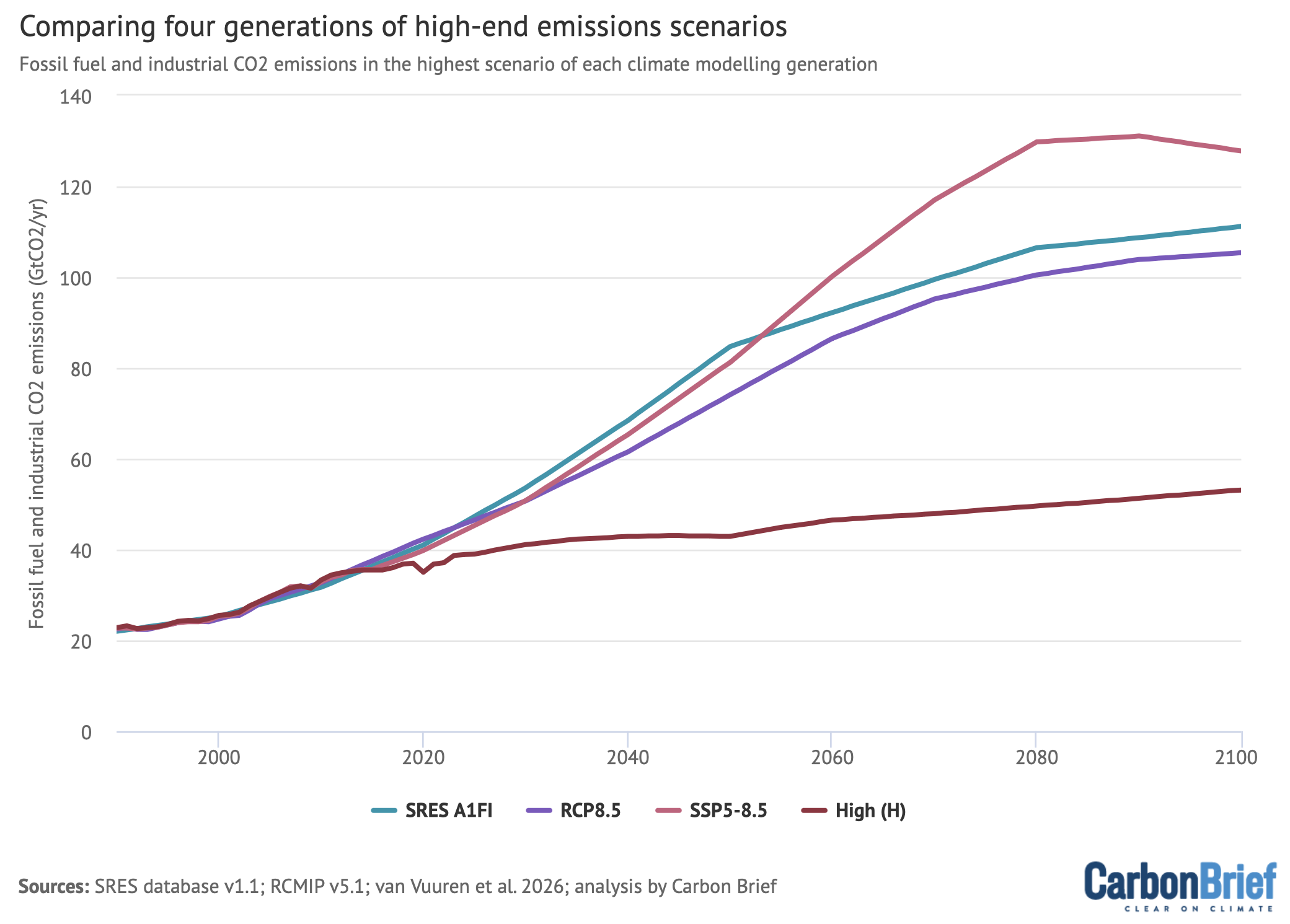
The transformation at the high end of the emissions spectrum is far more dramatic. The new high scenario reaches 55 gigatonnes of carbon dioxide per year by 2100, which is less than half of the peak emissions projected by the former SSP5-8.5 scenario. In cumulative terms, the new high scenario results in approximately 3,820 gigatonnes of carbon dioxide between 2024 and 2100, roughly half of the cumulative emissions associated with SSP5-8.5. This downward shift means that the top tier of the new scenario set aligns more closely with what previous modelling generations classified as a middle-of-the-road outcome.
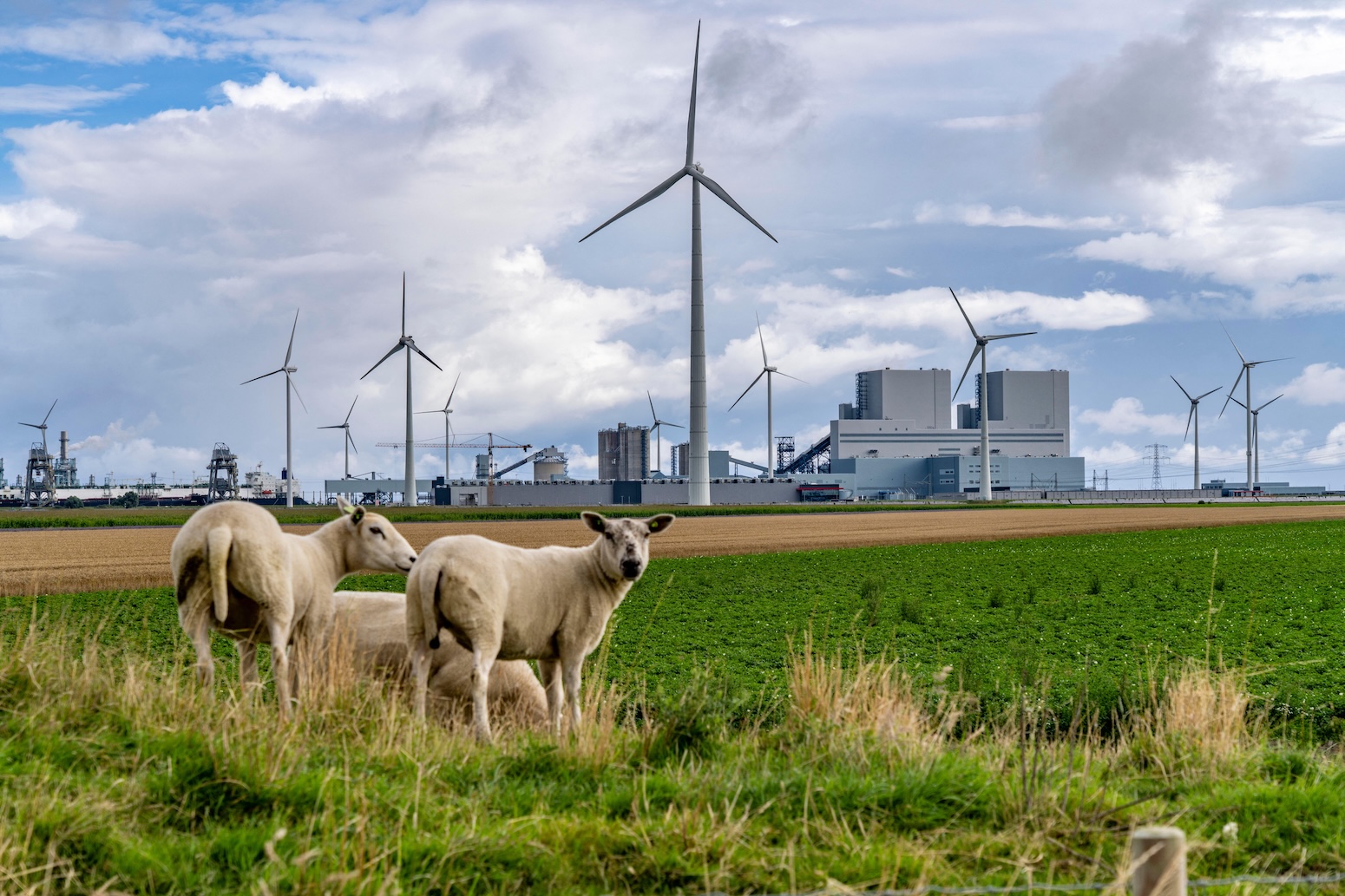
This downward revision is grounded in technological and economic reality. The plunging costs of renewable energy, the widespread deployment of solar, wind, and battery storage, and the global plateau in coal demand mean that a hypothetical rollback of climate policies today would not trigger the extreme coal utilization levels assumed a decade ago. While previous high-end scenarios were constructed as extreme worst-case possibilities rather than likely forecasts, real-world progress in clean energy investment has made those severe trajectories increasingly implausible.
Implications for Future Warming and Thresholds
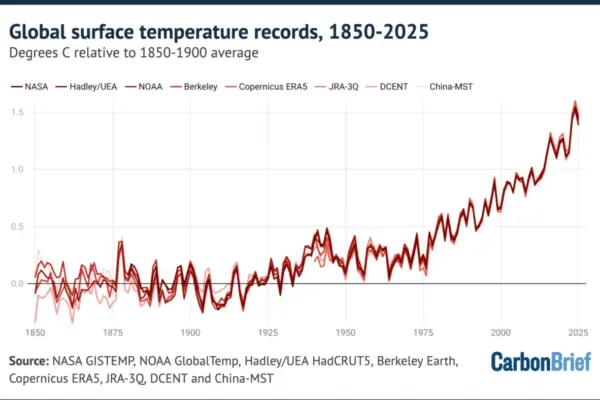
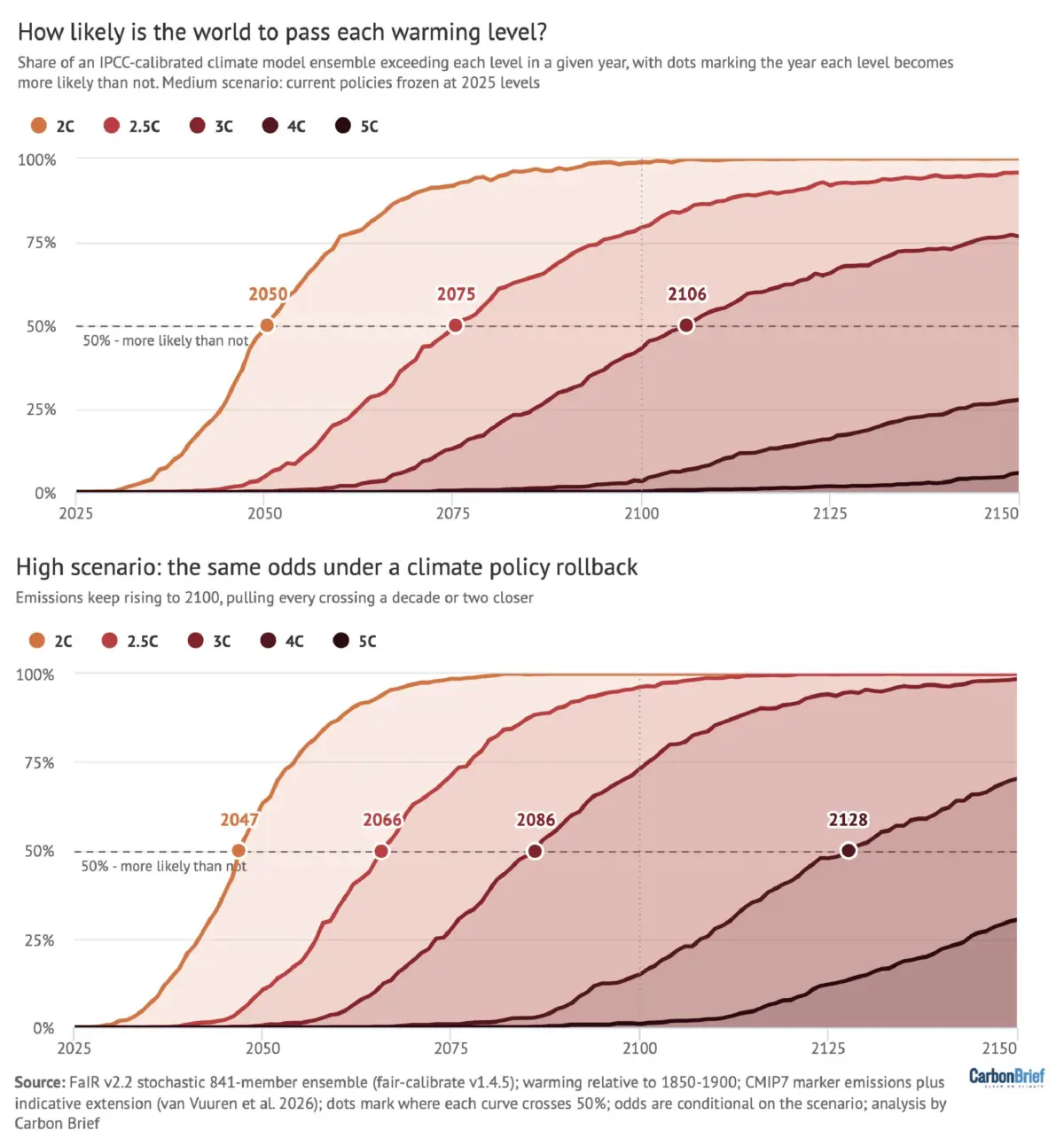
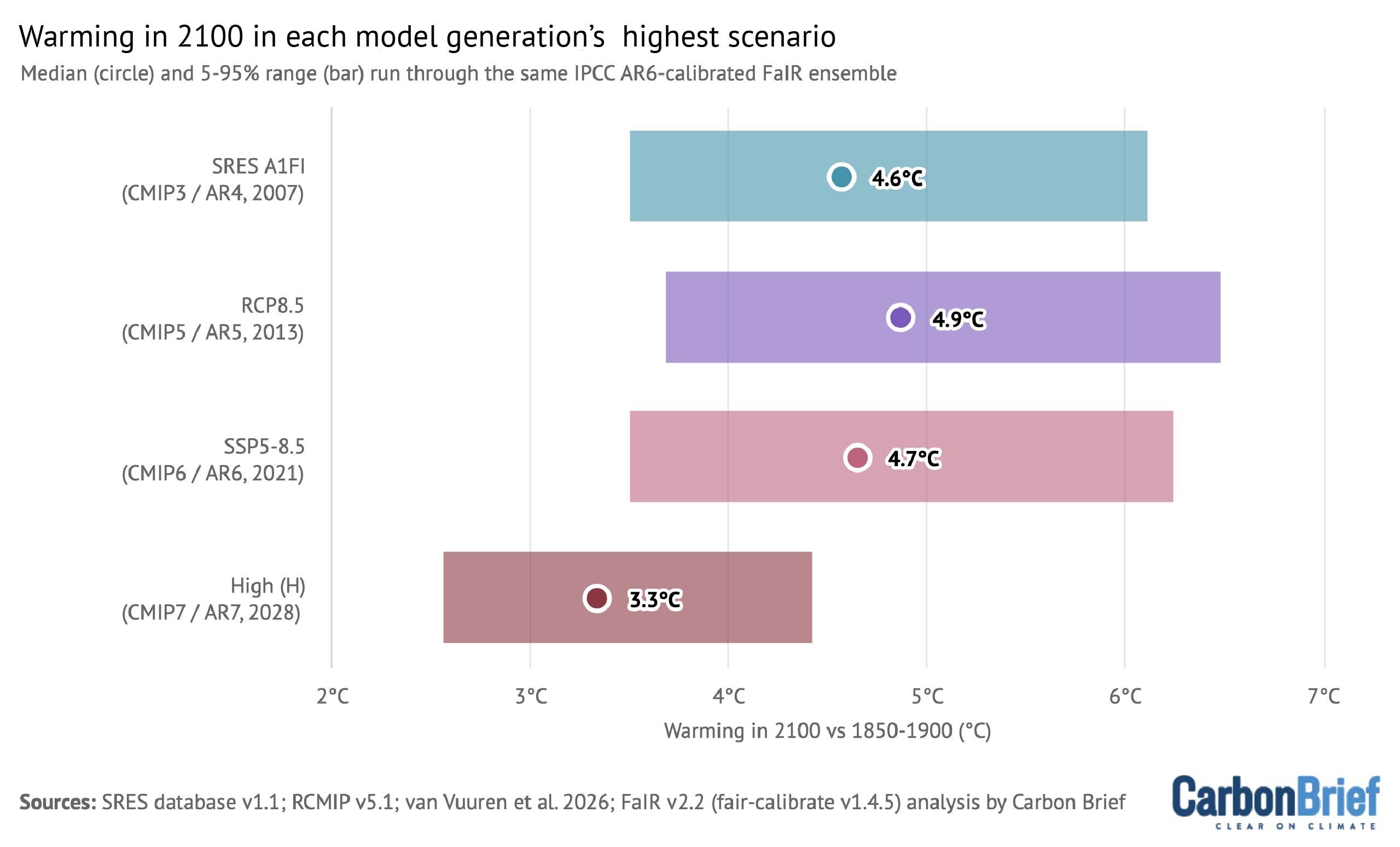
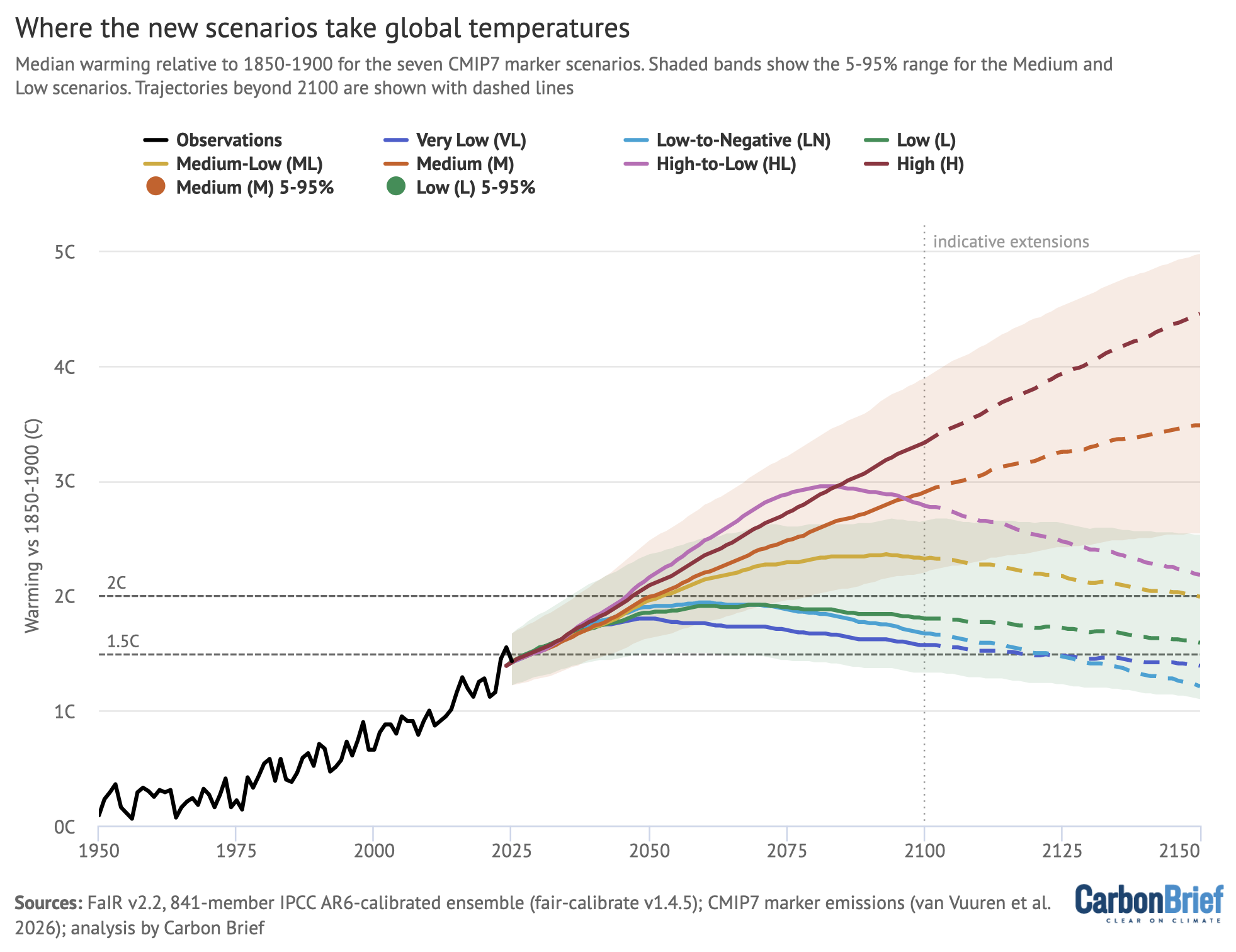
To evaluate the thermal consequences of the new scenarios on a consistent basis, analysts processed the CMIP7 emissions pathways through a standardized climate emulator calibrated to the IPCC’s sixth assessment report. The resulting median warming projections for the year 2100 relative to pre-industrial levels range from 1.6 degrees Celsius in the very-low scenario to 3.3 degrees Celsius in the high scenario, with the current-policy medium scenario reaching 2.9 degrees Celsius.
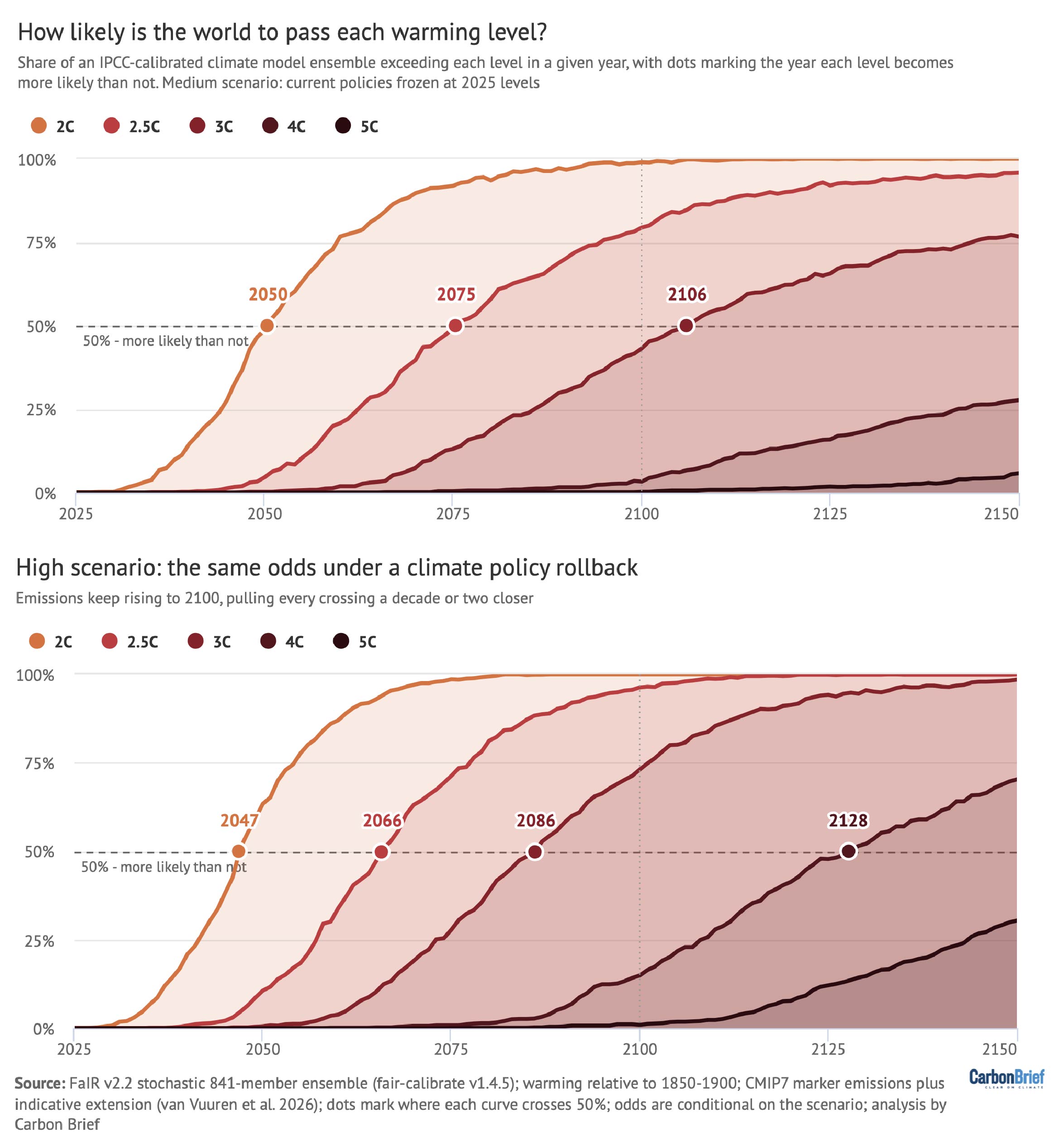
Under the medium scenario, which assumes current policies remain frozen, global warming is virtually guaranteed to surpass the 1.5 degrees Celsius threshold by the early 2030s. The 2 degrees Celsius limit is crossed around mid-century, and 3 degrees Celsius is reached by approximately 2110. Conversely, the high scenario accelerates these timelines, pushing the 2 degrees Celsius threshold into the 2040s and 3 degrees Celsius into the 2080s, with a substantial probability of exceeding 4 degrees Celsius by 2150.
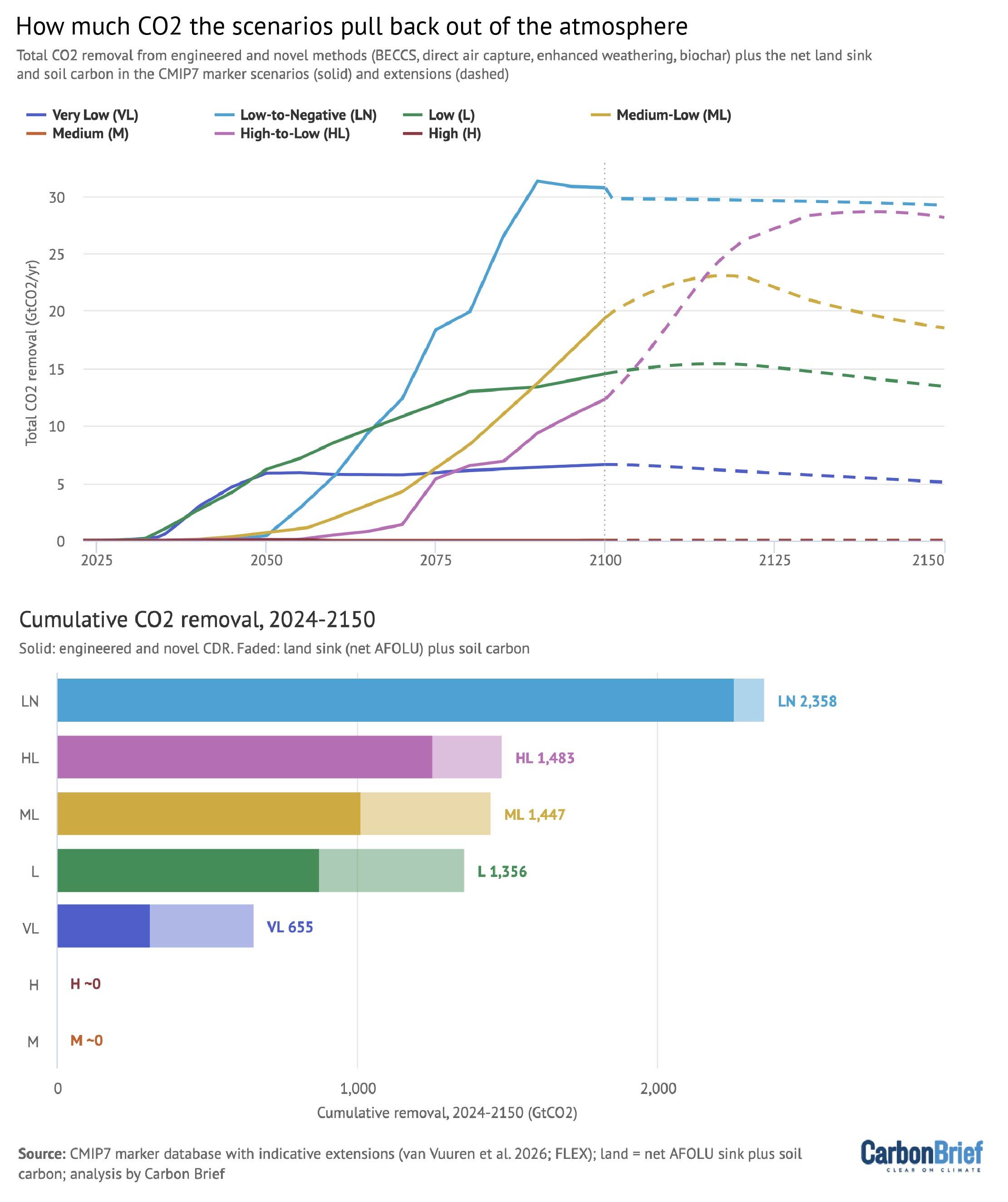
The necessity of carbon dioxide removal becomes apparent in any scenario that seeks to peak and decline global temperatures. Because carbon dioxide persists in the atmosphere for millennia, deep mitigation pathways rely heavily on removing carbon from the air to reverse warming trends and counteract residual emissions from hard-to-abate sectors. The low-to-negative scenario, for instance, pulls a cumulative total of thousands of gigatonnes of carbon dioxide out of the atmosphere by 2150 through a mix of engineered approaches like bioenergy with carbon capture and storage and direct air capture, alongside land-based sinks.
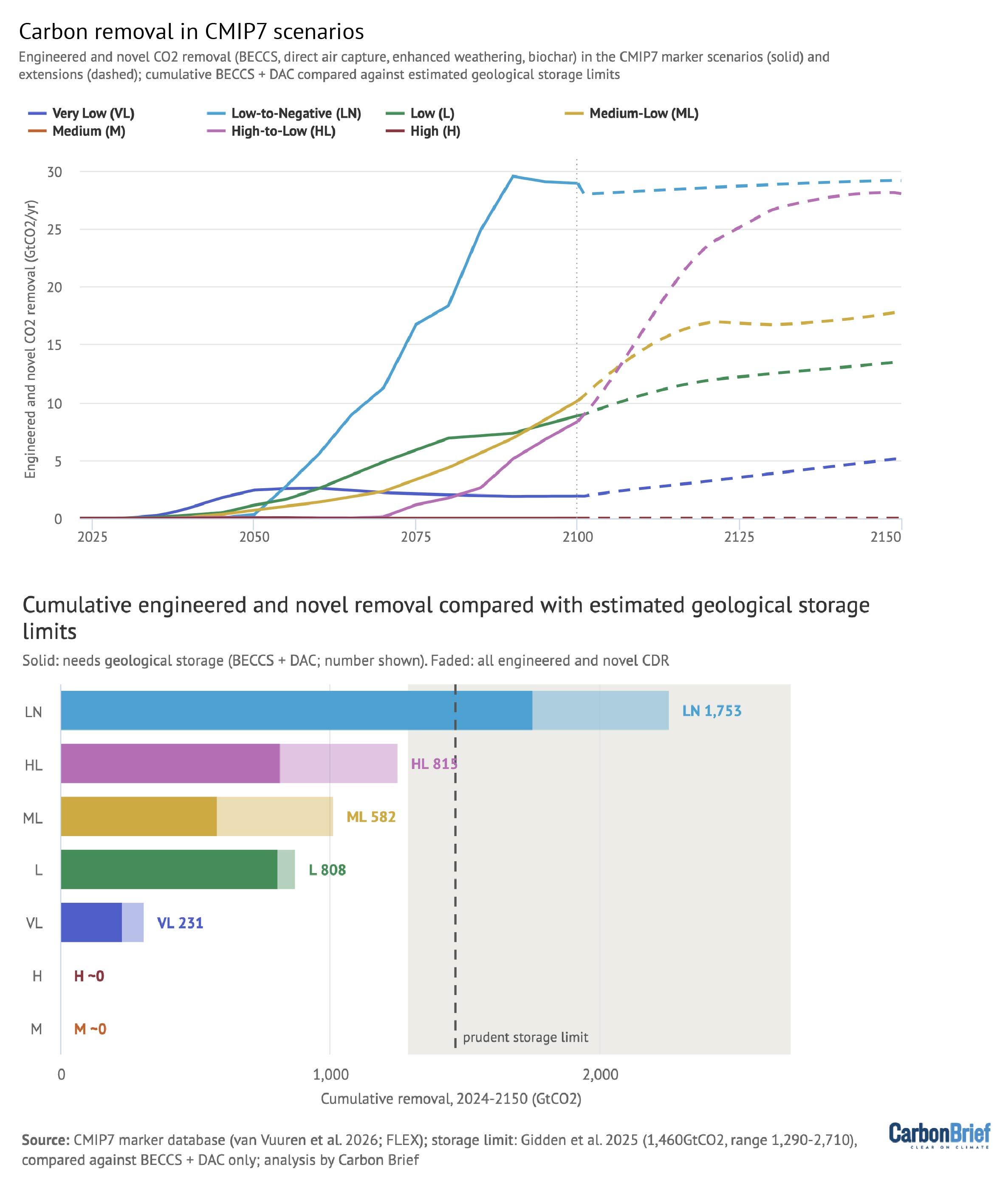
While these technological removal methods offer a vital mechanism for addressing temperature overshoot, they require planetary-scale infrastructure and substantial financial investment. Furthermore, heavy reliance on geological storage introduces significant logistical and industrial challenges, as the required storage capacity would dwarf the current scale of fossil fuel operations.
Ultimately, the CMIP7 scenarios demonstrate that while worst-case emissions trajectories of the past have receded due to global clean energy momentum, avoiding severe climate impacts remains an immense challenge. The absence of a traditional business-as-usual scenario highlights a more nuanced understanding of energy transitions among scientists. As modelling groups run the new simulations, the resulting data will shape the upcoming IPCC assessment reports, leaving governments, businesses, and societies to determine which of these plausible futures ultimately becomes reality.