Wildfires currently raging across large swathes of land in Indonesia are tracking alarmingly close to the emissions levels of the country’s most intense fire season of this century, according to climate experts and atmospheric data.
New figures from the Global Fire Emissions Database show that, as of September 7, fires across Indonesia have already produced an estimated 76 million tonnes of carbon (MtC) in 2026. This stark tally places the current year on the exact same trajectory as 2015, a catastrophic fire season that saw flames consume 2.6 million hectares of land nationwide and release a staggering total of 333 million tonnes of carbon into the atmosphere.

Dr. Guido van der Werf, a prominent researcher at Wageningen University in the Netherlands, noted that the unfolding disaster in Indonesia is "more or less on track" to match the peak emission levels recorded eleven years ago. He highlighted that certain parts of the country, notably the easternmost province of Papua, are experiencing unprecedented devastation, "burning more than they’ve ever burned."
Indonesia is no stranger to massive, emissions-intensive fire seasons driven by prolonged drought and land alteration. Historical research has estimated that the record-breaking 1997 fire season generated carbon emissions equivalent to between 13% and 40% of all global fossil fuel emissions that year. A separate scientific study analyzing the carbon dioxide emissions from the 2015 Southeast Asian fires—which primarily impacted Indonesia—found that their carbon output surpassed the entire annual fossil fuel emissions of the European Union. Furthermore, the severe, toxic regional haze generated by those fires has been linked to more than 100,000 premature deaths across the surrounding population.
El Niño Influence
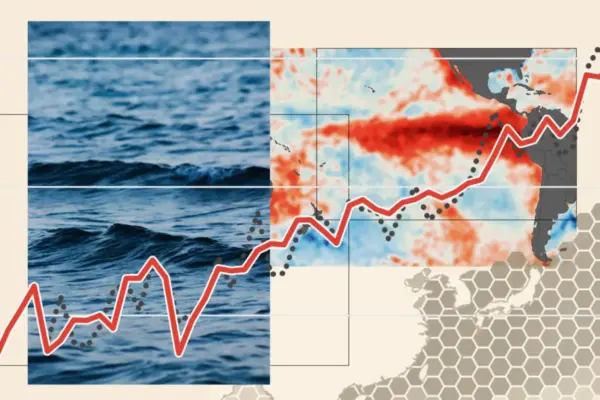
As was the case during the devastating seasons of 2015 and 1997, the 2026 Indonesian fires are unfolding against the backdrop of an active El Niño event.

This naturally occurring climate phenomenon, closely tied to shifting sea surface temperatures in the equatorial Pacific, periodically drives up regional temperatures and severely dries out the landscape in Indonesia. These conditions establish a tinderbox environment capable of generating fires so immense that they permanently imprint on global carbon budgets.
Climate scientists project that the current El Niño—which officially established itself in June and is anticipated to persist well into 2027—will rank as one of the most intense on record.
Dr. Mark Parrington, a senior scientist at the Copernicus Climate Change Service, explained the seasonal context, noting that the period from August through October and November marks the dry season in Indonesia. While seasonal fires are a normal occurrence during these months, Parrington emphasized that the scale observed this year far exceeds typical dry seasons and rivals previous major El Niño events.

Dr. Nisa Novita, strategic lead for peatland at the Indonesian environmental conservation NGO Yayasan Konservasi Alam Nusantara (YKAN), pointed out that while El Niño does not directly spark the majority of fires, it acts as a critical amplifier. By creating exceptionally hot and dry conditions, the climate pattern makes fires vastly easier to ignite, allows them to spread at accelerated speeds, and renders them exceedingly difficult to control.
Extensive scientific research has repeatedly demonstrated that fires in Indonesia frequently break out in regions subjected to significant land clearance and peatland drainage, often carried out to clear space for agriculture and palm oil plantations. These human-driven alterations create an unnaturally dry landscape that remains highly flammable during prolonged droughts.
According to Van der Werf, the ultimate scale of the 2026 fires—and whether they will ultimately eclipse the intensity of the 2015 disaster—will depend heavily on the duration of the current El Niño event, alongside the practical effectiveness of recent peatland conservation and restoration initiatives.
Novita explained that Indonesia’s fires are uniquely carbon-intensive due to the country’s vast tropical peatland ecosystems. When these ancient peatlands are degraded and artificially drained through the construction of agricultural canals, the local water table drops significantly. This process dries out the organic peat, making it profoundly flammable during dry seasons or intensified El Niño cycles. Unlike fires confined to dry surface ecosystems, subterranean peat fires can smolder underground for weeks or months, turning the very soil beneath the surface into a readily available fuel source.
Conservation Efforts and New Frontiers
Extensive peatland restoration initiatives implemented across Indonesia in recent years have previously been credited with mitigating fire risks. Notably, these efforts helped reduce the overall number of blazes during the 2019 El Niño event.
In the wake of the catastrophic 1997-1998 fires, the Indonesian government introduced a wide range of regulatory measures designed to strengthen peatland protection through dedicated institutions and legal frameworks. These measures included a prominent national moratorium on issuing new licenses to convert primary forests and carbon-rich peatlands into commercial plantations and logging concessions. Following the subsequent crisis in 2015, the government established an official Peatland Restoration Agency, which was later granted an expanded mandate in 2021 to oversee mangrove restoration as well. However, that specific agency was dissolved last year.
Reflecting on these shifting policy landscapes, Novita noted that the country has undoubtedly learned and improved its framework over the decades. Yet, she raised a fundamental concern over whether these measures are sufficient or if policymakers continue to underestimate the lingering risks posed by degraded peatlands when confronted with a severe El Niño.
Van der Werf observed that the incoming 2026 fire data does not yet clearly indicate the degree to which recent restoration efforts have successfully mitigated the spread and impact of the blazes. He noted that while he had hoped Indonesia would experience a relatively quiet fire season despite the powerful El Niño, the data tells a starkly different story.
If existing regulations had achieved their intended effect, Van der Werf suggested, the current dry conditions should not have resulted in a fire season of this magnitude. While regions like Sumatra have experienced a relatively quiet season—potentially signaling localized successes—other areas are heading in the opposite direction. Papua and neighboring Papua New Guinea, he warned, represent new frontiers, currently undergoing the same destructive ecological cycle that Sumatra experienced two decades ago.