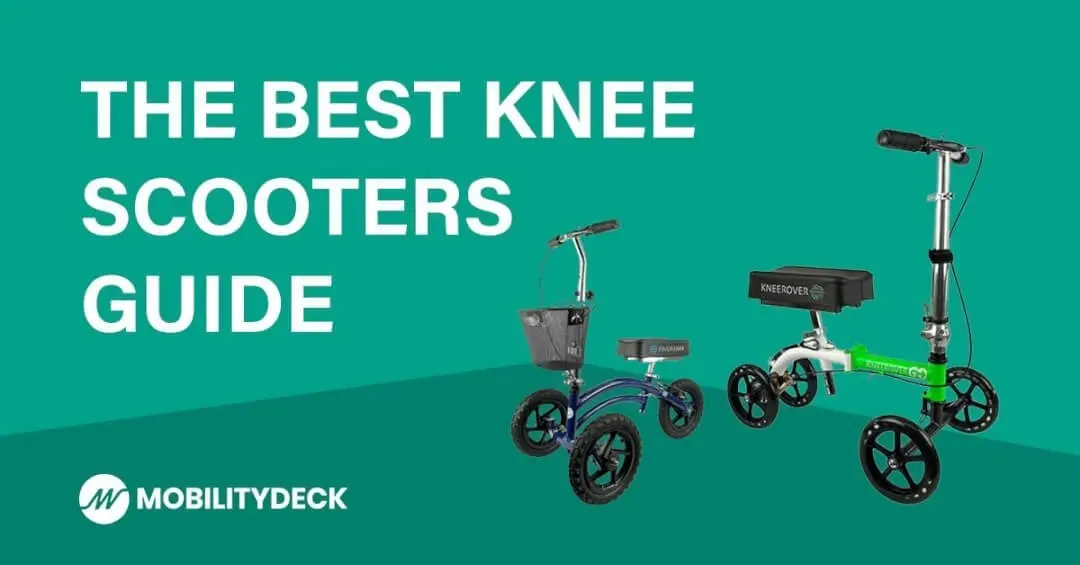
When considering a knee scooter for the first time, patients are often met with a barrage of marketing materials featuring an array of confusing measurements, capacities, and materials. Inches, pounds, weight capacities, and frame compositions can make the selection process feel overwhelming. Understanding what these specifications actually mean is critical for anyone recovering from foot surgery, a broken leg, or other lower-body medical conditions who wants to regain their independence without compromising safety.
Important Features to Consider
When evaluating a mobility device designed to support an entire human body, several foundational elements demand close attention. Frame material sits at the top of this list. It is crucial to understand what material has been used to manufacture any knee scooter’s frame. The material should be durable and strong, preferably something like aluminum or steel, to ensure reliability. Because these devices are engineered to hold the entire weight of your body, optimum support is non-negotiable to protect users from further injury. Furthermore, a strong and sturdy material proves beneficial when navigating various weather conditions. Users naturally want to avoid devices that tarnish or degrade during sudden rainstorms or wet weather.
Equally critical from a safety perspective is the brake system. Nobody wants to end up rolling down a hill, unable to stop. Knee scooters feature various braking mechanisms, but industry experts suggest opting for models where the brakes are positioned securely on the handlebars, functioning much like a bicycle. Consumers seeking a deeper understanding of a specific model’s braking apparatus are encouraged to consult the manufacturer’s official documentation and website.
Weight capacity is another major aspect to scrutinize. Different knee scooters support distinct weight ranges. While a standard scooter typically holds about 300 pounds, specialized options such as the BodyMed Folding Knee Scooter accommodate higher capacities. Purchasing a device that fails to support a user’s specific weight places them at immediate risk of further injury.
For everyday convenience, a good quality knee scooter should feature an attached storage basket or box. As users travel or go about their daily routines, they invariably need to carry personal items with them. In instances where a model lacks an integrated storage container, compatible aftermarket baskets can usually be purchased separately.
Tire quality also requires careful evaluation. Consumers intending to use their scooter outdoors should look for tires built from durable materials such as polyurethane. It is equally important to assess whether the wheels are suitable for harsh weather conditions. Even if individuals plan to avoid riding in the rain, damp ground and slick surfaces are inevitable, making slip-resistant tires vital for safe navigation.
Finally, ease of assembly plays a significant role in the overall user experience. Buyers generally prefer devices that assemble smoothly without requiring expensive or specialized tools. Leading models are designed to minimize the effort and time required not just for initial assembly, but also for routine cleaning, compact storage, and effortless transport between locations.
Frequently Asked Questions
Understanding how these mobility aids function helps demystify the transition from traditional crutches. While different knee scooters operate in various ways, they generally feature a four-wheel design that supports one injured leg while allowing the user to use their healthy leg for independent propulsion. A typical knee scooter also includes a heavily padded knee platform designed to provide extensive support and comfort.
Regarding portability, most knee scooters available on the market are foldable, though the folding mechanism varies by feature and specification. Usually, a release lever is connected to the handlebars; pulling or releasing this lever automatically folds the frame. Alternatively, some models position a similar lever directly over the seat. In either case, these mechanisms allow users to store and transport their equipment with minimal hassle.
When comparing knee scooters to traditional crutches, consumer preference typically leans toward scooters. Medical experts generally favor knee scooters because they demand significantly less upper body strength, offer faster and more fluid mobility, and are relatively easier to adjust than conventional crutches.
Insurance coverage remains a frequent point of inquiry. Generally, insurance providers prefer to cover cheaper alternatives such as crutches. However, coverage entirely depends on an individual’s specific policy, plan limits, and potential qualification for government aid programs like Medicare or Medicaid. Patients are strongly advised to contact their insurance providers directly to determine if the cost of a knee walker is covered.
For those looking to purchase, numerous online retailers offer high-quality options. Budget-conscious shoppers frequently turn to platforms like Amazon, while those with more financial flexibility explore specialized suppliers such as 1800Wheelchair.
Other Knee Scooters We Reviewed
Beyond the top market recommendations, a wide array of knee walkers and scooters from various manufacturers offer viable alternatives depending on individual circumstances.
The KneeRover GO Knee Walker stands out as an exceptional, compact knee scooter available at an attractive price point, combining high build quality with user-friendly operation.
For those requiring robust outdoor performance, the All Terrain Heavy-Duty KneeRover Steerable Knee Walker offers high reliability for individuals recovering from foot surgery or severe lower-body injuries. Equipped with 12-inch pneumatic tires designed to roll smoothly over dust, dirt, grass, gravel, and sidewalks, it delivers agility uncommon in standard models. It is compatible with both left and right legs, features a 3-inch thick knee platform, offers height adjustment, and boasts an impressive weight capacity of 400 pounds alongside a tie rod steering system for tight spaces.
The Roscoe Knee Scooter with Basket provides a lightweight option, weighing around 30 pounds post-installation. Its large, wide rear wheels roll easily over road bumps, while responsive handlebars offer extensive control. It features ample knee padding, a reliable brake system, and a convenient thumb-release folding lever.
The KneeRover HYBRID Knee Scooter introduces an all-terrain front axle upgrade with a detachable front axle secured via a thumb-release knob. Its four-wheel design and 9-inch pneumatic front wheels ensure fluid mobility, making it gentle on sensitive injuries while accommodating both left and right legs on a contoured 3.5-inch knee platform.
The Vive Steerable Knee Walker is a durable, compact device designed to assist those recovering from leg injuries. Featuring an attached storage bag and a foam knee cushion contoured to distribute weight evenly while promoting airflow, it incorporates 8-inch polyurethane wheels, advanced dual rear brakes, and adjustable components.
Designed specifically for children and smaller adults, the KneeRover Jr. Knee Walker delivers high quality in a reduced size. It features comfortable rubber-grip handlebars, responsive brakes, and an adjustable, lightweight foam knee cushion.
The Roscoe Economy Knee Scooter offers budget-conscious shoppers a durable device capable of supporting up to 250 pounds. While its 7.25-inch wheels are optimized for indoor use and its padding is relatively sparse, it provides a steerable, foldable alternative to crutches.
The Swivelmate Knee Walker emphasizes maneuverability, featuring front wheels that turn 90 degrees and a patent-protected belt drive system. Weighing just 22 pounds yet supporting up to 400 pounds, it includes 7-inch polyurethane wheels, a stabilizing fifth center wheel, and a 3-inch thick cushion designed to distribute pressure evenly.
The Essential Medical Supply Free Spirit Knee and Leg Walker prioritizes stability, utilizing large wheels and a specialized turning mechanism to prevent over-steering. It includes a travel-securing belt and folds easily for transport.
The Isokinetics Inc. Steerable Knee Walker offers a dual steel frame supporting up to 300 pounds. It utilizes a single-brake system complete with parking brakes and a height-adjustable cushion, serving as a strong indoor-only mobility aid.
Finally, the ELENKER Steerable Knee Walker Deluxe Medical Scooter weighs 23 pounds while supporting up to 300 pounds. It features handlebars paired with a quick-release folding mechanism, hand-operated brakes for speed control, and a memory foam knee pad designed to alleviate inflammation and pain during recovery from surgeries, fractures, or sprains.