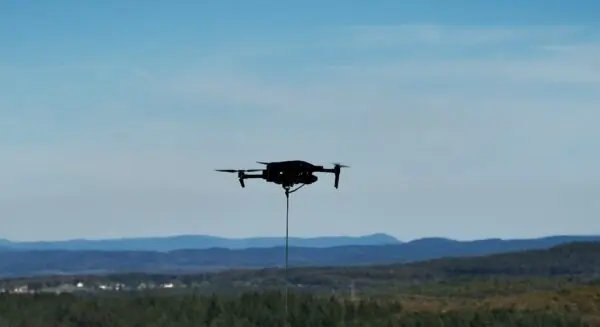
Mountain View, California-based drone delivery pioneer Matternet has officially introduced its next-generation aerial logistics ecosystem, the M3 platform. Unveiled on September 28, 2026, the comprehensive system is engineered to transform instant urban logistics across the food service, retail, healthcare, and industrial sectors. Coming on the heels of the company’s recent move to begin trading publicly on the OTCQB under the ticker symbol MTTN earlier in the month, the M3 platform represents a massive leap forward in automated, scalable aerial transportation.
Designed specifically to operate from rooftop micro-hub installations without requiring any on-site human operators, the M3 system allows senders to simply drop off packages into a secure portal and walk away. The technology handles every subsequent phase of the journey autonomously, from loading and takeoff to precise navigation and delivery.
Andreas Raptopoulos, founder and chief executive officer of Matternet, emphasized the broader vision behind the launch. He noted that the company originally set out to construct an entirely new layer of transportation infrastructure hovering safely above congested cityscapes. Having proven through the preceding M2 platform that autonomous drone delivery can be executed safely even within the world’s most demanding regulatory and operational environments, the company is now positioning the M3 as the vehicle for universal scale. According to leadership, the goal is to transform drone delivery into a reliable utility layer that any business or institution can easily access and depend upon for mission-critical logistics.
Matternet M3 Aircraft, Dock, and Portal
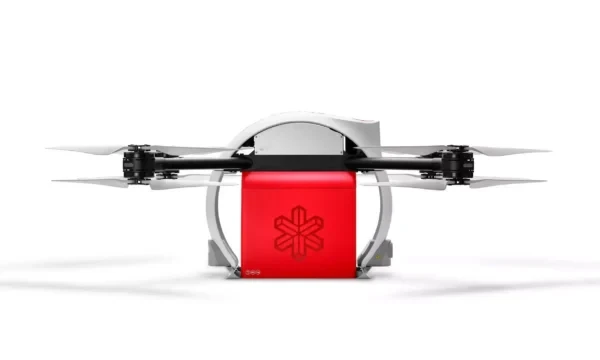
The core architecture of the M3 platform is divided into three distinct yet seamlessly integrated hardware components: the aircraft, the dock, and the portal.
First, the M3 Aircraft serves as the workhorse of the fleet. It is engineered to transport payloads weighing up to 11 pounds, or 5 kilograms, across a robust 10-mile, or 16-kilometer, service radius. Notably, the aircraft features a versatile cargo bay designed to accommodate ordinary, everyday merchant packaging, including standard food containers, retail shopping bags, and cardboard boxes. In addition to general consumer goods, the cargo system fully supports specialized payload configurations tailored specifically for sensitive healthcare shipments and industrial transport.
Second, the M3 Dock acts as the secure home base for the aircraft. It is responsible for storing, protecting, and rapidly charging the drones between missions. The hardware is designed for maximum deployment flexibility, offering installation configurations that can be mounted securely on commercial rooftops or integrated at ground-level facilities depending on the operational footprint required by the client.
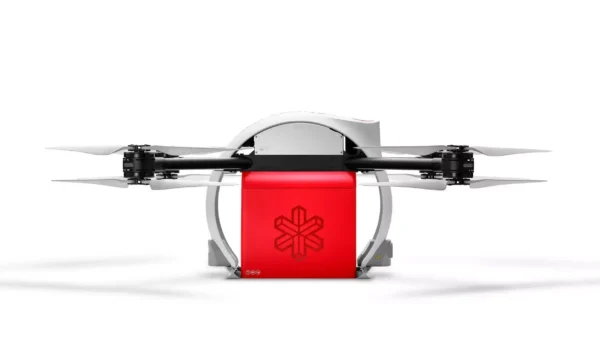
Finally, the M3 Portal functions as a low-cost, off-grid drop-box terminal where senders can deposit multiple packages simultaneously for asynchronous pickup. Matternet designed the portal with a freestanding architecture intended to radically simplify physical installation procedures and significantly accelerate the overall deployment timeline for new commercial networks.
Elaborating on this utility-style approach, Raptopoulos compared the vision for drone logistics to basic municipal services. He stated that drone delivery ought to operate largely in the background as an invisible, highly dependable, and cost-effective utility. In his view, a modern hospital, retail storefront, or bustling restaurant should be able to plug into an active autonomous delivery network with the same frictionless ease that a building connects to the municipal water supply or the electrical grid.
Launch Partners and Path to Commercial Service
To validate and jump-start the deployment of the M3 platform, Matternet has already secured strategic launch partners on both sides of the Atlantic. In the United States, popular restaurant chain Dave’s Hot Chicken has signed on as an initial U.S. launch partner to test and utilize the technology for instant food logistics. Meanwhile, across the Atlantic in the United Kingdom, healthcare logistics firm Apian will serve as a key launch partner. Matternet and Apian already maintain a successful collaborative history, operating an active drone delivery network for the National Health Service across Central London. Company leadership indicated that additional commercial partnerships focusing on high-volume, instant delivery applications will be announced in the coming months.
Looking ahead at the operational timeline, Matternet is actively targeting the second half of 2027 for the official launch of M3 commercial service. As part of its broader operational strategy, the company intends to establish dedicated M3 aircraft manufacturing capabilities directly within the United States. Furthermore, Matternet plans to leverage its ongoing strategic partnership with SoftBank Robotics America—a collaboration originally announced in April 2026—to fast-track network expansion and deployment efforts throughout the U.S. market and other vital international regions.
The M3 platform directly inherits the rigorous safety and compliance DNA of its predecessor, the M2. The M2 made aviation history as the very first drone delivery system to successfully secure both standard type certification and production certification from the Federal Aviation Administration. Building upon more than a decade of real-world commercial flight operations across the United States and Europe, Matternet has spent years refining its autonomous logistics framework across diverse sectors, ranging from complex healthcare supply chains and industrial warehousing to residential delivery applications.