The foundational rule of effective data communication has always centered on context. Long before a professional chooses a chart type, opens a presentation deck, or contemplates color schemes and layouts, they must understand who their audience is and what those individuals need to know or do. This philosophy forms the bedrock of methodologies taught across the data storytelling community, remaining as vital today as it has ever been.
By the time communicators reach the stage of framing their data, significant groundwork has usually already taken place. Analysts spend hours exploring datasets, identifying patterns, and surfacing key insights. Many professionals now turn to artificial intelligence to assist with these exploratory phases. However, exploratory work and explanatory work serve entirely different purposes. Knowing what a dataset says is fundamentally distinct from knowing how to communicate those insights to stakeholders. That critical transition—moving from data analyst to effective storyteller—is precisely where context becomes indispensable.

This juncture represents an area where artificial intelligence can deliver immense value as a collaborative thought partner, operating right at the beginning of a project before significant time has been invested in creation. AI can challenge vague assumptions, ask probing questions, introduce alternative analytical angles, and help stress-test strategic framing while changes remain effortless to implement. Unlike scheduling time with a busy colleague, AI is available on demand whenever a professional is ready to talk through their ideas.
Yet, maximizing this potential requires adequate preparation. The quality of any conversation with an intelligent system depends entirely on the context a user brings to the table. This preparation begins with understanding the core audience, clarifying what is at stake, and establishing a clear point of view before communicating any findings. Frameworks like the Big Idea worksheet offer a structured path toward this clarity, breaking down audience needs, potential risks, and core messages into manageable components.

Working with AI: Starting with Context
The concept of the Big Idea relies on a single sentence that captures a communicator’s point of view while conveying what is at stake for the audience. Structured frameworks provide a step-by-step method for achieving this clarity. Professionals can either complete a planning worksheet independently and provide it to an AI system as a starting point, or they can work through the process section by section, using the technology to pressure-test their thinking iteratively. Beginning with the audience, moving to the stakes, and culminating in the core message allows the structured framework to provide stability while AI sharpens each individual piece.
Before diving into detailed applications, professionals must recognize potential pitfalls when collaborating with AI to establish context and formulate a central message. Initial prompts must be carefully adapted to fit specific organizational needs and project scopes rather than accepted blindly. Setting the stage properly with an AI tool involves establishing ground rules, defining the project parameters, and instructing the system to act as a critical sounding board rather than a passive yes-man.
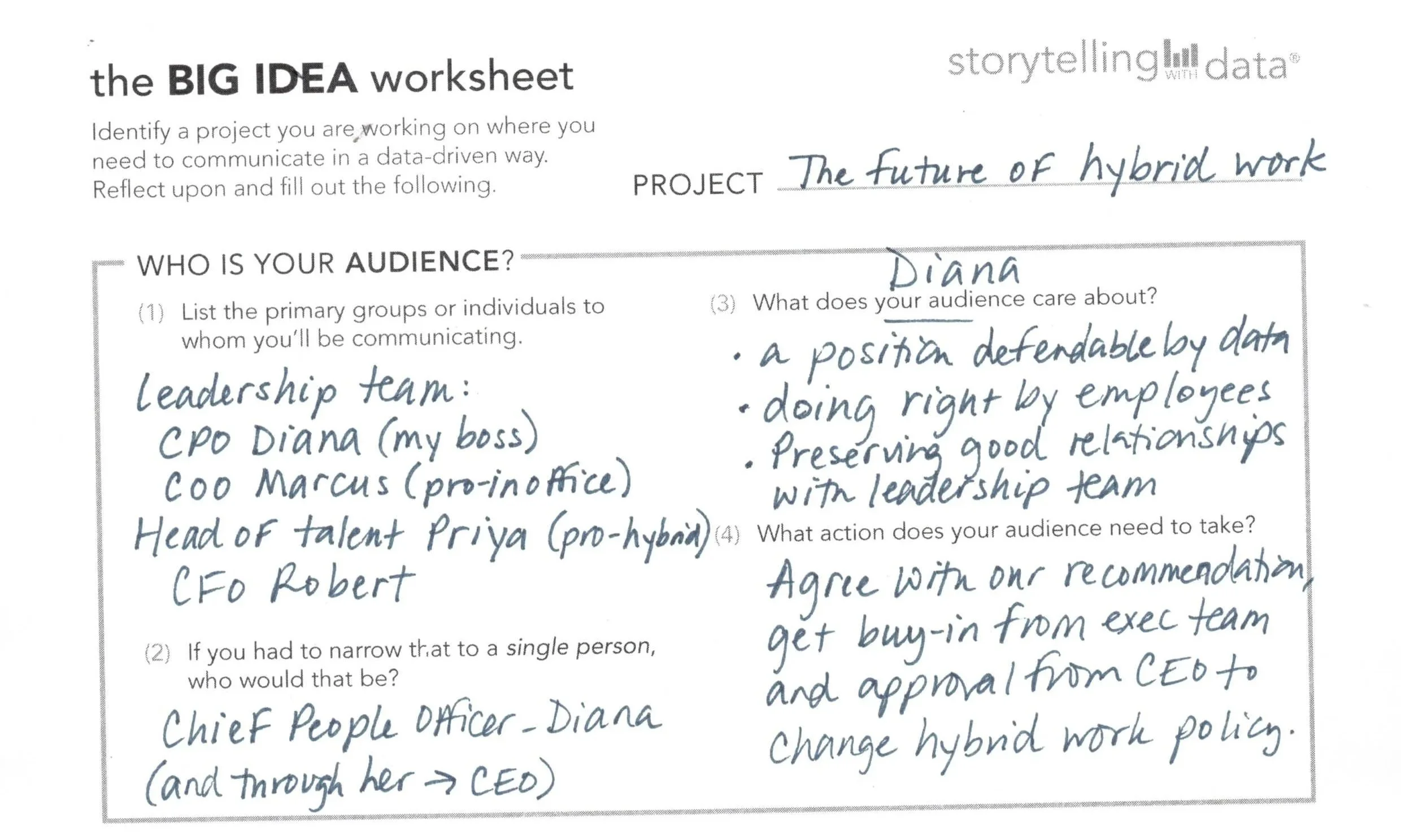
The Hybrid Work Scenario in Practice
To examine how these concepts translate into real-world scenarios, consider a case study involving a People Analytics Manager at a mid-sized consulting firm. Tasked with evaluating whether the company’s hybrid work policy is effective, the manager and their team undertook a comprehensive analysis. Their research spanned multiple dimensions, correlating employee performance ratings with in-office attendance patterns while also examining collaboration network data and organizational attrition trends.
The data revealed a nuanced picture that defied a simple yes-or-no conclusion. Rather than maintaining a rigid, one-size-fits-all policy requiring three days in the office and two days remote for all employees, the data pointed toward a differentiated approach tailored to specific roles and team types. However, this recommendation needed to land successfully with a leadership team holding divided opinions and diverse goals.
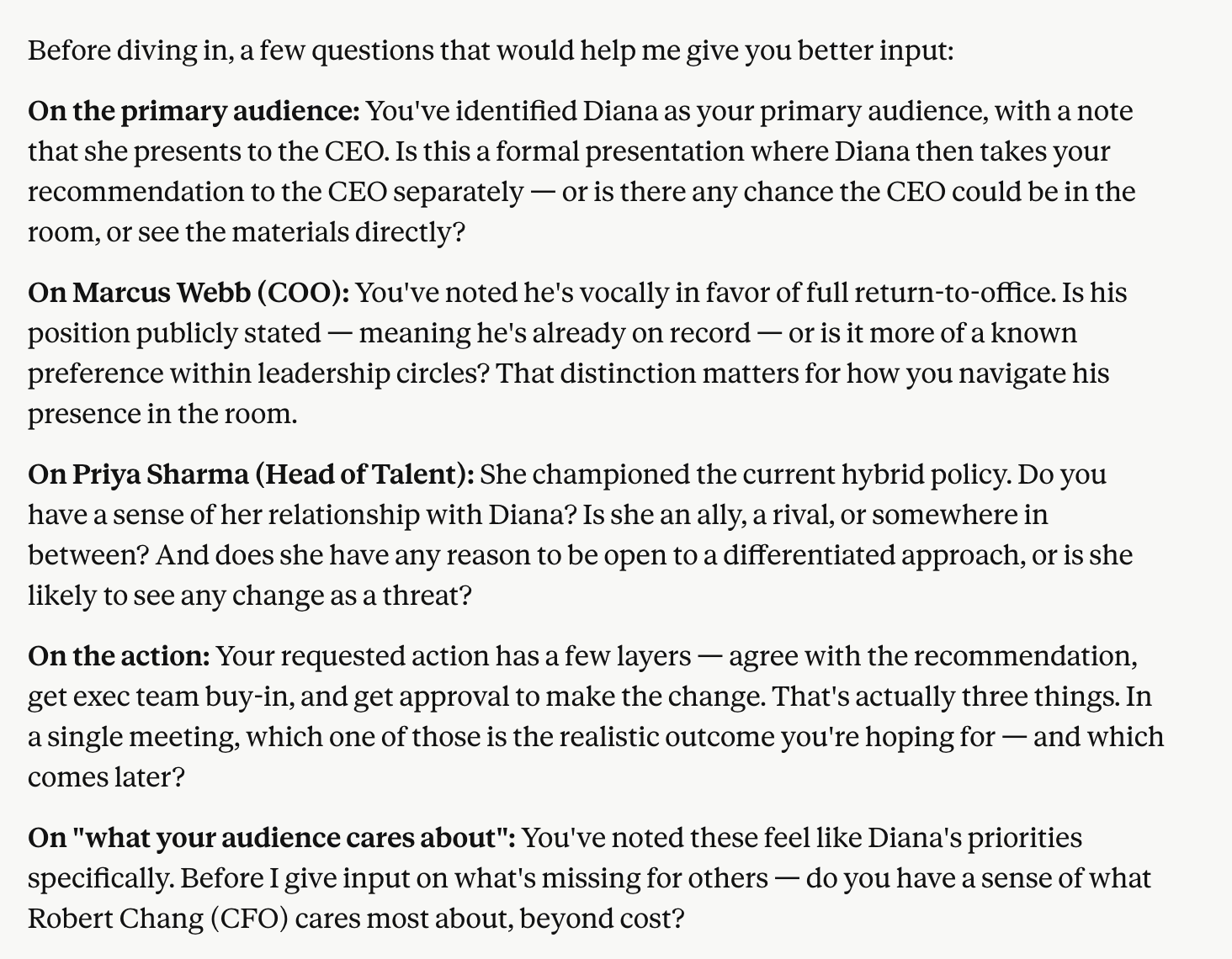
This situation represented an ideal testing ground for AI partnership. The audience was complex, and the consequences of a failed rollout were significant. Rather than jumping straight into building graphs and slide decks, the manager began working through the Big Idea worksheet alongside an AI assistant, using custom prompts to set the stage and define the project scope.
Rather than typing initial thoughts directly into the digital interface, the manager printed out the planning worksheet and spent time completing the audience section by hand. This analog approach ensures that initial ideas remain genuinely original, while the physical act of writing slows down cognitive processing and prevents premature anchoring to an AI system’s suggestions.
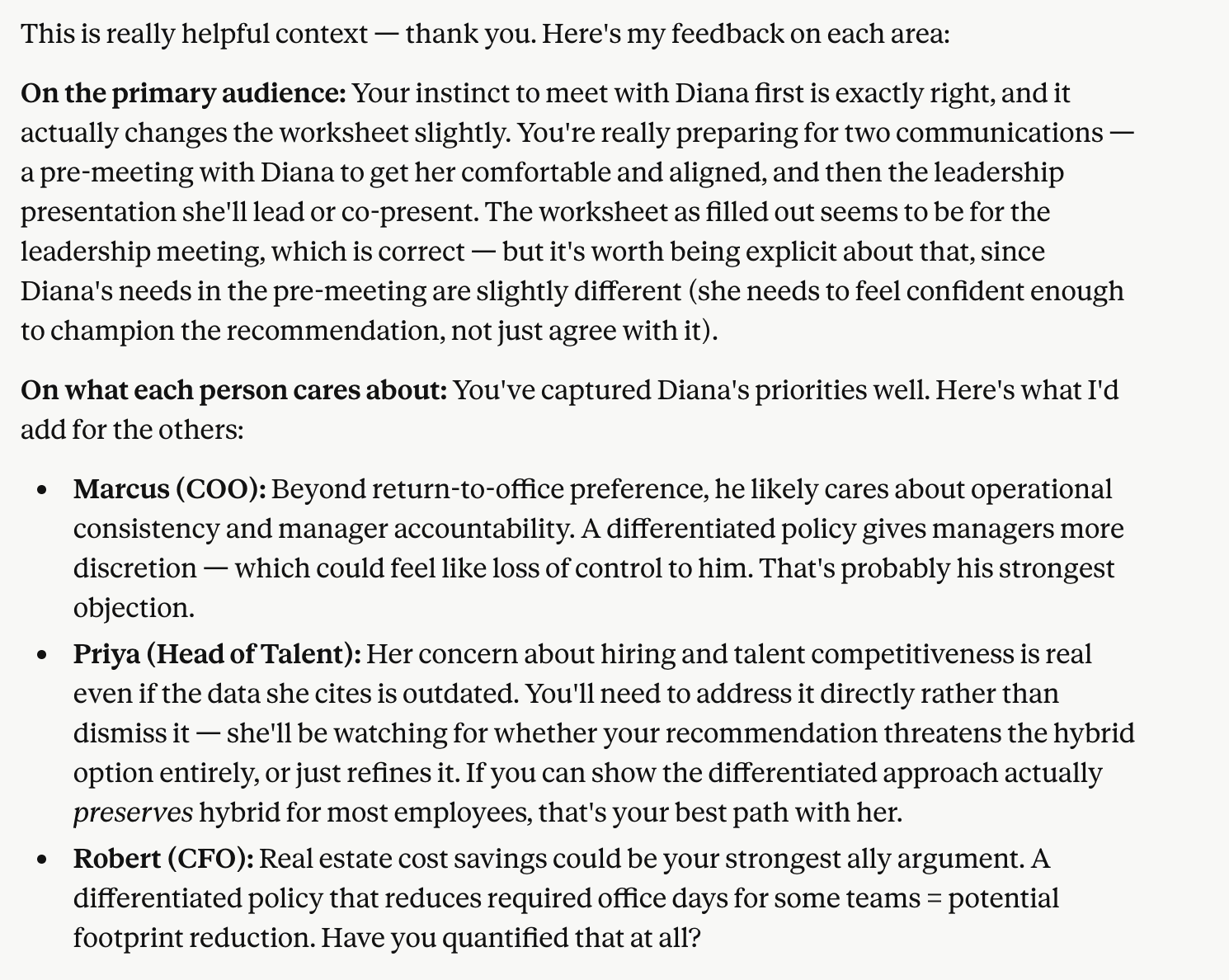
Refining Audience Understanding and Stakes
When sharing the initial audience breakdown with the AI assistant, the feedback loop immediately revealed hidden complexities. For instance, the discussion prompted deeper thinking about key stakeholders beyond just the primary decision-maker, including executive peers who might rely on outdated assumptions about talent attraction or operational costs. It also highlighted the importance of separating distinct desired actions, clarifying that securing buy-in from the broader leadership team was the primary objective leading up to final executive approval.
Reframing the initiative through targeted questions also uncovered strategic opportunities, such as presenting the operational shift as a permanent structural update rather than a temporary trial, thereby protecting critical financial arguments regarding real estate footprint reductions. Throughout the process, the AI partner offered alternative framings, such as shifting discussions around data credibility to focus on protecting organizational practices for data-driven decision-making as a whole.
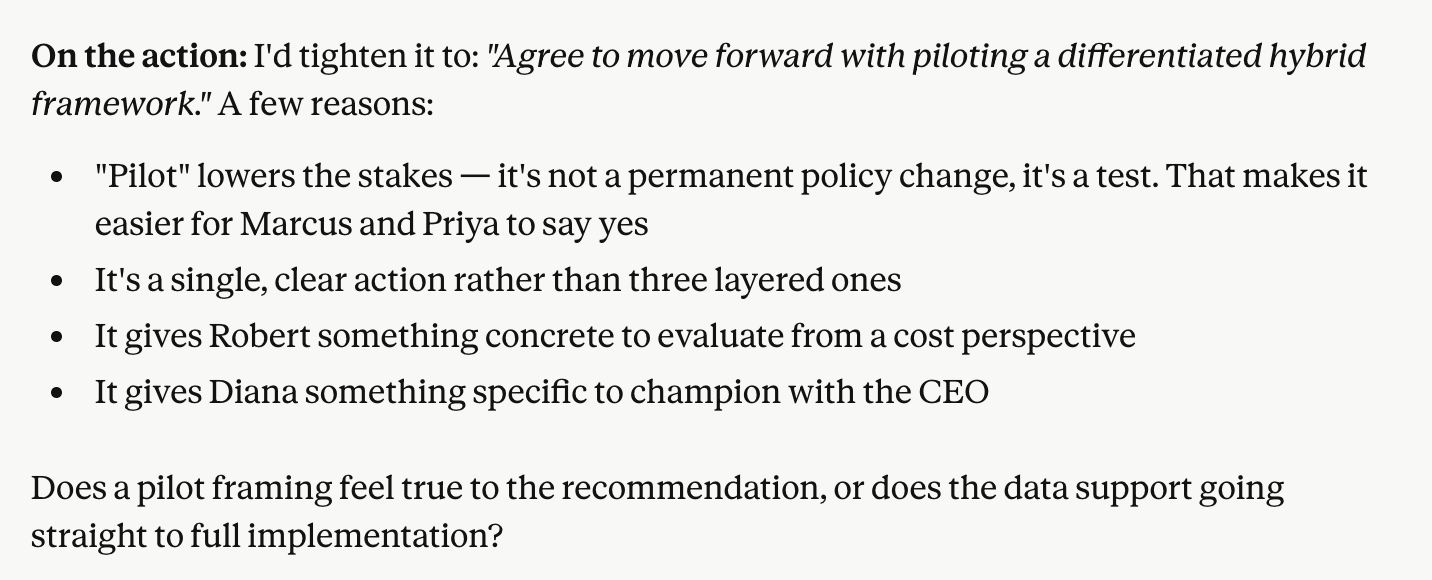
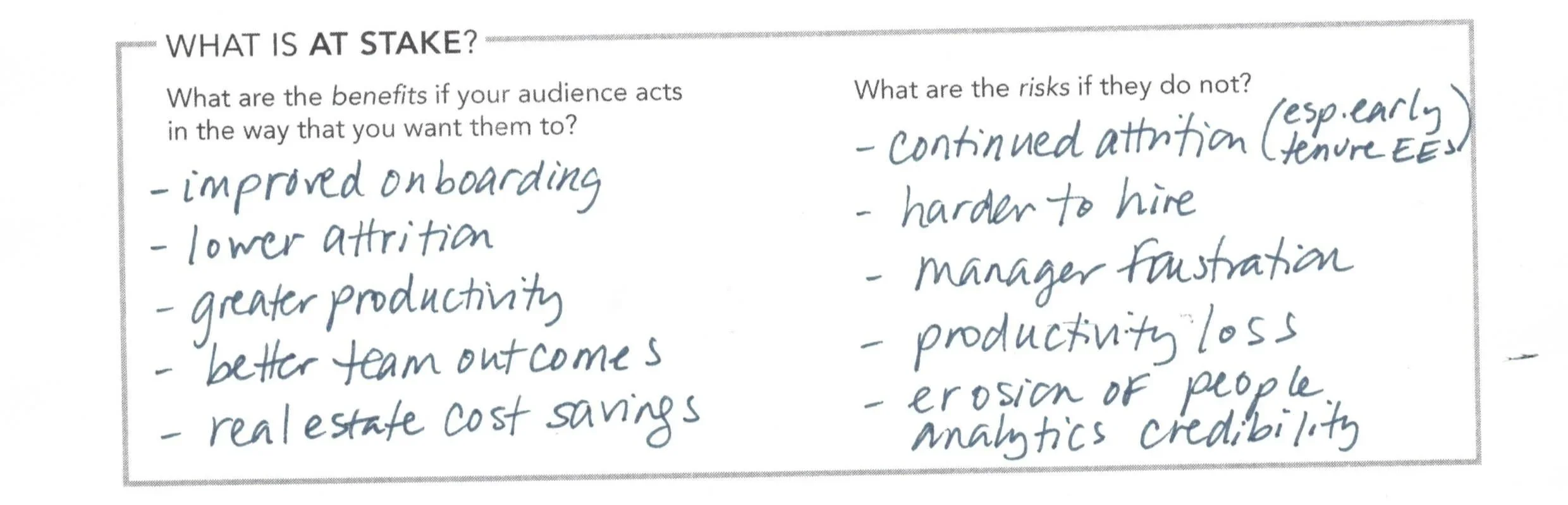
As these discussions progressed from audience analysis to examining what was at stake, the benefits and risks associated with the policy change became sharply defined. Vague concepts like improved productivity were systematically replaced with tangible organizational impacts tied directly to what individual leaders cared about most. This rigorous filtering process ensured that the final messaging resonated across the entire leadership spectrum, balancing cost savings, talent retention, and operational efficiency.
Crafting the Core Message
Distilling these insights into a single, cohesive Big Idea required careful iteration. Initial drafts that relied on broad generalizations were refined through dialogue with the AI assistant, ensuring the core message maintained appropriate breadth without sacrificing impact. The resulting statement successfully bridged the gap between analytical findings and executive priorities: shifting from a rigid hybrid mandate to a differentiated policy that meaningfully reduces operational costs while enabling employees to perform better and stay longer.
Looking back at the progression from initial thoughts to the final formulation, the value of structured AI collaboration becomes clear. By acting as a patient, inquisitive thought partner, the technology helps professionals see past their own proximity to a project, asking the right questions without doing the thinking for them. When used correctly, AI serves as an effective sounding board that transforms raw data insights into compelling, context-driven narratives ready for executive presentation.