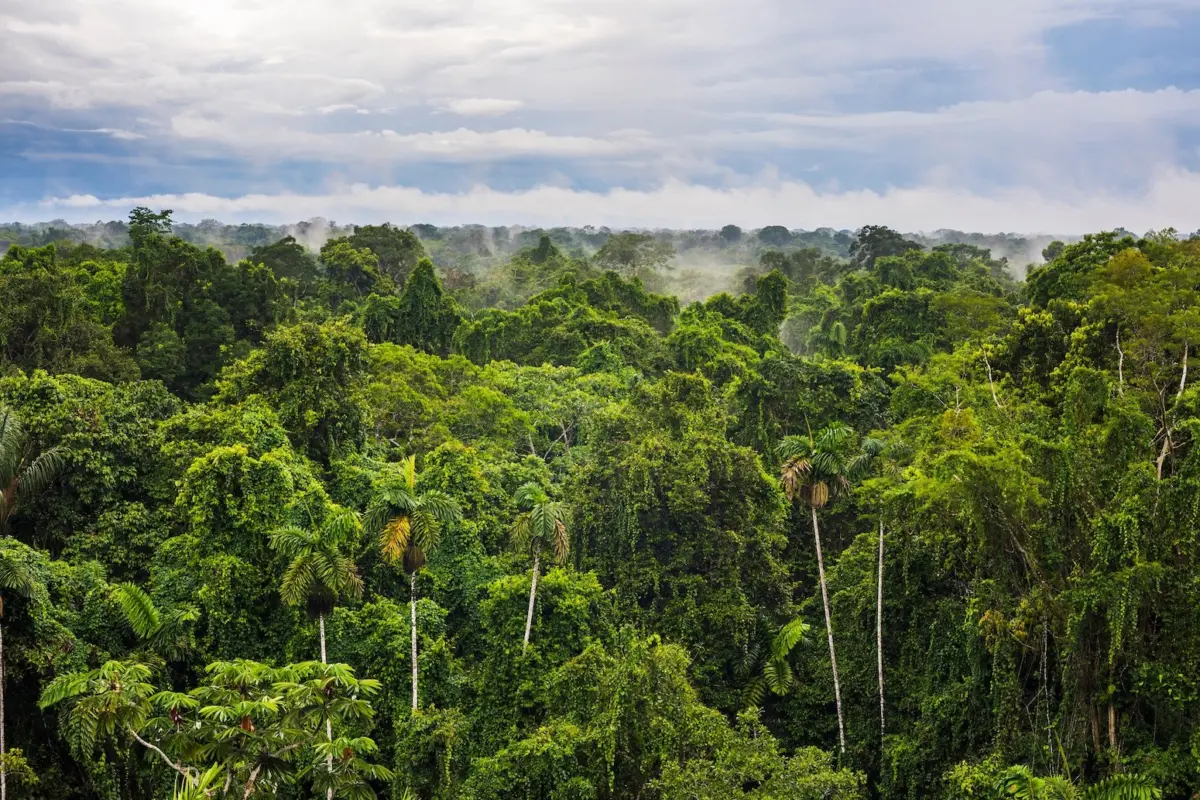
An area of the Amazon rainforest roughly equivalent to the size of the US state of New Jersey has remained standing due to Luiz Inácio Lula da Silva’s leadership of Brazil, according to comprehensive new analysis by Carbon Brief.
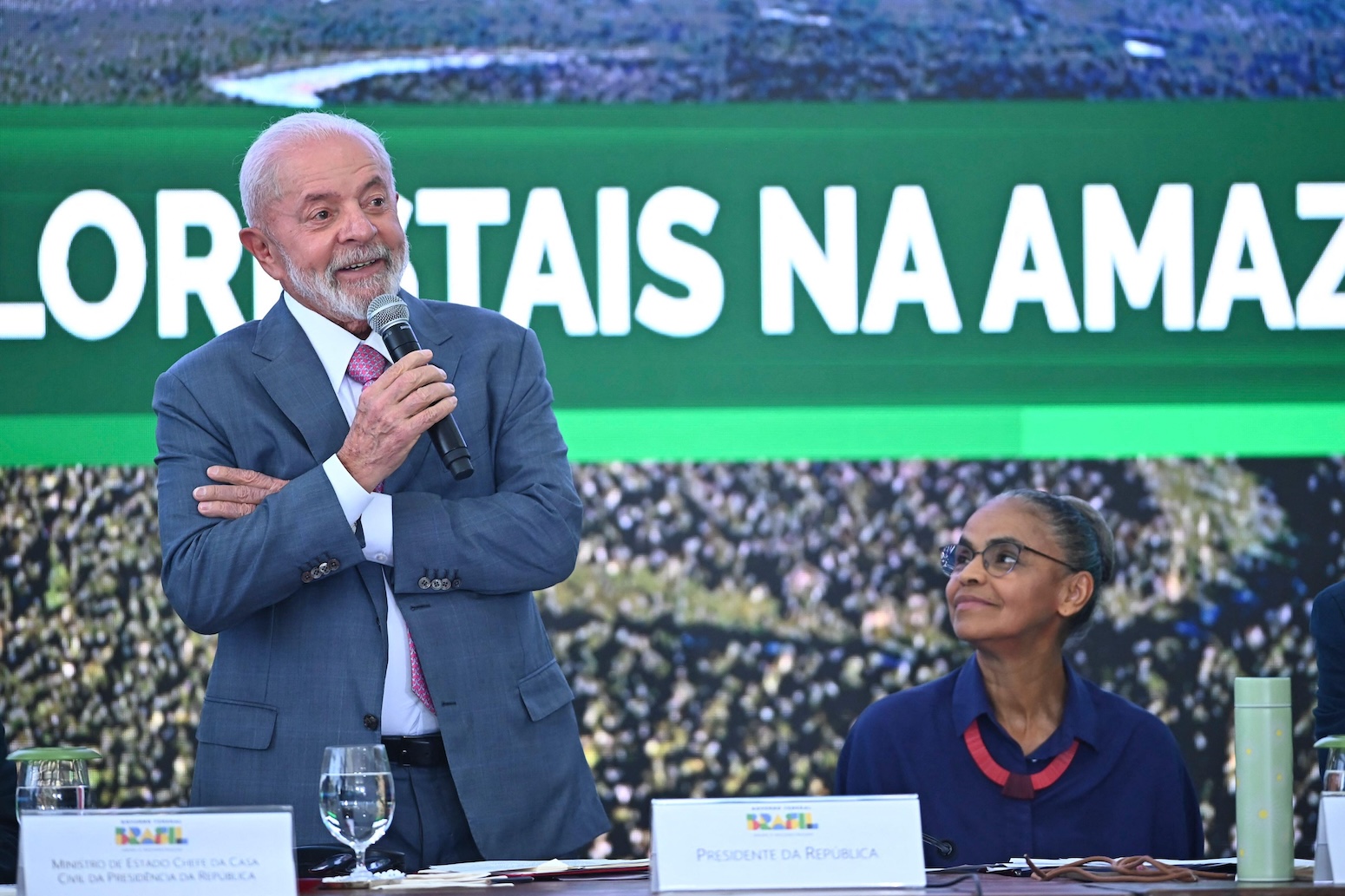
Lula assumed the presidency after defeating Jair Bolsonaro in the fiercely contested 2022 election, taking charge of a nation that encompasses nearly 60% of the world’s largest tropical rainforest. During Bolsonaro’s far-right presidency, forest loss surged amid aggressive deregulation, budget cuts to federal agencies, and an openly hostile approach toward environmental and Indigenous protections. In stark contrast, deforestation has dropped sharply under the left-wing leadership of Lula and his environment minister, Marina Silva. Current projections indicate that Amazon deforestation is on track to hit its lowest level on record this year.
Now, as another pivotal presidential election approaches in Brazil, Lula finds himself locked in a tight race against Flávio Bolsonaro, a senator for Rio de Janeiro and the son of the former president. With the younger Bolsonaro championing anti-environmental policies strikingly similar to those of his father, experts warn that the upcoming vote threatens to undo fragile, hard-won gains for Amazon conservation.
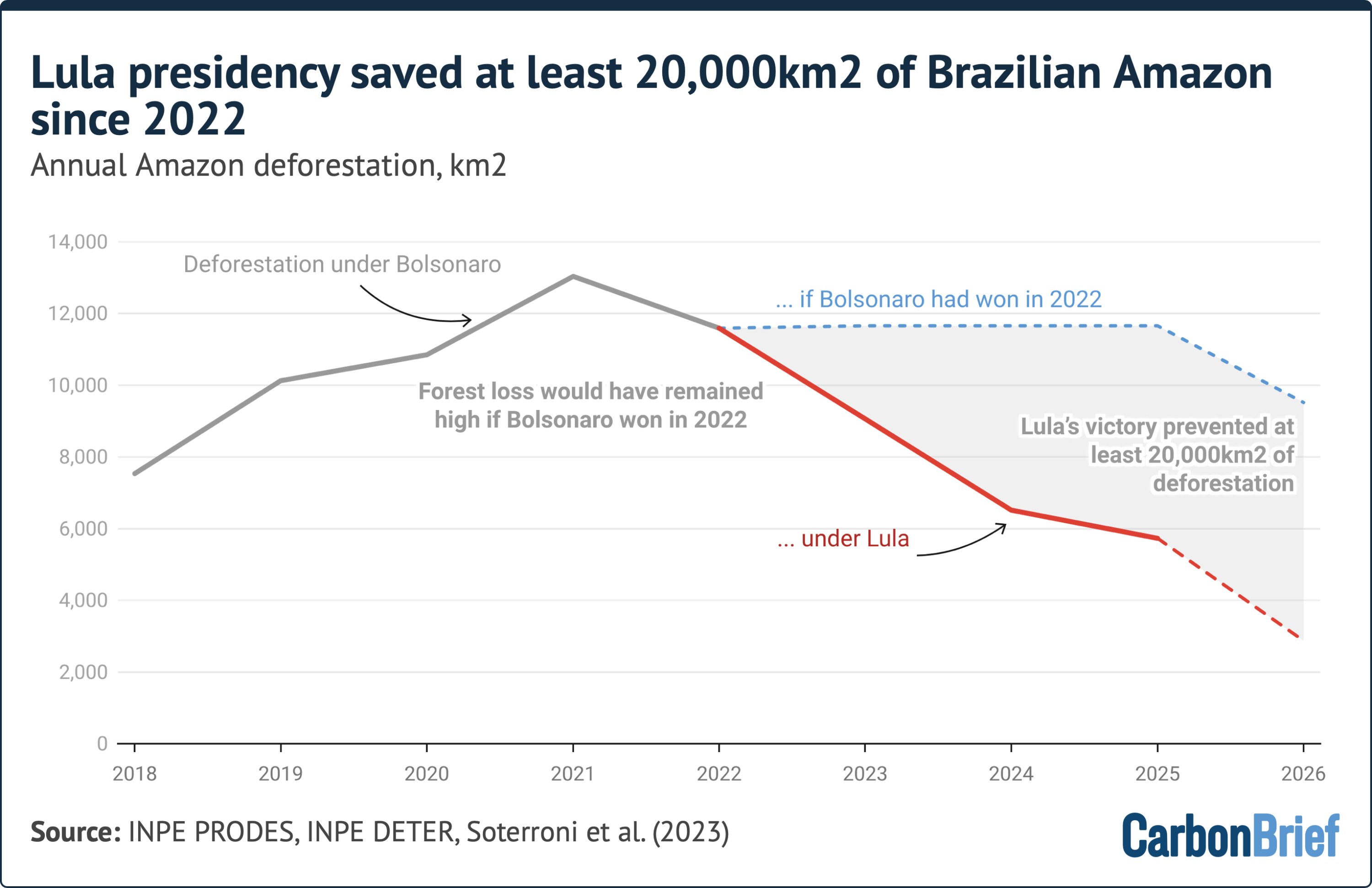
Carbon Brief’s analysis suggests that at least 20,000 square kilometers of deforestation have been avoided since Lula took office and restored the prioritization of Amazon protection. This calculation is derived from modeling by an international research team that simulated an alternative scenario in which Brazil’s flagship Forest Code legislation was left unenforced—serving as a clear proxy for the governance style seen under Jair Bolsonaro. Environmental experts consulted for the study emphasize that this estimate is likely conservative, noting that actual deforestation under a continued Bolsonaro administration could have been significantly higher.
With Lula and Flávio Bolsonaro currently tied in national opinion polls, the upcoming election is poised to profoundly shape environmental action in the world’s fourth-largest greenhouse gas emitter, where national emissions are overwhelmingly driven by deforestation.
“Brazil is Back”
During his tenure from 2019 to 2022, Jair Bolsonaro aggressively championed Brazil’s powerful agribusiness sector, overseeing an unprecedented escalation in Amazon destruction. By weakening regulatory bodies, slashing enforcement budgets, and empowering wildcat mining and illegal land-clearing, the previous administration effectively neutralized the Forest Code—the foundational legislation that mandates landowners to preserve and restore native forests on their properties.
Upon securing victory in the late 2022 elections, Lula promised to steer the nation toward a target of “zero deforestation” by 2030, famously declaring to the COP27 UN climate summit in Egypt that “Brazil is back.” Upon taking office, the administration rolled back Bolsonaro’s wave of deregulation and reinstated a comprehensive action plan for the prevention and control of deforestation in the Amazon. Led by Marina Silva, the Ministry of Environment scaled up federal enforcement, intelligence operations, and policing activities across the region.
The results have been dramatic. Annual deforestation in the Amazon plummeted by more than half, dropping from 11,594 square kilometers per year in 2022 to 5,731 square kilometers by 2025. While official government figures for the August 2025 to July 2026 tracking period are still pending, preliminary satellite alerts put deforestation at 2,874 square kilometers. Although the final verified total is expected to be higher, experts maintain that 2026 deforestation could reach its lowest level since systemic government record-keeping began in 1988.
A New Jersey-Sized Sanctuary
When stacked against the modeled alternative scenario in which Bolsonaro won the 2022 election, Carbon Brief’s analysis demonstrates that at least 20,000 square kilometers of the Amazon basin remains untouched today. This protected expanse is roughly equivalent to the area of Wales, Belize, Slovenia, or New Jersey.
The methodology behind these findings relies on a 2023 study evaluating the role of nature-based solutions in Brazil’s pathway to net-zero emissions. Utilizing the GLOBIOM-Brazil model—developed by researchers at the University of Oxford, the International Institute for Applied Systems Analysis, and Brazil’s National Institute for Space Research (INPE)—the study compared full compliance with the Forest Code against a baseline scenario reflecting the weak governance and lack of enforcement characteristic of the Bolsonaro years.
Dr. Aline Soterroni, a University of Oxford researcher who led the 2023 analysis, noted that the rapid reversal seen under Lula demonstrates how swiftly deforestation rates can respond to decisive political will. However, she stresses that the "no forest code" simulation remains relatively conservative because it assumes deforestation would plateau rather than spiral infinitely upward, constrained only by slower global demand growth for Brazilian beef and soy. It does not fully capture the explosive potential of unmitigated illegal clearing under permissive governance.
Claudio Angelo, international policy coordinator at Brazil’s Climate Observatory, echoed these sentiments, stating that a Bolsonaro victory in 2022 would likely have unleashed deforestation rates far exceeding those of his first term. The political signal alone, Angelo argues, would have triggered an unprecedented expansion of wildcat mining and illicit land grabs, compounding previous legislative efforts by lawmakers like Flávio Bolsonaro to dismantle the Forest Code from within the Brazilian congress.
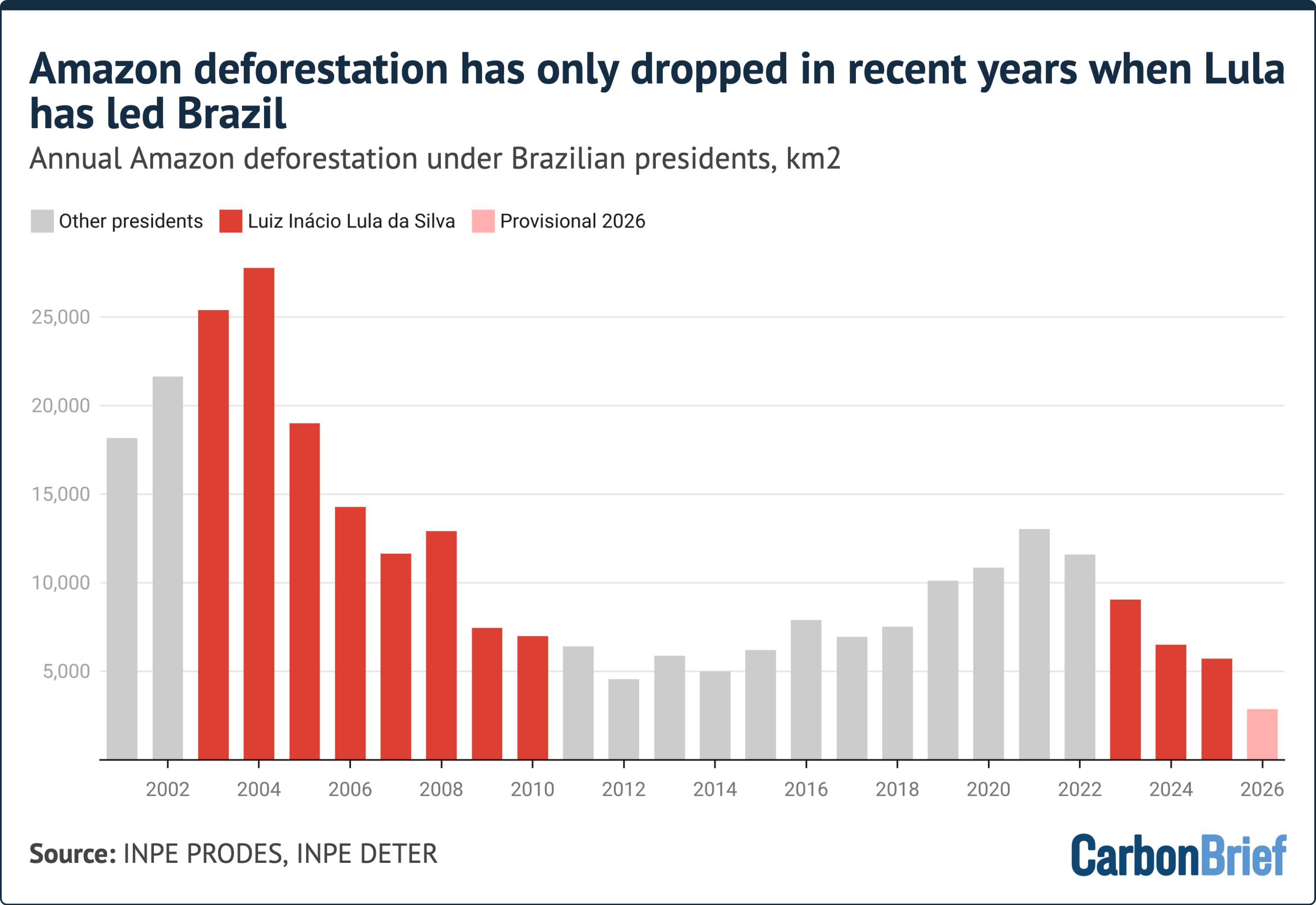
Soterroni points out that deforestation rates did not plummet overnight the moment Lula took office, reflecting the slow, imperfect administrative challenge of rebuilding dismantled enforcement apparatuses and restoring the rule of law. Nevertheless, the overarching takeaway remains clear: weak environmental governance leaves ecosystems vastly more vulnerable than active, rigorous implementation of foundational conservation laws.
High-Stakes Election Dynamics
Jair Bolsonaro is currently serving a prison sentence for plotting a coup d’état after refusing to accept his 2022 electoral defeat. In his absence, his son, Senator Flávio Bolsonaro, has emerged as the principal standard-bearer for the nation’s right-wing political movement, facing off against Lula in a crowded field of 13 candidates.
Opinion polls show Lula and the younger Bolsonaro locked in a neck-and-neck statistical tie. If Lula secures victory, analysts expect his administration to steadfastly pursue its "zero deforestation by 2030" agenda. Historical data underscores this trajectory: every significant drop in modern Amazon deforestation has occurred during Lula’s three terms in office.
Conversely, experts warn that a victory for Flávio Bolsonaro—a known climate skeptic who has pledged to advance his father’s pro-agribusiness and pro-mining agenda—would trigger a devastating resurgence in forest destruction. Angelo characterized Lula’s continued political leadership as the sole barrier standing between the Amazon basin and widespread devastation.

Dr. Patricia Pinho, deputy science director at the Amazon Environmental Research Institute, warned that Brazil cannot afford four consecutive years of accelerating deforestation and escalating violence against Indigenous populations. Dr. David Lapola, an ecologist at the University of Campinas, added that a right-wing return to power would instantly discard national climate and conservation goals. He noted that the 2019–2022 Bolsonaro administration proved how rapidly decades of environmental policy and institutional infrastructure can be dismantled by executive decree in a matter of months.
Divergent Policy Platforms
According to an evaluation by the Climate Observatory analyzing the six top-polling presidential candidates, Lula maintains the most environmentally robust platform in the race, featuring 16 positive and detailed conservation commitments, including the 2030 zero-deforestation pledge. In contrast, Flávio Bolsonaro’s platform contains seven explicitly anti-environmental proposals, overshadowed by a single pledge to achieve zero illegal deforestation by 2029.
Environmental analysts view this 2029 pledge with deep skepticism, noting Flávio Bolsonaro’s historical legislative efforts to weaken the Forest Code and legalize commercial exploitation across vast swaths of pristine forest. Lula also stands alone among major candidates in putting forward a firm national emissions reduction target, aiming to slash greenhouse gas emissions by 59% to 67% by 2035 compared to 2005 levels.
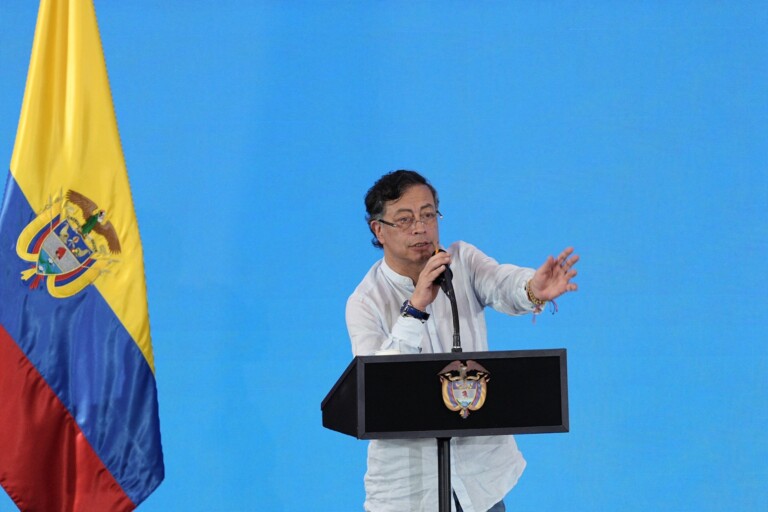
Despite the monumental stakes, experts note that climate and environmental issues have largely taken a back seat to economic and security concerns for the broader electorate, occupying a less prominent space in the public discourse than they did during the 2022 contest. Furthermore, regional trends compound these domestic pressures; recent reports from Mongabay warn that if Bolsonaro wins, up to 95% of the entire Amazon basin could fall under the control of right-wing governments in neighboring nations—including Bolivia, Colombia, Ecuador, and Peru—all of which explicitly prioritize extractive industries over environmental conservation.
If no candidate secures an absolute majority during the initial voting round on October 4, Brazil will proceed to a historic presidential runoff election on October 25, mirroring every electoral cycle since 1998.
Beyond the Presidency: The Soy Moratorium and Congress
Regardless of who occupies the presidential palace, broader systemic factors will heavily influence the future of Brazil’s ecosystems. Chief among these is the effective collapse of the Amazon Soy Moratorium, a landmark voluntary agreement established in 2008 where major agricultural traders committed to boycotting soybeans grown on lands deforested after that year.
Hailed by international conservation groups as one of the most successful supply chain policies ever enacted—having prevented an estimated 18,000 square kilometers of deforestation during its first decade—the moratorium effectively unraveled earlier this year when major grain traders withdrew from the pact. Pinho described the collapse of the agreement as a severe blow to environmental safeguards, with new scientific models projecting an additional 14,000 square kilometers of forest loss by 2036.
Simultaneously, the configuration of the Brazilian congress remains a critical battleground. Right-leaning parties, including the Liberal Party associated with the Bolsonaro family, currently hold half of the seats across both legislative chambers. This balance of power has routinely fostered bitter legislative conflict, such as when congress successfully overrode Lula’s presidential vetoes in 2025 to advance a controversial deregulation package dubbed the "devastation bill."

As voters head to the polls to elect a new president, state governors, and federal lawmakers, experts emphasize that the outcome will cement a definitive national vision. Lapola cautioned that a victory for the Bolsonaro platform risks solidifying a dangerous cultural consensus that treats ecological protection as a partisan preference rather than an existential human necessity, noting that the pillage of land, destruction of biodiversity, and marginalization of Indigenous communities have no place in a responsible 21st-century society.