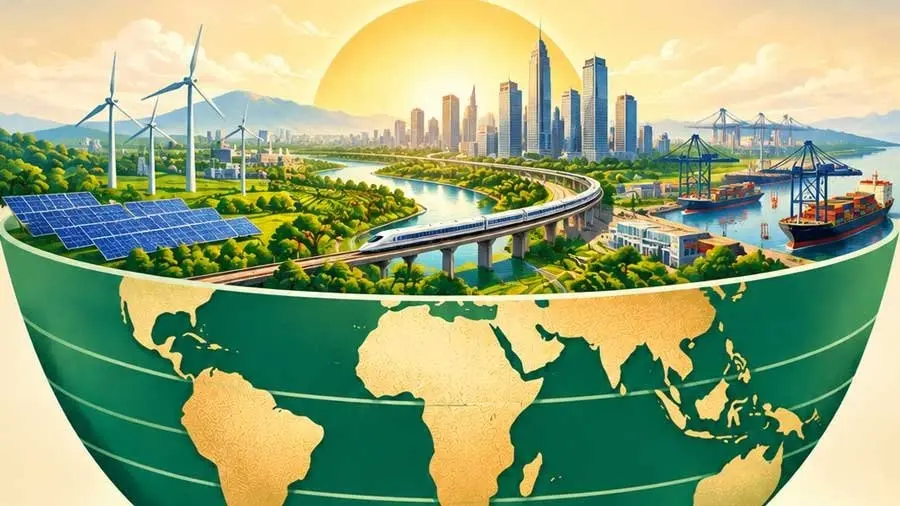
Over the course of 2025 and 2026, the concept of "the Global South" underwent a profound evolution, transitioning from a broad academic descriptor into a prominent diplomatic instrument featured prominently in international summits, joint statements, and high-level G20 deliberations. Across a series of landmark gatherings held in capitals and regional hubs such as New Delhi, Johannesburg, Belém, and Sevilla, developing nations increasingly framed the Global South as a legitimate collective entity authorized to advocate for a more equitable and just system of global governance.
Despite this diplomatic visibility, persistent fractures revealed that the Global South often functions more as a shared sentiment or emotional solidarity than a cohesive, immutable reality. As international dynamics shift, the central question facing developing nations is no longer whether the Global South exists as a legitimate geopolitical concept, but whether its members can successfully convert their shared aspirations into a powerful negotiating tool capable of extracting tangible benefits and concrete concessions from the established international community.
The G20 Test Case
The structural ambitions and limitations of this movement were brought into sharp focus during South Africa’s historic presidency of the G20 in 2025. As the first African nation to lead the bloc, South Africa built directly upon the diplomatic momentum generated by India during its own presidency, which had successfully championed the permanent integration of the African Union into G20 forums in 2023.
The resulting Johannesburg declaration, appropriately titled "Solidarity, Equality, Sustainability," won widespread approval from attending international officials due to its sharp focus on critical issues such as systemic debt relief and sustainable financing for development. However, the summit also exposed the fragile nature of global consensus when confronted by major power politics. Washington notably chose not to attend the summit, openly challenging the legitimacy of the rotational presidency transfer.
The rift deepened when President Donald Trump subsequently excluded South Africa from the 2026 G20 summit hosted in Miami, replacing it instead with Poland and systematically rewriting the official G20 digital footprint to align with an "America First" doctrine. This newly adopted framework placed primary emphasis on domestic deregulation, national energy security, and technological supremacy. The high-profile snub served as a sobering lesson for developing nations: while consensus politics can be a pivotal mechanism for shaping regional agendas, it ultimately struggles to bind or override the immediate strategic interests of global hegemons.
G77 and BRICS: A Weight without Unity
Parallel multilateral frameworks have faced similar tests of cohesion and efficiency. Since its inception in 1964, the Group of 77 and China has expanded dramatically to encompass 135 countries, representing well over two-thirds of all member states within the United Nations. Operating under a rotating regional presidency system, the coalition has frequently been praised by high-ranking international officials, including UN Secretary-General António Guterres, who has characterized the group as a fundamental pillar of multilateralism during an era marked by protracted wars, deepening global inequities, and crippling national debts.
Nevertheless, in-depth academic research examining the group’s day-to-day functions within the UN General Assembly highlights a persistent structural hurdle: wide disparities in wealth and national interest among member states make consensus-building increasingly difficult. Efforts by member nations to establish a permanent, institutionalized "Global South caucus" within the broader UN architecture have repeatedly stalled, illustrating the group’s ongoing inability to translate informal solidarity into unified, effective operational action.
Into this structural vacuum, the BRICS bloc has increasingly stepped to project alternative influence. The adoption of the New Delhi Declaration at the 2026 summit—orchestrated by an expanded coalition of 11 core BRICS nations, 10 partner countries, and associated corporate entities—explicitly called for comprehensive reforms within the UN Security Council, coordinated resistance against unilateral economic sanctions, and the construction of resilient supply chains for strategic commodities. Yet, analysts note an important distinction: while the operational output of BRICS frequently aligns with the broader objectives of the Global South, the two entities remain conceptually and structurally distinct.
Development Finance
The most tangible demonstration of collective bargaining capacity among developing nations emerged during the Fourth International Conference on Financing for Development, convened in Sevilla in the summer of 2025. The high-stakes gathering drew representatives from more than 190 nations who successfully negotiated and signed the Sevilla Commitment, marking the first genuinely intergovernmental framework for global development finance established since 2015.
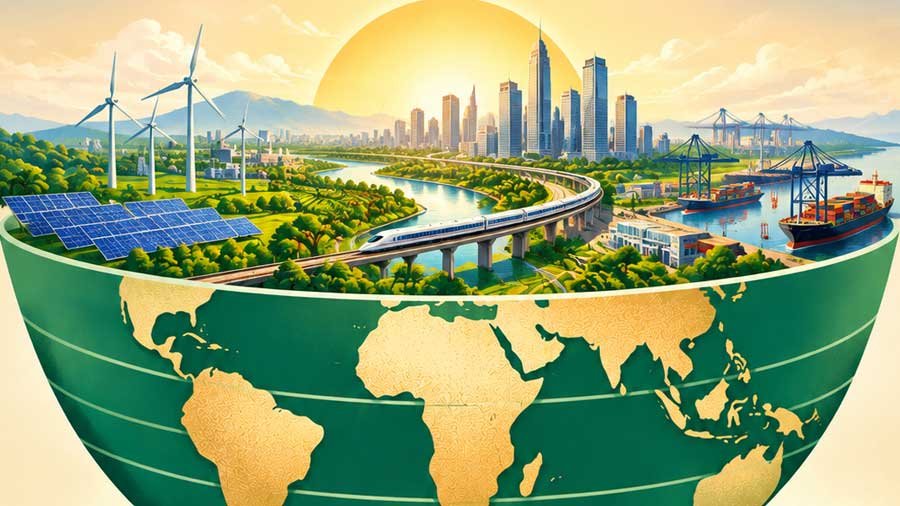
The conference resulted in the formal endorsement of 130 voluntary initiatives designed to directly tackle the staggering four-trillion-dollar annual financing gap plaguing the United Nations Sustainable Development Goals. Addressing the underlying economic crisis, UN Secretary-General Guterres later highlighted that developing nations collectively expend approximately 1.4 trillion dollars every single year strictly on servicing external debt payments. This systemic burden forces nearly 3.4 billion people to live in countries where public expenditure on debt servicing far outweighs total spending on domestic health care and education combined.
To address these compounding pressures, a dedicated Sevilla Forum on debt was formally initiated in October 2025. The successful adoption of this comprehensive financial framework—particularly against the backdrop of stagnating international development aid—demonstrated that the Global South retains a robust capacity to drive international agenda-setting, provided that multilateral forums are structured around broad consensus rather than allowing a single dominant state to wield a paralyzing veto.
Climate Finance
Climate diplomacy provided another crucial arena for collective mobilization, highlighted by the COP30 summit held in Belém in November 2025, which marked the first time the UN climate conference took place within the Amazon basin. The summit yielded two notable outcomes: the "Baku to Belém Roadmap," which establishes a formal commitment to mobilize at least 1.3 trillion dollars annually for developing nations by 2035, and the broader "Belém Package," which calls for the immediate tripling of adaptation finance from 2025 levels. Additionally, Brazil leveraged the platform to launch the innovative Tropical Forests Forever Facility, a financial mechanism designed to compensate nations for preserving vital tropical ecosystems.
Despite these financial milestones, deep divisions remained visible on the negotiating floor. More than 80 countries pushed aggressively for the inclusion of a binding fossil fuel phase-out roadmap, but their efforts ultimately failed to make it into the final text. Furthermore, while South African negotiators expressed satisfaction with the secured financial targets, they cautioned that the overall financing base remained entirely inadequate for addressing the immense climate adaptation challenges confronting the developing world.
The geopolitical friction of the summit was compounded by external absences and policy shifts. For the first time in the history of COP proceedings, the United States declined to participate in the summit. Simultaneously, Germany announced cuts amounting to six billion euros in international decarbonization assistance. These concurrent developments underscored a recurring paradox in contemporary climate negotiations: while the Global South can successfully set ambitious normative objectives and steer multilateral agendas, the realization of actual funding remains heavily dependent on the shifting political goodwill of wealthy donor governments.
Slogan or Force
An empirical evaluation of international diplomacy throughout 2025 and 2026 suggests that neither unbridled optimism nor absolute pessimism accurately captures the reality of the Global South. In specific multilateral settings defined by numerical majority and procedural agreement, the Global South functions as a formidable negotiating bloc capable of shaping global norms. However, in contexts where a single major superpower retains veto power or unilateral control over institutional decision-making—such as the diplomatic friction surrounding South Africa’s exclusion from the G20—the collective identity of the Global South can quickly be marginalized.
Ultimately, the Global South does not operate as a monolithic, permanent international bloc. Instead, it manifests as a fluid network of overlapping coalitions—including the G77 and China, BRICS, and various Southern-led UN forums—that activate dynamically in response to specific economic, environmental, and strategic challenges as their immediate interests dictate.
By Prarabdh Seth
The author is a recent Master of Arts graduate in Diplomacy, Law and Business from the Jindal School of International Affairs at O.P. Jindal Global University. His research interests include the Indo-Pacific region, India-Europe relations, the Global South, international trade, economic diplomacy, national security, defence, strategic affairs, maritime security, geoeconomics, critical and emerging technologies, artificial intelligence, semiconductor geopolitics, critical infrastructure, and political risk. His professional experience includes internships with the Europe India Centre for Business & Industry (EICBI), the Embassy of Ukraine in New Delhi, the Pankaj Jha Centre for Security Studies, and the Jindal Centre for the Global South. He also served as the Events Head for AGORÁ 26: Conversations Beyond Borders, the flagship international diplomacy conference of the Jindal School of International Affairs.