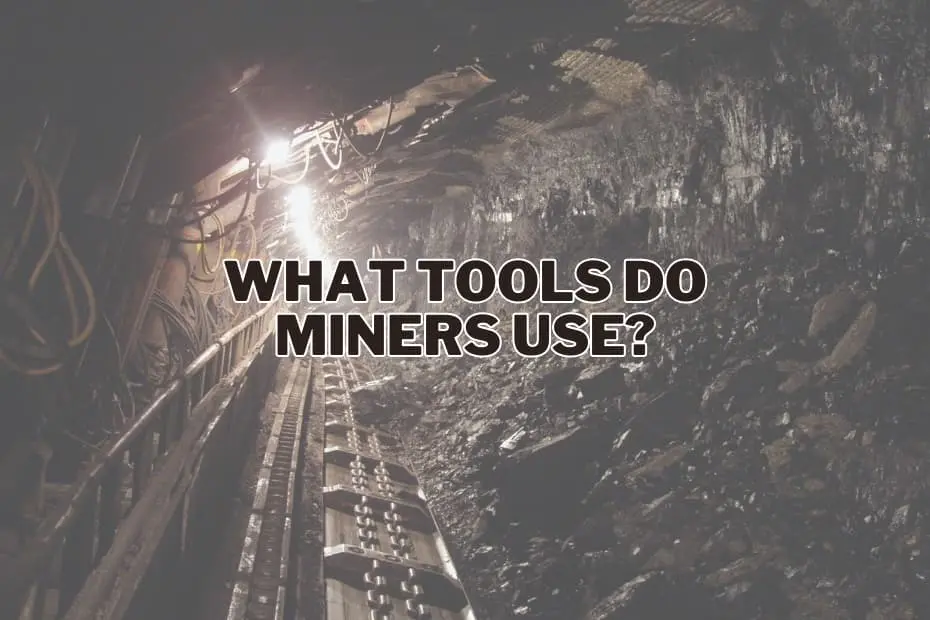
Mining remains one of the world’s oldest, most foundational, and most hazardous industries. For thousands of years, humanity has reached deep into the Earth to extract the raw materials necessary to build civilizations, power economies, and drive technological revolutions. However, the image of a lone miner digging into a dark wall with nothing but a basic shovel is a relic of the past.
Today, the modern mining sector is a sophisticated blend of heavy engineering, chemical science, and high-tech safety protocols. To get the job done efficiently while keeping workers safe, the industry relies on a specialized toolkit designed for every distinct stage of the mining process—from the initial geological exploration and heavy extraction to material transport and refining. Understanding the diverse array of tools miners use highlights not only the complexity of modern resource extraction but also the incredible engineering required to keep these operations running smoothly.
1 The Pickaxe: A Timeless Symbol of Manual Precision
The pickaxe is perhaps the most enduring and universally recognized symbol of the mining profession. While heavy machinery now handles the bulk of large-scale extraction, this classic tool remains an indispensable asset on modern worksites.
The primary utility of the pickaxe lies in its simplicity and adaptability. Miners rely on it to break apart small, stubborn rock formations, clear away compacted earth in confined spaces, and carefully scrape away mineral-rich layers that require a delicate touch. Modern pickaxes are far more advanced than their historical predecessors; they are forged from high-grade, durable steel and equipped with ergonomic handles designed to absorb shock. This ensures they last longer, withstand heavy impacts, and reduce physical fatigue on the worker. When paired with essential safety gear like helmets and reinforced gloves, the pickaxe remains a highly reliable and necessary tool in any miner’s daily kit.
2 The Shovel: The Workhorse of Material Cleansers
No mining site, whether surface-level or deep underground, can function without a sturdy shovel. While heavy machinery moves mountains, the humble shovel is the ultimate tool for localized debris management, site maintenance, and manual loading.
Miners use shovels to clear away loose rock fragments, scoop up soil, and load materials into transport carts or conveyor systems. The design of mining shovels has evolved to include various specialized shapes, such as flat-edge shovels for clean scraping of hard surfaces and pointed-tip shovels for digging into loose gravel. Because shoveling loose debris frequently kicks up dust and sharp rock fragments, miners must pair this manual task with protective gear—specifically safety goggles—to safeguard their vision from flying debris and airborne particles.
3 The Drill: Penetrating the Earth’s Deepest Reserves
When miners need to reach mineral deposits locked deep behind massive stone barriers, they turn to specialized drills. Mining drills are absolutely essential for penetrating tough, dense rock layers that manual tools cannot crack.
These tools range from handheld power drills used for localized anchoring and small-scale blasting preparation to massive, vehicle-mounted industrial drill rigs. Drills serve a dual purpose in modern mining: they allow for the extraction of core samples during exploration, and they create the precise holes required to plant explosive charges. By significantly reducing the physical effort needed to penetrate hard rock, these advanced excavation tools drastically increase productivity and speed up the preparation phase of mining operations.
4 The Sledgehammer: Raw Power for Early Exploration
In the early phases of mining exploration, or in tight subterranean passages where heavy machinery cannot physically fit, the sledgehammer is a vital tool. Driven by the physical strength of the miner, a sledgehammer’s powerful swing delivers concentrated kinetic energy capable of fracturing large, stubborn boulders.
Miners utilize sledgehammers to break down oversized rocks into manageable pieces that can be easily cleared or loaded. Because wielding a sledgehammer requires immense physical exertion and creates a high risk of flying rock chips or accidental slips, safety protocols are strictly enforced during their use. Miners must wear heavy-duty helmets and, when working on uneven or elevated terrain, secure themselves with safety harnesses to prevent dangerous falls.
5 The Jackhammer: Combining Percussion and Rotation
For tasks that require more power than a sledgehammer but demand more portability than an excavator, the jackhammer is the tool of choice. Operating on pneumatic, hydraulic, or electric power, the jackhammer combines the rapid hammering action of a chisel with the rotary motion of a drill to pulverize solid rock with high efficiency.
Commonly deployed in both open-pit surface mines and tight underground shafts, jackhammers make quick work of hard concrete and geological formations. However, this high-power tool generates substantial hazards, including extreme noise levels and dense clouds of fine silica dust. To mitigate these occupational hazards, miners operating jackhammers are required to wear specialized personal protective equipment, including high-grade safety goggles, hearing protection, and ventilation masks to prevent long-term lung damage.
6 The Helmet: The Essential Shield
In an environment where falling rocks, low ceilings, and heavy machinery are constant hazards, the helmet is the single most critical piece of safety gear. No miner is permitted to step onto a worksite without a durable, certified, and properly fitted safety helmet.
Modern mining helmets are engineered from high-impact composite materials designed to absorb severe blows and protect the head from falling debris. Beyond protection, these helmets serve as practical utility platforms. Most modern mining helmets feature integrated brackets designed to securely hold high-powered headlamps, ensuring that miners have a reliable light source pointing exactly where they look, keeping their hands free to operate other tools.
7 Safety Goggles: Preserving Vision in Harsh Conditions
The air inside an active mine is often thick with dust, fine rock particles, and chemical residues. To protect their eyes from these constant threats, miners rely on high-performance safety goggles.
These are not standard glasses; mining safety goggles are designed to seal tightly against the face, preventing microscopic dust from entering the eyes. They feature impact-resistant, clear lenses that guard against high-velocity rock chips generated by drilling and blasting. Furthermore, because underground mines can be incredibly humid and subject to rapid temperature changes, these goggles are equipped with advanced anti-fog coatings to ensure that miners maintain crystal-clear visibility at all times.
8 Dynamite: Controlled Power for Mass Extraction
When faced with massive, impenetrable rock faces, manual labor and mechanical drilling are often insufficient. In these scenarios, dynamite is utilized to break through dense rock formations quickly and expose rich mineral veins.
Though highly effective, the use of explosives is one of the most hazardous aspects of mining. Blasting operations require meticulous planning, precise calculations, and strict adherence to safety protocols. Specialized blasting technicians drill precise holes, place the charges, and detonate them from a safe distance. Because the detonation of dynamite releases high concentrations of dust and toxic gases, mining operations must pair blasting with highly efficient ventilation systems to clear the air before miners are allowed to re-enter the blast zone.
9 The Excavator: The Heavy-Duty Giant of the Field
At any modern mining site, the excavator stands out as an industrial giant. These massive, diesel-powered earthmoving machines are equipped with powerful hydraulic arms and heavy-duty buckets designed to scoop up and move tons of rock, soil, and ore in a single motion.
Excavators are indispensable for surface mining, overburden removal, and loading haul trucks. By replacing the manual labor of hundreds of workers with a single, highly efficient machine, excavators have completely revolutionized the speed and scale of modern mining operations, making the extraction of low-grade ores economically viable.
10 The Conveyor Belt: Streamlining Material Logistics
Once valuable ore has been broken free from the earth, transporting it out of the mine is a massive logistical challenge. This is where the conveyor belt system proves its worth.
Rather than relying entirely on trucks or manual hauling, automated conveyor belts are installed to transport extracted materials and waste rock over long distances, often from deep underground directly to surface processing facilities. These systems run continuously, drastically reducing the reliance on manual labor, lowering fuel emissions from underground transport vehicles, and significantly increasing the overall efficiency of the extraction pipeline.
11 The Rock Splitter: Precision Fracturing Without Explosives
In certain mining environments, the vibrations, noise, and fumes associated with dynamite blasting are too dangerous or environmentally disruptive. When explosives are not an option, miners utilize rock splitters.
A rock splitter works by inserting a wedge into a pre-drilled hole. Using immense hydraulic pressure, the machine forces the wedge outward, applying thousands of pounds of side-to-side force. Because rock has high compressive strength but low tensile strength, this outward pressure causes the boulder to split apart quietly and cleanly, without generating dangerous shockwaves, flying debris, or toxic fumes.
12 The Mining Cart: The Classic Rail-Bound Transport
While conveyor belts handle continuous bulk transport, mining carts remain highly effective for moving heavy, concentrated payloads along established tracks. These carts run on specialized rail systems laid throughout the tunnels of underground mines.
By utilizing tracks, mining carts can easily transport massive loads of heavy ore from the deep, active extraction faces to central processing or hoisting areas with minimal friction and energy expenditure. Modern variations are often automated or pulled by electric locomotives, reducing the physical strain on miners and minimizing underground emissions.
13 The Headlamp: Illumination in the Deep Dark
Underground mines are completely devoid of natural light. Without a reliable light source, working safely or efficiently would be entirely impossible. The headlamp is the primary tool that brings light to these pitch-black subterranean environments.
Mounted directly onto the miner’s helmet, the headlamp provides hands-free, high-intensity illumination. Modern headlamps utilize long-lasting, energy-efficient LED technology and rechargeable lithium-ion batteries, ensuring that miners have a bright, dependable beam of light to guide them through dark tunnels, identify structural hazards, and inspect geological formations throughout their long shifts.
14 The Ore Crusher: Preparing Raw Material for Refining
Extracting rock from the earth is only half the battle; the valuable minerals locked inside must still be liberated. The ore crusher is the primary industrial machine responsible for this crucial phase of the process.
Located at the surface processing facility, ore crushers utilize immense mechanical force to pulverize large, heavy rocks into much smaller, manageable fragments. By breaking down the raw material, these machines prepare the ore for chemical processing and refining, maximizing the recovery rate of valuable metals and minerals while minimizing waste.
15 The Ventilation System: The Invisible Lifeline
Of all the tools and machinery deployed at an underground mining site, the ventilation system is arguably the most critical for human survival. Deep underground, the air can quickly become stagnant, hot, and contaminated with dangerous particulate matter.
Industrial ventilation systems utilize massive fans, ductwork, and air scrubbers to continuously pump fresh air from the surface down into the deepest shafts of the mine. This constant airflow serves multiple vital functions: it regulates underground temperatures, dilutes and removes hazardous dust, and displaces lethal, odorless gases such as carbon monoxide that can accumulate during blasting or equipment operation. Without these highly engineered systems, deep underground mining would be physically impossible for human workers.
Frequently Asked Questions: Understanding Mining Tools
What is the most important safety tool for miners?
While every piece of safety gear plays a vital role, a durable helmet equipped with an integrated headlamp is widely considered the most essential safety tool. It provides critical, hands-free illumination in pitch-black environments while protecting the miner’s head from low ceilings and unpredictable falling debris.
Why do miners use dynamite?
Dynamite is used to break through incredibly dense, hard rock formations that manual tools or standard mechanical drills cannot easily penetrate. By using controlled explosions, miners can quickly shatter massive rock faces to access deep, valuable mineral veins.
What types of drills are used in mining?
Miners utilize a variety of drills depending on the scale and location of the operation. These include handheld electric, pneumatic, and hydraulic drills for precise, localized work, as well as massive, vehicle-mounted industrial drill rigs used for deep exploration and creating blasting holes.
How do conveyor belts help miners?
Conveyor belts automate the transportation of heavy, extracted materials over long distances. By continuously moving ore and debris from deep underground directly to the surface, they reduce the need for manual hauling, lower the rely on diesel transport vehicles, and significantly increase operational efficiency.
What role do ventilation systems play in mining?
Ventilation systems act as an invisible lifeline for underground miners. They continuously circulate fresh air throughout the mine shafts, regulate temperatures, and actively remove toxic gases—such as carbon monoxide—and hazardous dust, maintaining a breathable and safe working environment.