The Federal Communications Commission has granted a new conditional exemption from its Covered List for a foreign-manufactured drone system, marking another significant milestone in how federal regulators are navigating the complex intersection of national security and international commercial technology partnerships.
In a Public Notice released on October 2, the Public Safety and Homeland Security Bureau within the Federal Communications Commission (FCC) announced a series of new conditional approvals covering various types of imported equipment. The newly cleared technologies span multiple high-tech categories, including advanced telecommunications routers, specialized robotic devices, and uncrewed aircraft systems (UAS).
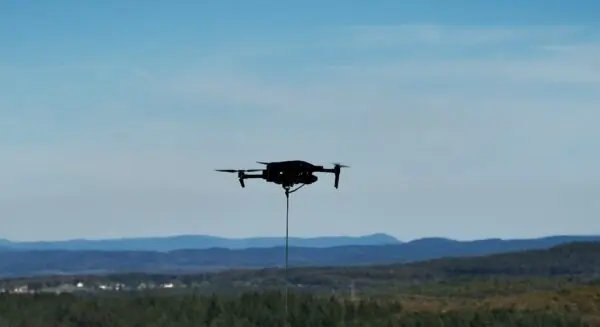
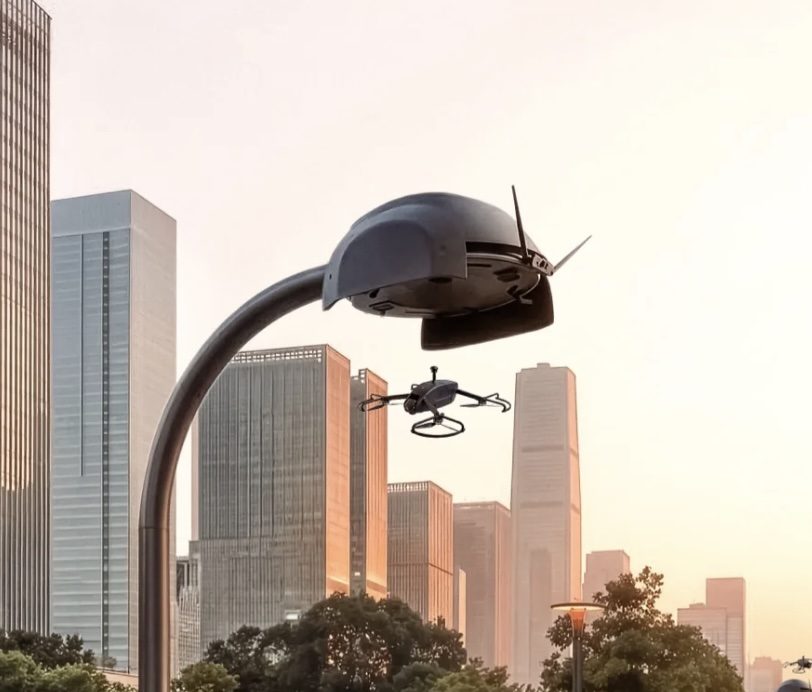
For the commercial drone industry, the most notable inclusion in this latest regulatory update is the K500L Uncrewed Aircraft System and its accompanying Nest V2 docking station, manufactured by the Italian company Dronus S.p.A. Following a security evaluation, the Department of War granted conditional approval for both the aircraft and its automated base station. Consequently, the FCC has exempted these specific Dronus products from restrictions outlined in the agency’s Covered List, allowing them to remain eligible for standard FCC equipment authorization.
Navigating Foreign Drone Restrictions Through Conditional Approvals
The broader regulatory framework governing foreign-produced drones stems from a critical national security determination issued by an Executive Branch interagency body. Pursuant to this determination, the FCC added foreign-produced uncrewed aircraft systems and their critical components to its restrictive Covered List in December 2025, effectively barring them from standard authorization processes to protect domestic telecommunications and critical infrastructure networks.
Despite these stringent baseline prohibitions, the regulatory framework established several specific pathways for exception. Most notably, the rules allow authorized federal entities—specifically the Department of War or the Department of Homeland Security—to determine that a specific foreign-made product does not pose an unacceptable risk to national security. Products that successfully navigate this rigorous vetting process can receive a specialized conditional approval, unlocking an exemption from the Covered List.
Throughout 2026, federal authorities have continuously refined, expanded, and clarified these regulatory exceptions to accommodate the rapidly evolving commercial drone marketplace. In July, the FCC notably extended broader exemptions for products already featured on the Blue UAS Cleared List, as well as for qualifying domestic end products, pushing those compliance deadlines forward to January 1, 2028.
Furthermore, the July regulatory update introduced critical structural changes regarding how conditional approvals are managed for foreign-produced UAS. Under the revised guidelines, these conditional approvals no longer carry an automatic expiration date of December 31, 2026. Instead, foreign manufacturers are now permitted to maintain their market eligibility indefinitely, provided they strictly comply with approved operational plans to transition their manufacturing and supply chain processes onshore, while continuously passing updated government security vetting procedures.
This modern framework forms the exact regulatory foundation that now applies to Dronus S.p.A. and its flagship K500L platform. The FCC has emphasized that the newly granted exemption remains strictly contingent upon Dronus maintaining full compliance with the detailed onshoring plan submitted during its application process. Both the K500L drone and the Nest V2 docking station will also remain subject to ongoing product vetting. Federal regulators have underscored that any failure to adhere to the mandated onshoring roadmap or maintain security standards will result in the immediate revocation of the approval, returning the equipment directly to the restrictive Covered List.
A Growing Ecosystem of Approved Drone Systems
With this recent decision, Dronus joins an expanding roster of international and domestic drone manufacturers that have successfully secured conditional approvals throughout 2026. The FCC’s continuously updated regulatory registry now features advanced systems from a diverse array of companies, reflecting a nuanced approach to supply chain security that accommodates vetted international partners.
The growing list of approved entities includes SiFly Aviation, Mobilicom, ScoutDI, Verge, Sees.ai, Air6 System, Elevon Aerial, Blueflite, and Verity. Additional companies featuring approved systems on the federal registry include Flock Safety, ABZ Innovation, Real-Time Robotics, Ceres Air, Exedy Globalparts, Parallel Flight Technologies, and Ascento, highlighting the wide-ranging integration of autonomous and uncrewed technologies across public safety, enterprise operations, and industrial sectors.
For international drone manufacturers watching the U.S. regulatory landscape, the inclusion of the Dronus K500L illustrates a viable, structured path through the FCC’s strict new supply-chain integrity rules. The agency’s policy demonstrates that foreign manufacturing origins do not automatically disqualify a high-tech aerial system from operating within the United States. However, companies seeking access to the American market must demonstrate absolute compliance with federal security requirements and, where mandated, make firm, legally binding commitments to shift their production footprints onshore.
Ultimately, the process remains conditional by design. While approvals can theoretically persist over the long term for uncrewed aircraft systems without a pre-determined termination date, that longevity is entirely dependent on the manufacturer’s unwavering adherence to approved onshoring milestones and the continuous fulfillment of stringent government vetting standards.