The Federal Aviation Administration is introducing a significant update to its Part 107 remote pilot knowledge test, shifting how aspiring commercial drone operators will be evaluated on critical airspace and navigation concepts. Beginning October 26, the agency will roll out new image-based questions designed to test an applicant’s ability to interpret aviation charts directly within the digital exam interface.
The update directly impacts the Unmanned Aircraft General-Small, or UAG, knowledge test. This is the foundational examination that individuals must pass to earn their initial remote pilot certification under Federal Aviation Regulation Part 107. While the core knowledge required to safely operate a small unmanned aircraft system in the National Airspace System remains fundamentally the same, the method by which the FAA assesses that knowledge is undergoing a modernization effort.
According to the FAA’s August 2026 Airman Testing Community Advisory, the federal agency is actively collaborating with its official testing provider, PSI, to integrate these dynamic image-based elements directly into the exam questions. This evolution aims to ensure that newly certified drone pilots possess practical, real-world navigational skills rather than relying solely on static memorization derived from legacy study materials.
What Is Changing in the Exam Format?
Under the updated testing framework, applicants taking the initial remote pilot exam may encounter questions featuring modern aviation chart images that do not appear in the existing printed testing supplements. For years, students have relied on predictable map excerpts and figures printed in standard testing supplement books to answer spatial and regulatory questions. The introduction of these novel image assets means candidates must be fully prepared to analyze unfamiliar chart excerpts on the fly.

To help candidates prepare for the transition, the FAA has released sample questions within its recent advisory. One of the highlighted examples requires the test-taker to examine an interactive chart image, identify the specific controlled airspace surrounding a designated airport, and determine whether proposed drone operations at that location necessitate prior air traffic control authorization. Another sample scenario challenges the applicant to accurately identify the correct airport communications frequency from a visual excerpt of a sectional chart.
These changes underscore the FAA’s ongoing push to align drone testing standards with the complexities of modern airspace management. As low-altitude airspace grows increasingly crowded with commercial operations, delivery drones, and recreational users, the ability to rapidly and accurately interpret navigational charts is paramount.
Despite the introduction of these new question types, the FAA has confirmed that printed testing supplements will not disappear immediately. Applicants will continue to have access to traditional supplements during their exams until the agency officially transitions away from them at a later, yet-to-be-announced date. Furthermore, the October 26 update does not alter the underlying Part 107 operating regulations, nor does it establish any new certification requirements or operational restrictions for commercial drone pilots. The rules of the sky remain identical; only the evaluation format is evolving.
Resources and Preparation Strategies for Applicants
As the industry prepares for the October 26 rollout, aviation education and training entities are mobilizing to support prospective remote pilots. Industry stakeholders and training providers have begun updating their curricula to ensure students are not caught off guard by the new chart interpretation requirements.
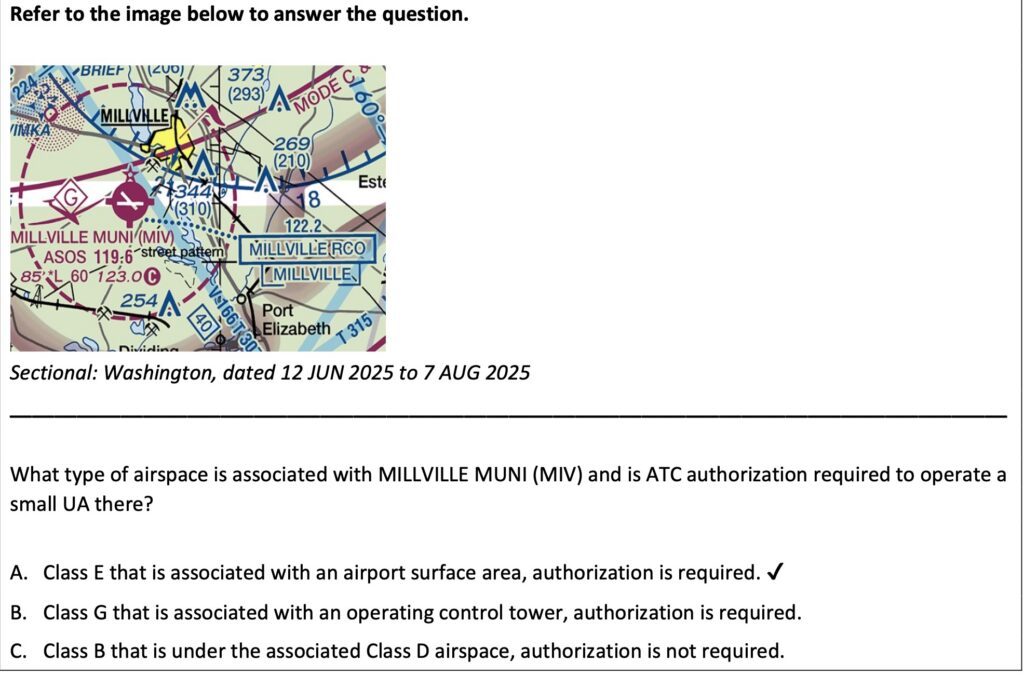
The FAA strongly encourages all individuals scheduled to take the UAG knowledge test to review the newly released sample questions directly through its official testing provider, PSI. Familiarizing oneself with the digital testing interface and the visual clarity of the new chart excerpts can significantly reduce test-day anxiety and improve performance.
Independent training organizations have also stepped up to bridge the preparation gap. For instance, the independent training provider Fly107Prep has published a detailed, free explanation outlining the specifics of the October 26 changes. In addition to their informational breakdowns, the organization provides specialized study tools specifically targeted at mastering aviation chart interpretation. These offerings range from complimentary study guides to paid test preparation applications designed to simulate the updated testing environment.
Ultimately, this transition represents a broader, multi-year initiative by the FAA to modernize airman knowledge testing across both manned and unmanned aviation sectors. For prospective drone pilots looking to enter the commercial market, the underlying principles of aviation weather, regulations, loading, and airspace classification remain absolute. However, the October 26 update serves as a clear reminder that the standard for commercial drone competency is shifting toward adaptable, practical visual analysis, ensuring that tomorrow’s remote pilots are thoroughly equipped to navigate a complex and evolving sky.