The Federal Aviation Administration is introducing a significant update to its Part 107 remote pilot knowledge test, shifting how applicants will be examined on essential aviation concepts. Beginning October 26, the agency will roll out new image-based questions that require prospective commercial drone pilots to interpret dynamic aviation charts directly on their exam screens. While the core regulations governing small unmanned aircraft systems remain entirely unchanged, the overhaul represents a major modernization effort designed to test practical comprehension over rote memorization.
According to the FAA’s August 2026 Airman Testing Community Advisory, the regulatory body is collaborating closely with its official testing provider, PSI, to seamlessly incorporate these visual elements directly into exam questions. The upcoming modification specifically targets the Unmanned Aircraft General-Small (UAG) knowledge test. This foundational examination is required for all individuals seeking to earn their initial remote pilot certification, making the upcoming revision relevant to thousands of aspiring commercial drone operators across the United States.
What Is Changing in the Exam?
Under the updated testing framework, applicants may encounter test questions featuring modern aviation chart images that do not appear anywhere in the currently printed testing supplements. Historically, students preparing for the Part 107 exam could rely heavily on familiarizing themselves with static, pre-published figures and diagrams provided in official supplementary books. The new format disrupts this traditional study approach by presenting fresh visual data that forces candidates to analyze unfamiliar chart excerpts on the fly.

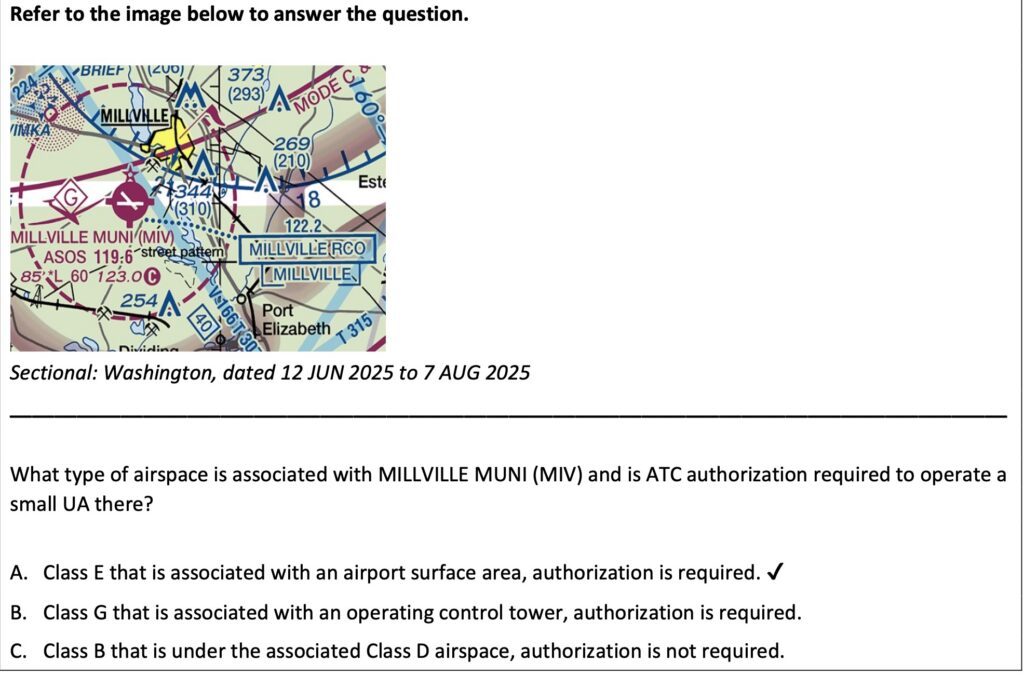
To help candidates prepare for the transition, the FAA has published sample questions within its advisory document. One of the highlighted examples asks applicants to carefully examine a visual excerpt to identify the specific airspace surrounding a given airport and subsequently determine whether planned drone operations necessitate active air traffic control authorization. Another sample question challenges test-takers to accurately identify the correct airport communications frequency from the provided graphic.
These adjustments signal a shift toward evaluating a candidate’s genuine analytical abilities. Rather than relying on memorized figures or rehearsed answers from existing study materials, future remote pilots must demonstrate that they can read, interpret, and navigate actual aeronautical data visually. Despite the introduction of these interactive graphic elements, the FAA has confirmed that printed testing supplements will remain accessible to applicants for the time being. The agency has not yet announced a definitive timeline for the complete retirement of these traditional supplements, ensuring a transitional window for current study guides.
Crucially, the regulatory foundation of the industry remains untouched. The upcoming October 26 updates do not alter Part 107 operating regulations, nor do they introduce any new legal certification requirements for operating small unmanned aircraft systems commercially. The laws governing altitude limits, visual line-of-sight requirements, and operations over people remain exactly as they are today. The change is strictly structural and methodological, modernizing the testing mechanism rather than rewriting the rulebook.
Resources for Applicants and Industry Adaptation
As the aviation community prepares for the implementation date, various resources are emerging to help applicants adapt to the modified testing environment. The FAA strongly recommends that prospective drone pilots review the official sample questions available through its designated testing provider, PSI. Engaging with these materials early allows candidates to familiarize themselves with the updated visual interface and question layout before stepping into the testing center.
Independent training providers are also stepping up to assist students through the transition. Organizations such as Fly107Prep have published detailed explanations regarding the October 26 adjustments, offering targeted study tools specifically focused on enhancing aviation chart interpretation skills. Alongside free informational resources, companies in the test-prep sector are updating their proprietary applications to ensure students are adequately prepared for the new graphic-heavy examination format.
Industry observers note that this modernized testing format forms part of a broader, long-term FAA initiative aimed at bringing all airman knowledge testing into the digital age. For prospective drone pilots entering the commercial space, the underlying aeronautical knowledge required to fly safely in the National Airspace System remains identical. However, the precise manner in which that critical knowledge is tested is evolving, requiring a more dynamic, visually competent approach to ground school preparation.