All across England, NHS ambulance services experienced some of the busiest days in their entire operational history during the record-shattering June heatwave, according to data obtained exclusively through freedom-of-information requests.
During a month that saw temperatures surge past 37 degrees Celsius in various parts of the country, the UK government was forced to declare only the second-ever "red" extreme heat warning in its history. The resulting stifling conditions triggered an unprecedented surge in medical emergencies, pushing frontline emergency responders to their absolute limits and eclipsing peak demand levels typically reserved for the depths of winter or the height of the Covid-19 pandemic.
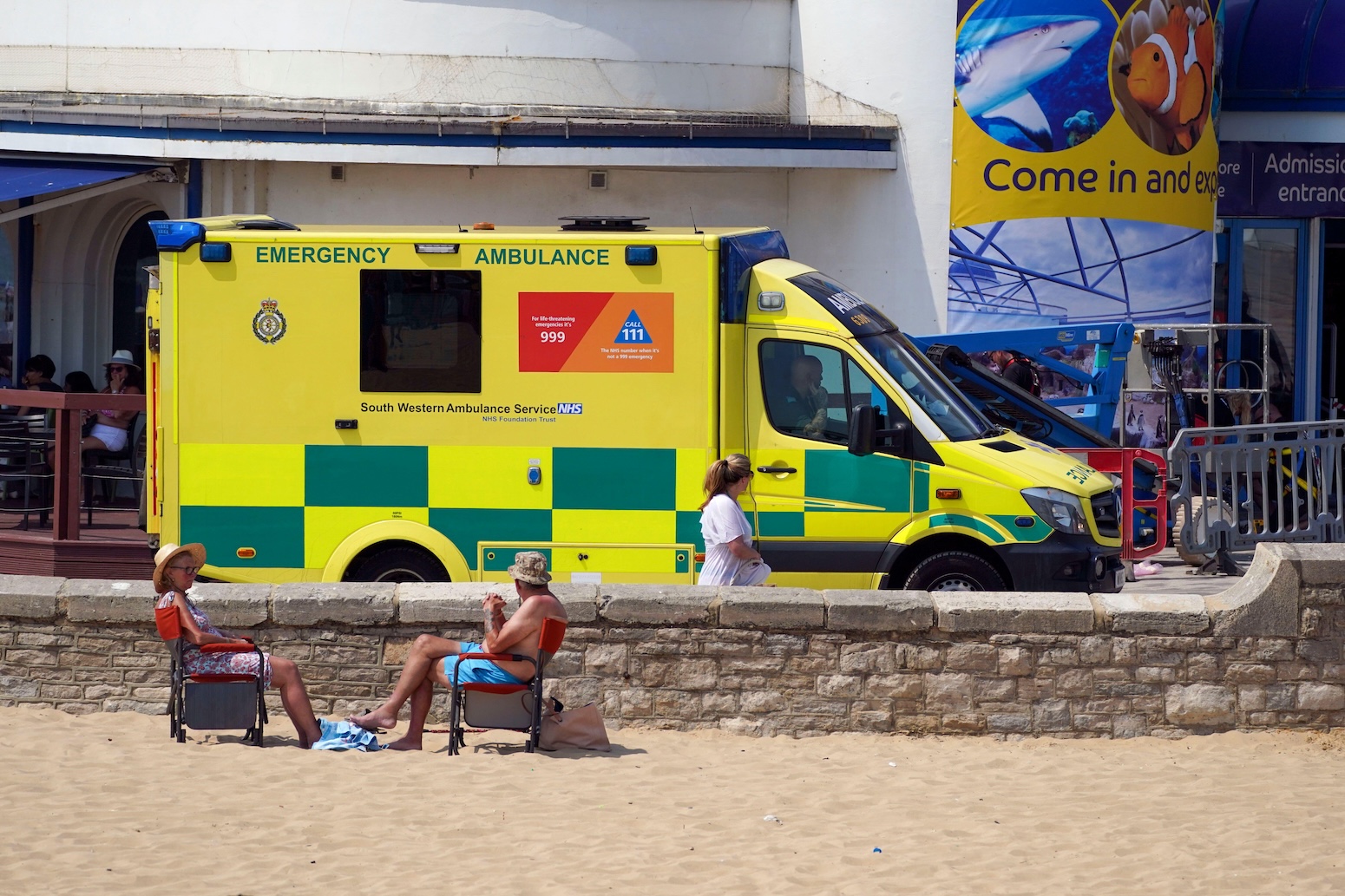
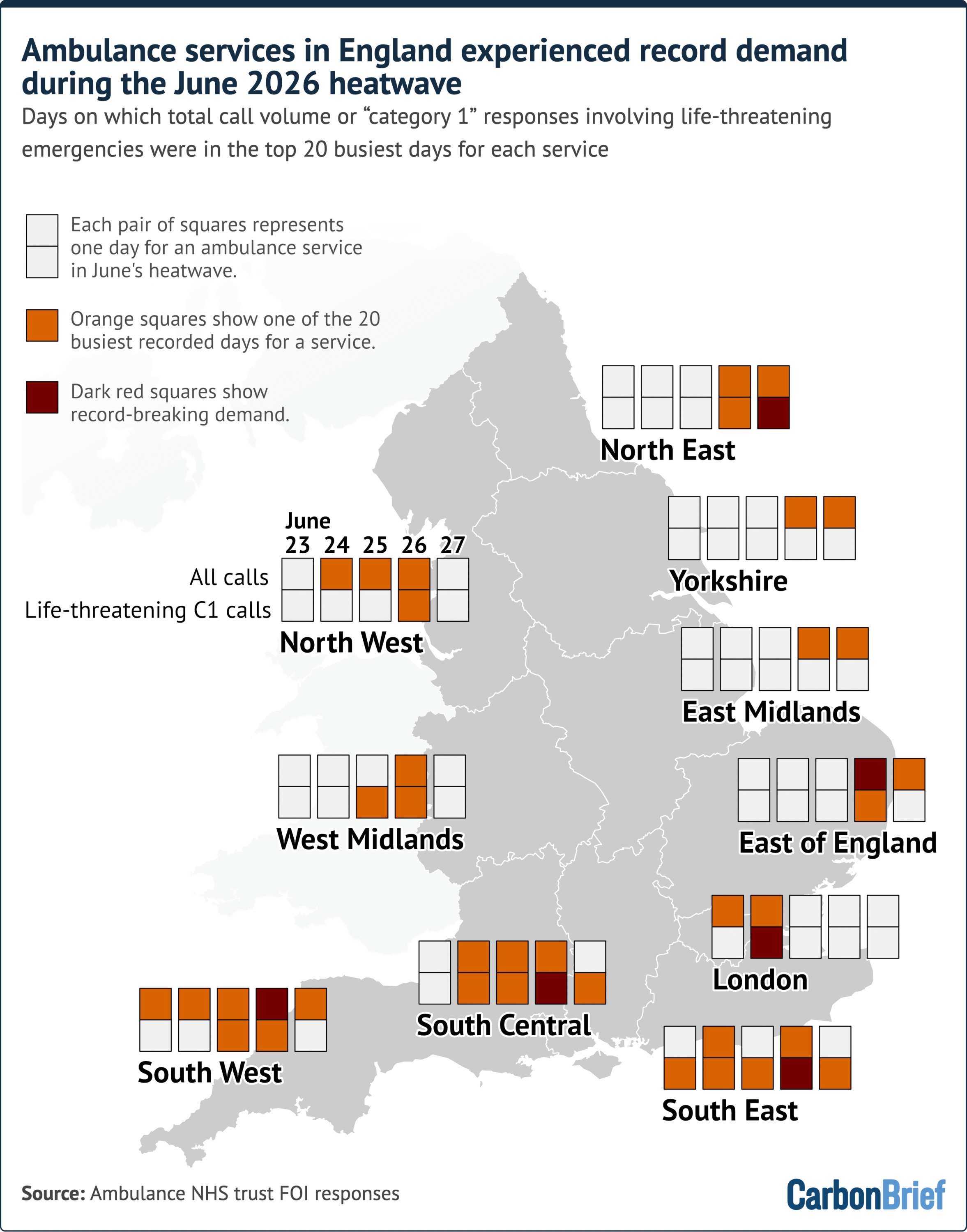
Data provided by the nation’s 10 principal NHS ambulance trusts to Carbon Brief reveals that four out of every ten services—including the London Ambulance Service—responded to historic highs of life-threatening emergencies on at least one day between June 23 and June 27. Furthermore, regional services covering the south-west and east of England recorded their highest volumes of 999 calls since records began.
The nationwide data underscores a shifting operational reality for the British healthcare system. While emergency departments and ambulance crews have historically braced themselves for maximum strain during cold winter months, extreme summer heatwaves are rapidly emerging as a parallel—and occasionally superior—source of life-threatening medical demand.
Heat Demand and Unprecedented Emergencies
Extreme heat significantly elevates the risk of numerous acute and life-threatening medical conditions, most notably cardiovascular diseases and respiratory complications. As late June temperatures soared, the UK government blanketed the country in amber and red heat health alerts. A red alert—issued across the Midlands and the south of England—serves as a stark official warning that there is a significant risk to life even among the healthy population. Researchers later calculated that the summer’s various heatwaves contributed to nearly 3,000 heat-related deaths across the United Kingdom.
To measure the severe strain placed on the emergency services during this period, freedom-of-information requests were dispatched to all 10 NHS ambulance trusts in England, asking for comprehensive breakdowns of their busiest days on record. The inquiries focused on both total 999 call volumes and category 1 responses—the designation reserved for immediate, life-threatening incidents such as cardiac arrests.
The resulting analysis highlights a remarkable concentration of record-breaking days during the five-day heatwave window from June 23 to June 27. At least two distinct heatwave dates ranked within the top twenty busiest days in the recorded history of every single ambulance service across the country.

This trend was most pronounced in the south and east of England, where daytime temperatures frequently surpassed 36C and approached a blistering 38C in localized pockets. The London, South East Coast, South Central, and North East ambulance services all logged historic daily records for handling life-threatening emergencies while the heatwave persisted.
For the South East Coast and South Central trusts—which collectively manage emergency logistics across a vast territory stretching from Oxfordshire down to Kent—June 25, 26, and 27 all witnessed unprecedented volumes of category 1 callouts. Meanwhile, the South Western and East of England ambulance services both registered their highest-ever volumes of overall 999 calls on June 26, matching the exact day that the highest June temperature ever recorded in the UK was measured in Norfolk.
Health experts note that these heat-driven spikes arrive on top of a baseline of steadily rising annual demand. For years, ambulance services have grappled with an increasing volume of emergency calls driven by an aging population, a rise in complex and chronic health conditions, and mounting mental health pressures. This structural upward trend explains why the vast majority of historical peak days in the provided datasets fall within the 2020s. Beyond the immediate shock of the June heatwave, 2026 as a whole remains on track to set new records for total annual ambulance demand.

Coping with Stifling Heat
On June 26, the peak day of the heatwave emergency, ambulance services across England collectively responded to 4,084 life-threatening emergencies. By comparison, the average daily volume for such critical incidents normally hovers around 2,500 during a standard summer month.
Stu Holliday, head of emergency preparedness, resilience and response at the North East Ambulance Service, explained the physiological mechanisms driving the surge. During periods of prolonged hot weather, he noted, services consistently observe sharp increases in calls from individuals suffering from acute dehydration, heat exhaustion, and heatstroke. Furthermore, extreme temperatures exacerbate pre-existing health conditions, particularly among vulnerable populations such as older adults, young children, and pregnant individuals.

The convergence of record heat and soaring call volumes placed extraordinary pressure not only on patients, but also on the frontline workforce. Labor organizations, including the UNISON trade union, raised urgent concerns regarding working conditions for ambulance crews, warning that paramedics were frequently forced to operate in stifling vehicle cabins with faulty or nonexistent air conditioning while managing relentless, back-to-back emergency callouts.
When compared historically, the data illustrates that the heatwave placed a heavier burden on many regional ambulance fleets than the peak waves of the Covid-19 pandemic, cementing climate-driven extreme weather as one of the most formidable operational challenges facing the modern National Health Service.