Abacus AI has emerged as a significant technical workspace designed to combine multiple artificial intelligence models and operational functions under a single umbrella. As organizations and individual developers seek ways to streamline their interactions with various AI technologies, platforms offering unified environments have gained substantial traction. Abacus AI attempts to address this demand by providing an expansive ecosystem that ranges from basic conversational interfaces to autonomous multi-step agents and specialized development environments. However, a balanced examination of the platform reveals a complex landscape characterized by both enthusiastic adoption by power users and notable friction points reported across online forums, user reviews, and video walkthroughs.
Overview and General Platform Perception
Online feedback regarding Abacus AI presents two distinct perspectives. On one hand, positive reviews frequently originate from power users who leverage the platform’s wide variety of AI models, specialized agents, and cost-effectiveness relative to maintaining multiple separate subscriptions. These users appreciate the convenience of centralizing tasks such as writing, data analysis, image and video generation, and coding within a single interface. On the other hand, negative reviews highlight challenges related to credit consumption, pricing transparency, a steep learning curve, and specific workflow-related hurdles. Analyzing both viewpoints provides a clearer picture of the platform’s operational capabilities, utility, and areas where users encounter difficulties.
At its core, Abacus AI functions as a comprehensive technical workspace. For beginners entering the AI landscape, features like ChatLLM offer a welcoming entry point by granting access to models from major providers such as OpenAI, Anthropic, and Google through a unified interface. This allows users to toggle between different models without navigating multiple applications or managing separate accounts. While many casual observers compare Abacus AI directly to standalone conversational tools like ChatGPT or Claude, industry analysts note that these platforms serve fundamentally different purposes. ChatGPT and Claude specialize primarily in conversational AI and direct dialogue, whereas Abacus AI targets a broader spectrum of individual and commercial needs by integrating diverse AI capabilities, developer tools, and autonomous agent frameworks into one environment.
The Ecosystem of Core Tools and Services
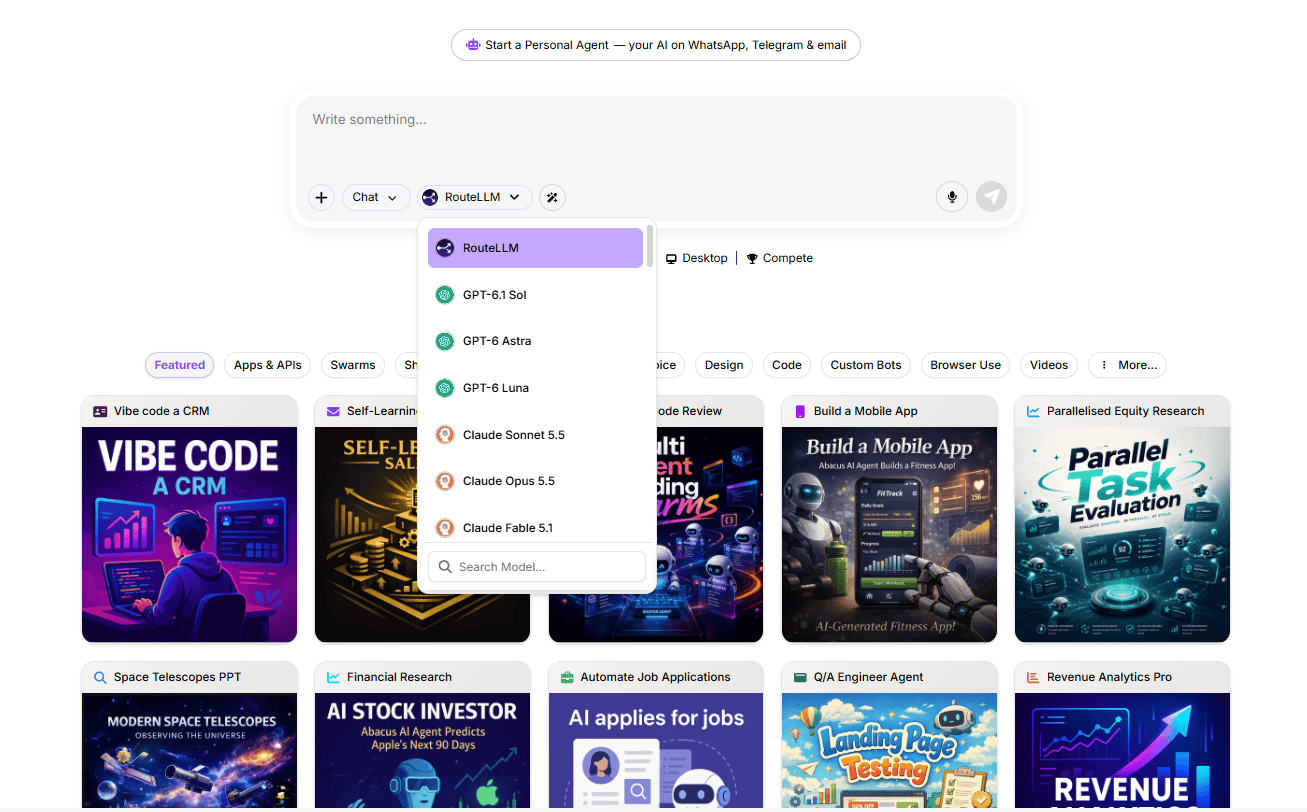
The Abacus AI ecosystem comprises a diverse array of products tailored to different technical and creative requirements. Central to this architecture is ChatLLM, which provides simultaneous access to a varied range of AI models enhanced by intelligent routing powered by RouteLLM. Complementing this are specialized autonomous agents designed to execute complex operations. The Abacus AI Agent performs multi-step actions encompassing research, coding, web navigation, and application development. For asynchronous communication workflows, Claw operates as an AI agent capable of executing multi-step actions directly through messaging channels such as Slack, WhatsApp, and Telegram without losing context between sessions. Similarly, Hermes functions as an autonomous agent capable of performing multi-step actions while learning reusable skills from prior task execution.
For software developers, the platform offers Abacus AI Desktop, a dedicated environment designed for coding, pair programming, and editing local files. Media creators utilize the Studio environment to generate images, videos, and audio using a variety of underlying models. Application development is supported by AppLLM, also referred to as vibe coding, which assists users in creating and deploying web applications simply by describing desired functionalities in natural language. To support these continuous background operations, the SuperComputer provides a cloud environment that keeps AI agents, code, and services running even after a browser session has concluded.
Further expanding its developer-centric offerings, Abacus AI features Agent Swarms to coordinate multiple AI agents simultaneously across different aspects of complex tasks. The platform also includes Smaug, a proprietary family of open-weight AI models specifically optimized for reasoning, coding, and agent-based workflows. Finally, the Abacus AI Bot serves as an open-source coding agent and desktop application designed to facilitate seamless interaction with the platform’s broader agent infrastructure.
Evidence-Based Assessment of Platform Challenges
Despite its extensive feature set, user discussions and community forums highlight several recurring criticisms regarding the platform’s user interface, pricing model, credit system, and workflow reliability. Understanding these challenges is essential for evaluating the platform’s suitability for specific use cases.
The interface and usability present notable hurdles for newcomers. Some users report that navigating the platform can be overwhelming due to the sheer volume of tools and features consolidated into a single workspace. Additionally, the ability to fluidly switch between various underlying AI models can occasionally make it difficult to track precisely which model generated specific outputs in previous conversations. The platform’s advanced features, particularly autonomous agents and complex workflow creation, carry a steep learning curve that requires dedicated time to master. While basic ChatLLM features remain accessible to general users, many advanced tools are optimized primarily for individuals with technical proficiency and developer experience.
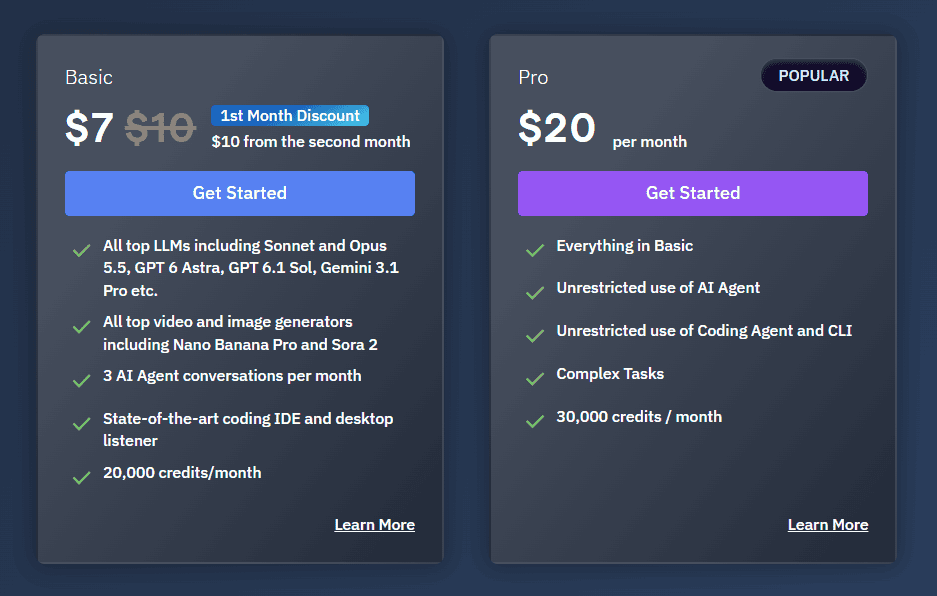
Financial predictability represents another major area of user concern, specifically surrounding credit consumption and pricing structures. Users frequently express uncertainty regarding how many credits a given task will consume, particularly when executing complex, multi-step agent workflows. Tasks involving extensive background research, iterative code generation, or multi-agent coordination can deplete monthly credit allowances faster than anticipated. Furthermore, platform pacing rules can restrict how remaining monthly allowances are accessed throughout a billing cycle, complicating budgeting for both individuals and businesses. Instances of confusion regarding introductory promotional offers transitioning into regular subscription pricing have also been documented in user forums.
Workflow reliability and performance issues occasionally disrupt operations. Autonomous AI agents may occasionally halt prematurely before completing a workflow or generate outputs that require substantial human intervention and correction. A common point of frustration involves credits being consumed during failed runs or when an agent encounters an error before achieving its objective. Multi-step tasks frequently demand precise prompt engineering, ongoing monitoring, and active troubleshooting to ensure the final result aligns with user expectations.
Business feature integration and support inquiries form the final major category of user feedback. Organizations evaluating the platform must verify whether their existing software stacks and preferred third-party integrations are fully supported before adoption. Teams seeking preconfigured solutions for customer support, IT ticketing, or specialized enterprise functions often find they must manually configure custom workflows. Analytics and monitoring features also require careful evaluation by businesses with strict reporting standards. While some comparative reviews characterize the platform as more suitable for hobbyists and developers than enterprise teams, others successfully integrate its developer tools into daily operations. Customer support response times and billing inquiries round out the primary discussion points, with community members emphasizing the importance of thoroughly reviewing subscription terms, renewal dates, credit limits, and cancellation policies prior to committing to paid plans.
Exploration Through Real-World Use Cases
Practical demonstrations of Abacus AI illustrate its capability to handle complex, real-world scenarios spanning web development, mobile application creation, process automation, business intelligence, software testing, and academic research.
In web development, the platform demonstrates the ability to generate multi-page websites equipped with integrated payment functionalities, such as Stripe checkout systems, allowing businesses to rapidly test consumer demand or launch digital offers. Beyond simply rendering a checkout page, these applications must handle successful transactions, failed payments, and post-purchase workflows. Similarly, mobile application development demos showcase fitness trackers, running coaches, meditation apps, expense trackers, and simple mobile games. While applications featuring live GPS tracking or background modes highlight the platform’s generative power, developers note the necessity of testing generated code on physical devices to ensure real-world reliability.
CRM development represents another prominent use case, where users can generate customer relationship management tools featuring employee directories, vacation tracking, and user role permissions. As business rules, database integrations, and permission structures increase in complexity, thorough application testing becomes critical. In data processing, the Invoice Processing API and Invoice Data Extractor tools demonstrate the ability to ingest PDF documents or images, extract vendor details, line items, and financial amounts, and convert that data into validated CSV files. The primary utility in these automation scenarios lies in structuring unstructured text while flagging questionable fields for human review.
Revenue analytics and business intelligence tools automate spreadsheet analysis to uncover financial patterns and growth opportunities. However, financial analysts emphasize that precise metric definitions—such as distinguishing between invoiced, recognized, and collected revenue—must be established prior to analysis to prevent AI-driven misinterpretations of financial data.
For software engineering teams, multi-agent code review systems deploy multiple AI agents simultaneously to examine recent pull requests, identify potential bugs, detect inefficiencies, and suggest security improvements. While parallel processing accelerates code auditing, resolving contradictory suggestions from different agents remains a manual responsibility for human developers. Automated software testing through AI QA engineer agents emulates user interactions to evaluate form submissions, email verification, and workflow integrity, generating bug reports for tracking systems like Jira. Furthermore, scheduled browser workflows automate repetitive operational tasks, such as logging into external portals, downloading invoices, uploading data to cloud spreadsheets, and monitoring competitor pricing through automated screenshots.
Research and reporting capabilities enable the parallelized analysis of large datasets, such as evaluating dozens of companies within major stock indices to construct theoretical investment portfolios. However, industry professionals stress the importance of verifying underlying sources, ensuring data freshness, and distinguishing between factual data points and AI-generated interpretations.
Target Audience and Suitability
Abacus AI is ideally suited for individuals and organizations seeking to move beyond basic text generation and conversational querying. The platform’s integration of multiple foundational models, autonomous agents, application development environments, data analytics, and workflow automation makes it a strong option for users who want to consolidate various AI functions into a single workspace. Developers, technical project managers, and tech-savvy entrepreneurs stand to gain the most from the platform’s expansive ecosystem. Conversely, users whose primary requirements are limited to basic conversational assistance or simple chatbot interactions may find the platform’s broad feature set and credit management system more complex than necessary for their daily routines.
Conclusion and Final Considerations
Abacus AI provides a highly multifunctional environment that bridges the gap between conversational AI, autonomous agent execution, software development, data analysis, and media creation. Its primary advantage lies in its operational flexibility, allowing users to transition seamlessly between different AI capabilities within a unified interface. However, this versatility introduces a distinct learning curve and requires careful management of credit consumption and subscription terms. By approaching the platform with an understanding of both its powerful automated workflows and its inherent operational complexities, users can effectively determine how well the ecosystem aligns with their specific technical and professional requirements.