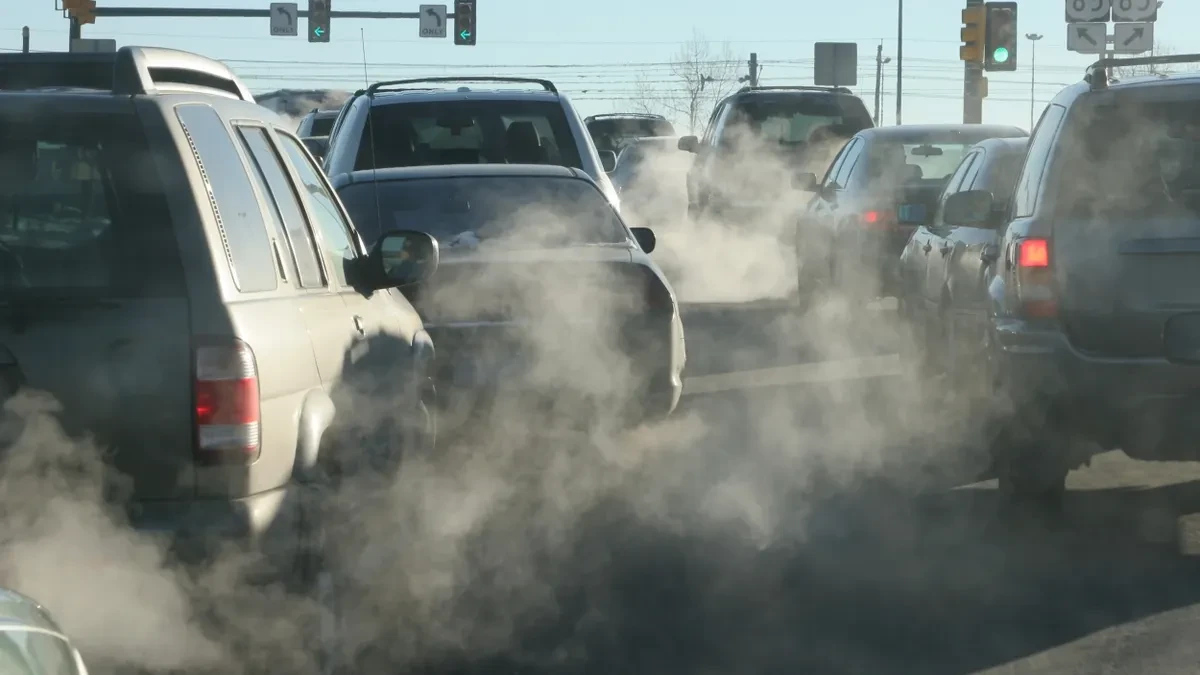
A broad coalition spanning U.S. cities, states, and counties has launched a formal legal challenge against the Trump administration’s recent rollback of federal vehicle efficiency standards, arguing that the weakened rules will drive up consumer costs, increase pollution, and exacerbate the financial burden on American households at a time of soaring global gasoline prices.
The lawsuit, filed by a massive alliance of municipal and state governments, targets the administration’s finalization of relaxed Corporate Average Fuel Economy (CAFE) standards. The policy change directly dismantles former President Joe Biden’s more stringent rules, which would have required automakers to significantly increase the fuel efficiency of passenger cars and light trucks to approximately 50 miles per gallon by the year 2031.
The legal challenge brings together a diverse array of local and state leaders who contend that abandoning aggressive fuel economy targets runs counter to statutory protections and harms both the environment and local economies. The roster of plaintiffs filing the lawsuit includes the District of Columbia, Chicago, the city and county of Denver, Los Angeles, New York City, and the city and county of San Francisco. They are joined by a powerful bloc of states: Arizona, California, Colorado, Connecticut, Delaware, Hawaiʻi, Illinois, Maine, Maryland, Massachusetts, Michigan, Minnesota, New Jersey, New Mexico, New York, North Carolina, Oregon, Rhode Island, Vermont, Washington, and Wisconsin.
Dive Brief:
The legal confrontation stems from a foundational piece of federal legislation enacted decades ago. In 1975, Congress passed the Energy Policy and Conservation Act, which formally required the National Highway Traffic Safety Administration (NHTSA) to establish what it defined as "maximum feasible" fuel economy standards for new vehicles entering the American market.
Last month, the Trump administration finalized its new fuel efficiency standards, replacing the previous trajectory set under the Biden administration. While the Biden-era guidelines aimed for a fleet average of roughly 50 miles per gallon by 2031, the newly adopted Safer Affordable Fuel-Efficient Vehicles Rule III, issued by NHTSA, projects a much more modest fleet average fuel economy of 34.9 miles per gallon by model year 2031. This represents a step up from the 30.1 miles per gallon standard established for model year 2024, but falls drastically short of the previous administration’s goals.

The U.S. Department of Transportation defended the policy shift in a late September press release, asserting that the prior regulations overstepped legal boundaries. The department stated that "despite statutory prohibitions against even considering alternative fuel technologies such as EVs when setting standards, the Biden-Buttigieg standards were set so high that they created a backdoor electric vehicle mandate."
Dive Insight:
State attorneys general and municipal leaders immediately pushed back against the administration’s rationale, emphasizing the practical consequences that higher fuel consumption will have on everyday drivers.
"Historically, NHTSA’s standards have reduced consumer costs by improving vehicle fuel efficiency, placed downward pressure on gas prices by reducing fuel consumption, protected the U.S. economy from global oil shocks, and reduced pollution from tailpipes and refineries," said New Jersey Attorney General Jennifer Davenport in a news release detailing her state’s participation in the lawsuit. "However, the final rule significantly weakens fuel economy standards, harming both consumers and the planet at the exact moment when global gasoline prices are soaring."

Local leaders echoed these economic and environmental concerns, pointing to the immediate financial strain placed on city residents. Urban centers, which frequently bear the brunt of poor air quality and traffic congestion, argued that lower fuel efficiency standards directly undermine local climate action plans and public health initiatives.
"These rollbacks are bad for the environment and hell on our wallets," Denver Mayor Mike Johnston said in a public statement. "Gas prices are already skyrocketing because of President Trump’s war. These changes only add insult to injury, and we are prepared to fight them in court."
The legal battle over the CAFE standards sets the stage for a protracted court fight between the federal government and a coalition representing millions of Americans across more than two dozen states and major metropolitan areas. As the litigation proceeds, the core debate centers on the balance between federal regulatory authority, the economic realities of rising fuel costs, and the ongoing national effort to curb transportation-related emissions.