By Jim Magill, Features Editor
The inspiration needed to start a successful, high-impact enterprise can often come from unexpected places. For Andrew Ashur, CEO of Lucid Bots—a rapidly growing manufacturer of specialized cleaning drones and industrial aerial equipment—that pivotal moment struck while he was still a junior at Davidson College in North Carolina. Standing on campus, he happened to catch sight of a crew of commercial window washers dangling from a platform that was being violently buffeted by high winds.
As he watched the workers struggle to hold on for dear life while trying to perform their daily duties, a fundamental question immediately crossed his mind: Why hasn’t anybody found a way to make this perilous job safer?
That single observation served as the catalyst for Lucid Bots. Headquartered in Charlotte, North Carolina, the aerial robotics company has since evolved into a major player in the commercial drone industry, deploying its specialized UAVs to wash buildings, towers, bridges, and other critical infrastructure across the United States and 18 foreign countries.
Driven by his initial curiosity, Ashur began conducting deep research into the day-to-day realities and inherent dangers of the window washing and exterior maintenance industry. What he discovered was a staggering statistic that cemented his commitment to automated solutions: roughly once every four days, a worker dies somewhere in the world while cleaning a building. To Ashur, this grim reality was completely unacceptable in an era where advanced technology allows humanity to send spacecraft deep into outer space.
At the same time, Ashur’s research opened his eyes to the massive, underserved global demand for exterior building maintenance services. Real estate, he realized, constitutes the largest asset class in the world, holding a combined market value that eclipses all global stock and bond markets put together. Maintaining the immense value of this global infrastructure requires consistent upkeep, which translates to a never-ending cycle of cleaning, painting, and protective coating applications.
Despite studying economics and Spanish as a liberal arts student with virtually no formal background in robotics, Ashur made the bold decision to build a company centered around flying robots. His core mission was to take over the dangerous, backbreaking, and life-threatening tasks that human maintenance workers faced every single day, removing humans from harm’s way entirely.
While still completing his undergraduate studies, Ashur collaborated closely with the Jay Hurt Hub for Innovation and Entrepreneurship at Davidson College to lay the groundwork for the enterprise. In 2018, he and his founding team officially launched Lucid Bots. With critical backing from the renowned start-up incubator Y Combinator, alongside an impressive $34 million in venture capital funding, the enterprise has expanded rapidly over the past few years. Today, Lucid Bots employs approximately 80 dedicated professionals at its Charlotte headquarters and production facilities.
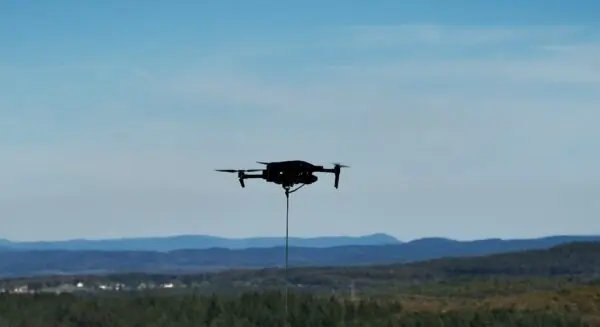
The company’s market footprint has grown just as quickly. Lucid Bots currently serves more than 400 commercial customers located across more than 40 U.S. states and three continents. Demonstrating its ongoing evolution and manufacturing scale, the company recently announced the commercial launch of the Power Tether, a ground-based power supply system designed to deliver a continuous stream of electricity to aerial drones during extended operations. Lucid Bots currently manufactures about 25 spraying drones per month, and Ashur notes that the company is actively ramping up production lines to manufacture an equal number of power tethers each month to meet surging market demand.
Brain, Frames, and Tools
As an advanced manufacturing company, Lucid Bots provides its commercial customer base with the specialized hardware and software tools required to replace traditional, expensive, and high-liability human labor programs with highly efficient, cost-effective Unmanned Aerial Vehicles.
To explain the company’s overarching product philosophy, Ashur breaks down the technology stack into three distinct pillars: the brain, the frames, and the tools.
The brain layer serves as the foundational software architecture of the platform. It represents a universal software stack engineered to operate seamlessly across virtually any type of robotic frame, ensuring adaptability and long-term utility as hardware technology continues to evolve.
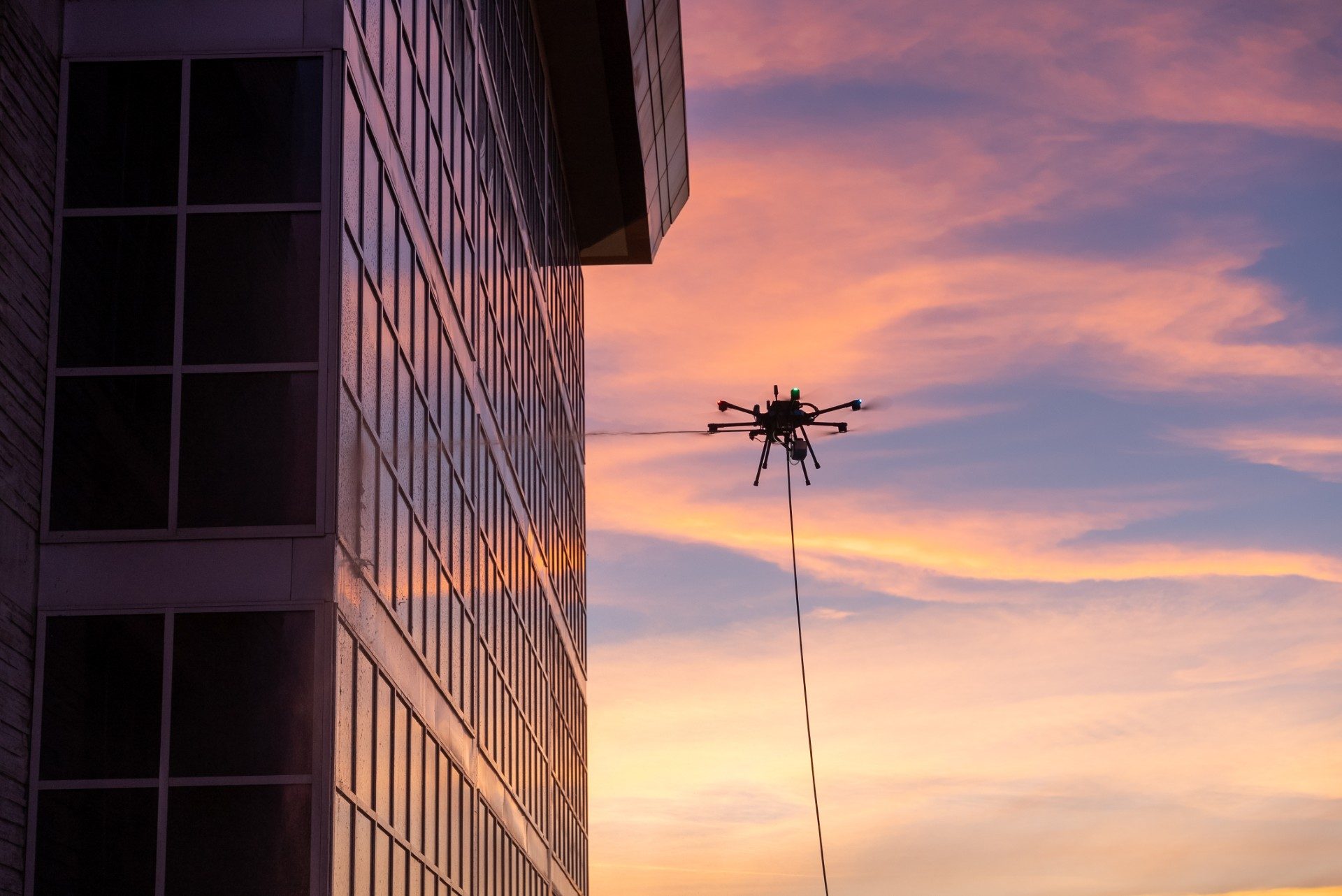
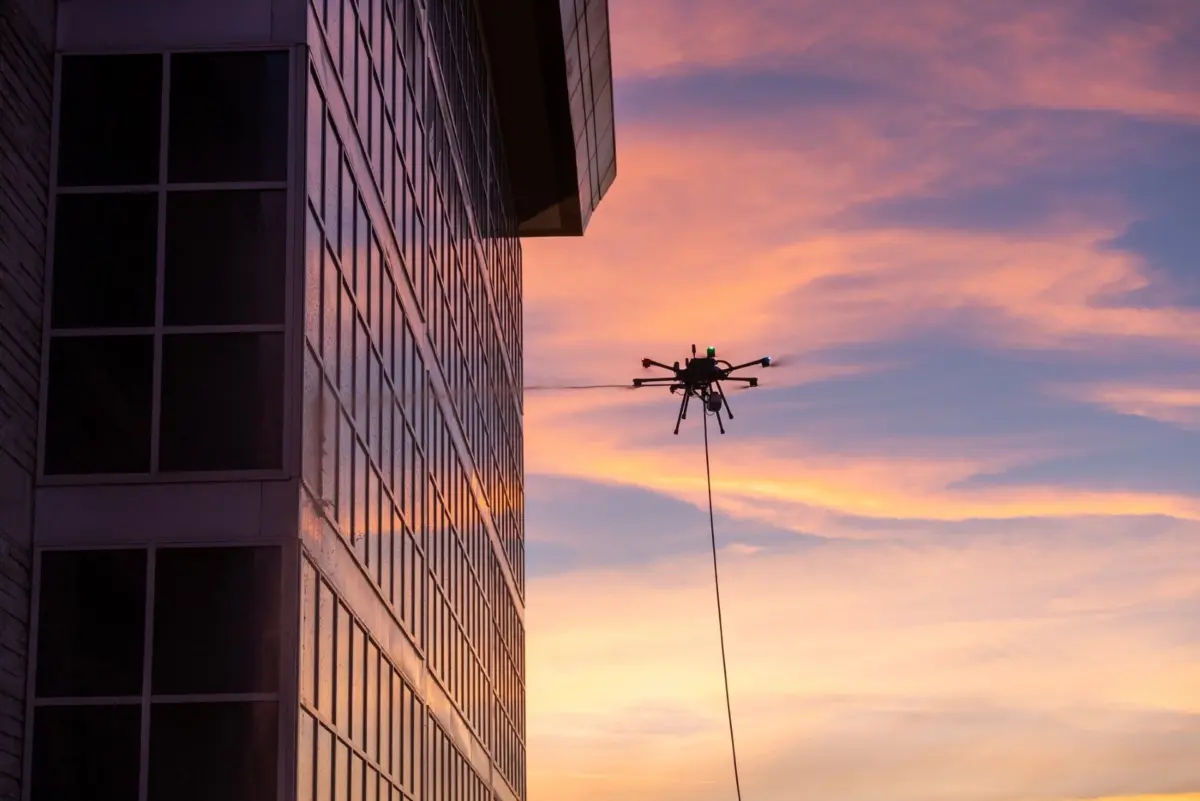
The frame layer, meanwhile, is anchored by the company’s flagship commercial product: the Sherpa Drone. The Sherpa is a purpose-built industrial cleaning drone designed from the ground up to wash building exteriors safely and efficiently up to heights of 150 feet. To accommodate diverse architectural surfaces, the Sherpa supports three distinct cleaning methodologies. These include soft washing for delicate materials such as traditional stucco, high-pressure washing for rugged concrete and brick, and specialized window cleaning enabled through an optional payload attachment.
From the very beginning of the design process, modularity was a primary objective for the engineering team. Ashur noted that the goal was to build an industrial drone frame that was exceptionally modular from both a mechanical and an electrical perspective, ensuring that operators could easily attach a wide variety of functional tools depending on the specific job requirements.
On the tool side of the equation, Lucid Bots has significantly broadened its product ecosystem well beyond traditional exterior washing attachments. The company recently introduced a new hardware option known as the Shield Payload. This specialized tool enables drone operators to spray protective coating materials directly onto structures, effectively waterproofing exterior surfaces without the need for scaffolding or suspended human work platforms.
Furthermore, the company is putting the finishing touches on late-stage development and deployment phases for an integrated painting payload. Recently, a commercial customer successfully utilized the new painting tool to coat the exterior of a massive newly constructed warehouse. In another prominent real estate and infrastructure use case, Lucid Bots has partnered with a local highway system in North Carolina, where maintenance crews are actively deploying the Shield Payload to quickly and efficiently paint over graffiti on highway bridges.
Ultimately, Ashur envisions a future where Lucid Bots takes this established platform—featuring its universal software brain and the highly adaptable modular frame of the Sherpa drone—and continues to innovate by engineering entirely new tools around it, helping commercial customers generate greater operational value and increased revenue streams.
Focus on Supply Chain Dynamics
In the fast-paced and rapidly shifting landscape of the commercial UAV market, Ashur firmly believes that maintaining domestic operations as a U.S.-based drone manufacturer provides the company with a powerful strategic advantage for long-term growth and stability.
As seen in recent years with ever-evolving federal legislation, regulatory bodies and lawmakers have taken an increasingly stringent stance against importing commercial drones and sensitive components from foreign nations. This shifting regulatory environment has placed a renewed national focus on the critical importance of domestic manufacturing capabilities within the United States.
When Lucid Bots first established its domestic manufacturing operations, industry observers may have viewed the decision as unconventional or overly ambitious. However, as the market navigates the mid-2020s, it has become abundantly clear that companies wishing to remain competitive in the unmanned systems space must prioritize building locally.
Like many other U.S.-based drone producers, Lucid Bots places an immense amount of operational emphasis on establishing a secure, resilient, and dependable supply chain. This robust supply network ensures the company maintains a steady flow of the parts and specialized components required to keep its manufacturing lines moving and its customers fully supported.
Within the company, staff often joke that supply chain management has effectively become their primary love language. Lucid Bots employs dedicated professionals whose entire daily focus centers around procurement, vendor management, and comprehensive supply-chain oversight.
At the same time, Ashur is realistic about the inherent vulnerabilities present in any modern industrial supply chain. Disruptions can happen for a variety of reasons, but the company’s objective is simply to minimize its exposure and mitigate risk far more effectively than competitors in the wider industry.
Lucid Bots achieves this risk reduction through two primary strategies. First, the company maintains a highly skilled, full-stack engineering team. If a sudden component shortage occurs or if engineering adjustments are required, the company possesses deep expertise across electrical, mechanical, and software engineering disciplines, allowing them to quickly scope and integrate new replacement parts into their products without missing a beat.
Second, the company cultivates a deep, diversified network of vetted vendors. Lucid Bots carefully ensures that it does not rely on single-threaded dependencies for critical hardware components. This strategy is reinforced by a robust internal Enterprise Resource Planning system designed to maintain strict oversight of inventory thresholds and minimum order quantities, safeguarding the business against unexpected supply shocks and ensuring uninterrupted production as the company continues to scale.