Technology is no longer simply supporting the travel experience; it is increasingly becoming part of the journey itself. From visa processing and airport navigation to personalised travel services and wellness, artificial intelligence is beginning to connect the many fragmented stages of a traveller’s journey, transforming how people move across the globe.
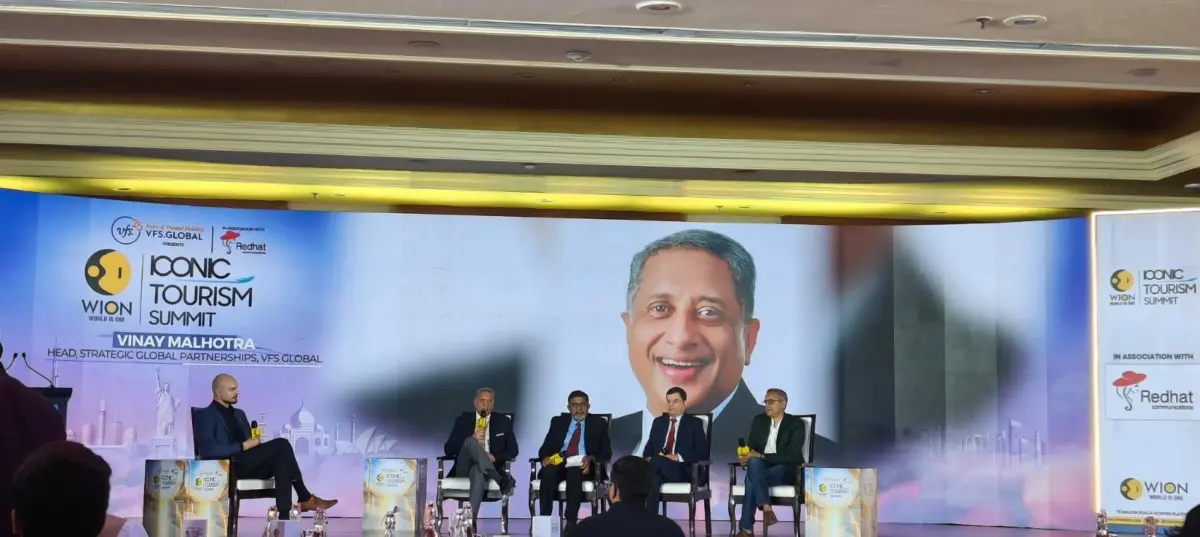
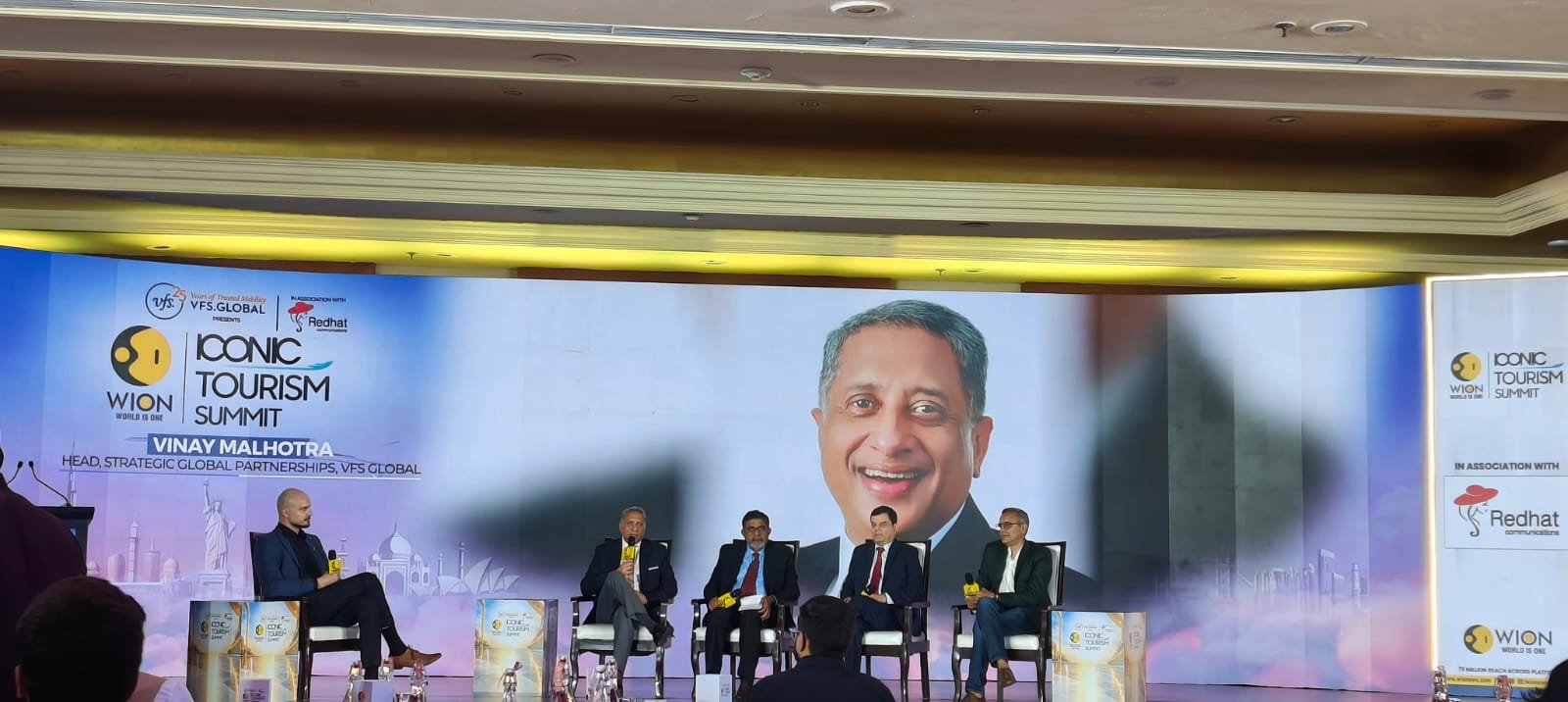
That was the central theme of the panel discussion titled "Tech Frontiers: Reshaping Journeys" at the WION Iconic Tourism Summit, held on September 23rd in New Delhi. The high-profile panel brought together prominent industry leaders, including Anil Parashar, Executive Director of ITQ Technologies Pvt Ltd; Vinay Malhotra, Head of Strategic Partnerships at VFS Global; Achin Sharma, Chief Digital Officer at WAISL; and Abhilash Kalathil, Executive Director of Kairali Ayurvedic Group. Together, they explored the evolving intersection of modern technology and the global tourism sector.
The conversation quickly moved beyond the familiar, surface-level question of whether artificial intelligence will transform tourism. Instead, the panellists suggested that the more pertinent and pressing question is how technology can make travel genuinely simpler without making it less human. As the travel and hospitality industry continues to digitise at a rapid pace, finding this delicate balance has become a critical priority for stakeholders across the ecosystem.
For Vinay Malhotra, the sheer scale of VFS Global’s operations makes the integration of advanced technology not just beneficial, but entirely indispensable. VFS Global currently serves 70 client governments and operates more than 4,000 application centres spread across 167 countries, handling millions of complex applications annually.
Malhotra pointed to the company’s Intelligent Document Processing (IDP) capabilities as a prime example of AI being utilised behind the scenes to support visa processing. Such systems can help identify inconsistencies in documentation and generate structured information for visa officers, all while keeping the actual visa decision firmly in the hands of the relevant government authority. VFS Global itself consistently emphasises that its IDP solution operates with strict human-in-the-loop controls, ensuring that technology serves as a powerful assistant rather than an autonomous decision-maker.
Malhotra also highlighted the logistical challenges posed by increasingly complex documentation submitted by applicants. Bank statements, for instance, can frequently run into hundreds of pages, making manual scrutiny both time-consuming and prone to oversight. Artificial intelligence can assist human workers by helping to identify anomalies, irregularities, and inconsistencies that might otherwise be missed during manual reviews.
However, Malhotra stressed that technology is by no means confined to the back office. VFS Global’s digital services also extend directly to customer interaction, with artificial intelligence and generative AI being deployed to support communication across multiple languages, bridging gaps for international travellers.
One of the most practical and customer-centric examples he offered during the summit was the "Visa At Your Doorstep" service. This innovative offering takes the entire visa application process directly to a traveller’s home, office, or any other convenient location. The mobile set-up is equipped to capture documentation, biometrics, photographs, and digital signatures before securely transmitting the information to the relevant authorities. Malhotra noted that this service is particularly useful for corporate groups, large families, medical travellers, and individuals living in remote areas far from traditional visa application centres.
For Malhotra, therefore, technology works best when it actively removes friction from the user experience. That underlying thought quickly became a recurring theme throughout the broader panel discussion, resonating with perspectives from other sectors of the travel industry.
Anil Parashar argued that the travel industry should exercise caution so as not to confuse mere technology adoption with genuine progress. Technology, he cautioned, should simplify the travel experience rather than inadvertently create yet another layer of complicated processes for travellers and travel professionals alike.
His larger, overarching point was that artificial intelligence should never be viewed as a wholesale replacement for human judgement. Travel agents and industry professionals, he suggested, will continue to play a vital role precisely because technology cannot anticipate every unique human circumstance or emotional nuance.
"The question that needs to be asked is what technology cannot do," was the essence of Parashar’s argument. The complex tasks and nuanced situations that technology cannot handle effectively will continue to require dedicated human intervention.
This realization becomes particularly crucial when automated technology malfunctions or makes an error. Parashar cited examples from the airline industry, where data-driven systems can produce recommendations based purely on historical patterns, while human decision-makers may readily recognize unique real-world circumstances that the underlying algorithm has not adequately captured. The lesson from these scenarios was clear: data can certainly inform decisions, but it should not automatically dictate them.
Achin Sharma brought the discussion closer to the physical infrastructure of the airport itself. As airports become increasingly digitised, he argued, the biggest opportunity lies not in deploying isolated, standalone technologies, but in seamlessly connecting the different parts of the wider travel ecosystem.
WAISL is already working actively in this direction, offering comprehensive solutions that span passenger processing, airport operations, biometrics, advanced analytics, the Internet of Things (IoT), and digital-twin technology. Its current AeroWise platform, for instance, brings crucial operational data together to provide airports with a unified, real-time view of both airside and landside activity.
For Sharma, the real promise of artificial intelligence is its unique ability to reduce friction across the entire journey. A traveller should not have to repeatedly move between disconnected systems for flights, hotels, ground transfers, and other ancillary services. AI could eventually connect all of these disparate stages and anticipate potential problems well before they escalate into major disruptions.
A delayed flight, for example, should not simply generate a passive alert for the passenger. An intelligent travel ecosystem could recognize that the delay threatens an upcoming connecting flight, proactively identify alternative itineraries, and present them directly to the traveller before they even reach the transfer desk.
The airport environment itself is also becoming noticeably more intelligent. WAISL’s collaborative work with GMR Airports includes advanced AI-enabled operational systems, while nationwide initiatives like DigiYatra and facial-recognition-based passenger processing are helping to create smoother, more paperless, and contactless journeys for millions of flyers.
Sharma’s visionary outlook extended even to indoor navigation within sprawling airports: modern technology can guide passengers efficiently from one gate to another while also intelligently surfacing relevant retail, dining, and passenger services along the way.
Yet, despite these impressive advancements, the panellists repeatedly returned to a vital warning: technology implemented purely for the sake of technology can easily become counterproductive.
A digital check-in process that requires a traveller to enter the exact same personal information repeatedly is not seamless. A customer service chatbot that fails to resolve a problem while simultaneously blocking access to a human agent is not improving the customer service experience. Furthermore, an automated process that depends entirely on unstable or unreliable connectivity can quickly become yet another source of frustration for travellers on the move.
"Automate the predictable and humanise the exceptions," Sharma stated, capturing perhaps the single most important principle to emerge from the entire summit discussion.
For Abhilash Kalathil, technology is equally relevant to one of the tourism industry’s fastest-growing segments: wellness travel. In recent years, travellers are increasingly seeking out holistic health retreats, making personalized care a paramount concern.
Kairali Ayurvedic Group has been experimenting with artificial intelligence not to replace traditional Ayurveda practitioners, but rather to support them and create a more deeply personalized engagement with guests. To this end, the group introduced KAAI alongside its specialized AI assistant, Aarika, which are designed to support expert practitioners with information access, case management, and tailored wellness recommendations.
Kalathil described a forward-looking vision in which technology can successfully maintain a meaningful relationship with a guest even after their physical wellness retreat has ended. Rather than sending generic promotional messages, an AI-enabled system could remember individual preferences, health interests, and previous retreat experiences to help foster a more sustained, personalized relationship with the traveller over the long term.
For a specialized wellness business built around long-term client relationships and holistic health, that distinction matters immensely. At the same time, Kalathil acknowledged that there are sensitive moments when technology must step aside entirely. If a guest needs to discuss a complex medical issue, prescription medications, or any health-related question that requires professional clinical judgement, the interaction must be promptly escalated to the appropriate human expert.
The comprehensive discussion ultimately revealed that the future of travel may not be about forcing a choice between humans and machines. Instead, it is about thoughtfully deciding where each is most useful and effective.
Artificial intelligence can process vast quantities of information, identify hidden patterns, predict travel disruptions, personalize recommendations, and automate repetitive administrative tasks. Meanwhile, humans bring empathy, emotional context, critical judgement, and the unique ability to respond gracefully to unexpected circumstances that do not fit neatly into a rigid dataset.
As Parashar summarized, the real opportunity lies in making technology work for people rather than forcing people to constantly work around technology. The next frontier of tourism, therefore, may not simply be smarter airports, faster visa processing times, or more sophisticated AI assistants. Rather, it may be a truly integrated travel ecosystem in which these diverse technologies finally begin to speak to one another, quietly removing friction from the journey while leaving the most human parts of travel firmly in human hands.