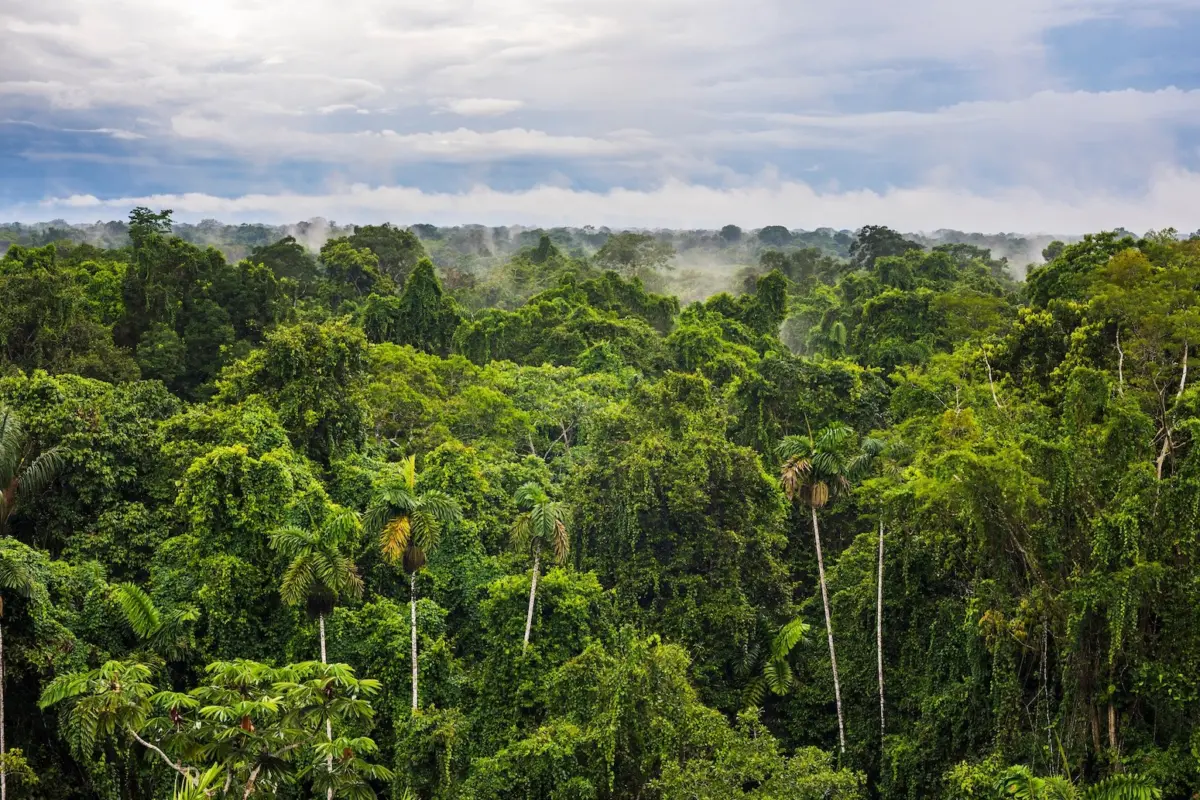
An area of the Amazon rainforest roughly the size of the US state of New Jersey has remained standing due to Luiz Inácio Lula da Silva’s leadership of Brazil, according to a recent Carbon Brief analysis. The findings underscore the stark environmental divide in South America’s largest nation, where shifting political winds can mean the difference between forest preservation and accelerated ecological destruction.
Lula defeated Jair Bolsonaro in the fiercely contested 2022 election to assume the presidency of the nation that proudly houses nearly 60% of the world’s largest tropical rainforest. During the far-right presidency of the elder Bolsonaro, forest loss surged as regulatory oversight was systematically dismantled. In stark contrast, deforestation dropped sharply under the left-wing leadership of Lula, with modern tracking suggesting that Amazon deforestation is on track to hit its lowest level on record this year.
Now, as another high-stakes presidential election approaches, Lula faces a formidable challenge from Jair Bolsonaro’s son, Flávio Bolsonaro. The younger Bolsonaro champions anti-environmental policies strikingly similar to those of his father, threatening to unravel fragile conservation gains.
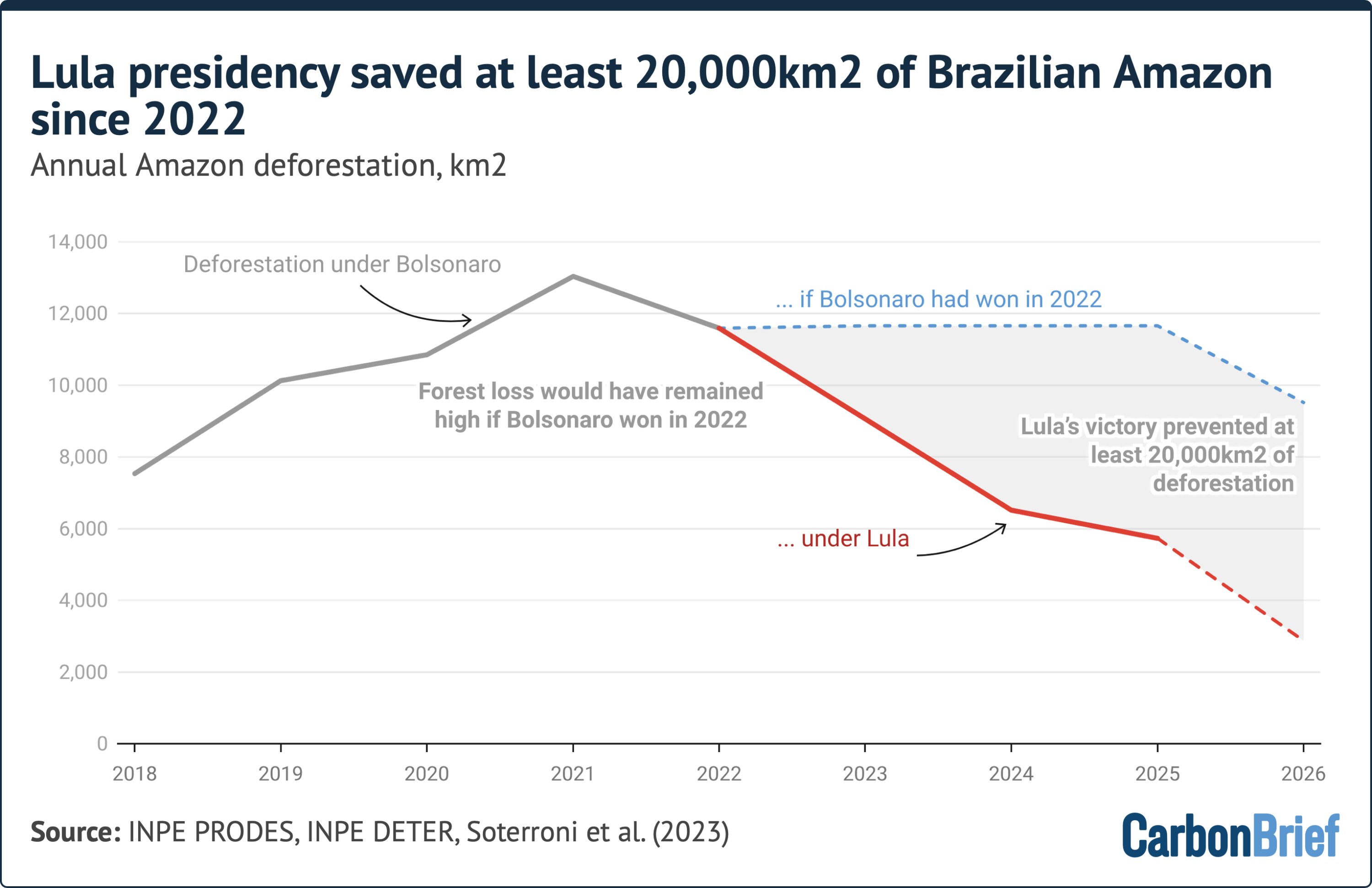
Carbon Brief’s analytical modeling suggests that at least 20,000 square kilometers of deforestation has been successfully avoided since Lula took office and restored Amazon protection as a national priority. This estimate is derived from rigorous modeling by an international research team that simulated an alternative baseline scenario in which Brazil’s flagship Forest Code legislation was left unenforced—acting as a proxy for the governance style witnessed during Jair Bolsonaro’s administration. Experts consulted by Carbon Brief note that this estimate is likely conservative, warning that actual deforestation under an uninhibited right-wing regime could have soared much higher.
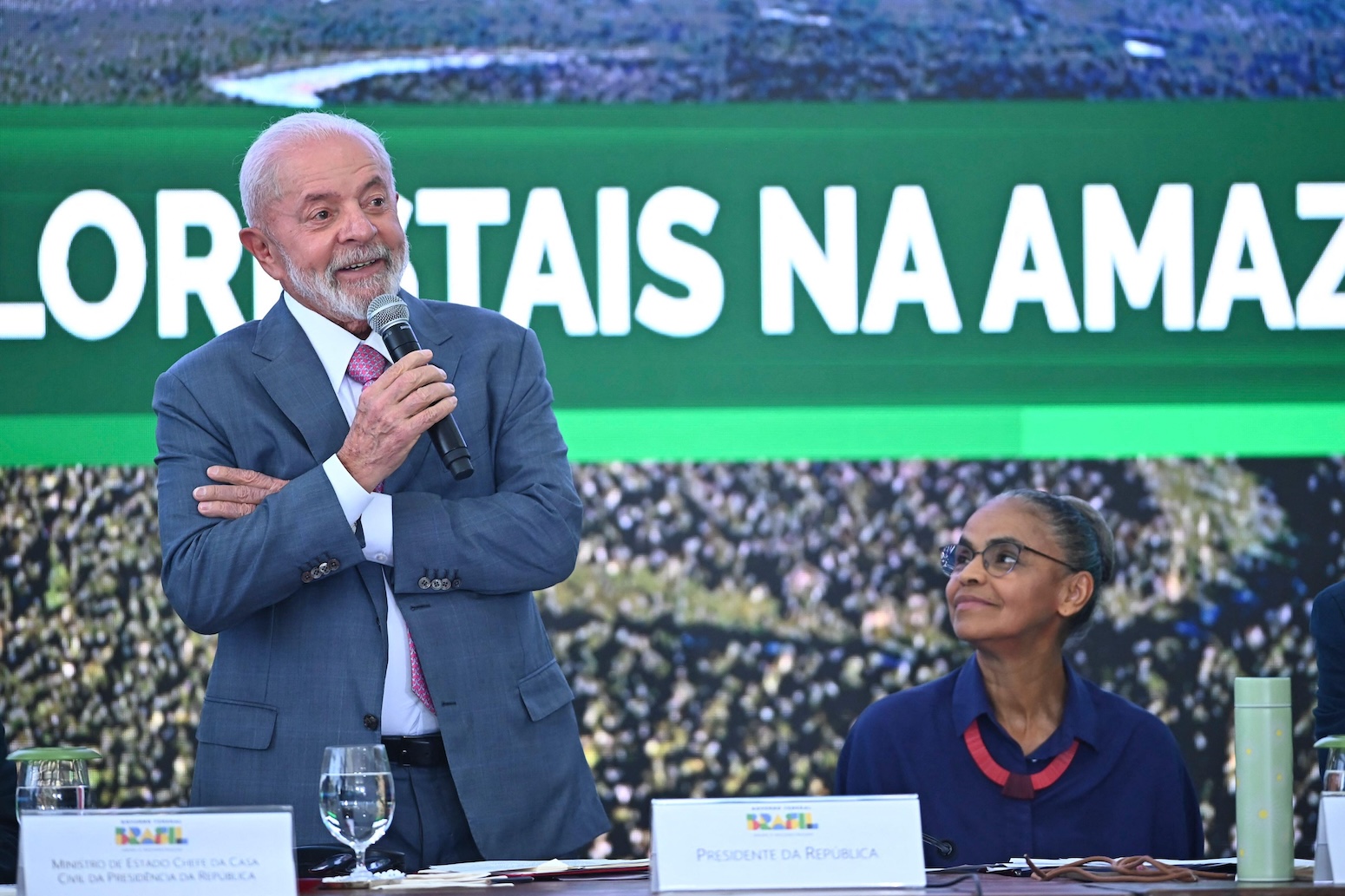
With Lula and Flávio Bolsonaro currently locked in a tight statistical tie in national opinion polls, the upcoming election is expected to profoundly dictate the environmental trajectory of the world’s fourth-largest greenhouse gas emitter, where national emissions are predominantly driven by land-use change and deforestation.
"Brazil is Back"
When Jair Bolsonaro governed Brazil between 2019 and 2022, he heavily championed the nation’s powerful agribusiness sector, overseeing an unprecedented spike in Amazon timber loss and land clearing. His administration actively weakened federal regulations, slashed the budgets of vital environmental protection agencies, and empowered illegal mining and logging operations, all while launching sharp political attacks against Indigenous populations and environmental defenders.
These aggressive policy shifts meant that the Forest Code—Brazil’s cornerstone conservation legislation requiring landowners to preserve and restore native vegetation on private properties—was systematically under-enforced.
Following his inauguration in early 2023 after his historic electoral victory, Lula promised to steer the country toward a target of zero deforestation by 2030. In a celebrated address at the COP27 United Nations climate summit, he declared to the international community that "Brazil is back."
To deliver on this promise, Lula rapidly rolled back the previous administration’s wave of deregulation and reinstated a specialized action plan for the prevention and control of deforestation in the Legal Amazon. Under the guidance of renowned environmentalist and Environment Minister Marina Silva, the ministry scaled up federal enforcement, policing, and intelligence-led operations across the vast rainforest biome.
As a direct result of these aggressive policy interventions, annual deforestation in the Amazon more than halved, plunging from 11,594 square kilometers per year in 2022 down to 5,731 square kilometers in 2025. While official government records for the August-to-July cycle are finalized on an annual schedule, preliminary real-time satellite alert data placed recent deforestation figures at 2,874 square kilometers. Although final telemetry assessments are expected to yield higher figures upon complete analysis, environmental experts remain confident that Amazon deforestation for the year could register its lowest level since official records began in 1988.
A New Jersey-Sized Forest Saved
Compared to the modeled counterfactual scenario in which Jair Bolsonaro secured re-election in 2022, the Carbon Brief analysis calculates that at least 20,000 square kilometers of the Brazilian Amazon has been preserved. This saved expanse is roughly equivalent to the total land area of Wales, Belize, Slovenia, or the US state of New Jersey.
The methodology relies on an updated 2023 study examining the role of nature-based solutions in Brazil’s strategic pathway toward net-zero emissions. Built upon the GLOBIOM-Brazil framework, the research was conducted by collaborative teams from the University of Oxford, the International Institute for Applied Systems Analysis, and Brazil’s National Institute for Space Research.
Dr. Aline Soterroni, a University of Oxford researcher who spearheaded the 2023 analysis, noted that the swift reversal witnessed under Lula demonstrates how rapidly environmental degradation can respond to decisive political will. However, she emphasized that the modeling of the unforced Forest Code baseline remains relatively conservative, as it accounts for moderating global demand for Brazilian beef and soy while omitting the full spectrum of opportunistic illegal clearing driven by state apathy.
Other international policy experts share these concerns. Claudio Angelo, international policy coordinator at the Brazilian Climate Observatory, argued that a Bolsonaro victory in 2022 would have unleashed deforestation rates far exceeding those of his first term. He pointed to the powerful political signal such a victory would send, likely triggering an explosion of wildcat mining and widespread land grabbing across isolated indigenous reserves.
Soterroni observed that deforestation did not drop overnight the moment Lula took office, highlighting the inherently gradual and complex process of restoring institutional capacity and enforcing environmental rule of law across a region the size of a continent. Nonetheless, the core takeaway of the scientific modeling remains clear: weak environmental governance maintains structurally higher rates of forest loss compared to the enforcement of national conservation laws.
High Stakes at the Ballot Box
With Jair Bolsonaro currently imprisoned following convictions related to plotting a coup d’état after his 2022 defeat, his son Flávio Bolsonaro, a federal senator representing Rio de Janeiro, has stepped into the presidential race. While the ballot features 13 candidates in total, Flávio Bolsonaro and Lula have emerged as the dominant frontrunners, running neck-and-neck in opinion polls ahead of the first round of voting.

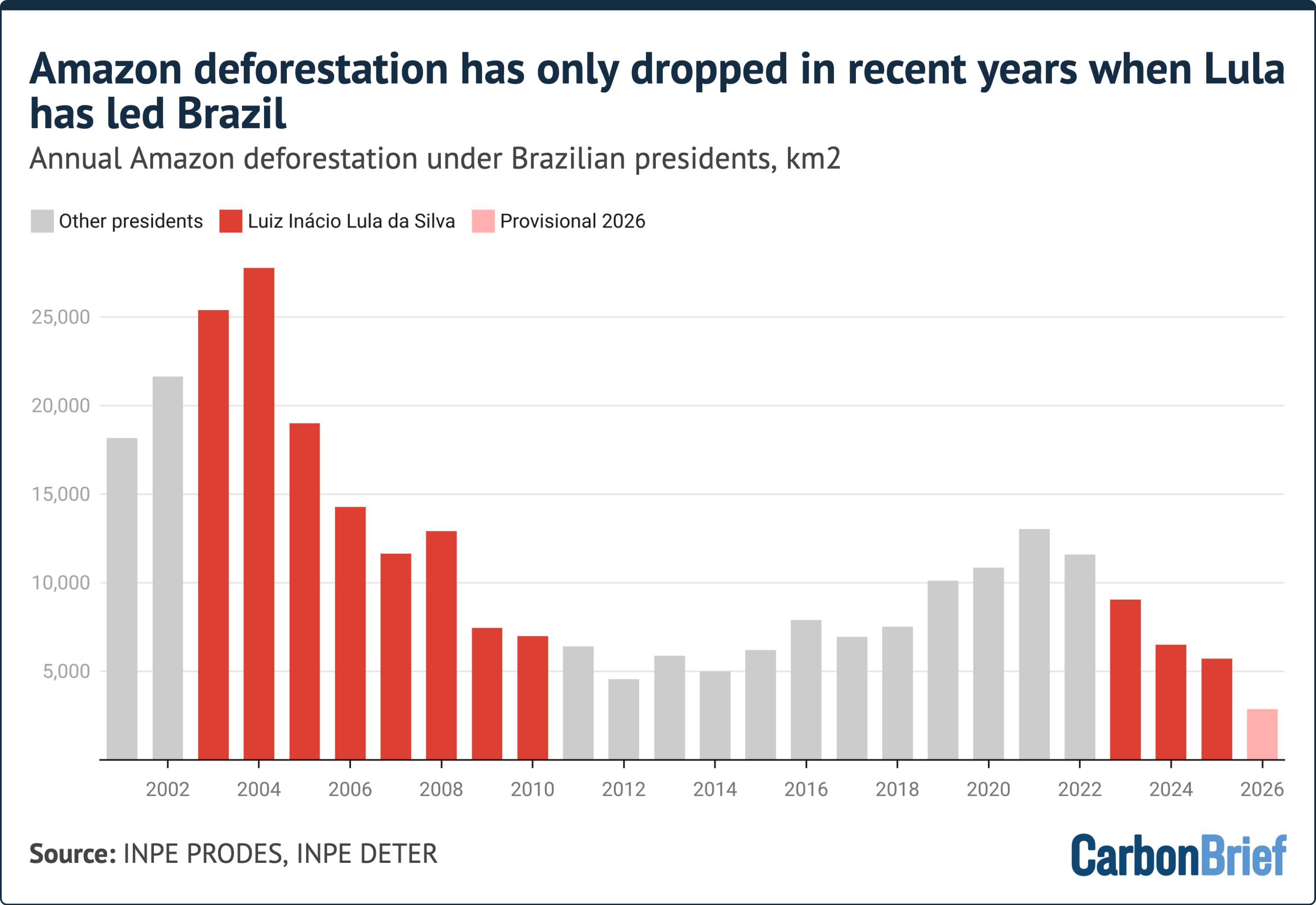
If Lula secures another mandate, analysts expect his administration to steadfastly pursue its zero-deforestation agenda. Historical data demonstrates a clear correlation: meaningful drops in Amazon deforestation over recent decades have exclusively occurred during Lula’s three presidential terms.
Conversely, experts warn that a victory for Flávio Bolsonaro—an outspoken climate skeptic who has pledged to advance his father’s political legacy—would likely trigger a devastating ecological resurgence. Dr. Patricia Pinho, deputy science director at the Amazon Environmental Research Institute, stated that the country simply cannot afford another four years of accelerating forest loss and escalating violence against Indigenous communities.
Dr. David Lapola, an ecologist at the University of Campinas, concurred, warning that a right-wing return to power would quickly undo decades of painstakingly built environmental policy. He noted that the 2019–2022 period proved how rapidly executive acts can dismantle institutional protections, warning that vital climate goals would effectively be discarded.
Independent policy tracking by the Climate Observatory further highlights this ideological chasm. Lula’s platform boasts the greenest policy proposals among the six top-polling candidates, containing 16 detailed environmental commitments, including his 2030 zero-deforestation pledge and a concrete target to reduce national greenhouse gas emissions by up to 67% by 2035 compared to 2005 levels.
In contrast, Flávio Bolsonaro’s platform includes several explicitly anti-environmental proposals. Although his platform features a nominal pledge to eliminate illegal deforestation by 2029, environmental advocates remain deeply skeptical given his past legislative efforts to rewrite the Forest Code and legalize commercial exploitation within protected zones.
Furthermore, geopolitical shifts across the broader Amazon basin compound these domestic concerns. Environmental researchers warn that if right-wing candidates consolidate power in neighboring countries like Bolivia, Colombia, Ecuador, and Peru, up to 95% of the entire Amazon biome could soon fall under the governance of leaders who explicitly prioritize mining and agribusiness over ecological preservation. If no presidential candidate claims an outright majority in the initial October vote, a decisive runoff election will follow later in the month.
Broad Market and Legislative Pressures
Beyond the executive branch, broader economic and legislative pressures continue to threaten the future of Brazil’s ecosystems. A prominent concern is the effective collapse of the Amazon Soy Moratorium, a landmark voluntary agreement through which major commodity traders committed to boycotting soybeans grown on lands deforested after 2008. Widely hailed by conservation groups as one of the most successful supply-chain interventions in history, the moratorium prevented an estimated 18,000 square kilometers of clearing during its first decade. However, major grain traders withdrew from the pact, prompting researchers to warn that its dissolution could drive thousands of square kilometers of additional deforestation in the coming decade.
At the same time, the composition of the Brazilian Congress remains a critical battleground. Right-wing parties, including the Liberal Party associated with the Bolsonaro family, maintain significant legislative leverage, frequently clashing with the executive branch. Lawmakers previously managed to override presidential vetoes on controversial legislative measures, illustrating the ongoing friction between conservation-minded administration goals and development-focused lawmakers.

Experts emphasize that the upcoming election will ultimately determine whether environmental stewardship is treated as a fundamental public necessity or merely an expendable political preference. As voters head to the polls, the future of the world’s most vital carbon sink hangs in a precarious balance.