For generations, the debate over how to manage Australia’s sprawling native forests has been framed as an uncompromising binary choice. On one side are conservationists who argue for total protection, warning that human intervention devastates ecological integrity and destroys irreplaceable wildlife habitats. On the other side are local foresters, timber workers, and regional communities who advocate for sustainable timber harvesting to support local economies and livelihoods. This ideological tug-of-war has dominated public policy, media discourse, and political campaigns for decades, leaving little room for middle ground or nuanced scientific exploration.
However, the reality of forest management is far more intricate than this polarized debate suggests. A newly published scientific analysis of a long-abandoned, multi-decade forestry experiment nestled within Victoria’s majestic mountain ash forests demonstrates that the answers to sustainable management are far more complex—and hopeful—than previously assumed.
To understand the roots of this ongoing controversy, one must look back to the 1970s. During this era, scientists, environmental advocates, and the general public began aggressively questioning the prevailing forestry practice of clearfell logging. Under this method, all trees within a designated block of forest are harvested simultaneously. Conservationists forcefully argued that clearfelling caused catastrophic ecological damage by stripping away vital habitats for rare and endangered species, fragmenting ecosystems, and diminishing the overall environmental value of the native landscape.
Conversely, the forestry sector defended the practice through an ecological lens. Proponents pointed out that mountain ash forests are naturally adapted to severe, stand-replacing bushfires that periodically sweep through the region. In their view, clearfell logging served as the human-managed equivalent of these intense natural fire cycles, clearing the ground for the next generation of vigorous tree growth.
Despite the heat of the arguments and the deep polarization dividing communities and environmental groups, the fundamental scientific questions remained largely unresolved. Did clearfelling truly represent the only viable way to regenerate these forests? How did the environmental and structural impacts of clearfelling genuinely compare to less intensive forestry techniques, such as partial harvesting or heavy thinning? For years, these vital empirical questions lingered without definitive, long-term answers.
A Landmark Experiment
The turning point arrived in the mid-1980s, when the Victorian government initiated a sweeping restructure of the state’s timber industry. Recognizing the need for empirical data to settle mounting public disputes, authorities invested the modern equivalent of approximately A$26 million into a comprehensive research initiative. The goal was to explore alternative silvicultural methods—the specialized branch of forestry dedicated to establishing, growing, and tending forest stands—rather than relying solely on traditional clearfelling.
This ambitious undertaking was officially named the Silvicultural Systems Project (SSP). Established between 1987 and 1989, the project set up research sites across two distinct geographic areas: Tanjil Bren, located high in Victoria’s rugged Central Highlands, and Cabbage Tree Creek, situated further east in the dense forests of East Gippsland.
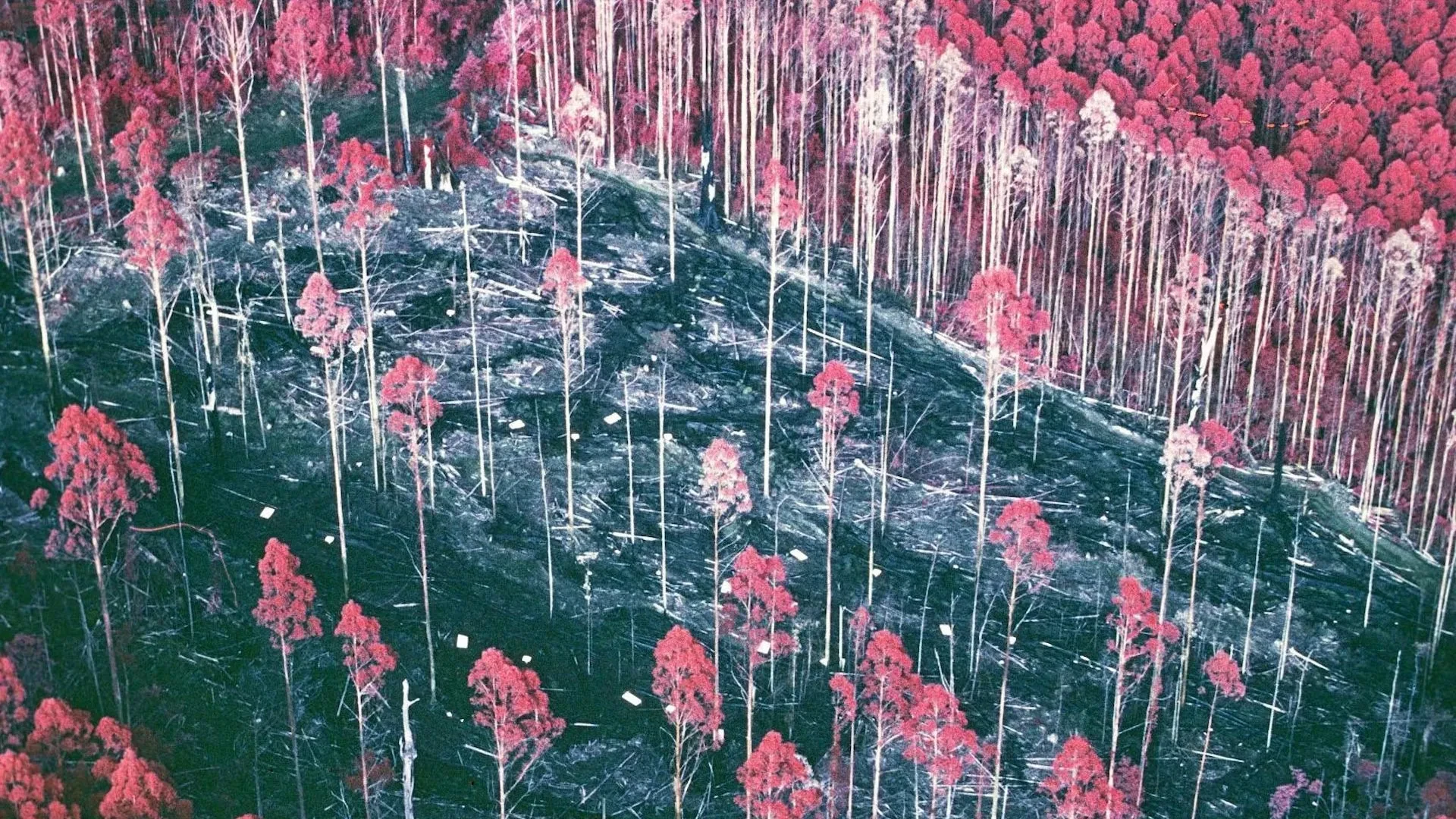
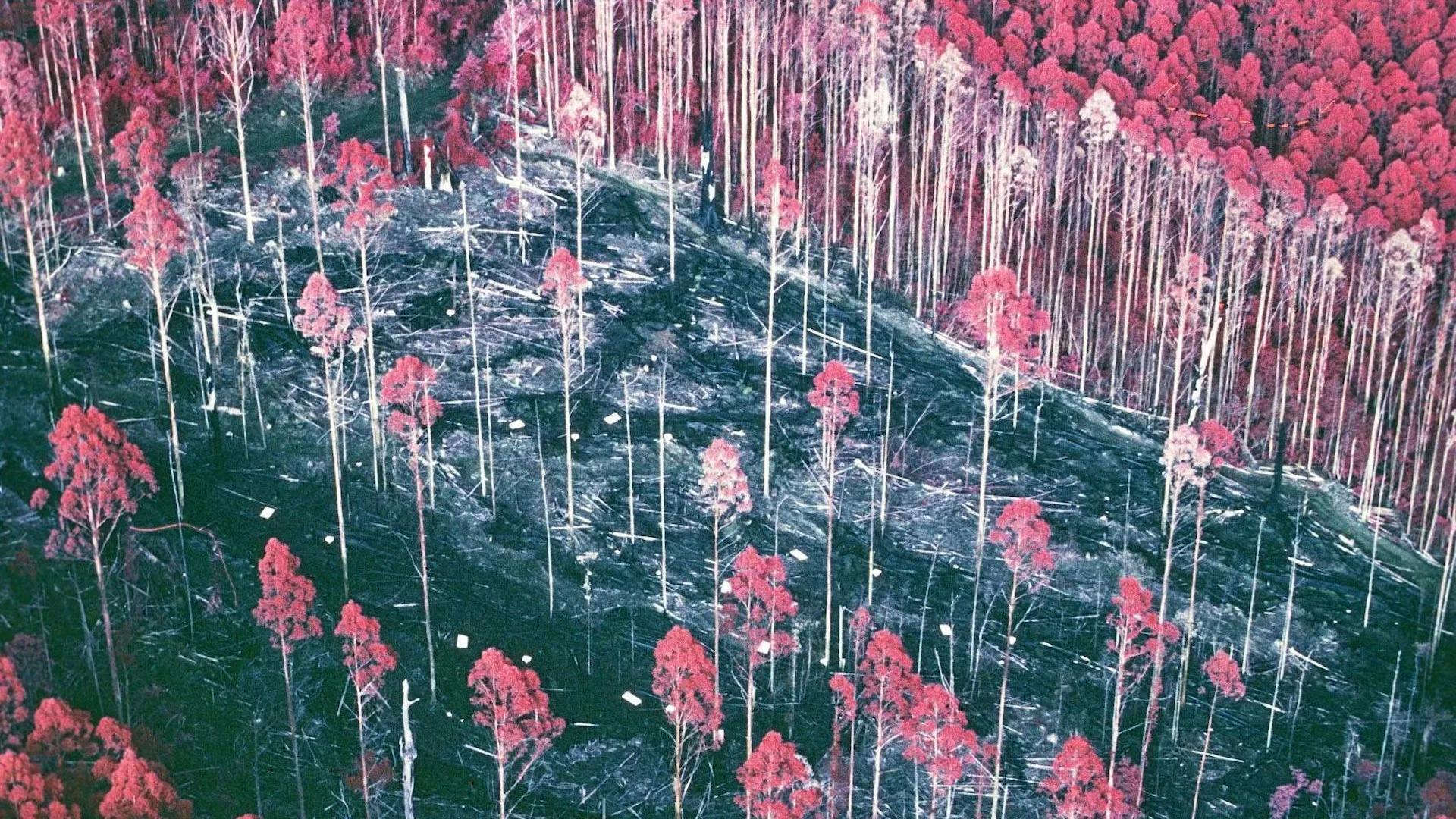
The project was heralded as a landmark experiment of unprecedented scale in Australian forestry. It was designed to directly compare how forest ecosystems regenerated across a comprehensive spectrum of silvicultural approaches. The experimental design incorporated traditional clearfells, where harvested blocks ranged between 250 and 350 meters in width, alongside smaller patch clearfells featuring narrower widths of 50 to 140 meters. Crucially, the project also tested heavy thinnings, a practice where 50 to 70 percent of the standing trees within a plot were removed. To maintain rigorous scientific standards, extensive areas of unharvested forest were left untouched to serve as permanent benchmarks and control groups for comparison.
At the Tanjil Bren research location, the forest consisted of dense mountain ash regrowth that had successfully established itself following the devastating 1939 bushfires. Researchers established hundreds of distinct survey plots across the landscape and began the meticulous, long-term process of monitoring thousands of individual seedlings. By the early 2000s, the initial findings seemed definitive: mountain ash trees regenerated most successfully and vigorously on the large clearfell sites. In contrast, where tall canopy trees were intentionally retained or where cleared patches were kept relatively small, the forest dynamics shifted, allowing common understory species, particularly acacia, to dominate the landscape.
Following the publication of these initial reports, the project gradually faded from the public eye. The access roads grew over with vegetation, the wooden project signs weathered and collapsed into the undergrowth, and the ambitious experiment was largely forgotten by policymakers and the public. The broader societal debates over logging and conservation raged on, seemingly unaffected by the forgotten data resting quietly in the forest.
Yet, while the researchers moved on and the funding dried up, the trees kept growing.
Astounding Results
In 2014, a team of researchers from the University of Melbourne visited the Tanjil Bren research site as part of a university field trip focusing on native forest silviculture. One of the accompanying colleagues, Simon Murphy, had been directly involved in the initial establishment of the experiment decades earlier. He suggested that the students be shown the long-term outcomes of the various silvicultural systems existing side-by-side in a real-world setting. What the academic team discovered upon inspecting the plots was nothing short of astounding.
When examined three decades later, the original findings regarding the large cleared patches and clearfelled areas still held true: the mountain ash trees were vigorous, abundant, and tall. However, it was the heavily thinned sections of the forest that captured the researchers’ immediate and profound attention.
The surviving trees left behind in the thinned plots had grown into absolute giants. Although the trees were only 80 years old—a relatively young age for this species—the largest specimens averaged well over a meter in diameter at chest height, with some exceptional trees exceeding 1.5 meters in diameter. The heavy thinning process had provided these specific trees with significantly more spatial breathing room, sunlight, and underground resources, and the trees had responded to this release with extraordinary biological vigor. In fact, the largest trees located within the thinned stands measured a remarkable 20 percent greater in diameter than comparable trees found in the unharvested control areas.
Even more remarkable was the discovery regarding carbon storage. Measurements revealed that the thinned stands of trees had successfully stored as much carbon in their dense wood as the untouched, unharvested control areas—and in many cases, even more. Over the course of just 30 years, the heavily thinned forest had not only fully compensated for the carbon removed during the initial harvesting operation but had also accumulated enough additional carbon to match the accumulation seen in pristine, unmanaged control plots.
These empirical discoveries carry profound ecological implications for forest management moving forward. Larger trees possess thicker bark and greater structural resilience, making them significantly more resistant to severe bushfires. When subsequent fires inevitably sweep through the landscape, these massive trees stand a far higher survival rate than younger, densely packed stands. Furthermore, these colossal trees are much more likely to naturally develop tree hollows—a critical, scarce, and steadily declining habitat type required by vulnerable and rare native wildlife, including the greater glider and the endangered Leadbeater’s possum.
In addition, the acacia trees that flourished across many of the experimental silvicultural treatments proved to be vital to the survival of the Leadbeater’s possum. These marsupials rely heavily on acacia for foraging and as pathways to navigate through the complex forest canopy. Subsequent camera trap surveys deployed across the research sites confirmed this ecological link: Leadbeater’s possums were detected across every single silvicultural treatment plot surveyed, whereas none were found within the unharvested control areas.
Lessons for the Future
The findings emerging from the long-forgotten Tanjil Bren Silvicultural Systems Project offer three critical lessons for the future of environmental management and forestry policy in Australia.
First, the discovery underscores the irreplaceable value of long-term silvicultural and ecological experiments. Across Australia, countless historical research projects remain scattered through native forests, possessing the potential to fundamentally transform our contemporary understanding of how complex ecosystems respond to human intervention and changing climatic conditions. Yet, all too often, these valuable scientific assets end up neglected, defunded, and lost to time. Locating, revitalizing, and protecting these long-term studies before they disappear permanently must become a priority for the scientific community.
Second, the research demonstrates that forest thinning does not necessarily require an ecological compromise. While public debate has long treated forestry as a zero-sum game, the data from Tanjil Bren—alongside parallel studies examining conifer forests in North America—proves that targeted management can simultaneously supply sustainable timber for local processing industries, absorb and sequester atmospheric carbon, and improve structural habitats for native wildlife. This points toward a win-win-win scenario that challenges the rigid dichotomy of conservation versus production which has paralyzed public policy discussions for decades.
While heavy thinning cannot and should not be applied universally across every landscape, it emerges as a valuable, science-based tool for increasing structural diversity in tree ages and sizes, particularly within forests that have been previously altered by clearfelling or high-severity wildfire.
Third, and perhaps most importantly, the project highlights that there is no single silvicultural silver bullet for managing complex forest ecosystems. The lessons learned from the decades-old experiment at Tanjil Bren reveal that a spectrum of management options exists well beyond the simplistic binary of traditional clearfelling. These alternative approaches can successfully balance society’s ongoing demand for wood products, maintain robust carbon storage stocks, and actively conserve rich regional biodiversity.