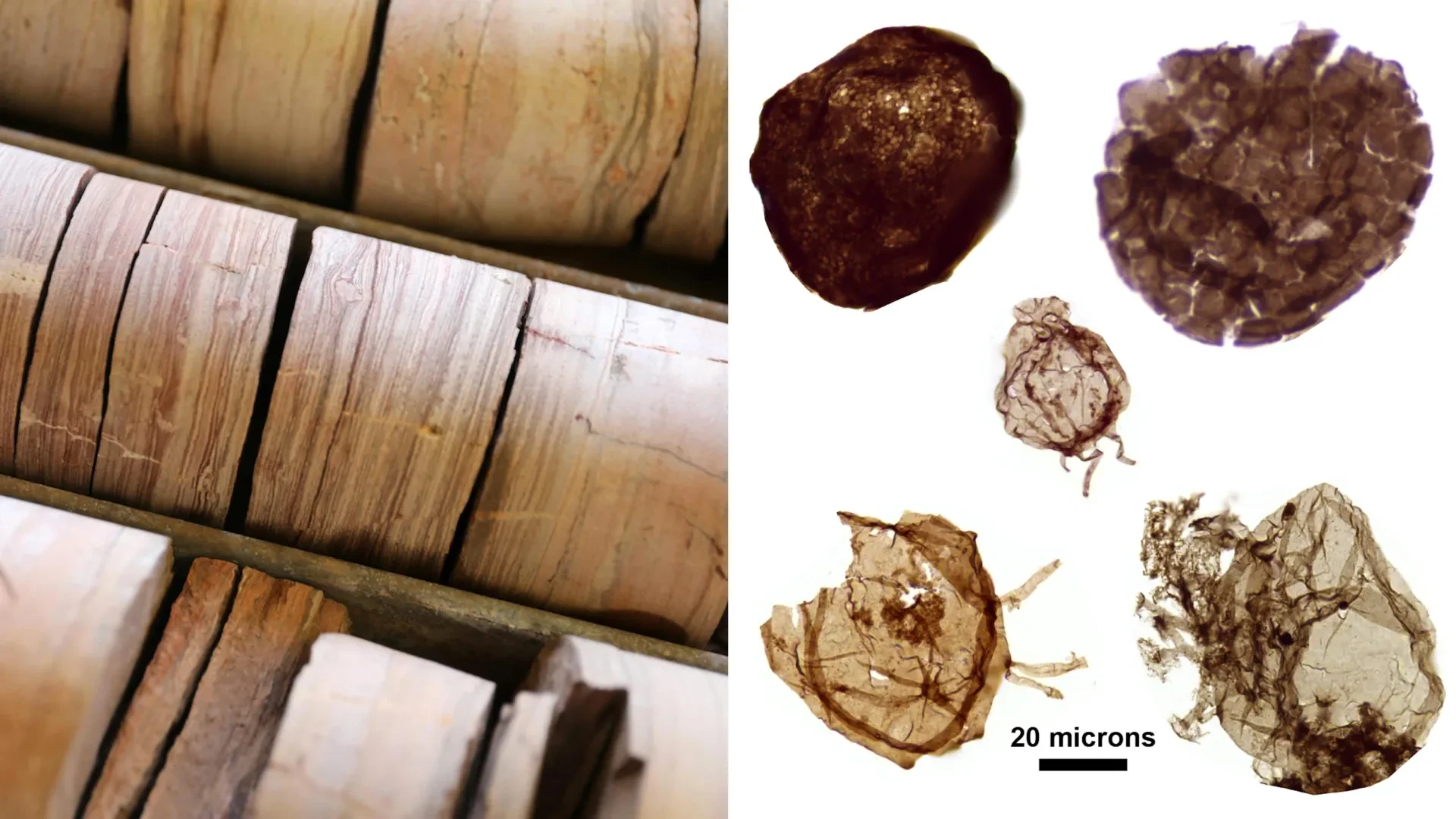
Stored away in an open-air warehouse in the tropical city of Darwin, Australia, lie dozens of unassuming wooden and plastic trays containing cylindrical cores of rock. Bored hundreds of metres below the surface by mineral exploration companies decades ago, these geological samples were originally gathered in the search for valuable economic commodities, far removed from the minds of evolutionary biologists.
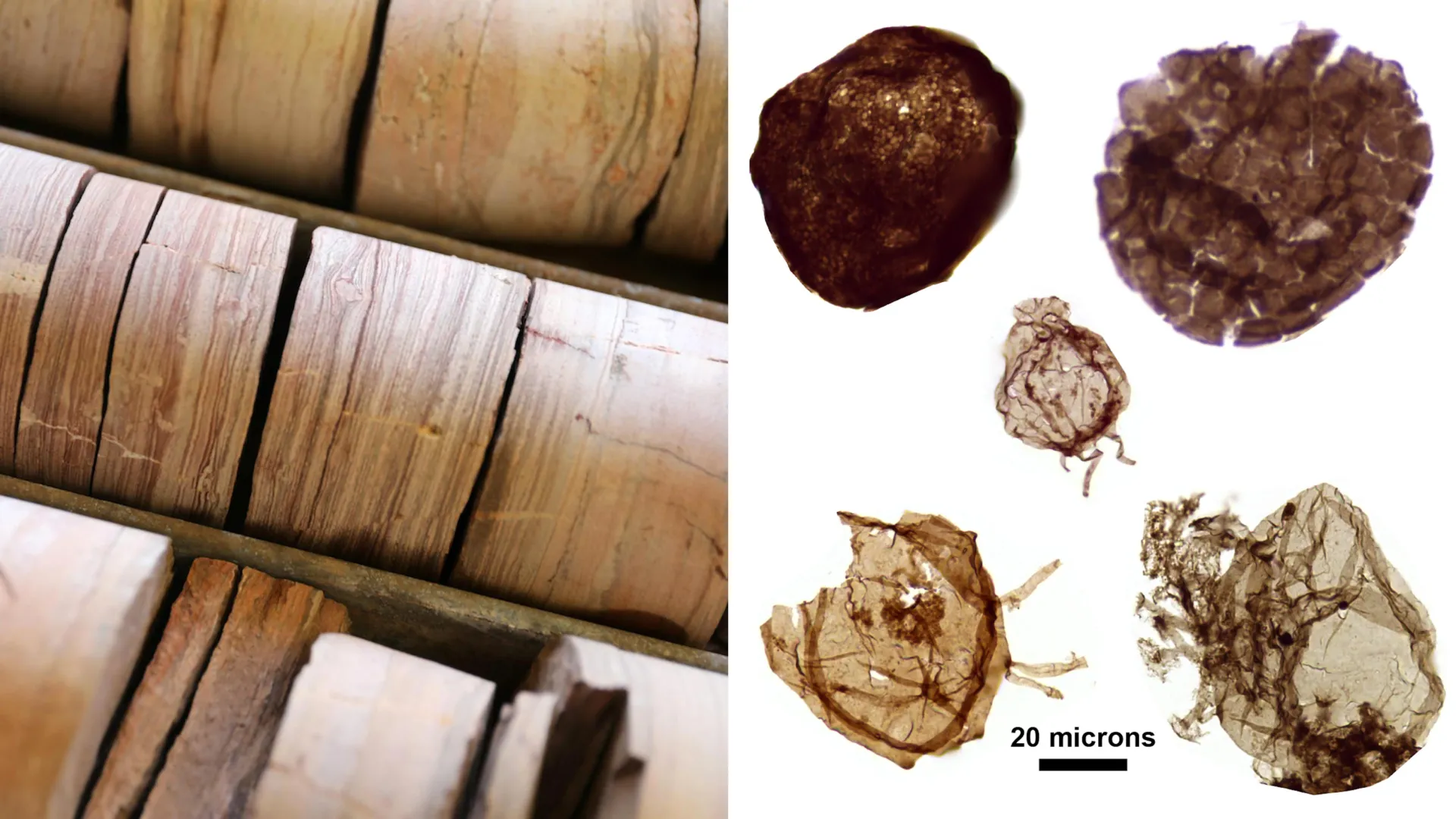
Yet, as a new study published in the prestigious scientific journal Nature reveals, these ancient archives hold secrets that go far beyond mining and mineral economics. Tucked away inside the Northern Territory Geological Survey facility, some of these drill cores consist of mudstone—a fine-grained sedimentary rock formed from hardened ancient seafloor mud. When mineral prospectors originally pulled these cores from the earth, they were entirely unaware that the muddy matrix housed microscopic fossils. These are the remnants of tiny, single-celled organisms that lived and died on the seafloor of an ancient inland sea, a vast body of water that covered much of northern Australia more than 1.5 billion years ago.
According to the new research, these microscopic remnants are crucial for addressing one of the most enduring and complex puzzles in evolutionary biology: the origin of eukaryotes. This major evolutionary leap led directly to the creation of all complex life on Earth, ultimately paving the way for plants, animals, and human existence.
Small but Complex
To understand the magnitude of this discovery, scientists look at the fundamental division of life on Earth. All living organisms can be broadly categorized into one of two distinct groups, which differ fundamentally at the cellular level.
The first group comprises prokaryotes, which include bacteria and archaea. These organisms possess a relatively simple cellular organization and exist predominantly as single-celled entities, lacking internal compartments. Eukaryotes, by contrast, represent a radically different biological architecture. This group includes all animals, plants, algae, and fungi. Their cells are vastly more complicated, featuring a defined nucleus that houses genetic material, alongside other specialized structures known as organelles that perform specific, compartmentalized metabolic and functional jobs.
The eukaryotic revolution fundamentally transformed our planet. By introducing complex cellular machinery and cooperative internal structures, it unlocked the potential for multicellularity, leading eventually to the rise of complex animals and, billions of years later, human observers. Based on modern genetic observations of living organisms, it is now widely agreed among evolutionary biologists that the last common ancestor of all living eukaryotes resulted from a momentous symbiotic union. This merger involved at least two distinct prokaryotic microbes: an archaeon and a bacterium cooperating to form a single, more advanced entity.
The earliest direct evidence for this monumental transition comes in the form of microfossils—the preserved remains of single-celled organisms that display a level of structural and cellular complexity completely absent among standard prokaryotes, yet characteristic of modern eukaryotes.
Fossils belonging to this complex lineage can be found scattered across various parts of the globe within rock strata dating back at least 1.5 billion years. However, the sedimentary layers preserved in Australia’s Northern Territory contain specimens that push this timeline back even further. The oldest of these Northern Territory fossils date back an astonishing 1.75 billion years, making them the oldest currently known eukaryote fossils anywhere on Earth.
Despite this remarkable record, the ancient world in which these early eukaryotes first emerged remains largely shrouded in mystery. Because the geological record from deep time is often fragmentary, many fundamental aspects regarding the true nature, environment, and ecological drivers of these pioneering organisms remain unknown.
Oxygen: Friend or Foe?
For decades, standard biological theory held a relatively straightforward view regarding the relationship between life and atmospheric gas composition. Many types of bacteria are known to thrive in extreme environments devoid of oxygen, persisting quite comfortably in anaerobic conditions. However, nearly all eukaryotes alive today depend entirely on oxygen for their daily survival. This reliance stems from aerobic respiration—the metabolic process of breaking down food using oxygen, which yields the vast, concentrated amounts of energy that complex, multicellular life demands to function.
Yet, the long-held assumption that oxygen has always been an unalloyed benefit for all eukaryotes has come under intense scientific scrutiny in recent years. This paradigm shift follows the surprising discovery of enigmatic modern eukaryotes that manage to thrive and reproduce in environments entirely devoid of oxygen, challenging the notion that aerobic metabolism is an absolute prerequisite for eukaryotic life.
Simultaneously, there is mounting geochemical evidence from the global rock record indicating that during the era when eukaryotes were first evolving and diversifying, atmospheric and oceanic oxygen levels were likely much scarcer than they are today. This suggests that oxygen-free marine habitats would have been the prevailing norm across ancient oceans. Collectively, these modern biological surprises and ancient geological reconstructions have called into question the traditional assumption that eukaryotes have been strictly dependent on oxygen since their very inception.
While genetic studies of living microbes—particularly those belonging to groups considered closely related to the ancestors of the first eukaryotes—can offer vital clues into cellular ancestry, they have inherent limitations. Genetic clocks and modern genomic comparisons can only peer so far back into the past. Only the physical fossil record can provide direct confirmation of long-extinct lineages, and only the study of ancient geology can offer an accurate window into the true environmental conditions these pioneering organisms inhabited.
More than 12,000 Fossils
To bridge this gap in our understanding, the researchers behind the new study turned to the extensive rock collections housed in Darwin. They took systematic samples of the mudstone cores stored in the warehouse, crushed them down into fine powders, and dissolved the mineral matrix using specialized chemical treatments. By analyzing the organic microscopic residue left behind after this rigorous dissolution process using high-powered microscopes, the team was able to identify and catalog more than 12,000 individual microfossils.
Alongside cataloging the fossils themselves, the scientists closely examined the surrounding mudstone layers to reconstruct the ancient environment at the time the sediments were deposited on the seafloor. This geochemical and sedimentological analysis provided clear insights into the specific habitats these ancient eukaryotes inhabited. Furthermore, by carefully examining the chemical signatures locked within the mudstones, the researchers were able to determine whether free oxygen was present in the surrounding seawater when the microscopic organisms were alive.
The results of this exhaustive analysis revealed a striking pattern. While eukaryote fossils were discovered across a wide range of ancient environments—ranging from shallow coastal mudflats to the deeper open sea—they appeared exclusively in samples that had been deposited in oxygenated settings. Samples originating from oxygen-free environments contained only simple, prokaryotic forms, completely lacking the complex cellular structures of early eukaryotes.
This stark division suggests that even the oldest known eukaryotes, which inhabited Earth between 1.7 and 1.4 billion years ago, were fundamentally dependent on oxygen for their existence and proliferation. These empirical data provide strong new support for a long-held hypothesis that fluctuations in oxygen availability played a central, catalytic role in driving the evolutionary emergence and early success of complex life.
Resolving the exact ecological drivers and environmental context behind the major evolutionary leap represented by the appearance of early eukaryotes remains one of the most compelling and heavily debated questions in the modern life sciences. As researchers continue to unlock the secrets held within these ancient microfossils, further investigations into Australia’s geological archives will undoubtedly shed more light on the origins of complex life, deepening our understanding of how our cellular ancestors first emerged and helping to clarify our own unique place in the history of the planet.